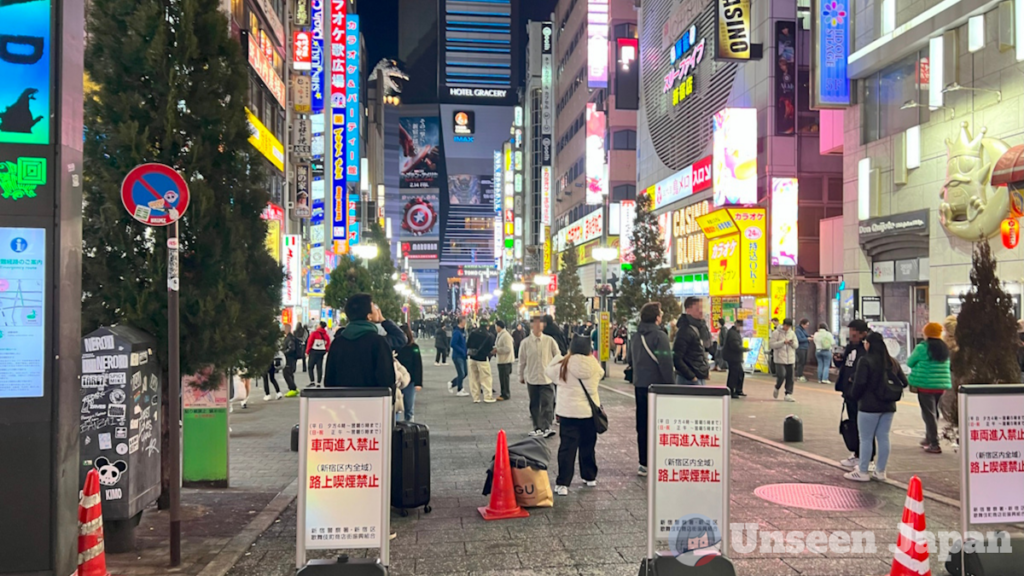
Japan’s economy continues to creak along as wage stagnation and inflation cripple consumers. As a result, people – especially the young – are looking for ways to cut costs.
The latest trend? An old concept with a new vocabulary: Dropping your friends because you can’t afford them anymore.
The arrival of fure-fure genshō (フレフレ現象)
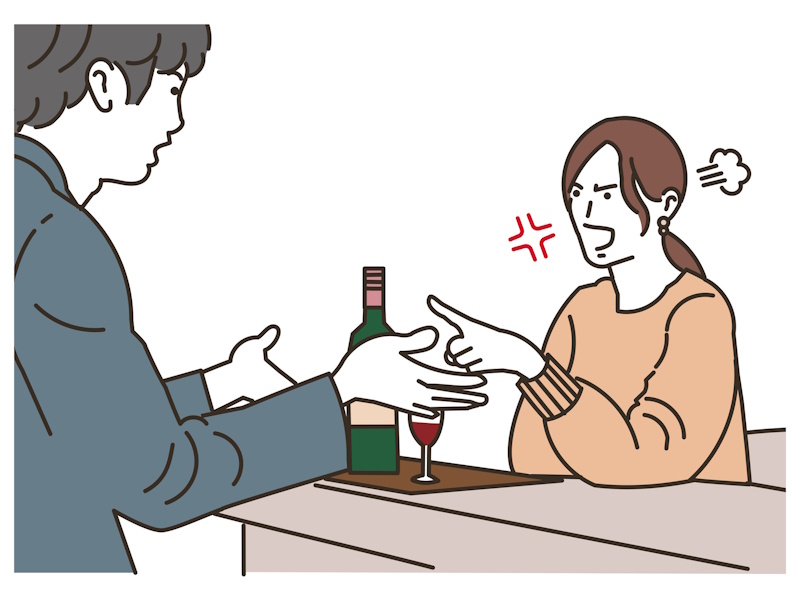
Both online TV news network ABEMA and the Nikkei have given coverage lately to the so-called fure-fure genshō. Fure-fure is an abbreviation of “friend inflation” (フレンド + インフレーション), a word borrowed from a similar phenomenon in English.
And no, that’s not a case of having too many friends. Rather, it’s about having too many of the wrong friends – i.e., friends where the “cost-performance” ratio is low. This often happens because friends from college or earlier want to maintain the illusion of “equality” in the friendship even if they live at different income levels. This leads to spending more than you might be otherwise willing to maintain your connections.
As you can guess by the loan word, this isn’t a solely Japanese phenomenon. A US NetBank survey found that 44% of 20-40-year-old adults skip major events with friends due to cost.
Young Japanese people, however, are adopting their own vocabulary for it. Some refer to the practice of cutting out what they perceive as poor friends as 損切り (songiri), or “loss-cutting” – a word borrowed from stock trading.
A necessity due to low wage growth
Those interviewed by ABEMA struck a consistent theme. Going out to lunch these days costs at least 1,500 to 2,000 yen ($9-$13) a visit. The cost is even worse for after-work drinking gatherings, or nomikai (飲み会): a typical night out can easily set you back 6,000 yen ($38). That’s money that people would rather spend on themselves.
People are echoing that sentiment on social media platforms. “The quality of your friends is more important than the number,” one wrote.
Nikkei says the impact on consumer spending is measurable. People 35-59 years old are spending more as a percentage of their income on going out than ever – up to 2.6% in 2025. By contrast, those under 35 are keeping it on average below 1.5%, with no signs of growth in the past five years.
Experts say the phenomenon is to be expected. “While prices keep rising, driven mostly by essentials like food and utility bills, relatively few people are seeing wage increases that keep pace with inflation,” Nippon Life researcher Ogata Naoko told ABEMA. “As a result, less-essential spending such as socializing and entertainment is an easy target for cutbacks.”
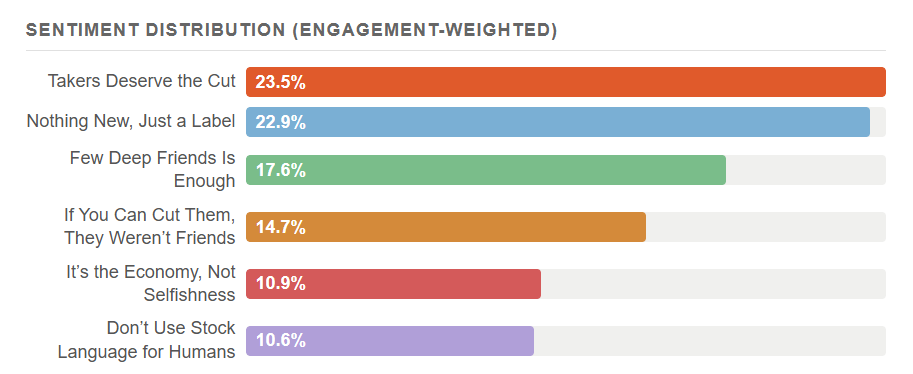
Many online agreed with the necessity of cutting back on friendships due to money concerns, and said that’s nothing new. However, many also objected to the language.
“The moment you start thinking about friendship in terms of cost-performance or returns, that person stops being a ‘friend’ and becomes just an ‘acquaintance,’” one wrote in response to the phenomenon.
Applying the stock market term son-giri to human relationships rubbed many the wrong way. “Treating people as liabilities, materials, assets… the whole thing is nothing short of revolting,” another wrote.
An increasing willingness to be on your own

In times past, getting together with friends or colleagues for drinks was seen as a critical part of Japanese culture. So-called “nomi-nication” (飲みニケーション) has historically been a tried-and-true method for getting ahead in business and even finding your life partner.
Starting around 2017, however, the nomikai entered a period of decline. Workplace drinking parties fell from 75% in that year to around 60% in 2025. A Nippon Life survey in 2024 found that 56.4% of workers consider “nomi-nication” unnecessary.
The blocker isn’t a dislike for social functions. 68.8% of young people surveyed said they still valued the traditional year-end party, or bōnenkai (忘年会). They just don’t wanna pay for it.
If any country was primed for the “friendflation” trend, Japan was. In recent years, the country has seen a spike in “singles cultures,” as people become more willing to enjoy the pleasure of their own company – a trend influenced by population decline and the corresponding drop in the marriage rate. More businesses – from restaurants to karaoke rooms – now cater to お一人様 (o-hitorisama) customers.
All of this alone-ness, however, may come with a social cost. Kodokushi (孤独死), or dying alone, has risen dramatically in Japan in the past decade. Japan’s government even has a Minister of Loneliness assigned to address the problem.
Some people simply like to be alone, of course. But for others, it seems friends are increasingly becoming a luxury they feel they can’t afford.
Sources
友達をコスパで損切り?「フレフレ現象」とは…止まらない物価高で「自分にお金を使いたい」 識者が分析 ABEMA TIMES / Yahoo! News
‘Friendflation’: the increasing cost of maintaining a social life. The Week
若者は人間関係もコスパ、物価高で広がる「フレンドフレーション」 日本経済新聞
【現代社会】友達をコスパで損切りする時代「フレフレ現象」の正体 note.com / 二天カエル
友達を「投資」と呼ぶ寂しさについて|フレンドフレーションと測れない価値 note.com / 灯親@理覚の哲学者
働く人の平日ランチ、全体平均485円(前年比上昇率7.3%) リクルート プレスリリース
働く人の昼食平均485円、3年連続増 外食なら1250円 日本経済新聞