
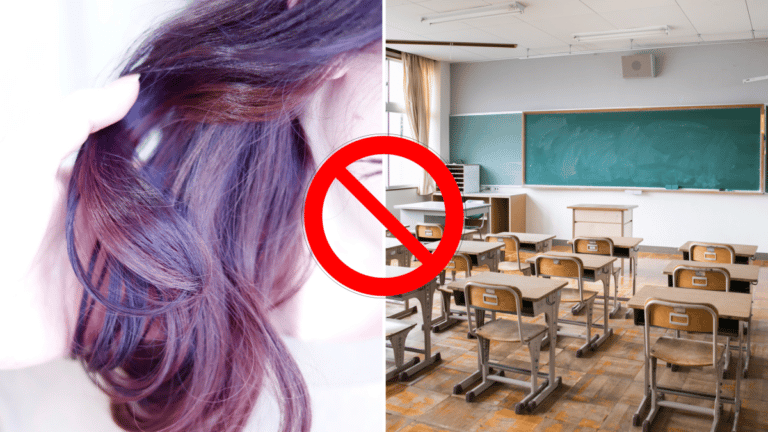
School can be tough even if society designates you as “normal”. For minorities or even those with special interests, it can quickly become hell. One girl is finding that out the hard way as she and her parents attempt to balance her life as a fashion model against her school’s strict style regulations.
Draconian regulations
Japanese schools have come under increasing fire in recent years for regulations that parents say are heavy-handed. One of the more bizarre examples was the revelation that some schools forbid students from wearing undergarments during gym class. In one case, school officials told a parent her daughter could wear a bra…if an employee confirmed her breasts had “developed enough”.
Many more schools have strict regulations around hair color. This has caused many students with diverse ethnic backgrounds to suffer discrimination. Book reviewer Nishida Ai, whose parents are Japanese and American, has talked about the shock and sense of discrimination she felt when her school’s yearbook dyed her brown hair black.
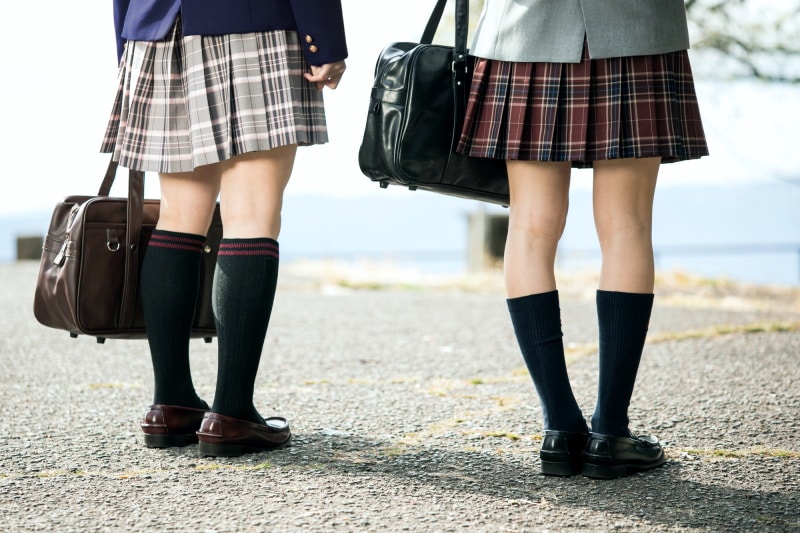
While hair color regulations are controversial, many teachers and officials continue to defend them. The argument is that consistency of appearance, through school uniforms and other dress code regulations, helps foster a sense of equality. School uniforms, for example, can take fashion out of the equation and cover income disparities between families.
Her own classroom, her own teacher
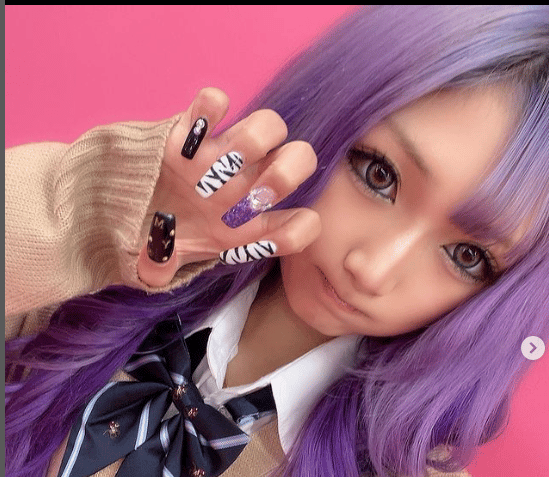
That brings us to the case of Juna, who was a 13-year-old fashion model when Bunshun profiled her in 2022. Juna dresses in gyaru fashion, a rebellious style that had its peak in the 1990s and is marked by tanned faces, bright makeup, and colored hair.
While nowhere near its previous popularity, gyaru still survives as a fashion subculture. Magazines such as egg and Ane Ageha help keep the culture alive.
Juna is an exclusive model for egg. She also has a popular Instagram account, which at the time had over 60,000 followers. Her schedule keeps her so busy, she tells Bunshun Online, that she often doesn’t have time to attend school in person. A recent work stint, for example, kept her on the road for two weeks straight[1].
Unfortunately, when Juna can attend school on her days off, it’s not a great experience.
Juna’s school is one of the many with strict regulations on hair color. School officials designate her blue hair as a violation of school regulations. As such, she’s not allowed to attend classes with her peers. Instead, she has to attend a special classroom by herself, where she receives instruction from a dedicated teacher. She only gets to see and interact with her classmates before and after school. And she can’t participate in any group activities, such as music or gym.
Sadly, it’s been like this for a while. Bunshun’s November 2022 article is a follow-up piece from an interview they did with her that April, six months earlier. Since then, the school has relaxed the regulations a touch. Juna can now enter the school grounds with her classmates and doesn’t have to use a separate entrance as she did before.
Fighting for change, but not an exception
Juna’s father, 30, says the family has tried various workarounds to allow Juna to participate in classes under existing regulations. They weighed wigs and a temporary black spray color. He says the sprays were too shiny and faded quickly. As for the wigs, they simply made Juna stand out more.
Bunshun also asked Juna about the reverse tactic: dyeing her hair black and only using a wig for her photo shoots. “With gyaru, you have to be flashy. I considered using a wig when I entered middle school, but I thought that’d make me stand out from the other models.”
Her father says he continues to talk with the school about rules changes. However, he emphasizes that he’s against Juna being some sort of exception.
Juna says she’s opposed to attending school online as well. But her father says repeated talks have not moved the school, so for now she has no choice but to keep studying in the separate room.
Question: do you like UJ's independent coverage of Japan? Our writers are supported by our members. Join Unseen Japan Insider to get bonus content every week, an ad-free website, and access to our large and growing Insider archive.We manage to keep most of our content free thanks to the generosity of our members. Join Unseen Japan Insider and you'll get access to new, exclusive UJ member content weekly, an ad-free website, and access to our large and growing Insider archive.
“The Blue Devil’s Arrived”
In the second part of Bunshun’s interview, Juna opens up about how hard it is to study in isolation. “I have to tackle homework alone and there’s a lot I can’t understand. My teacher helps me but I feel it’d be more enjoyable studying together with everyone.”
Juna also remarks on how some students tease her over her hairstyle. “One of my senpai said at the school entrance, ‘The blue devil’s arrived’…. It doesn’t bother me much but the next time someone says something I’m definitely hitting back.”
Some might argue that Juna brought this upon herself through her choice of profession. My own take is that Juna’s hair color is an expression of who she is. Her predicament is one shared by many in Japan whose hair color deviates from the “standard” black of a primarily ethnic Japanese student.
This reality is only going to get more complicated as time progresses. Schools in Japan will need to find a way to relax their regulations before this issue hits a cultural breaking point.
What to read next
Japanese Schools Court Controversy with Draconian Hair Regulations
Keep reading



Sources
[1] 〈元小学生ギャル〉「入学から半年経っても教室に入れない」「髪色の問題で遠足も辞退…」中学生ギャルの父親(30)が、学校側の対応に思うこと. Bunshun Online
[2] 「先輩から『青鬼がきた〜』と髪色をからかわれて…」中学生ギャル(13)が語る、“校則”と周囲からの“偏見”〈元小学生ギャルの現在〉. Bunshun Online