
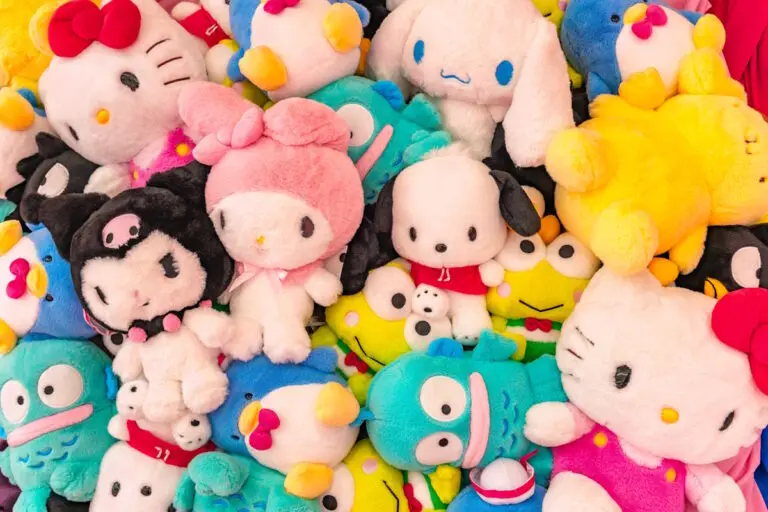
Walk through any busy street in Tokyo today, and you’ll see them everywhere. Plush charms sway from school bags, luxury handbags, and stylish backpacks.
Plushies (Japanese: ぬいぐるみ, nuigurumi) have become one of Japan’s biggest micro-trends among young people. The boom began in late 2023 and shows no sign of slowing.
This trend may look cute and simple at first glance. Yet several cultural forces drive its rise. Fashion shifts, social media habits, omamori traditions, and even the gachapon (capsule toy) economy fuel this movement.
Looking at the trend on the streets of Shibuya
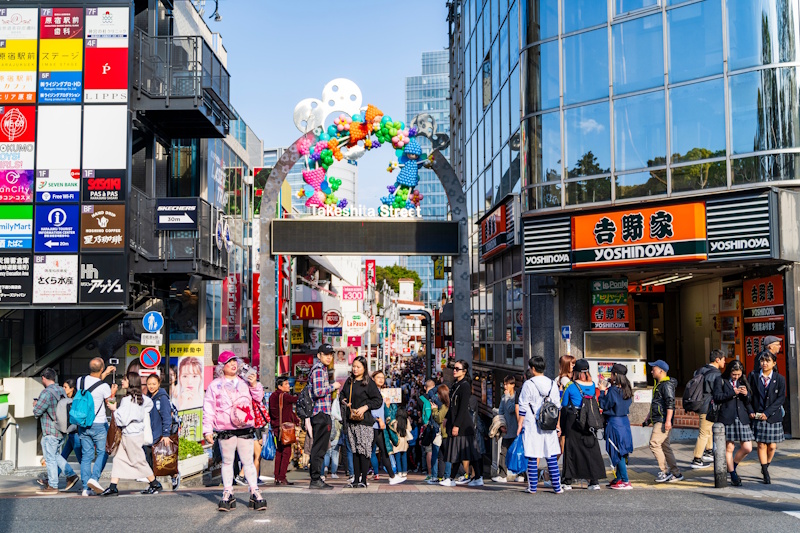
A recent feature article from Yomiuri Shimbun highlights this boom. Reporters interviewed teens and young adults in Shibuya, one of Tokyo’s fashion hubs. Many young people covered their school bags with plush toys.
A group of high-school students on a school trip from Hokkaido attached several plush toys to each bag. They coordinated colors with care. Blue bags held Stitch from Lilo & Stitch. Pink bags carried Hello Kitty and the rabbit character Esther Bunny, by Korean artist Esther Kim.
“We don’t worry about using the same characters,” one said, “but we do care about the colors.” The group explained that they chose plushes to match their outfits and bag palettes.
Two 22-year-old office workers took a different approach. Each attached one large plush charm to a luxury brand bag from Miu Miu or Louis Vuitton. Their charms featured characters by illustrator Mikko or the Chinese toy brand Pop Mart. “Big plush charms are trending,” one said.
International visitors have joined the movement. A French student wore a blue jacket and matched it with a blue Chiikawa character. A 34-year-old visitor from China displayed K-POP character charms in a clear bag made to showcase one’s favorite idol.
What’s the reason behind this trend?
This trend is thought to be caused by two main factors: oshi-katsu and fashion.
Oshi-katsu means supporting one’s favorite character, idol, or brand. Many fans enjoy bringing their oshi outside with them. Others treat plush charms as fashion accents. Characters like Ester Bunny and Pop Mart designs gained mainstream popularity. Influencers and brand collaborations reinforced the boom.
SHIBUYA109 lab., a youth-focused research group, surveyed 15–24-year-old women. Over 59% said they had attached plushes to their bags. Many called plushes soothing companions. “They lift my mood,” one said. “Touching them calms me when I feel anxious.”
Plush charms as emotional companions
Young people often avoid posting their faces online. Instead, they photograph plush toys. In the survey, more than 63% agreed that they sometimes photograph only their plushes when taking pictures with friends. Over 65% said they avoid posting their faces openly on social media.
Plush toys thus become avatars. They express personality without risk. They also spark conversations. “People share their likes through plushes,” SHIBUYA109 lab. notes. It creates gentle, low-pressure communication.
A clinical psychologist interviewed in the extended report by SHIBUYA 109 lab. explained the psychological appeal. Plush toys can act as emotional partners. Many people project comfort, identity, or a sense of companionship onto them. Handling a soft plush releases oxytocin, a hormone linked to reduced stress.
For many fans, plush charms are not accessories. They are tiny emotional anchors in a fast-paced world.
Question: do you like UJ's independent coverage of Japan? Our writers are supported by our members. Join Unseen Japan Insider to get bonus content every week, an ad-free website, and access to our large and growing Insider archive.If you love UJ's independent coverage of Japan, join Unseen Japan Insider to get content every week, an ad-free website, and access to our large and growing Insider archive.
The link to Japan’s omamori tradition
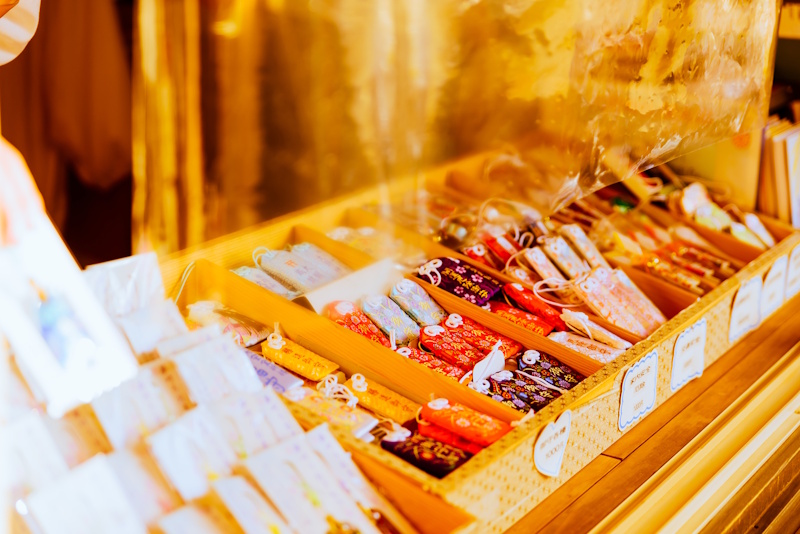
To understand why plush charms feel natural in Japan, we must look at omamori. These small protective amulets are sold at shrines and temples. People attach them to backpacks, bags, or phones. Each omamori offers a blessing, such as safety, academic success, or good health.
Japan’s relationship with personal charms runs centuries deep. People carry them every day, often without question. The cultural logic feels familiar: a small object protects, comforts, or motivates.
Modern bag charms often echo the role of omamori. The survey shows this connection, revealing that 70% of respondents described plushes as “like a protective charm.” Young people treat plush charms as emotional guardians. They bring comfort during commutes, exams, and stressful social moments.
To the Japanese, omamori is a mix between a lucky charm, a prayer token, and a personal motivator. Plush charms borrow this emotional function. This cultural background helps explain why Japan embraced the plush-bag trend so rapidly. The idea of carrying a meaningful, decorative object is not new. Plush charms simply represent a modern evolution.
The gachapon culture and the explosion of mini-characters
Another major force behind the trend is gachapon culture. Gachapon are capsule-toy vending machines found across Japan. They sell miniature figurines, mascots, and keychains. Prices range from 200–500 yen per capsule, and the designs often change monthly. Collectors check machines frequently.
Japan has tens of thousands of gachapon machines. Their presence in train stations, shopping malls, and electronics stores keeps the market vibrant. Many gachapon releases focus on characters designed specifically to hang from bags or straps.
This constant supply of new mini characters encourages collecting. It also lowers the barrier to entry. A person can buy one plush or figure without major cost. They can also change their bag charms frequently. The cycle rewards discovery and personal expression.
The gachapon ecosystem also shapes Japan’s aesthetic preference for small and cute things. Young people build tiny curated displays on their bags. Because gachapon culture is decades old, today’s teens grew up with it. Attaching characters to everyday items feels normal. Bag charms are simply the latest form of this long-running toy culture.
Fashion meets identity

Japanese fashion often celebrates individuality through subtle accessories. Plush charms let people express their tastes without overwhelming an outfit.
Many Gen Z youths choose charms that match their clothes. Others choose charms that show their fandoms. Luxury-brand owners enjoy the contrast between high fashion and playful mascots.
This trend also aligns with Japan’s love for soft communication. Young people often avoid direct self-assertion. Plush charms let them signal personality gently. A character or color palette communicates a mood without words.
In many ways, the bag charm boom reflects a shift in how young people navigate the public world. They want self-expression and emotional comfort. They want connection without confrontation. Plush charms satisfy all of these needs.
SHIBUYA109 lab. predicts that nui-katsu, “plush-toy activities,” will continue to grow. More brands release character collaborations. More influencers showcase plush charms online. More gachapon vendors introduce new mini mascots.
This trend may fade eventually, but its cultural roots run deep. Japan has always embraced small symbolic objects. From omamori to gachapon mascots, cute and meaningful tokens shape everyday life.
Keep reading


Sources
「バッグにぬい」なぜ増えた? 流行のファッションアイテムでさりげなく伝える「好き」読売新聞
【ぬい活】「新語・流行語大賞」候補 実は“意外な”メリットも… ハマりやすい人の特徴を心理カウンセラーが解説 livedoor News
Z世代の「ぬい活」に関する実態調査 PR Times