

Japan is facing a host of serious issues, ranging from rising prices to chronic worker shortages across industries. So why is it spending so much time putting more restrictions on foreign residents and foreign investment? A slew of proposed laws raises questions around what problems the country is actually trying to solve.
Land grab? Gov looks into tracking apartment building purchases
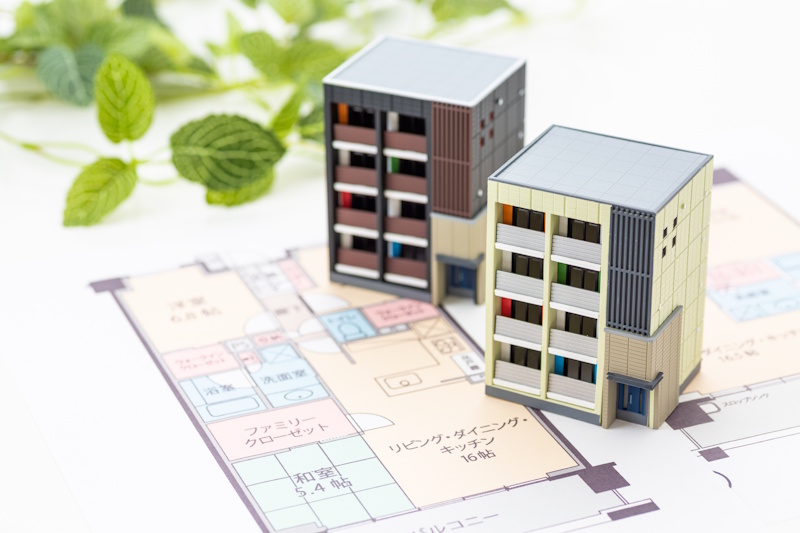
The first proposed law addresses a years-long concern on Japan’s far right about foreign real estate investment. For ages, online propagandists have, in particular, accused China of attempting to “take over” Japan surreptitiously via real estate purchases. (They’ve also accused China of deliberately making Japan hotter via solar panels, so…take that for what you will.)
The number of foreign real estate investors in Japan does seem to have increased over the past few years. Tourism is driving much of this business, with many investors snapping up buildings to turn them into private vacation rentals.
This practice has made headlines in Japan, as some residents have complained about vacation rentals deteriorating the quality of their neighborhoods. In at least one incident, residents complained after a Hong Kong-based businessman jacked up rents on a property in a brazen attempt to clear out the building.
These real estate deals often fly under the radar. There’s no requirement to have citizenship or even a valid visa to own property in Japan. The country’s Digital Ministry currently maintains the Real Estate Base Registry, which records land and building ownership. However, the database currently only tracks the citizenship of buyers of arable land. It’s usually not tracked in the case of condominium or other building sales, except in certain situations.
That might change, however. Prime Minister Takaichi Sanae’s government is exploring a change to Japanese law that would require recording the citizenship of anyone who buys any type of property in Japan. The change aims to make the rule consistent across all types of property. It will also be implemented in a way that enables tracking of foreign investments made through Japanese intermediaries.
The goal of the change is to enable the government to institute different taxes on foreign-owned property versus Japanese-owned property. It’ll also give the government an official read on how much of Japan is “owned” by foreign interests. That will likely, in turn, lead to increased regulations controlling how and when foreigners can purchase property here.
Question: do you like UJ's independent coverage of Japan? Our writers are supported by our members. Join Unseen Japan Insider to get bonus content every week, an ad-free website, and access to our large and growing Insider archive.If you love UJ's independent coverage of Japan, join Unseen Japan Insider to get content every week, an ad-free website, and access to our large and growing Insider archive.
Make Japan Japanese again? More restrictions coming on permanent residency, naturalization
This change is at least defensible from a national security standpoint. And in the absence of data, it’s hard to tell if this even is a problem or just a conservative fever dream.
Other proposed changes, however, seem to come completely out of left field.
Immigrants currently comprise 3% of Japan’s population. While still small, that’s the highest level in recorded history. Some small areas of the country already have foreign populations exceeding 10%. This change isn’t surprising, given that Japan’s aging and declining population has left its companies chronically short-staffed across industries.
Despite this, Takaichi’s rightist government is taking multiple steps to make immigrating to Japan and remaining here harder. The government recently announced, for example, that it would increase visa and permanent residency application fees. The new fees closely match those of countries such as the US and the UK, even though Japanese salaries remain well below theirs.
Now, the government is also reportedly considering making it harder to become a permanent resident. By default, permanent residency requires 10 years of consecutive residence in the country. However, some conditions can cut this down to as little as five years. The proposed legal revision would eliminate the conditions that enable obtaining permanent residency after just three years.
Permanent residents can stay in Japan unconditionally for their entire lives and don’t need to reapply for visas periodically. They also have no restrictions on the type of work they can perform here.
Another proposed restriction would make it harder for foreigners to acquire Japanese citizenship. Currently, a resident can apply for citizenship after only five years of stay – a shorter default period than that required for obtaining permanent residence. The proposed legal revision would extend this period to an as-yet-undetermined period.
Other proposed changes would more closely track foreign residents who are behind in health insurance and national pension payments. Those who are in arrears will be unable to renew their visas.
Populism vs. progress
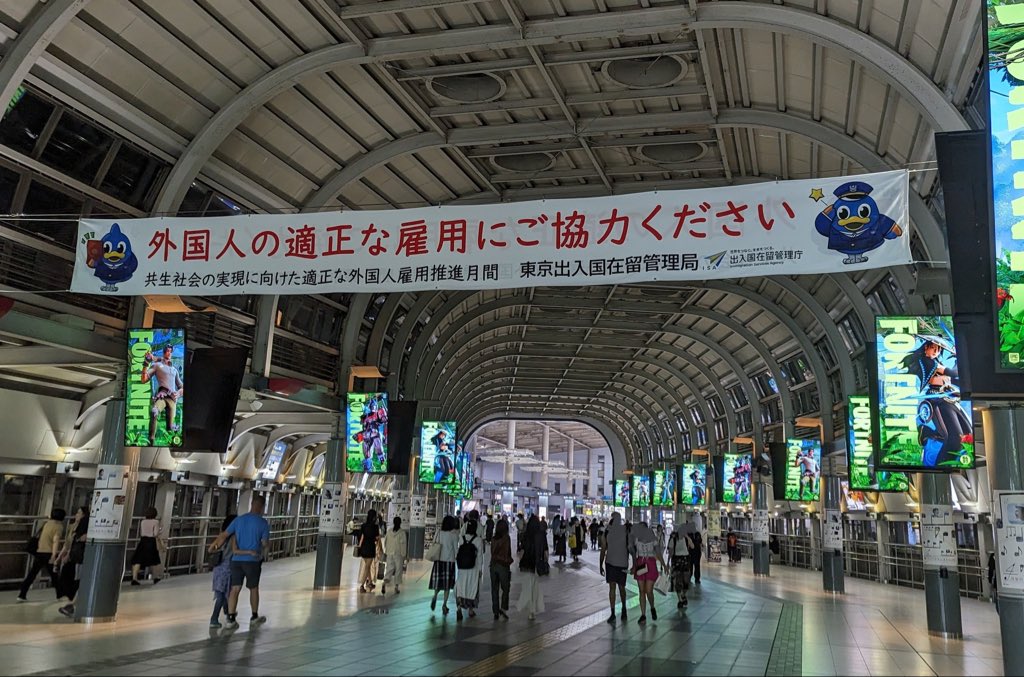
Massive tourism and immigration mean that Japanese citizens are exposed to foreigners and immigrants more than ever. That’s led to a wave of fear-mongering and backlash. The press running multiple reports of tourists behaving badly and online rightists stoking fears around immigrant crime have helped fuel the country’s overall right-wing shift in the past two years, as people worry about Japan becoming “less Japanese.”
But immigration is the least of Japan’s problems. Foreigners don’t commit crimes in greater numbers than residents. And Japan’s aging and dwindling population means it desperately needs foreign labor. A recent report from TSR, for example, found that 359 businesses last year filed for bankruptcy as a direct result of labor shortages – the highest amount ever. The number is expected to reach 400 by year-end.
Despite decades of wage stagnation, many workers still flock here – particularly from Southeast Asia – for better opportunities. That could grind to a halt if the country continues to make it clear that immigrants are inherently suspect and unwelcome.
Takaichi Sanae’s government is betting that bold, populist stances will goose its approval and keep it in power. Its “tough on foreigners” stance and its saber-rattling against China vis-à-vis Taiwan are indicative of this approach.
The sad thing is that, so far, it’s working. A recent (December 7th) poll puts her cabinet’s approval rating at a stunning 75.8%. It’s revived the struggling Liberal Democratic Party (LDP) at a time when it seemed on the brink of falling into factionalism and obscurity.
These extreme right-wing stances, however, have palpable real-world downsides. Making it tougher for people to immigrate to Japan will make it harder for businesses to stay afloat. Japan’s conflict with China has led to so many travel cancellations that hotels say it’s already affecting their bottom line.
Takaichi’s tactics may keep her in power for as long as her scandal-plagued mentor, Abe Shinzo. The flip side is that she might find herself the chief of an increasingly weakened and feeble nation.
Keep reading




Sources
外国人の不動産所有状況を一元管理、登記・国籍を登録…27年度にも運用へ政府調整. Yomiuri Shimbun
高市政権、外国人永住許可要件の厳格化検討 社保料未納で資格更新認めず 1月に基本方針. Sankei Shimbun
日本帰化の要件厳しく、居住「5年以上」を延長案 政府検討. Nikkei
2025年1-11月の「人手不足」倒産 359件 サービス業他を主体に、年間400件に迫る. TSR
自民・維新の衆院議員定数削減法案 賛成59% 高市内閣の支持率75.8% JNN世論調査. TBS News Dig