
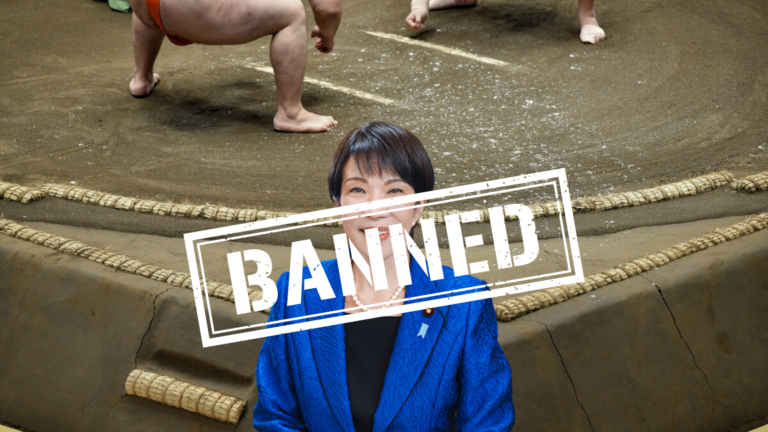
Prime Minister Takaichi Sanae will not step onto the sumo ring to present the Prime Minister’s Cup on the final day of the New Year Grand Sumo Tournament on January 25, 2026. Government officials say she has decided to follow existing practice rather than enter the ring herself, a choice that has drawn attention both at home and abroad.
Politics runs up against tradition
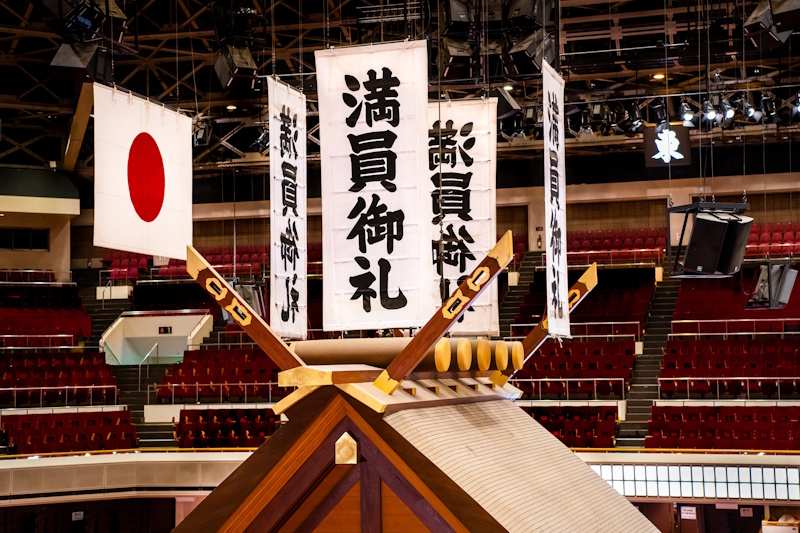
The decision matters because Takaichi is Japan’s first female prime minister. For decades, it has been customary for the prime minister, or a senior government representative, to climb onto the dohyo on the final day of major tournaments and hand the Prime Minister’s Cup to the champion wrestler. That custom dates back to 1968, when the trophy was created. Every person who has carried out that role has been a man.
The sumo ring, however, has long been regarded as a space closed to women. The practice, known in Japanese as nyonin kinsei (女人禁制), is centuries old. With the arrival of a female prime minister, many wondered whether this long-standing practice would finally change.
According to multiple government sources, Takaichi chose not to challenge the custom at this time. On January 25, she will not personally enter the ring to award the cup. In November 2025, during the Kyushu tournament, she was overseas and sent a male aide to present the trophy on her behalf.
At a recent press conference, Chief Cabinet Secretary Kihara Minoru said the prime minister places importance on respecting traditional culture. He added that the government would consider an appropriate response based on that view.
For supporters of tradition, the decision brings reassurance. For others, it raises familiar questions about gender, symbolism, and the pace of change in Japanese society.
Why the sumo ring is considered a sacred (and men’s-only) space
To understand why the issue carries such weight, it helps to look at what sumo represents.
Sumo is not simply a sport. It grew out of ancient rituals performed to pray for good harvests and national stability. Over more than a millennium, those rituals developed into organized competition, but the religious elements never fully disappeared.
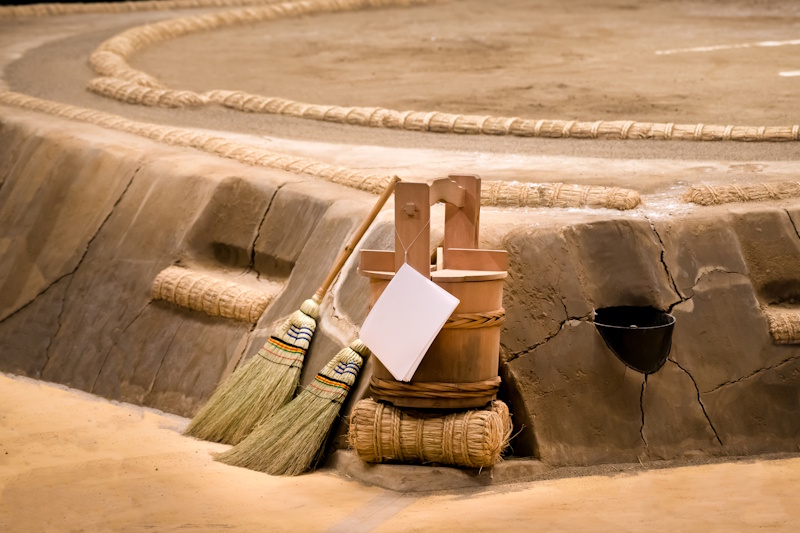
The 土俵 (dohyō) is central to that tradition. Before each tournament, a ceremony known as the dohyō-matsuri is held. Priests bury offerings such as rice, salt, dried kelp, and chestnuts at the center of the ring to welcome the gods. After the final day, another ritual symbolically sends the gods away. These ceremonies reinforce the idea that the ring is a sacred place, not just a stage for competition.
In the early days of modern sumo, access to the ring was tightly controlled. The Grand Sumo tournament was held within a Shinto shrine. Many shrines and Buddhist temples prior to the Meiji Era forbade women from even entering the grounds. This was due to various beliefs, such as the thinking that menstruation made women impure, or a strict interpretation of Confucianist doctrine.
When the organization that would later become the Japan Sumo Association was formed in the Taisho era, only wrestlers and officials were allowed on the ring. Gender was not the key issue then. Outsiders, regardless of who they were, stayed off the ring.
That changed after World War II. In 1968, the government created the Prime Minister’s Cup, and political leaders began stepping onto the dohyo during the closing ceremony. At the time, people did not imagine that Japan would one day have a female prime minister, and few considered how a woman in that role might fit into the tradition.
Today, that unresolved assumption has become impossible to ignore.
Question: do you like UJ's independent coverage of Japan? Our writers are supported by our members. Join Unseen Japan Insider to get bonus content every week, an ad-free website, and access to our large and growing Insider archive.If you love what we do, help us pay our writers to do more of it by joining Insider. You'll get bonus content every week, an ad-free website, and access to our large and growing Insider archive.
Women, sumo, and a history of debate
As women’s roles in Japanese society expanded, the sumo ring increasingly became a site of tension.
In 1990, Moriyama Mayumi, Japan’s first female chief cabinet secretary, was asked to present the Prime Minister’s Cup. The Japan Sumo Association refused. A decade later, Ota Fusae, the first female governor of Osaka Prefecture, was also denied permission to present a prefectural prize on the ring.
The issue drew widespread public attention in 2018. During a regional tour in Kyoto Prefecture, the mayor of Maizuru collapsed while giving a speech in the ring. Female nurses rushed onto the ring to perform emergency life-saving measures. An announcer repeatedly told them to leave because they were women. The incident sparked outrage across Japan and beyond.
The association later apologized, calling the response inappropriate. At the same time, it reaffirmed its position that women should not enter the sumo ring during official events. In a statement, then-chairman Hakkaku denied that the rule was based on the idea that women are impure. Instead, he said the dohyo is a sacred place where male wrestlers train and compete, and that the tradition should be preserved.
Critics were not convinced. The Japanese Communist Party’s newspaper, Shimbun Akahata, has argued that excluding women from official ceremonies constitutes discrimination. It points out that international agreements urge governments to eliminate customs that deny women equal access to public duties.
Supporters of reform also note that women compete widely in amateur sumo, including international tournaments. The strict ban applies only to professional sumo and its ceremonies.
Prime Minister Takaichi’s choice and what comes next
Against this backdrop, Prime Minister Takaichi’s decision appears cautious and deliberate. She has built her political base among conservative voters who place a high value on tradition and cultural continuity. Choosing not to enter the sumo ring avoids a direct clash with those supporters and with the sumo establishment.
At the same time, her position as Japan’s first female prime minister gives the issue new visibility in a country that is increasingly wrestling with gender equality issues, ranging from the use of separate spousal surnames to the unequal burden placed on women in most Japanese households.
Cultural anthropologist Suzuki Masataka has argued that traditions survive by adapting. Sumo itself has changed many times, particularly during the Meiji era, when leaders reshaped it into a national symbol in order to protect it in a rapidly modernizing society.
Comparisons are often drawn to the Olympic Games. Once a male-only religious festival, the Olympics gradually opened to women and eventually became a global event that emphasizes gender balance. Supporters of reform believe sumo could evolve in a similar way without losing its core identity.
Others disagree. They argue that the sumo ring’s symbolism is inseparable from its traditions, and that altering ceremonial practices risks weakening sumo’s spiritual foundation.
For now, the Japan Sumo Association says it has not received any request from the prime minister to revisit the issue. Without that push, change is unlikely to come quickly.
The dohyo itself remains unchanged, a small raised circle of clay beneath a hanging roof. Yet the debate surrounding it continues to grow. It reflects a broader struggle between tradition and equality, and between respect for history and the realities of modern society.
Prime Minister Takaichi has chosen, at least for now, to stand outside the ring. Whether future leaders will make the same choice remains an open question.
Keep reading


Sources
高市首相が大相撲初場所で土俵上での表彰見送りへ 25日千秋楽の内閣総理大臣杯授与めぐり 初の女性首相で対応注目のなか FNNプライムオンライン
土俵の「女人禁制」…女性首相誕生で大相撲の伝統どうなる 「要望あれば検討するかも」産経新聞
女性首相誕生で再燃「土俵の女人禁制」論争─どうなる大相撲の内閣総理大臣杯 nippon.com
土俵の「女人禁制」首相は差別なくす責任果たせ しんぶん赤旗
大相撲「土俵は女人禁制」歴史が教える意外なワケ 読売新聞