
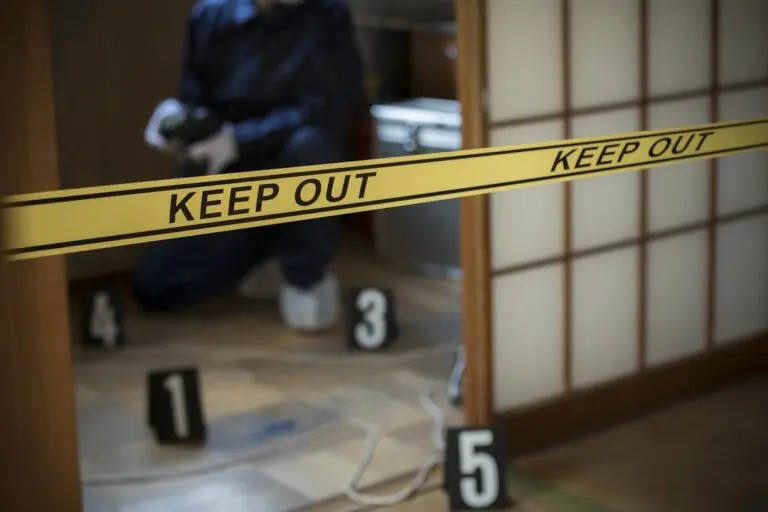
In Japan, when people decide where to live, there’s one question that lingers over the decision-making process:
Did someone die violently here?
So-called jiko bukken (事故物件) – “incident properties” or “stigmatized properties” – reflect the intersection of cultural and spiritual beliefs in a country where both Shinto and Buddhism influence perceptions of death. However, at least one survey from 2025 shows that attitudes might be changing. A large number of respondents say they’d live in a jiko bukken…if it meant a significant reduction in rent.
The stigma of “incident properties”
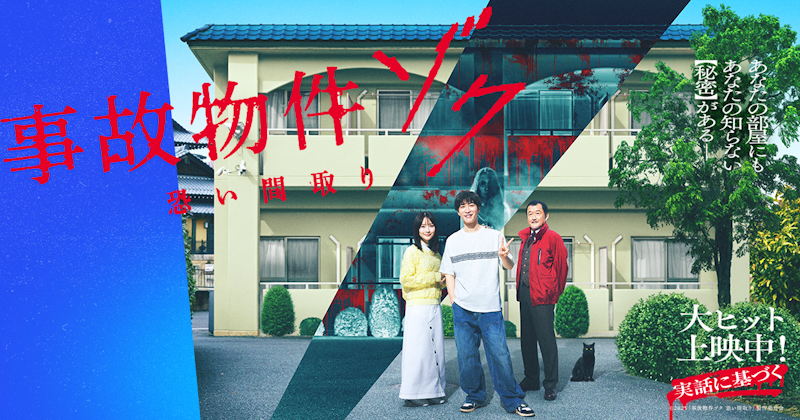
A jiko bukken is any property – a house, apartment, etc. – where someone has died, usually in a violent or disturbing way (e.g., a murder or suicide).
Jiko bukken carry a stigma due to a conjunction of Shinto and Buddhist beliefs. In Shinto, death can not only physically contaminate a place but also spiritually contaminate it (穢れ; kegare).
“Death, especially a sudden or lonely death, is seen as something that creates a kind of spiritual or emotional disturbance,” says UJ author Kristina Rin, who’s also a trained Shinto shrine maiden.
Japanese Buddhism also brings in a belief that people who died by murder or suicide may have 怨念 (onnen), or unresolved attachments. That could cause a person’s spirit to become an unsettled spirit (浮遊霊; fuyūrei).
The concept isn’t isolated to Japan. Similar attitudes can be found in China and Korea. But in Japan, the triple layering of Shinto beliefs, Buddhist beliefs, and a general “aversion to death” in Japanese society compounds the issue.
Jiko bukken gained fame (or, more accurately, infamy) in popular culture thanks to the work of comedian Matsubara Tanishi, who styled himself “the celebrity who lives in jiko bukken.” Matsubara spent 10 years living in seven stigmatized properties. He recalls everything he experienced in his bestselling book, 事故物件怪談 恐い間取り (“Stigmatized Property Ghost Stories: Floor Plans of Horror”), which became a hit movie – and a sequel.
Regulation, tracking, and controversy
For years, jiko bukken had no formalized definition – and realtors weren’t required to disclose that anything had happened. That changed in 2021, when Japan’s Ministry of Land, Infrastructure, Transport and Tourism (MLIT) issued its first-ever guidelines for reporting deaths related to real estate.
The MLIT rules dictate that realtors must disclose suicide, murder, death by fire, and any death that resulted in decomposition that warrants specialized cleaning. While this must be disclosed for three years for rental properties, it must be disclosed indefinitely for any property offered for sale.
A key event that realtors don’t have to report? Death by natural causes – an increasingly common occurrence in an aging nation where more people are dying alone in their homes. These deaths don’t have to be reported. Unless, of course, the body went undiscovered for too long.
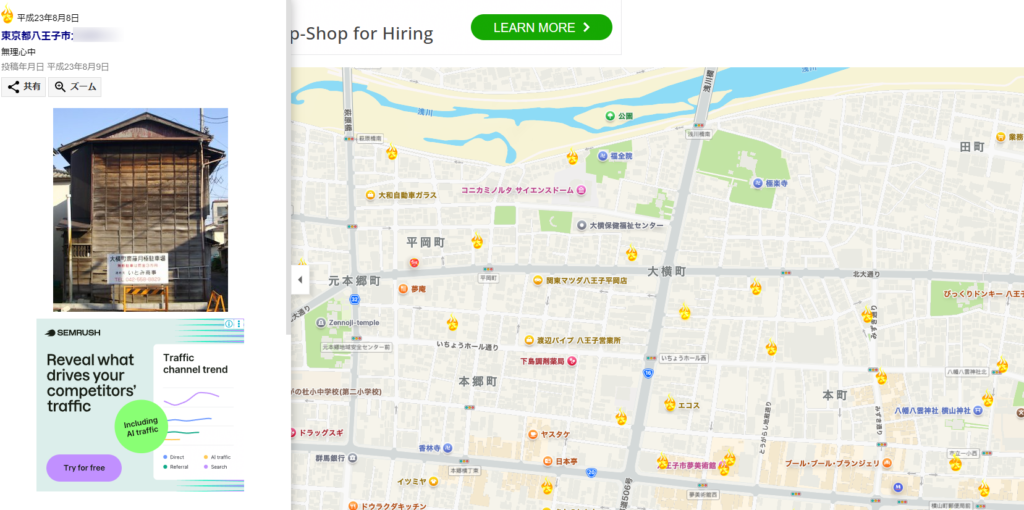
Despite the rules, there’s still no official way to track jiko bukken. That’s where sites like Ōshima Teru come in. The site, which accepts voluntary reports of incidents that occur at properties across Japan, is the work of economist Ōshima Manabu. As part of a family that rents property, Ōshima says he created the site in part because he was sick of seeing real estate agents skim commissions off of sales and rentals for minimal work.
The site isn’t without controversy. A quick perusal, for example, shows that it contains reports of “discoveries” of bodies. This suggests that some listings may report natural deaths that don’t conform to MLIT’s reporting guidelines.
In addition, false reports have made headlines in Japan. Ōshima admits that some of the data may be suspect, but blames haters who post fake data to discredit his work.
Is the stigma fading as Japan’s economy worsens?
The thing is, Japan’s economy isn’t what it used to be. As rents rise and prices soar, there are signs that consumers may be getting less picky about who died in their future home.
The company AlbaLink conducted a survey in October 2025 of 500 men and women in Japan, asking them if they’d live in a jiko bukken and, if so, what reason would compel them to do so. Not surprisingly, money was the top concern: 54.2% said they’d live in one if the rent were cheap. Another 34.6% said they’d consider it if the residence didn’t have “evidence of an incident.”
Other criteria that would compel people to live in a jiko bukken include:
- The interior is clean (18.2%)
- The area is nice (9.8%)
- The time taken to discover the incident was short (5.8%)
However, survey respondents also had hard limits. The top “nope,” at 55%, was anywhere a murder occurred. That was followed at 21.4% by a residence that had seen a suicide.
By contrast, only 9.2% said they didn’t want to live somewhere where a fire occurred. Other low-ranking concerns included:
- Anyplace with evidence of a crime or accident (9.0%)
- A death for any reason (8.4%)
- A place that might be haunted, i.e., where “spiritual phenomena have occurred” (7.8%)
- A place where it took time to find a dead body (4%)
These stiff refusal numbers show that the stigma of jiko bukken still lingers in Japan. On the other hand, a full 80% of those surveyed said they’d consider living in such a property “depending on the conditions” (24.4%). 55.8% said they’d want to avoid such properties, but would consider it if they had to. Only 18.2% said they’d flat-out refuse to live in one.
Since this survey doesn’t have previous baselines, it’s hard to tell if attitudes are changing over time, or why. However, given that 54.2% of respondents prioritize cheap rent, it’s safe to speculate that the economy might play a role. It’ll be interesting to see how these numbers continue to change relative to housing costs over time.
If you or someone you love is in crisis, please reach out for help. In Japan, you can call the following numbers:
0570-064-556 for kokoro-no-kenkou-soudan (こころの健康相談) operated by prefectural and city organizations
0570-783-556 for inochi-no-denwa (いのちの電話) operated by Federation of Inochi No Denwa.
For English language help in Japan, reach out to TELL.
If you are in the US, call 911 for emergencies and 988 for the suicide hotline.
Keep reading


Sources
事故物件でも選ばれる条件とは?入居者500人の意識調査から意外な本音が明らかに. Owner’s Style
「事故物件」500人中、何人の人が住めると回答? 不動産会社が”家賃相場”の値引き率も調査. Otona Answer
孤独死が起きると事故物件?賃貸の場合やならないケースも解説. Mind-Company
事故物件を嫌がるのは日本だけ?海外との違いを徹底比較!Yurukizi
ワケあり物件に10年住み続けて感じたこと 松原タニシさん「事故物件怪談 恐い間取り3」インタビュー. Asahi Shimbun Good Life With Books
宅地建物取引業者による人の死の告知に関する ガイドライン. MLIT