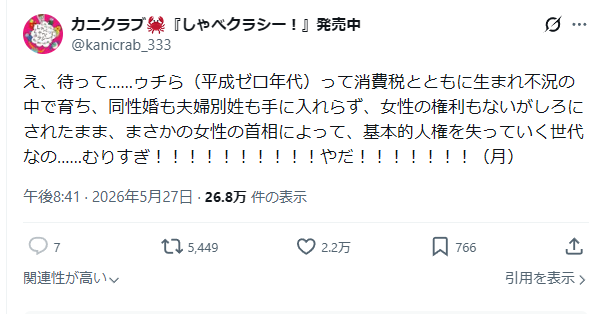
A recent post on X that garnered over 20K likes lamented:
“We (the Heisei-era born) were born in an age with economic slump side-by-side with the consumption tax, don’t have marriage equality or separate spousal surname rights, and as usual, women’s rights are being ignored; to lose our fundamental human rights under a female Prime Minister …it’s too much!!!!!! I hate it!!!!”
They’re not the only one wailing and gnashing teeth.
Japan has long lagged among developed nations when it comes to women’s rights. The 2025 Gender Gap Report from the World Economic Forum placed Japan 118th out of 148 countries, putting it at the bottom of the G7. One of the big drags on its score was the lack of female political representation: Japan’s Political Empowerment subscore fell to 8.5%, down from 11.8% a year earlier. The country’s share of women in management positions sat at just 16.1%. Under Prime Minister Ishiba Shigeru, only 10% of ministerial positions were filled by women.
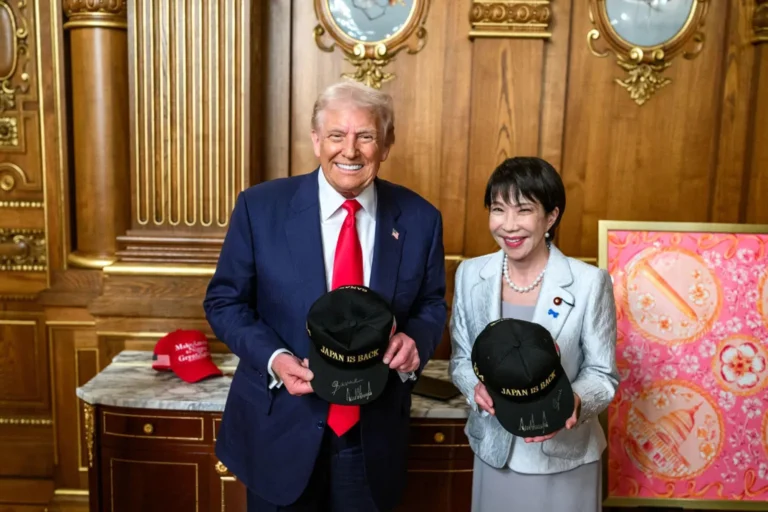
At the time, Japan also had never had a female Prime Minister. That changed last year with the election of PM Takaichi Sanae.
And yet somehow, as several Japanese media sources point out lately, progress on women’s rights – indeed, on everyone’s rights – is grinding to a halt. This comes just as the first women who benefited from Japan’s Equal Employment Opportunity Act of 1986 retire, look back, and realize just how much work remains to be done.
A litany of rights, ignored
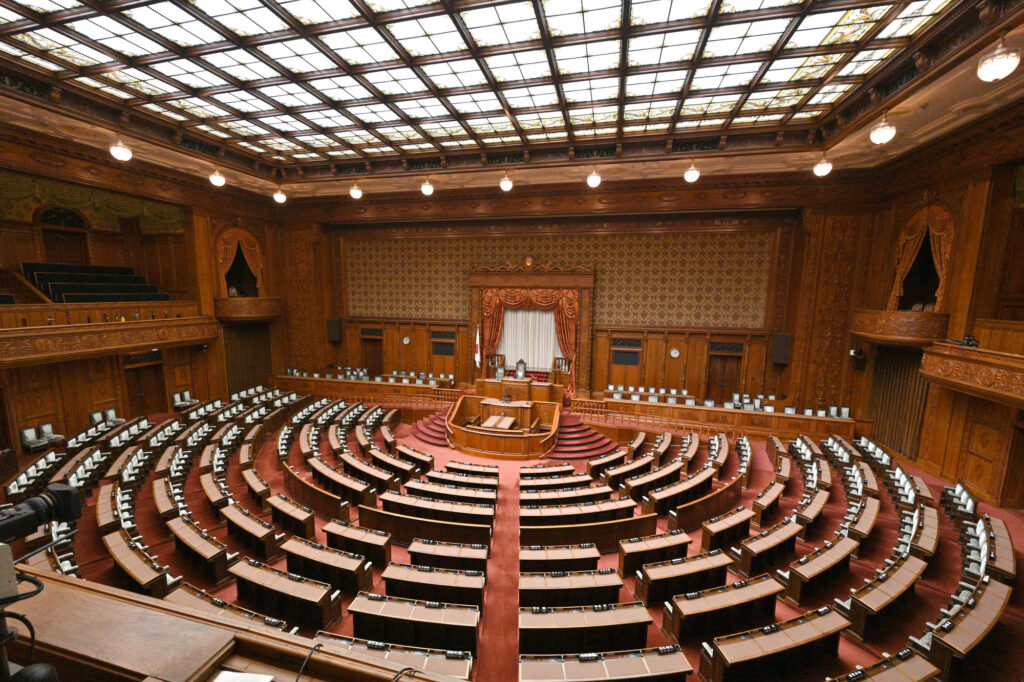
The first tell that women would get short shrift under the Takaichi government was the structure of her government.
Takaichi had originally said she wanted a “Nordic parity” model for her cabinet, with as many women serving as ministers as the Nordic countries have. Denmark has the fewest at 36%, but that still clears the world average of 22.9%. Meanwhile, Iceland and Finland have 60% and 61% of women in Cabinet positions, respectively.
And yet, excluding herself, Takaichi only has two women in her cabinet: Katayama Satsuki (片山さつき) as Japan’s first female finance minister and Onoda Kimi (小野田紀美) as economic-security minister. That’s as many as her predecessor, Ishiba, had. Before them, ex-Prime Minister Kishida had five women.
To be fair, Takaichi did nominate 10 women to vice-minister and political officer positions. However, she failed to clear the bar that she herself set.
In a recent discussion with Tokyo Shimbun, gender and politics scholar Miura Mari of Sophia University expounded on this contradiction. Miura argues that, while many people are hopeful that women’s rights will advance under Takaichi, there’s little indication this will happen.