
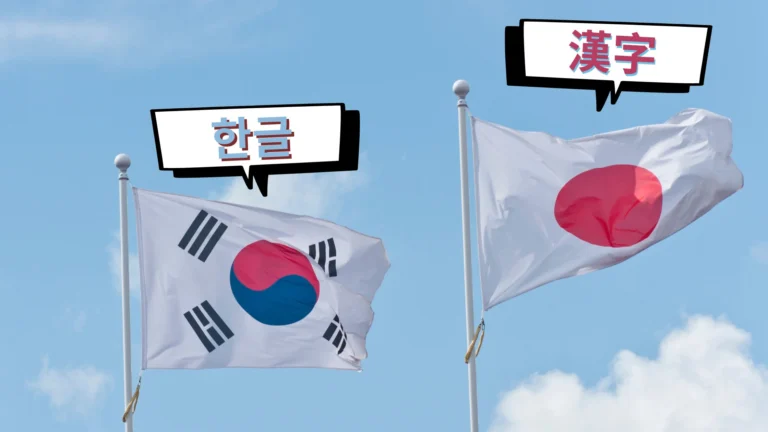
The cultural influence of China on Korea and Japan is rich and powerful. That’s clearly seen in the history of the two countries’ writing systems. Both Korea and Japan adopted Chinese characters (hanzi in Chinese; hanja in Korean; 漢字; kanji in Japanese) at early points in their history.
But history branches in strange and wonderful ways.
Today, Japanese has three scripts: kanji and the two kana syllabaries derived from kanji. The complexity is a major hurdle for Japanese learners, who have to memorize 2,136 characters, 46 basic hiragana, and 46 basic katakana to achieve core literacy. Meanwhile, Korea’s main script is hangul, requiring beginning Korean learners only to learn 24 basic and 40 combined letters.
Why the divergence? A popular post on social media led many users – Japanese, Chinese, and Korean – to offer their own theories. The real history is both complicated and fascinating, and raises the question: Why did the attempts to abolish kanji in Japan never take off?
Is abandoning kanji progress?
The debate started thanks to a post on social media service X by user @Duelexe11:
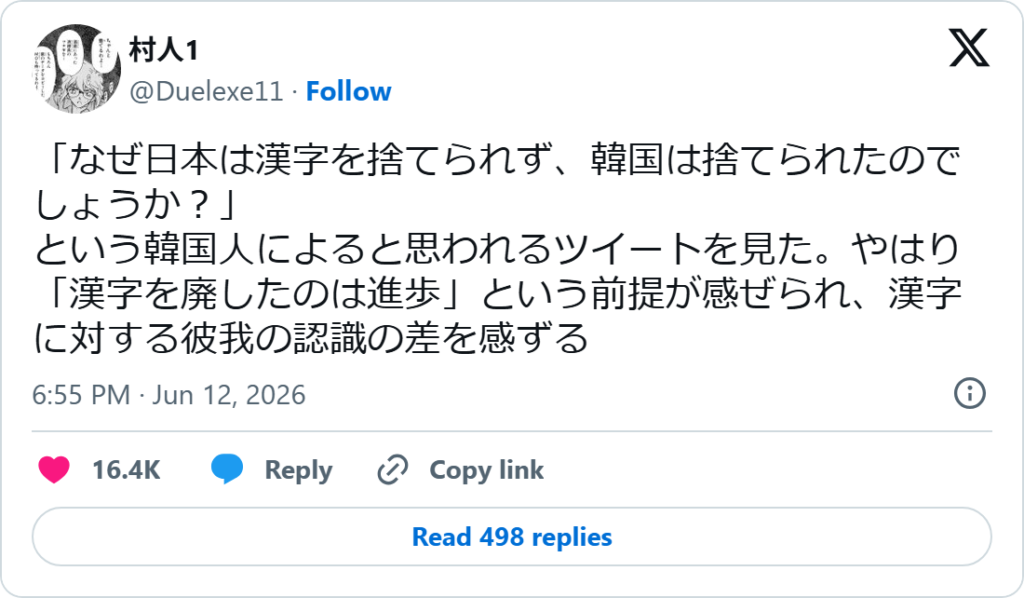
“I saw a tweet, apparently by a Korean person, asking: ‘Why couldn’t Japan abandon kanji while Korea could?’ As you’d expect, you can sense the underlying premise that ‘doing away with kanji was progress.’ You can feel the gap between how we each see kanji.”
The thread kicked off a lively and contentious discussion in four languages – Japanese, Chinese, Korean, and English. The thread, as you might expect, is dominated by Japanese people defending the use of kanji.
“I’d say that reflects a strongly Western, phonocentric way of thinking,” the OP responded to another user who argued that the West evolved from ideograms to alphabets. “My honest impression is that it’s doubtful whether that kind of ‘development’ can really be called progress.”
Others agreed. One user cheekily responded solely in hiragana to drive their point home:
べつに にほんごでも やろうとおもえば やれるけどね ふぁみこんの じだいから つかわれてきた しゅほうだよ もじすうが おおくなって しかも よみにくいから わざわざ やるりゆうは ないんだけどね
Japanese could do this too if it wanted, you know, it’s a method we’ve had since the Famicom era [kana-only writing]. It’s just that the character count balloons and it gets hard to read, so there’s no real reason to bother.
A Chinese user agreed. “The advantages of characters are showing: higher information density, less confusion when coining new words…with phonetic scripts, similar-sounding words become very hard to tell apart.” [Note: Auto-translated text]
The kanji abolition movement, from Edo to Meiji
All of this may be true. Personally, I love the beauty and efficiency of kanji and couldn’t imagine the Japanese language without them.
However, not everyone throughout Japanese history has agreed. Indeed, there have been some wild attempts to remove kanji from the written language.
The earliest attempt goes back to before the dawn of the Meiji period. Maejima Hisoka (前島密), who would go on to found Japan Post, was the first person to propose abolishing kanji. He submitted 漢字御廃止之議 (kanji go-haishi no gi), “A Proposal to Abolish Chinese Characters,” to Japan’s last shogun, Tokugawa Yoshinobu. The shogun didn’t seem to care for it.
The debate took off again, as you might expect, in Meiji. As Japan rushed to modernize, it debated whether to reform its writing system. Three schools of thought eventually formed:
- Eliminate kanji and just use the kana syllabaries (the かなのくわい, kana no kuwai, camp), organized in the 1880s
- Eliminate kanji and kana and use the Latin alphabet (the rōmaji camp)
- Reduce the number of kanji needed to be literate to around 2,000-3,000 (the kanji-reduction camp, led by intellectual Fukuzawa Yukichi)
None of these efforts, however, took off. Maejima would try to pitch abolition again at the birth of the Meiji Period, in 1872, only to be shot down again.
The attempt to replace Japanese with…French?!
The Romaji Association, founded in 1921, kept pushing to abolish kanji. It didn’t have a real chance of succeeding until after World War II. The occupying forces, operating as GHQ/SCAP, were sympathetic to kanji abolition. Editorials in newspapers such as the Yomiuri called for kanji to be tossed. The Cabinet made the Tōyō kanji list (当用漢字) in November 1946, limiting the official characters used to 1,850, as a step toward full abolition.
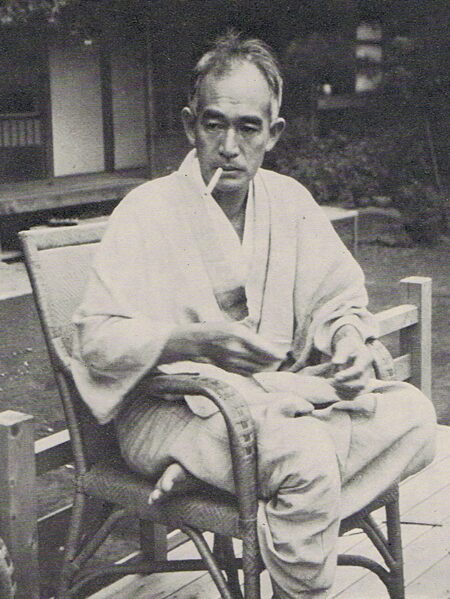
Meanwhile, other people had some truly wild ideas. Writer Shiga Naoya had the novel proposal of replacing Japanese with French as its national language. In an essay called “The National Language Problem” (国語問題), Shiga labeled Japanese “incomplete and inconvenient,” and argued that it was holding back the nation’s development.
The idea is even crazier when you realize that Shiga himself did not speak French.
While admitting he was “unfamiliar with foreign languages,” Shiga argued that French novels and poetry seem to resonate with Japanese sensibilities. In other words his argument came down, primarily, to vibes.
Homophones and high literacy keep kanji alive
GHQ/SCAP nearly got its way. Then, in 1948, a survey killed its hopes and dreams.
The occupying forces’ argument was that kanji were too hard to learn and that keeping them doomed the Japanese masses to ignorance. To prove its point, under its Civil Information and Education Section, it commissioned a nationwide reading-writing ability survey (日本人の読み書き能力調査) on about 16,820 people aged 15-64.
The result? The survey found that illiteracy was “extremely low” – only around 1.7 to 2.1%.
The occupiers had made a (probably racially-tinged) assumption that Japanese were widely illiterate. But that hadn’t been true for decades. Literacy climbed in the late Edo period thanks to the terakoya schools, which taught basic literacy to the masses.
Some estimates put late Edo-era literacy around 60%. That figure is highly contested. What’s well-documented is that, thanks to the 1872 Gakusei ordinance, literacy skyrocketed with mass schooling in the Meiji Period. School enrollment rose from 28% in 1873 to 91.6% in 1902, reaching near-universality by the 1910s.
Coupled with these high literacy figures was a practical problem. Japanese is a language with an extremely large number of homophones. This is baked into the split between on-yomi (Chinese readings) and kun-yomi (Japanese readings), and Chinese pronunciation being compressed into Japanese morae when Japan adopted hanzi. This means a single pronunciation like こう (kō) can correspond to potentially dozens of characters. That led Japanese to use more niji-jukugo (二字熟語), or two-character compounds, to disambiguate words.
However, the wasei-kango (和製漢語) boom of the Meiji Period undid some of that progress. The number of two-character compounds in Japanese exploded during this time as Japan created a bunch of new terms – shakai (社会; society), kenri (権利, rights), etc. – to reflect Western concepts that didn’t exist in Japan before.
Given all this, GHQ/SCAP backed down. In 1981 the Tōyō kanji gave way to the Jōyō kanji (常用漢字), reframed from a hard cap to a flexible “guide” of 1,945 characters; a 2010 revision raised it to 2,136.
By 1965 the Japanese Language Council’s chairman, Morito Tatsuo, declared the complete abolition of kanji “now inconceivable.” Indeed, even the Romaji Association has given up the fight: the group officially dissolved in 2023.
Question: do you like UJ's independent coverage of Japan? Our writers are supported by our members. Join Unseen Japan Insider to get bonus content every week, an ad-free website, and access to our large and growing Insider archive.We manage to keep most of our content free thanks to the generosity of our members. Join Unseen Japan Insider and you'll get access to new, exclusive UJ member content weekly, an ad-free website, and access to our large and growing Insider archive.
Korea’s kanji aversion is rooted in Japanese colonialism

So why did Korea go a different route? A combination of practicality and colonialism.
Korean used Chinese characters for over a thousand years before King Sejong promulgated 28 letters as “The Proper Sounds to Instruct the People.” Sejong’s goal was to democratize reading: Chinese characters didn’t easily fit the Korean language, so he created a system that “a wise man could learn in a morning, and a fool in 10 days.”
It didn’t take off, though, for nearly 450 years. The Confucian establishment, led by Choe Manri, railed against hangul, arguing that only “barbarians” like the Tibetans and the Japanese had their own script. Chinese characters, Choe argued, were the foundation of Confucian civilization. The scholar argued his point so hard that, at one point, Sejong threw him in jail.
But the Confucian scholars won for centuries. Hangul was called eonmun (諺文, “vulgar/vernacular script”), or amgeul (암글, “women’s script,” because there’s nothing that Confucianists hate more than women).
This didn’t change until the Gabo Reform of 1894 made the alphabet the basis for official government documents. Linguist Ju Si-gyeong christened the alphabet “hangul” in order to cast off the dismissive epithets.
Then the Japanese colonized Korea in 1910. This cemented the identification of hangul as a nationalist script, with the homegrown alphabet becoming a symbol of national identity and resistance. During this time, hangul continued to evolve: the Korean Language Society’s 1933 Unified Hangul Orthography retired several archaic letters that had fallen out of use, and the use of double consonants and compound vowels helped better reflect the spoken language.
When Korea split into North and South, the North kept hangul, abolishing hanja from daily print in 1949. The South briefly banned teaching hanja in 1970 under Park Chung-hee, but repealed the ban two years later after public backlash.
A tale of two writing systems
Today, Chinese characters are still taught in South Korean schools. South Koreans still formally learn 1,800 hanja in school. However, the post-1970 “Hangul Generations” can hardly read or use them. That’s ignited a debate around strengthening hanja education in schools in order not to lose access to the country’s history.
Korean, however, doesn’t need hanja the same way that Japanese needs kanji. While 57% of Korean vocabulary comes from words originally written with hanja, Korean pronunciation adapted better to Chinese pronunciation, making the homophone problem less severe.
Japan, meanwhile, shows no signs of abandoning kanji. Indeed, as the thread above shows, kanji are now regarded as an indelible part of the language – and of national identity.
That’s good news for fans of Japanese kanji. But perhaps, not good news for Japanese language learners. Better get busy memorizing characters if you want to pass the JLPT, my friends – the language isn’t changing anytime soon!
Keep reading



Sources
漢字廃止論 ウィキペディア
国語国字問題 ウィキペディア
当用漢字 ウィキペディア
国語問題要領(報告)/国語問題の歴史的展望 文化庁
日本人の読み書き能力1948年調査における非識字率と生年の関係 計量国語学(J-STAGE)
Japanese script reform Wikipedia
ハングル専用文と漢字ハングル混じり文 ウィキペディア
朝鮮における漢字 ウィキペディア
Falling literacy in South Korea revives debate over Chinese characters in classrooms Asia News Network
Hanja Wikipedia
Basic Hanja for Educational Use Wikipedia
“Terakoya”: Edo-Period Education for All Nippon.com
Popular Literacy in Early Modern Japan (Richard Rubinger) University of Hawai‘i Press
四 小学校の普及と就学状況 文部科学省
明治期の小学校の就学率はどのように上がっていったか レファレンス協同データベース(国立国会図書館)
On’yomi Wikipedia
Wasei-kango Wikipedia
History of Hangul Wikipedia
Ch’oe Manli, anti-Hangul Confucian scholar Language Log
Gabo Reform Wikipedia
Ju Si-gyeong Wikipedia