
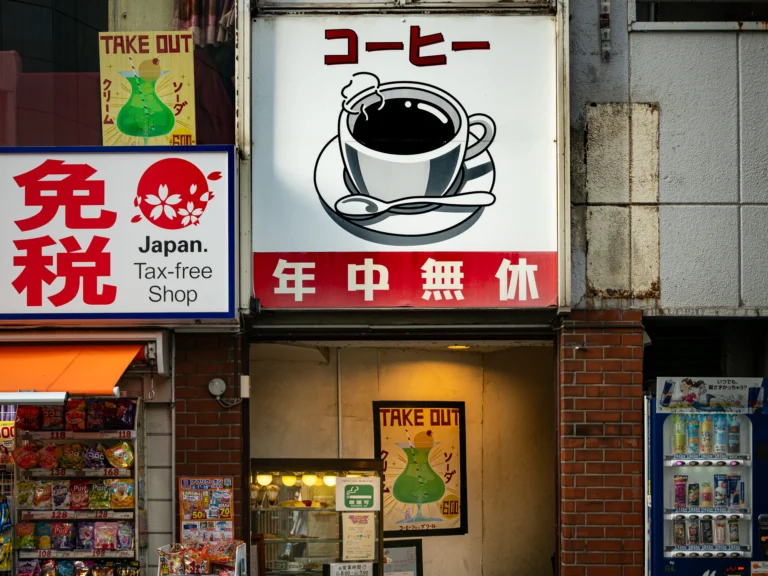
Traditional Japanese coffee shops (喫茶店; kissaten) are among the country’s best third spaces. For a nominal price, you can while away hours with a book or chatting with friends as the world outside passes you by.
Today, older kissa are struggling to stay open. One that’s defying gravity is a spot in Kabukicho, Tokyo’s bustling nightlife district, that’s open (almost) 24 hours a day. At Coffee Shop Cool, a diverse cast of characters – company owners, yakuza, sex workers, runaways, hosts, students, even a farmer – all congregate in a single room with a sordid history and a strong whiff of the Showa Era.
Not a coffee shop, but a home away from home
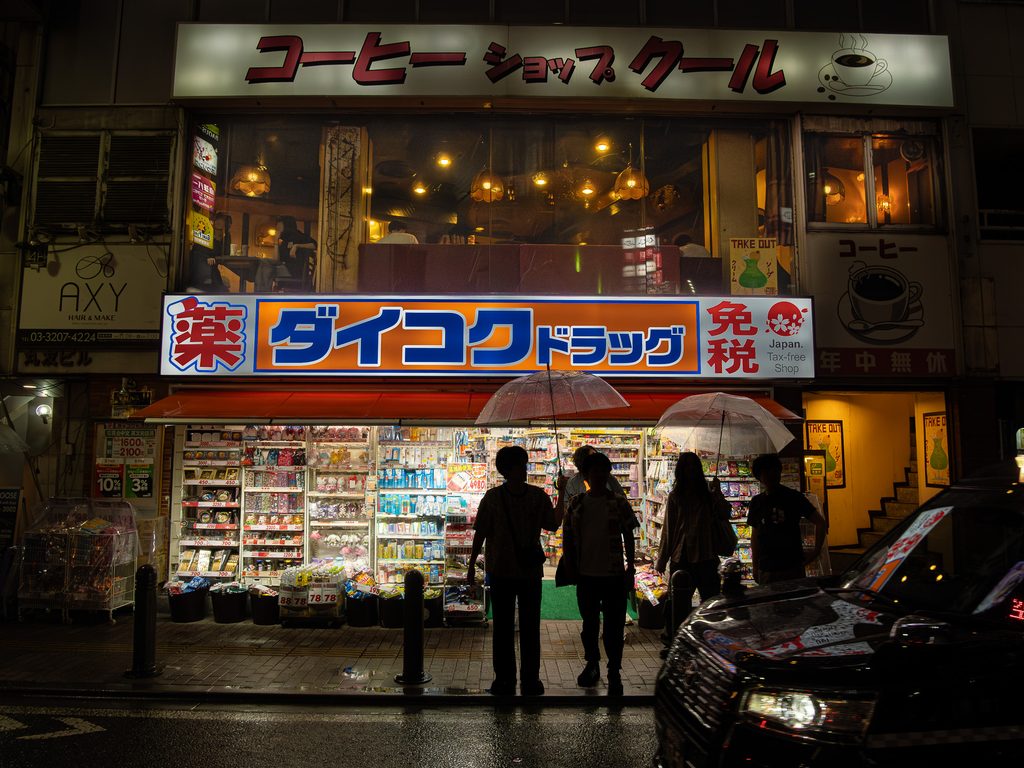
Coffee Shop Cool is in the dead center of Kabukicho, a short walk from Seibu-Shinjuku Station in the Marutomo Building. Its weathered and poorly lit signs don’t stand out compared to the brightly lit Daikoku Drug Store sign below it, making it an ideal spot for the “if you know, you know” crowd.
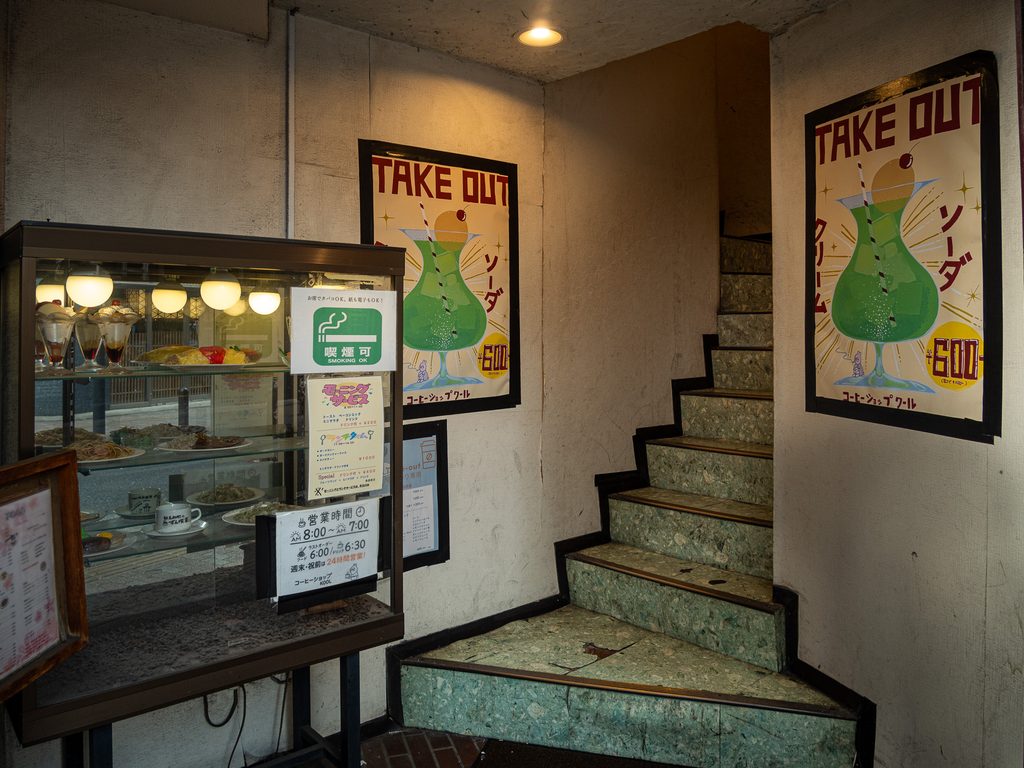
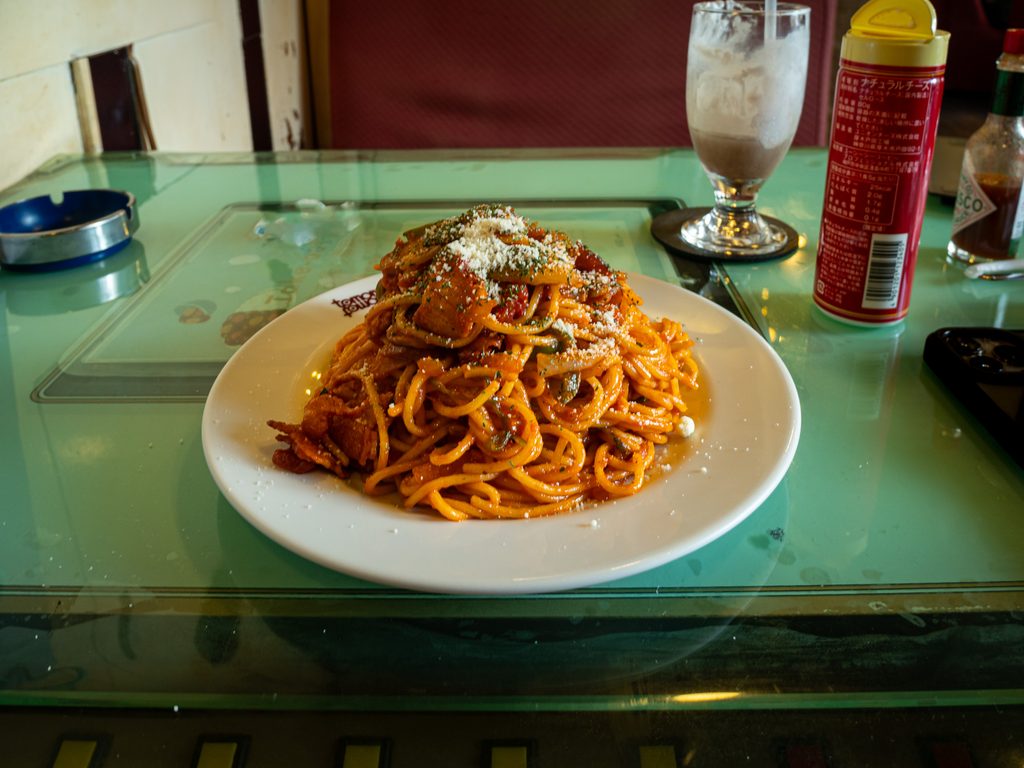
Cool is a classic Japanese kissaten. That means it has the typical menu of coffee, desserts, and a lineup of “Western” food (洋食) dishes like omuraisu and naporitan.
The space fits 40 people and, like a classic kissa, also allows smoking. That’s unusual, given that, under Tokyo’s strict new anti-smoking laws, a shop can only offer smoking in its main area if it’s a small business running since April 1, 2020, and has an all-family staff. Since Cool clearly has staff, it’s possible they’re simply defying the law, and no one’s complained about it yet.
Even in 2026, Cool’s prices are very reasonable, which is impressive given that it sits on prime real estate. A lunch set runs around ¥900 (~$5.85), and an iced coffee around ¥500 (~$3.25).
Perhaps what stands out most, however, is the diverse clientele. One regular told Toyo Keizai that he’s seen everything from yakuza executives negotiating turf to women interviewed for sex-shop jobs at nearby tables. In one infamous incident, a yakuza gang member attempted to perform yubitsume (指詰め), cutting off his own finger as a form of apology (a manager stopped him).
On any given day at Cool, you’re likely to see students, Toyoko kids, young women in between papakatsu (sugar baby) dates, and hosts hanging out with their female fans before the club opens. The shop runs nearly 24 hours, closing only from 7 am to 8 am on weekdays. It still runs a full 24 hours on Fridays and Saturdays, making it the perfect late-night or early-morning rest stop for Tokyo’s party people.
For many regulars, Cool isn’t just a coffee shop. As a company owner who’s been coming for about 20 years put it, it’s an ibasho (居場所), a place where people feel like they belong. Or, as we may say in English, a home away from home. A farmer who came weekly for over a decade called its melting pot of people “the liberal wind of Shinjuku.”
These are exactly the types of places I love in Tokyo. I feature a number of others like this in my guide to Tokyo nightlife, which contains over 30 bars and nightlife venues I’ve enjoyed firsthand.
Coffee Shop Cool outlived its chain brand (and other kissa)
Coffee Shop Cool began its life, not as an independent store, but as part of the chain Tomorrow. It didn’t do well, however, and was losing money when its first-generation master bought it out in the 1980s and renamed it.
Cool has kept running even as similar businesses close around it. Once a popular gathering spot, kissa have drastically fallen in number in recent years. The plummet is due to a combination of competition from coffee chains such as Starbucks and Doutor, plus owners dying without passing on their legacy.
Coffee Shop Cool isn’t exempt. There were a few times the store almost didn’t make it. Traffic around Kabukicho dropped thanks to Governor Ishihara Shintarō’s 2003-2004 “purification campaign.” The area suffered another blow in 2008, when the Shinjuku Koma Theater shut down. A number of cinema closures also gutted foot traffic. The store’s owner returned to the floor at age 60 and drew down his savings to keep the store afloat.
The shop that runs on vibes
The original owner passed away in 2024. Cool now runs under floor manager Shimada Masayuki, who’s been with the store since 2014. Shimada reportedly took the role of a “Showa dad,” resetting staff culture to bring the store back into the black.
Shimada doesn’t exactly do things “by the book,” though. That’s because, at Cool, there’s no book at all.
The shop has no written employee manuals or even recipes. Everything is handed down from seniors to juniors via training. The curry you eat today may taste different from yesterday’s depending on who cooked it, or even if yesterday’s cook decided to get a little frisky.
Sometimes, this loosey-goosey management style leads to some odd, even dangerous, decisions. The shop remained open during the COVID-19 pandemic, for example. The owner said the government subsidies to shops weren’t enough to justify closing.
The struggle to keep it small
Its questionable public health decisions aside, it’s nice to see a small shop managing to stay alive at a time when many areas of Tokyo feel like they’re sinking into corporate sameness.
Many in Japan have lamented how areas of the city once known for their individuality have been replaced by large towers sporting the same high-end shops. Projects like Azabudai Hills feel like they’re in the city, but somehow, not a part of it. Shibuya, once the center of Japanese fashion, has lost its reputation as a youth destination thanks to the eruption of projects such as Shibuya Scramble Square. Young people have opted instead to live and shop in neighborhoods such as Shimokitazawa and Kiyosumi-Shirakawa that still retain some semblance of character.
Even Shimokitazawa, however, had to fight to save itself. The area was almost mall-ified in 2003 with a proposed expansion of the Odakyu line. Residents banded together and formed a “Save the Shimokitazawa” movement. When Odakyu put the line underground in 2013, it launched the Shimokita Senro-gai project, which incorporated feedback from the opposition on both scale and design to ensure it integrated with the area’s character.
Kabukicho isn’t immune to this. Golden Gai, the collection of around 280 bars inside Kabukicho, has resisted pressure from developers to sell for decades. Kabukicho Tower didn’t replace any existing businesses (it took over the defunct Shinjuku Milano), but its artificial “yokochō” and polished, department store-like interior are at odds with the sprawling, grimy chaos just outside its door.
I don’t think Kabukicho is in danger of losing its character any time soon. It’s too sprawling and wily for that to happen. And it’s kept that way, not by corporations, but by shops like Cool that treat curating a home away from home not just as a job, but as a mission.
Keep reading
Sources
「ヤクザが密談し、風俗嬢が面接を…」歌舞伎町のど真ん中で“業務マニュアル一切なし”の「眠らない喫茶店」に人が集うワケ 東洋経済オンライン
歌舞伎町 Wikipedia
新宿コマ劇場 Wikipedia
コーヒーショップ クール 食べログ
店内禁煙 ~健康増進法・東京都受動喫煙防止条例~(第3版) 東京都保健医療局
新宿ゴールデン街 Wikipedia