


At the start of 2026, an AI-generated manga reached the top of Comic C’moA’s Young Adult rankings, marking a turning point for Japan’s manga industry. Comic C’moA is widely regarded as Japan’s largest e-book store, making the achievement especially notable.
The rise of an AI-assisted title to number one reflects how quickly generative technologies have moved from experimental tools to mainstream commercial assets. For readers, the ranking signaled curiosity and accessibility. For creators, it raised alarms about labor, authorship, and the future of artistic work.
A common love story told through controversial tools

The manga, My Dear Wife, Will You Be My Lover?, was released on December 28, 2025. It was created by mamaya and published by STUDIO ZOON. The work openly states that it uses AI-generated images, a level of transparency that has intensified public debate rather than diffused it. While AI tools have quietly entered parts of manga production before, few works have foregrounded their use so directly while achieving commercial success.
At its core, My Dear Wife, Will You Be My Lover? tells a story that feels intentionally familiar. The manga follows Ota Takumi and Mizuki, a dual-income married couple in their mid-thirties with children. From the outside, they appear happy and stable. Privately, they struggle with a sexless marriage, a theme that has become increasingly common in adult-oriented manga. Rather than treating the subject with heavy drama, the series frames it as a comedic and erotic challenge.
According to the creators’ own description, the story begins with a blunt desire: “I want to have sex with my beloved wife again!” Takumi tries to initiate intimacy after the children fall asleep, only to receive gentle rejections from Mizuki, who apologizes with a smile and says she’s tired.
The repeated refusals push Takumi to question their future. He wonders whether their relationship will survive once their children leave home. The story’s central promise lies in his decision to make his wife his lover again.
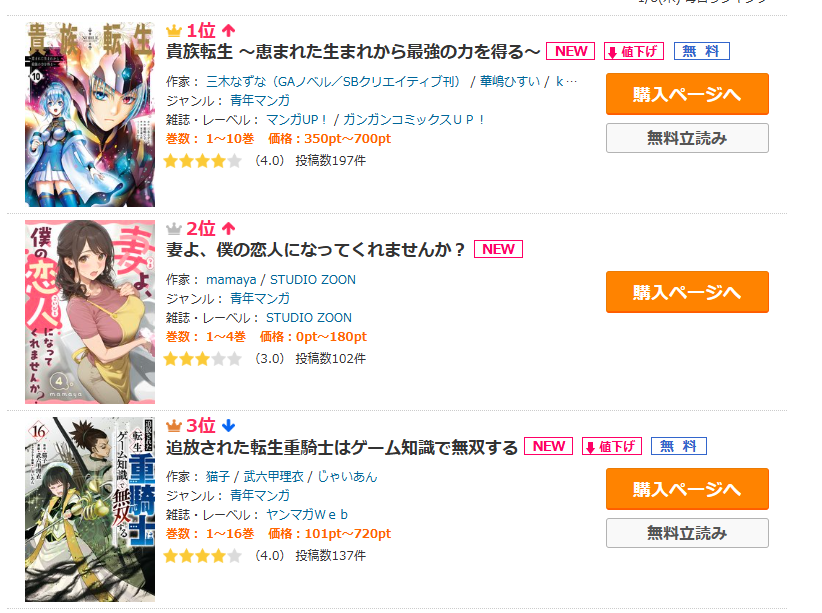
The creators describe the manga as “a slightly naughty, deeply relatable sexless-marriage comedy” and emphasize that it aims for broad empathy. The synopsis ends with a clear disclaimer: “This work was produced using AI-generated images.”
That statement has become inseparable from how readers approach the manga. For some, it represents innovation. For others, it undermines emotional authenticity. Yet the story’s structure relies less on novelty than on proven genre conventions, which may explain its wide appeal.
Divided reviews and shifting reader values
The work is controversial due to how it was generated. Generative AI (GenAI) uses probabilistic prediction models to create new outputs based on a user’s natural-language prompts. This requires training on extremely large datasets. In the case of generated manga images, this means training on the work of human artists, whose content is fed to AI training models without their permission or compensation.
Reader responses on Comic C’moA reveal a sharply divided audience. Many reviewers reacted positively, focusing on humor and readability rather than production methods. One comment simply stated, “It was just normally funny.” Another read, “I didn’t think an AI manga could be this enjoyable.” A third reviewer wrote, “When someone who understands manga fundamentals uses AI, it reads smoothly.”
Planning a trip to Japan? Get an authentic, interpreted experience from Unseen Japan Tours and see a side of the country others miss!

These comments suggest that for a portion of readers, AI is merely a tool. As long as the narrative flows and the characters appeal, the method of creation feels secondary.
At the same time, negative reactions were vocal and detailed. Some users accused the publisher of manipulating reviews. One commenter questioned whether five-star reviews were artificially planted, noting that many positive reviewers had no other review history.
Others criticized the art as “cut-and-paste AI images” and argued that both popularity and praise felt manufactured. Several readers demanded that AI-generated manga be separated into a distinct category, rather than competing directly with traditionally drawn works.
How this manga reached number one
Some criticism focused on readability rather than ethics. Reviewers complained about cramped panels, unclear spatial relationships, and what they described as “face manga,” where characters appear isolated rather than sharing coherent environments. Others dismissed the story as shallow, saying it resembled a short gag stretched too far.
Together, these reactions highlight a fractured readership. While some readers evaluate manga purely as entertainment, others assess it as cultural labor, where how something is made matters as much as what it delivers.
Despite the controversy, the manga reached the top of the rankings. A report titled The Intersection of Generative AI and Seinen Manga by tagtag offers a detailed explanation. According to the report, the success stemmed from structural factors rather than universal approval. The manga targeted a well-established demographic of adult male readers using a theme that already performs well digitally. It delivered full-color visuals optimized for smartphone screens, increasing its appeal in thumbnail-driven storefronts.
tagtag emphasizes the importance of production leadership. mamaya, credited as the creator, previously worked as an editor on multiple hit series. Rather than functioning as a traditional artist, mamaya acted as a producer or showrunner. In this model, AI handled visual execution while human expertise guided story structure, pacing, and audience targeting. The report argues that this separation allowed the project to move quickly and efficiently without abandoning narrative intent.
Platform mechanics also played a role. Rankings reflect sales and clicks, not critical consensus. Many users consume content without leaving reviews. As a result, loud criticism can coexist with strong performance.
tagtag notes that AI-generated art often excels at producing eye-catching thumbnails, which drives initial clicks. Once readers enter the series, familiar genre beats carry them forward. In this sense, the manga’s success reveals less about artistic acceptance and more about how digital marketplaces reward attention.
AI anxiety in the creative industry is beyond a single manga
The backlash surrounding AI manga connects to broader fears about generative technology. Recently, social media platform X introduced an image-editing feature tied to its AI chatbot, Grok. The tool allows users to alter images posted by others without permission using natural language prompts.
"Noah [at Unseen Japan] put together an itinerary that didn’t lock us in and we could travel at our own pace. In Tokyo, he guided us personally on a walking tour. Overall, he made our Japan trip an experience not to forget." - Kate and Simon S., Australia

Abuse followed almost immediately. Users prompted the system to sexualize photos of children and women, producing explicit images without consent. Engineers at X acknowledged the issue and promised safeguards, though public outrage spread quickly.
In Japan, similar anger emerged when users used Grok to sexualize cosplayers and public figures. Cosplayer Yukina publicly protested after seeing prompts asking Grok to alter her costume into sexualized versions. These incidents intensified concerns about nonconsensual AI use. They echo anxieties in manga publishing, where creators fear losing control over images and labor.
GenAI is also controversial for the images it paints about Japan. An increasing number of “content creators” on social media networks are making good money using AI to generate images of a Japan that doesn’t exist.
The manga industry has already faced AI flashpoints. A manga that won an honorable mention in the Young Jump Newcomer Manga Awards drew accusations of AI usage, particularly in its military illustrations. Shueisha declined to clarify its selection criteria, fueling speculation.
AI controversy in Japan extends beyond manga. A photography contest co-run by major newspaper Asahi Shimbun had to retract its top prize after Internet sleuths discovered the image was not only generated by AI but wasn’t even generated by the submitter.
Together, these cases suggest that Japan’s creative industries are entering a period of instability. AI-generated manga reaching number one is not an isolated event. It’s part of a broader reckoning over technology, consent, and the meaning of authorship in the digital age.
Before Mario, Nintendo sold hanafuda cards to the yakuza. Read the 400-year forbidden history of the flower cards that tricked the Shogun.

The company took pains to reassure its Japanese customer base that information about their masturbatory habits was safe.

Planck Stars isn’t a group to shy away from controversy. Indeed, it seems to be reveling in its latest affront to Japanese society.
Sources
妻よ、僕の恋人になってくれませんか? 第1話 コミックシーモア
生成AIと青年マンガの融合点:『妻よ、僕の恋人になってくれませんか?』に関する包括的調査報告書 NOTEーtagtag
「思いっきりAIイラスト」ヤングジャンプ受賞作、ネットの指摘が物議 集英社は「お答えできない」 ENCOUNT
