
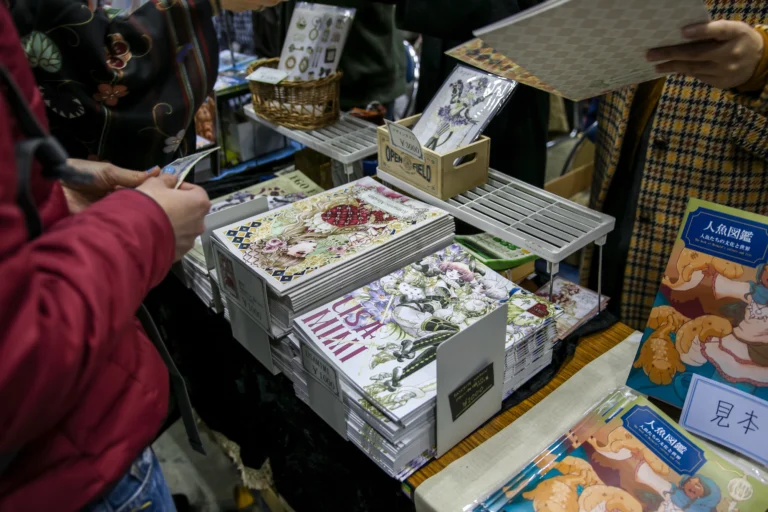
In less than a year, three printing companies serving Japan’s self-published magazine, manga and novel market (dōjinshi, 同人誌) shut down. Rising ink prices linked to instability in the Middle East have been cited as part of the explanation.
But the closures began before the latest geopolitical shock, and the deeper problem is much larger. Printers are being squeezed by rising costs and shifting production demands. And their customer base has little leeway to absorb higher prices.
Three closures in less than a year
Print Walk, founded in 2001, halted operations in March 2025 and was declared bankrupt by the Tokyo District Court several months later, with debts of about ¥100 million (~$650K).
Part of its distinctive dōjinshi print-set lineup was taken over by Shimaya Shuppan. Shimaya told Nikkei that it’s now considering raising prices in autumn 2026.
Suzu Tōshadō Printing, founded in 1986, stopped all printing operations in July 2025. Akatsuki Printing took over part of its established set specifications. But then Akatsuki itself closed in March 2026, roughly eight months after absorbing the work.
The sequence matters. Work didn’t simply disappear when one printer closed; it was redistributed among companies that were themselves operating under pressure. In one case, the printer that inherited a shuttered company’s business was gone less than a year later.
That absorption chain is the clearest illustration of the problem facing the industry: every closure leaves the remaining printers with more work, even as their own costs rise and margins shrink.
According to Printing Journal, Akatsuki had capital of ¥7 million (~$45K) and recorded FY2024 revenue of ¥129.03 million (~$838K) against a loss of ¥23.32 million (~$151K). Its total debts were about ¥250 million (~$1.6M), and it planned to file for bankruptcy at the Nagaoka branch of the Niigata District Court.
The company’s own announcement didn’t hide behind euphemism.
“Put simply, we’re going bankrupt,” Akatsuki said on X. The post was reposted more than 10,000 times within an hour.
The blunt announcement underscored something that can be easy to miss when looking at the industry only through price increases: these are small businesses absorbing structural changes in a specialized market, rather than large manufacturers temporarily coping with a spike in input costs.
The Middle East ink crisis accelerated an existing trend
Printing ink and the glossy film that coats a book’s cover are both refined from naphtha, a petroleum product whose price tracks crude oil, which is why instability in the Middle East reaches a printed book from two directions at once. It’s the same chain that drained the color from Calbee’s potato chip bags.
Print Walk’s bankruptcy record attributed its failure to declining print demand as digitalization advanced. Orders weakened, losses continued, and the company eventually faced a cash-flow squeeze.
Suzu Tōshadō cited falling demand for print media, successive increases in material costs and a labor shortage. It was also directly affected by the January 2024 Noto Peninsula earthquake. The company’s building survived, but its printing machinery was damaged. It resumed operations in April 2024, but ultimately closed rather than replace its presses.
Akatsuki faced a different combination of pressures. Its failure was attributed to surging raw-material costs for paper and ink amid high crude-oil prices, a weak yen and rising logistics costs, as well as digitalization, labor shortages and cancellations of events during the pandemic.
The timing is important. The sharp Middle East-related price shock arrived in spring 2026, after two of the three companies were already gone.
Eikou, one of the industry’s largest dōjinshi printers, made that distinction in its own May 2026 notice.
The company said it had already been planning a price revision for late 2026 before the latest escalation in the Middle East. The escalation, it said, merely forced the increase forward.
The notice laid out the increases spreading through its supply chain: acrylic materials were up 15% to 30% from April, clear stock was set to rise 30% from June, and body paper was rising by around 10% across the board from June. Offset ink was also flagged for a May increase.
But Eikou said its biggest concern was not simply higher prices.
“What we fear is materials going from supply restriction to supply stoppage,” the company said.
That distinction is crucial. The Middle East crisis did not create the industry’s underlying problems. It intensified an already difficult environment by threatening both the price and availability of materials.
Printing costs are soaring
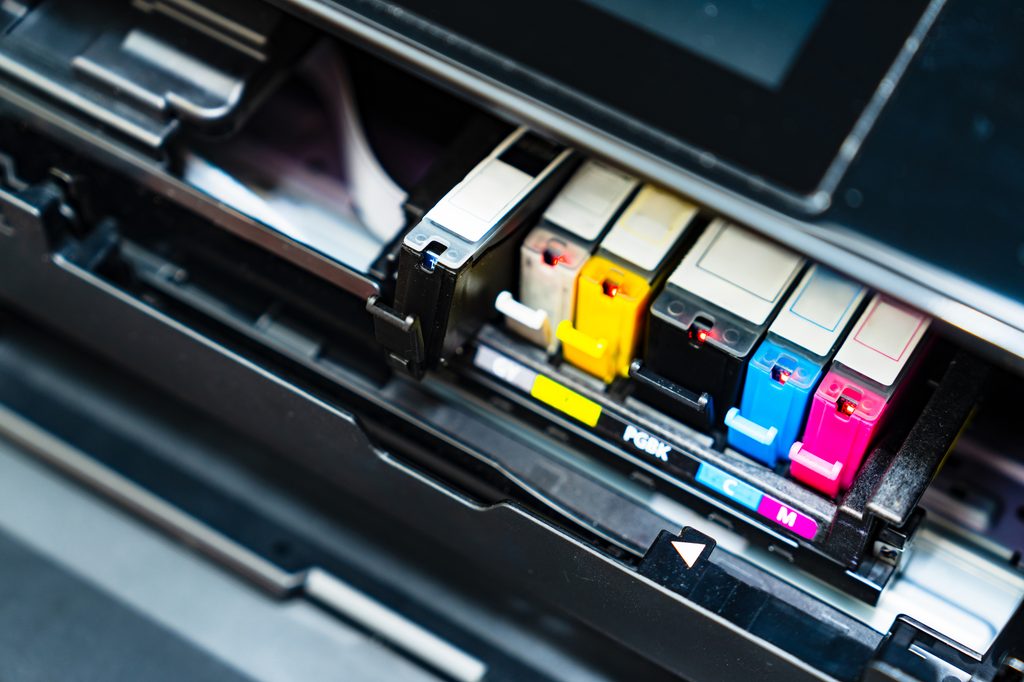
Eikou raised the prices of its dōjinshi print sets by 10% from July 10, 2026, saying material costs had risen beyond what a single printing company could absorb.
Shimaya’s previous price increase came in 2023, when it raised prices by about 8%. It was the company’s first revision in 14 years. It’s now considering another increase for autumn 2026, with its president describing the decision as “an agonizing choice.”
Okada Hajime (岡田一), Eikou’s president, estimates that raw-material costs are now about 30% higher than before the COVID-19 pandemic.
For years, he said, the company absorbed those increases itself because “if we revise prices, customers get cautious about ordering.”
That calculation reveals the industry’s fundamental bind: raising prices risks reducing demand, while keeping prices unchanged pushes the cost burden onto the printer.
The pandemic didn’t eliminate Japan’s fandom economy; it changed how fans participated in it. As travel restrictions lifted, activities ranging from Comiket and dōjinshi production to anime tourism and seichi junrei (聖地巡礼) returned, reinforcing how interconnected the country’s broader fan economy has become.
Question: do you like UJ's independent coverage of Japan? Our writers are supported by our members. Join Unseen Japan Insider to get bonus content every week, an ad-free website, and access to our large and growing Insider archive.We manage to keep most of our content free thanks to the generosity of our members. Join Unseen Japan Insider and you'll get access to new, exclusive UJ member content weekly, an ad-free website, and access to our large and growing Insider archive.
But demand isn’t collapsing
The industry’s predicament is harder to explain as a straightforward collapse in demand.
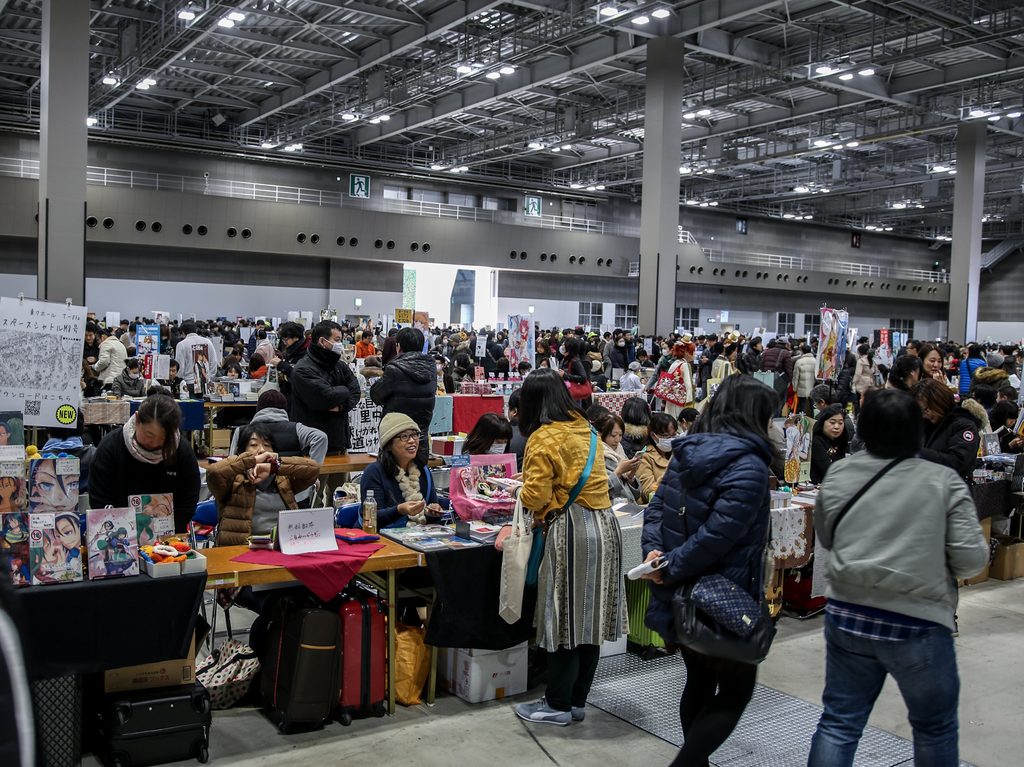
Comic Market 108, held at Tokyo Big Sight in August 2026, drew 260,000 people over two days, or 130,000 each day, 10,000 more than the previous summer despite hall renovation work and temperatures reaching 31°C. A total of 22,850 circles exhibited across the two days.
The Yano Research Institute estimates the dōjinshi market was worth ¥150 billion (~$974M) in fiscal 2025, up from ¥80 billion (~$519M) in fiscal 2021. The market, in other words, isn’t disappearing. What is changing is the economics of producing the physical books.
The pandemic accelerated that change. When events were canceled and postponed, creators could no longer predict how many copies they would sell. Many moved away from offset runs of several hundred copies (which require making a printing plate and therefore make sense at larger volumes) toward shorter on-demand runs that reduce the risk of being left with unsold inventory.
Printers responded by investing heavily in digital presses. Akagiri Gen (赤桐弦) of Akaboo, which operates dōjinshi sales events, described the industry’s new requirement as agility: printers need “the mobility and inventiveness to respond flexibly to that change.”
But the investment came as unit volumes were falling. Printers therefore faced a difficult combination: they had to invest in new equipment to accommodate customers ordering fewer copies, while simultaneously dealing with higher labor, paper, ink, energy and logistics costs.
Non-standard know-how is being lost
The danger isn’t only that fewer companies will print dōjinshi. It’s that the capabilities those companies developed may disappear when they do.
Ichikawa Kōichi (市川孝一), co-representative of the Comic Market Preparatory Committee, describes the appeal of specialist printers in terms of what conventional commercial printing might consider uneconomical.
“In a sense, you disregard cost, you try foil stamping, you slip in an endpaper, you try special stock, there are even books in wooden boxes,” he said. “Dōjinshi is where you can do that, and the dōjinshi specialist printers are the ones who take it on carefully.”
Foil stamping (箔押し; hakuoshi), unusual trim sizes, specialized papers, and delivery timed precisely to an event calendar aren’t simply optional extras. They are part of the infrastructure that allows creators to experiment with physical books.
And when a specialist printer disappears, those capabilities can disappear with it.
Japanese readers are arguing over the cause
Japanese online discussions show that readers and creators are already debating how much blame should be assigned to the latest geopolitical shock.
An April 26, 2026 Togetter roundup, which had received 17,221 views, collected reactions to viral posts claiming that dōjinshi costs would double because of the Iran conflict and the Takaichi government.
Responses from people in the trade pushed back on that timeline. Paper and ink prices, they argued, had already been rising for more than a year, with some describing increases stretching back three to five years.
Those discussions are not themselves evidence of the industry’s financial condition, but they reveal how the Middle East explanation has become an easy shorthand for a problem that predates the latest crisis.
A separate Togetter roundup from August 2025, focused on the struggles of printers, captured calls for companies to raise prices and return to profitability, as well as calls for government support.
The debate also intersects with a broader question about government support for Japan’s cultural industries and the country’s Cool Japan strategy: if the physical infrastructure supporting a major creative community disappears, can cultural policy compensate for it after the fact?
The immediate loss is a business. The longer-term loss is a set of machines, techniques, relationships, and institutional knowledge that enabled creators to make physical objects that couldn’t be easily reproduced elsewhere.
The Middle East may have made the next price increase arrive sooner. But the chain of closures suggests that the more consequential question is whether Japan’s specialist dōjinshi printers can remain viable at all…and what happens to the culture built around them if they can’t.
Keep reading


Sources
コミケ支える同人誌印刷所が悲鳴、老舗は廃業 中東発インク高も痛手 日本経済新聞
日本が誇る「同人誌文化」の足元から迫る危機…印刷コスト急増で、作り手にも買い手にも「ハードル上がる」 東京新聞
中東情勢に伴う弊社商品供給への影響について 株式会社栄光
同人誌セットの価格改定のお知らせ 株式会社栄光
2代目社長はこんなヤツ 株式会社栄光
あかつき印刷(新潟)、破産申請へ-負債2億5,000万円 印刷ジャーナルDIGITAL
同人誌印刷など手がける「あかつき印刷」(魚沼市)が廃業 SNSで惜しむ声相次ぐ 新潟日報
同人誌の味方「あかつき印刷」が3月20日をもって廃業。Xでは1時間で1万リポストを越え、廃業を惜しむ声や「長い間お世話になりました」などの感謝の言葉 電ファミニコゲーマー
東京・板橋の印刷業「ウォーク」に破産開始決定、負債1億円 不景気.com (archived)
石川 珠洲市の同人誌印刷会社スズトウシャドウ、事業終了 1986年設立の老舗 KAI-YOU
事業終了のお知らせ スズトウシャドウ印刷 (archived)
感謝の紙アート 創作ジャンル超え 廃業の印刷所へ 北國新聞
料金改定のお知らせ しまや出版
【あだちから新聞インタビュー 初めての人にも優しい同人誌専門印刷所】小早川真樹 足立区
「コミックマーケット108」閉幕、26万人が来場 悪天候や会場工事の中で前年比1万人増 KAI-YOU
「オタク」市場に関する調査を実施(2025年) 矢野経済研究所
『高市政権のせいで同人誌作成費用が2倍になる!』みたいなツイートが流れてきたが紙やインクの高騰は1年以上前から続いていることでイラン戦争だけが原因とは言えない Togetter
コミケの影の立役者である同人誌を印刷する会社が物価高やデジタル化を背景に苦境の陥っている「紙の文化は残って欲しい」「国が支援して欲しい」 Togetter
Doujinshi printer Wikipedia