

Polls consistently show that most travelers who come to Japan are most looking forward to the food. Sushi is at the top of their list. Once a humble street snack sold by fishmongers to move unsold stock, it is now a global hit and symbol of fine dining.
But for many people, raw fish is a high hurdle and a legitimate health concern. Luckily, there’s an earlier form of sushi still available: Edomae sushi, which uses prepared fish, so you can enjoy an authentic sushi experience without food safety or texture concerns.
What is Edomae sushi?
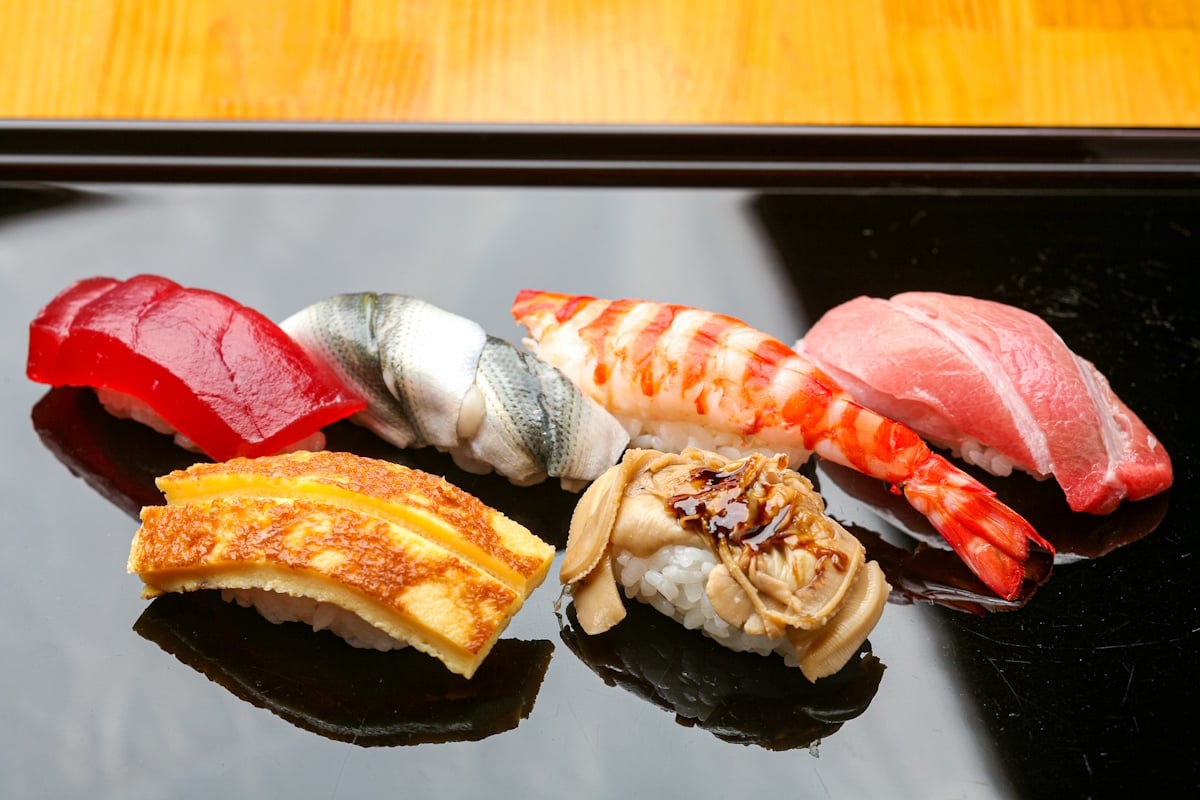
Edomae (Edo-style – literally “in front of Edo [Tokyo] Bay”) sushi is a sushi style that originated in Tokyo, formerly known as Edo. Unlike modern sushi that uses raw fish, Edomae sushi uses fish that has been simmered, cured, marinated, or pickled.
Examples of Edomae sushi are:
- Mackerel simmered in light broth
- Shrimp cured in soy sauce
- Eel cured in salt
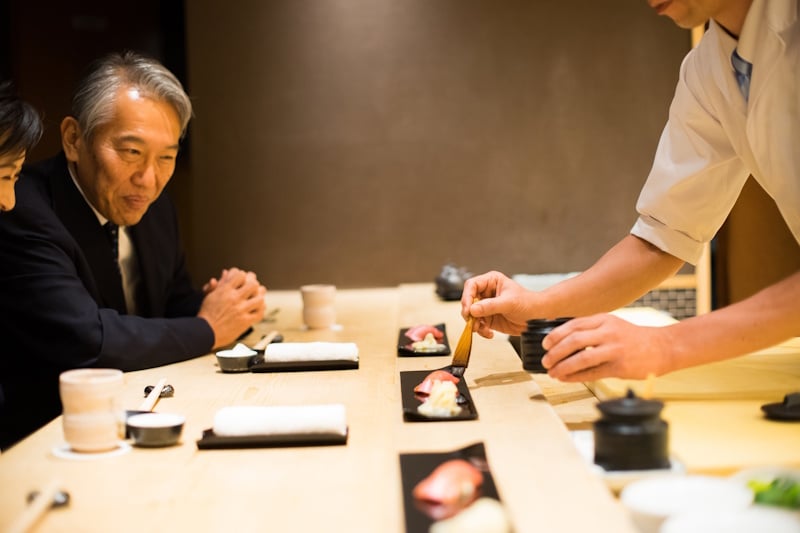
Like modern sushi, these dishes would be served as “nigiri,” hand-pressed onto a small bed of rice for easy eating with chopsticks or as finger food. While it started as street food, these days the Edomae style is a sign of fine dining, usually served “omakase,” with multiple courses planned and presented by the chef.
History of Edomae sushi
Edomae sushi first appeared in the early 19th century, as Tokyo, then known as Edo, was growing as a trading hub and center of political activity. Edo was especially known for its fish markets fed by the nearby bay.
Stiff competition in the market meant that fishmongers often had excess wares lying around. Selling this extra product as a fresh snack became a common practice, and so it was that sashimi (刺身) became a hit street food, especially among the young women of Edo.
Sashimi was already popular when Edomae sushi first appeared. Edomae sushi took sashimi and turned it into a focused dish: fish simmered, cured, or pickled to prolong the shelf life in an era before refrigeration, combined with rice soaked in sweet vinegar to complement the salted fish.
The exact point of origin is disputed. However, by 1830, the Edomae style was established in at least three sushi-specializing restaurants in Edo.
"Noah [at Unseen Japan] put together an itinerary that didn’t lock us in and we could travel at our own pace. In Tokyo, he guided us personally on a walking tour. Overall, he made our Japan trip an experience not to forget." - Kate and Simon S., Australia

The traditional style was characterized by the use of various vinegars and rice to complement different fish. Modern sushi has become fairly standardized, using white rice and “awase-zu,” the well-known mixture of rice vinegar and sugar, but back in the 19th century, flavors were still evolving. Edomae-style chefs would use brown rice and red vinegar to match and balance the strong flavors of the cured fish.
Is Edomae sushi a cop-out?
As a dish, sushi is thought of as capturing the “pure flavor” of the fish. From that perspective, you might think that Edomae sushi is going against the ideals of the cuisine by preparing the meat.
But as one Edomae-style chef, Chef Kunishima, describes, “Edomae style is about drawing out the flavors.” Curing a cut of fish in salt, for example, is used to heighten the flavor that is more subtle in standard sushi. As the original Tokyo-style sushi, Edomae sushi is a fully authentic form of the cuisine.
And concerns about eating raw meat are not unreasonable. To be clear, modern refrigeration technology and Japan’s food safety standards ensure that raw fish served at licensed sushi restaurants is almost certainly safe to eat. But eating raw meat always comes with some amount of risk, even if it is small.
If that makes you uncomfortable, it is a completely valid reason to seek out alternatives. Edomae sushi offers a traditional sushi experience using time-tested food preservation and flavoring techniques.
Where to find Edomae sushi?
Unsurprisingly, most Edomae restaurants are located in new Edo (Tokyo). If you want to try this traditional take on sushi, you can check out:
- Sushi Nakanishi (鮨 なかにし) – Located roughly 5 minutes from Shibuya Station in Tokyo, Sushi Nakanishi is a specialty shop dedicated to Edomae style, known for its minimalist decor. You can experience classic dishes and modern innovations in the cuisine from chefs dedicated to the tradition.
- Sushi-dokoro Kitamura (きたむら) – A basement shop in Ginza, this storied shop has been open since the bubble era, going on 40 years. Kitamura is a general sushi shop, but has a selection of Edomae dishes that are well reviewed.
- Chikamatsu Sushi (神田鮨近松) – Opened in 2022 in Kanda (near Akihabara), this stylish spot is dedicated to classic Edomae recipes. The menu is a product of the chef’s dedicated study of the style, so even though it is a newer spot, you can be assured you are getting an authentic Edomae experience.
One thing to note about Edomae is the price. The style’s high-end reputation places it firmly in the $60-200 USD range for a full-course meal. But you can be assured that Edomae chefs are committed to providing a fine-dining experience that upholds the style’s reputation.
Make sure to brush up on your sushi-eating manners before you go. And if you need someone to help you find and visit small shops around the Tokyo area or beyond, ping us at Unseen Japan Tours and ask about our custom itinerary and guiding services.
Discover the “unseen” side of Japan
Japan is on everyone’s travel bucket list. Sadly, many end up going to the same places as everyone else. That can turn what could have been a fun, once-in-a-lifetime experience into an exhausting battle with crowds.
"Noah [at Unseen Japan] put together an itinerary that didn’t lock us in and we could travel at our own pace. In Tokyo, he guided us personally on a walking tour. Overall, he made our Japan trip an experience not to forget." - Kate and Simon S., Australia
We started Unseen Japan Tours for the same reason we started Unseen Japan: To give people a unique glimpse into Japan they can’t get anywhere else. Let us create a custom itinerary of hard-to-find spots centered on your interests. We can also serve as your guides and interpreters, taking you to places that non-Japanese-speaking tourists usually can’t access.
Contact us below to get the ball rolling today!
Yep or NOPE? Suntory’s New Dr Pepper-Like Soda Confuses Japanese Consumers
Suntory’s new drink NOPE promises lots of flavor. Just WHAT that flavor is, however, has sparked a raging debate in Japan.
This Ramen Shop in Japan Demands You Stay Off Your Damn Phone
The shop in Saitama Prefecture said it instituted the policy after a customer watched an “inappropriate” video.

As Nut Allergies Soar in Japan, Airlines Grapple with a Response
Nut allergies are overtaking both wheat and milk in Japan. Here’s how airlines are responding and how to stay safe on your trip.
Sources
職人が語る「江戸前寿司の魅力」と楽しみ方。東京のおすすめ店も紹介. 旅色
江戸前寿司. Wikipedia
江戸前寿司とは 関西寿司との違い. Tokyo Sushi Academy
江戸前寿司と関西寿司の違いを徹底比較!特徴や歴史もご紹介. デリッシュキッチン
インバウンド消費の新定番は「コンビニ寿司」 電通調査で明らかに. AdverTimes
