
If you’ve ever felt you don’t have enough support when studying Japanese, you’re not alone. A MEXT survey shows that Japan is failing to provide support for foreigners learning the language.
According to a recent study conducted by Yamanashi Prefecture, more than half (54.3%) felt they were not receiving enough support for Japanese language studies. This same study also revealed that, of the almost 8,700 companies surveyed, close to 30% did not offer any support or classes for foreign employees seeking to study Japanese.
Sadly, this is not an isolated case.
The “blank zones” of Japanese language education
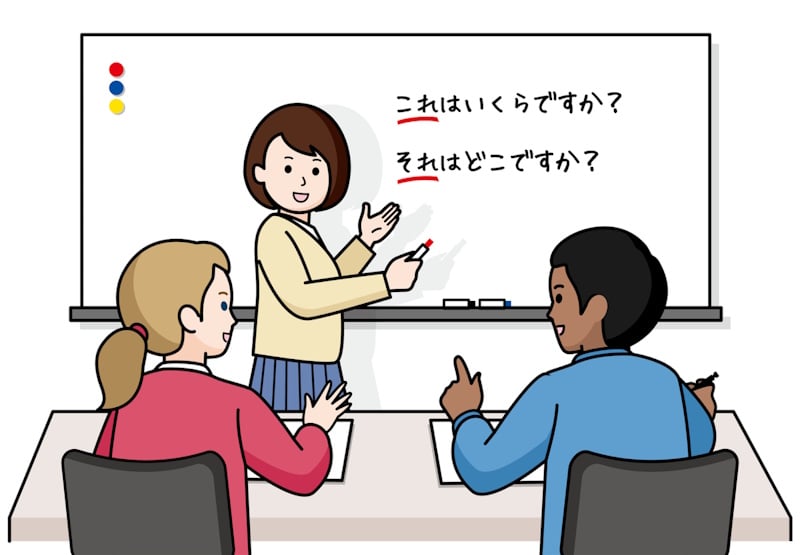
Gunma Prefecture also revealed findings that thirteen of its thirty-five municipalities are so-called “blank zones”, according to a MEXT (The Ministry of Education, Culture, Sports, Science and Technology) survey.
These blank zones are areas where neither public nor private organizations offer Japanese-language study programs of any kind. This is troubling because these areas still have foreigners living there who lack the proper support needed to fulfill their needs.
To further add to these frustrations, even students born in Japan who have learning disabilities often get left behind, according to a report from SBC Shinetsuhousou, a Nagano-based broadcaster. In this news documentary, What is ‘Reasonable Accommodation’ for those with Developmental Disabilities a news crew follows a student who is soon to enter Tsukuba University in Ibaraki Prefecture.
Throughout the news documentary, the viewer is shown how the university is taking steps to accommodate the student’s developmental disabilities. The documentary explains that Tsukuba University accepts students with disabilities. However, the university still had to speak with and work with the student on an individual basis, as there was no program in place to help a student with disabilities that affect their ability to learn kanji.
A worrying trend
What this story and the previously mentioned surveys tell us is that there is a troubling lack of support for anyone who could be seen as “outside the norm” of people learning Japanese.
We can see that even within the context of people born and raised in Japan, there are few systems in place to help people who need extra support when learning Japanese.
See a side of Tokyo that other tourists can't. Book a tour with Unseen Japan Tours - we'll tailor your trip to your interests and guide you through experiences usually closed off to non-Japanese speakers.

A story that affects me, personally
While I wouldn’t necessarily say that I live in a “Blank Zone”, it’s a struggle to find Japanese language classes that work well for me. The city I live in has very little in the way of public support for residents, but the larger nearby city offers free classes for foreign residents through its international affairs center.
However, these classes are staffed only by volunteers who have a limit on how much they can teach. This is because the city has a paid Japanese language class. The downside? It’s only held once a week, on Sundays.
There is often a generational gap with these sessions as well. Almost every volunteer is retired. It’s difficult to find people your own age. On top of this issue, these volunteers are not licensed, and vary greatly in teaching skill.
Even worse, the free sessions are only twice a week, and take place in the mornings. So if you have a part-time job or other things going on, there are no other sessions available. The city does have some private Japanese language schools. But these schools are geared more towards trainees for elderly care and students wishing to enter Japanese universities.
These schools are also expensive, so if you are earning the average salary of a foreign worker, which is skewed lower because of the types of jobs that are worked by many foreigners, then most are unable to afford them.
Isolated by kindness
There are some private tutors around, but these tend to be even more expensive than the private schools.
Another issue is that more than a few English teaching roles will have the company or school go out of their way to not let you interact with native Japanese staff. Or, they’ll often “accommodate” English language teachers by never speaking with them in any language other than English.
Even private NGOs struggle to keep up with demand. Once again, many are staffed by retirees who often age out of being able to offer support. Even the international organization in my city keeps trying to recruit my wife to take charge (on top of her real job). The staff is hoping they can retire from working in the organization itself.
Finally, the only private Japanese-language learning program in my city is for short-stay study-abroad students. It’s not available for foreign residents of the city.
"Noah [at Unseen Japan] put together an itinerary that didn’t lock us in and we could travel at our own pace. In Tokyo, he guided us personally on a walking tour. Overall, he made our Japan trip an experience not to forget." - Kate and Simon S., Australia

This is how many people end up left to their own devices. It requires an extreme amount of willpower in order to succeed.
A growing concern

Japan’s foreign-born population is still only around four million people. Compared with the total population of 122 million, it’s still small.
Despite this, the foreign population is growing due to Japan’s severe need for new workers to fill many jobs that Japanese people are unwilling to do. In some areas of Japan, foreign residents comprise more than 10% of the local population.
Japan is more than willing to bring in the workers it so desperately needs, but struggles to make the changes needed for those workers to learn even the basics of Japanese. While the prevailing attitude by many in the central government is to view foreign residents as guests, the reality on the ground is much different.
A recent Kyodo News Survey, reported by the Mainichi, shows that 75% of prefectural governments in Japan have included budgets for programs to encourage coexistence with foreign residents to achieve better social harmony. While these steps are positive, we can only hope that these prefectures, as well as every other, create programs to help these same residents and workers learn Japanese.

Can you pronounce these difficult Japanese place names? If not, don’t feel bad: most native speakers can’t either!

Japan will likely abandon its Kunrei-shiki romanization system that even most of its government doesn’t use.

You may still hear these words or see them in print – but you won’t hear them come from the mouth of a young person.
Sources
日本語教室に「空白地域」 群馬県内は13自治体が該当 文科省調査. Jomo News
外国人労働者 半数以上が日本語の学習環境に課題と回答 山梨県が初の調査. News.jp
75% of Japan prefectures boosting programs for coexistence with foreigners. The Mainichi
「漢字だけが極端に苦手。でも大学で学びたい」発達障がいの「合理的配慮」とは?学習障がいがある受験生を通じて考える 専門部署をつくり対応にあたる大学の取り組み. Newsdig TBS
