


Japan’s population has seen better days. Every year, the number of new live births hits a new low. Many people are facing pressure – from their parents or society – to hook up and produce kids.
Some sexual minorities who feel they can’t come out to their families or co-workers are reacting to this pressure by choosing a unique path: “friendship marriages” that provide them with societal cover while still enabling them to be themselves. It is, as one expert notes, a “survival strategy” driven by a society that’s still working to accept its LGBTQ citizens.
“A comrade in arms”

47News spotlights one such relationship. Satsuki is a lesbian woman who hid her identity from her mom, who kept pressuring Satsuki to get married and give her grandkids. Minato is a bisexual man who’s romantically attracted to women but sexually attracted to men exclusively.
Satsuki was inspired to look for an alternative form of relationship when she saw the popular 2016 TV drama Nigeru wa Haji da ga Yaku ni Tatsu. Translated in English as The Full-Time Wife Escapist, the original manga from Umino Tsunami takes its title from the Hungarian proverb szégyen a futás, de hasznos (Running away is shameful, but useful). In the story, the main characters agree to enter a “contract marriage” despite (initially) having no romantic feelings for one another.
Satsuki and Minato met on an Internet forum devoted to couples seeking alternative forms of marriage – whether due to their sexuality, under duress from family, or, as in Satsuki’s case, a combination of both. They eventually realized they were good friends and agreed to tie the knot. In 2023, Satsuki became pregnant through artificial insemination and they had their first child.
Outside of child-rearing, the two pursue their own happiness separately. They don’t even sit on the couch together at the same time. They refer to each other as “cousins” or “comrades in arms.”
Marriage inequality leads to this “last resort”

The service is in enough demand that there’s a company catering specifically to sexual minorities who want to establish a friendship marriage. Colors says it’s helped over 300 couples to date find a life partner, saying it has a 43.6% success rate in finding people a match. It specifically markets itself to Japan’s LGBTQ community as a means for creating “a marriage that isn’t a marriage.”
See a side of Tokyo that other tourists can't. Book a tour with Unseen Japan Tours - we'll tailor your trip to your interests and guide you through experiences usually closed off to non-Japanese speakers.

The head of Colors, Nakamura Arisa, says the majority of people who use the service are sexual minorities. Others also use the service, however, in order to find a life companion or a parenting partner who’s more of a best friend than a lover.
“Going forward, we want to offer more choices to people who can’t have romantic or sexual relationships with those of the opposite gender,” she said.
Such services exist, not simply due to societal pressure, but due to legal constraints. One expert, Professor Kubota Hiroyuki of Nihon University, says that one issue is the lack of legal recognition for same-sex marriages.
Japan has partnership systems in local jurisdictions that recognize civil relationships between same-sex couples. According to Marriage For All Japan, these measures cover over 90% of the country’s population as of this writing. However, they don’t confer the full benefits of legal marriage. While support for same-sex marriage is at an all-time high, that still hasn’t translated into actual legal and social recognition.
Professor Kubota calls friendship marriages a “last resort” and a “survival strategy” for sexual minorities. He argues that, if Japan recognized same-sex marriages, it would give LGBTQ couples the recognition and societal guarantees afforded to heterosexual couples.

The parade in Hitachi, Ibaraki Prefecture, shows how Japan’s LGBTQ+ citizens are committed to raising awareness in smaller cities and towns.
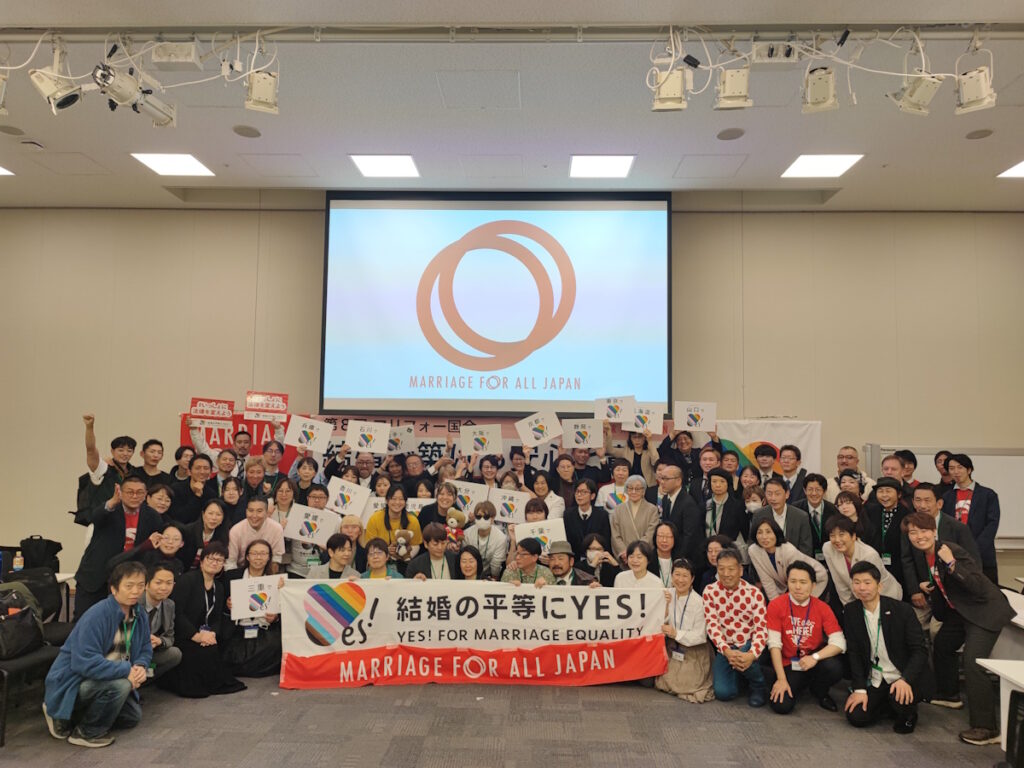
After a bitter court loss, LGBTQ people in Japan continue pressing politicians for fast action.
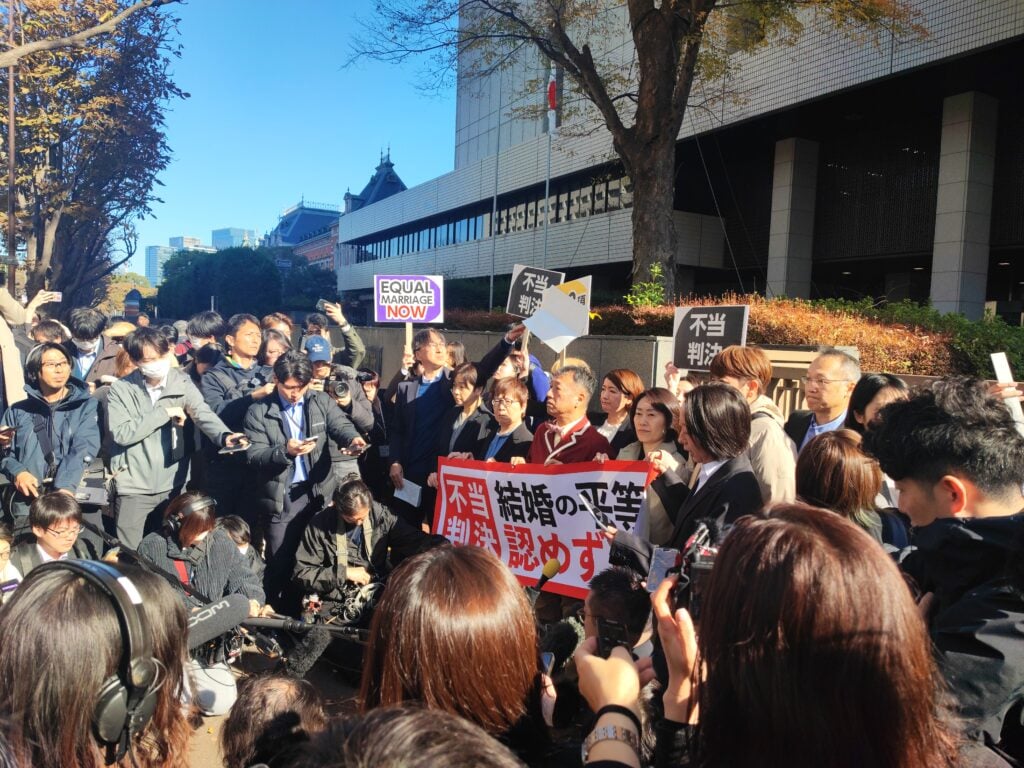
Supporters of marriage equality in Japan were met with an unexpected setback after a series of affirmative rulings.
Sources
恋愛も性行為もない「友情結婚」をした2人、一緒に3年暮らしてどうなった? きっかけはあの人気ドラマ、できた子どもは口そろえ「かわいい」. 47 News
