
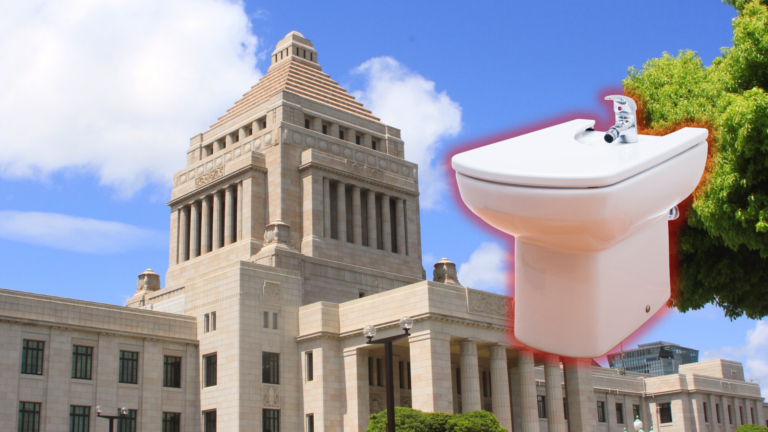
Japan’s House of Representatives has had a longstanding problem for its female members: agonizingly long wait times to use the toilet. To fix this, it has finally approved two more toilet stalls for the bathroom nearest its plenary chamber, which will bring the total to four.
While this might sound like an insignificant renovation at first, there’s a lot going on beneath the surface.
A petition for more toilets
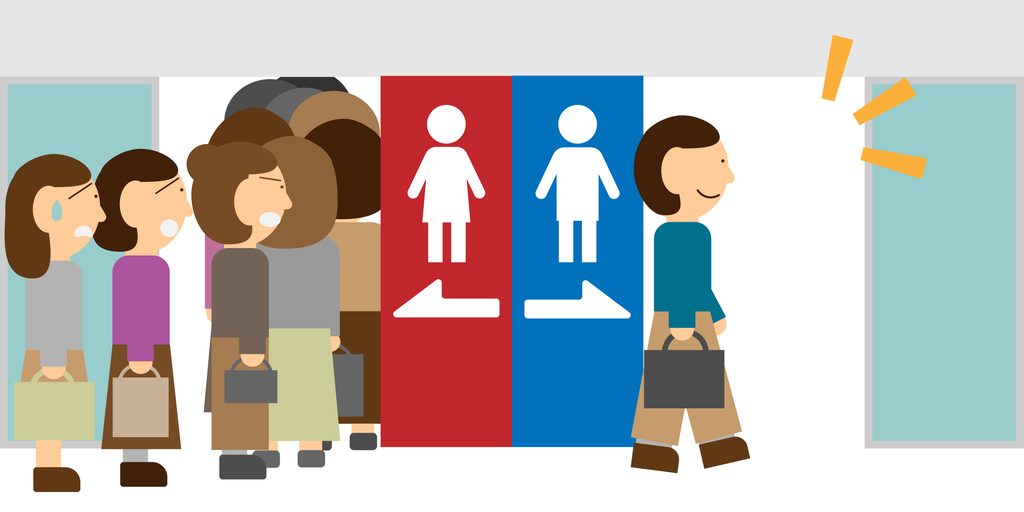
The new toilets, reported by Yomiuri on August 16, comes after 58 women members of the lower house, including Prime Minister Takaichi Sanae, signed a cross-party petition, roughly eight months ago. In December 2025, when the petition was being signed, there were 72 women in the house (68 now), so about 80% of female members signed it.
The additional stalls will probably not be finished until around December, one year after the petition was submitted.
As Constitutional Democratic Party lawmaker Komiyama Yasuko put it, a lot of women have to line up outside the women’s toilet before a plenary session. She’s the one who organized the petition, and she gathered a bipartisan slate of signatures.
It’s not purely a comfort issue or a complaint about unfairness. Rather, the request pointed out that the lines to the women’s bathrooms created delays that could affect the proceedings themselves and the lawmakers’ ability to do their jobs.
A severe toilet gap in the House of Representatives
To understand why this became such an issue, though, we’ve got to compare some numbers.
The main House of Representatives building has 12 men’s toilets and nine women’s toilets. That doesn’t sound too bad on paper. But counting rooms hides what actually matters: fixtures, including both toilets and urinals. Across the building, men have 67 fixtures while women have 22. So, the men got three times as many.
The gap is even worse when you look at the bathrooms near the plenary chamber; i.e., the ones that are flooded with traffic before and after plenary sessions. The women’s bathroom only has two toilets (soon to be four), while the men’s has five toilets and nine urinals. That’s seven times as many men’s fixtures as women’s in a high-traffic area.
It’s also important to take into account that it’s not really about whether there are more men than women in the House of Representatives. Of course there are; but it’s not a 7:1 ratio. Even if it were, it doesn’t take into account the numerous non-lawmaker female staff who work in the same building, such as secretaries and administrators. Unless there are parts of the Diet that are men-only, this would almost certainly create situations where women end up having to walk much farther to use a toilet than a male coworker.
More women’s toilets are also planned for the third floor next fiscal year to help even things out further.
Question: do you like UJ's independent coverage of Japan? Our writers are supported by our members. Join Unseen Japan Insider to get bonus content every week, an ad-free website, and access to our large and growing Insider archive.We manage to keep most of our content free thanks to the generosity of our members. Join Unseen Japan Insider and you'll get access to new, exclusive UJ member content weekly, an ad-free website, and access to our large and growing Insider archive.
Some history behind the floor plan and guidelines to fix it
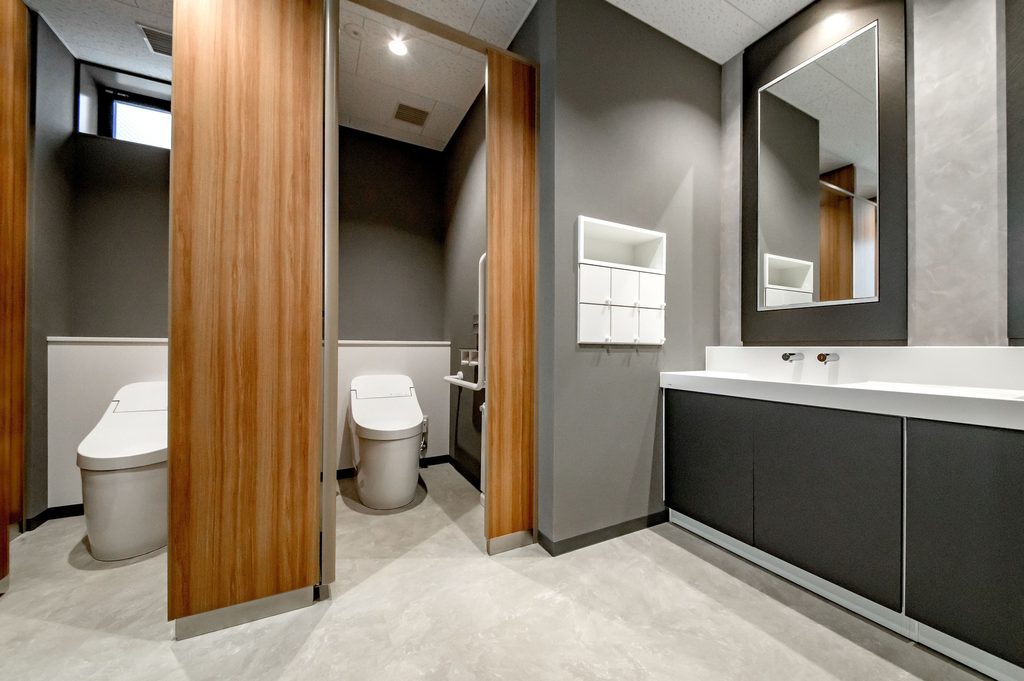
Japan’s National Diet Building was completed in 1936. At the time, women could neither vote nor become lawmakers. So, the government designed the building around the assumption that all legislators would be men.
Women in Japan gained suffrage through a 1945 revision to the election law (nine years after the Diet Building opened). In 1946, Japan’s first election in which women voted, 39 women were elected. However, even though 80 years have passed since then, there’s still a clear imbalance in plumbing.
On top of that, the government has only recently told the country (i.e., itself) to do better. On June 12, the Ministry of Land, Infrastructure, Transport and Tourism published Japan’s first national guideline on toilet fixture counts. Its basic recommendation is straightforward: where there will be roughly the same number of male and female users, women’s fixtures should equal or exceed the number of men’s fixtures, including urinals.
The guideline also tells designers not to assume men’s and women’s toilets need equal floor space and says plainly that adding more fixtures is the most effective solution. It’s almost like whoever wrote those guidelines was thinking specifically of the House of Representatives’ ridiculous bathroom situation.
The guideline itself is non-binding. There is no legal deadline and no penalty for ignoring it. If anything, Japan’s own parliament demonstrates the limits of voluntary standards: the institution now has a national guideline for everyone else while its most important chamber still offers women roughly one fixture for every three available to men.
Toilet fixtures across the country: not just a problem in one government building
This is also not an isolated finding. Momose Manami, a certified administrative procedures specialist, has counted fixtures in more than 1,300 public restrooms over roughly four years and found that men’s rooms average 1.68 times as many fixtures as women’s rooms. The scale of her survey led Japan’s mainstream media to cover it as a national issue.
Government data tells a similar story. Women’s fixtures amount to 0.63 per 1.0 men’s fixtures at train stations and 0.71 at bus terminals. Stadiums and arenas come closer, at 0.98.
Meanwhile, women’s representation in the Diet has hardly caught up with the building. In the February 2026 general election, 68 women won seats out of 465, or 14.6%. That was down from a record 73 in 2024. Japan ranked 118th out of 148 countries in the World Economic Forum’s 2025 Gender Gap Index.
So yes, parliament is adding two toilet stalls. But the real story is that it took 58 women lawmakers, a formal cross-party petition, soon-to-be twelve months, and a direct argument that toilet lines were disrupting legislative work to get them.
Keep reading



Sources
衆議院本館の女性用トイレ増設へ、高市首相らから「混雑が日常的」と指摘受け…個室を2室から4室に Infoseekニュース/読売新聞
高市首相も困ってる…女性用トイレ不足の国会議事堂 「議事進行にも影響しかねない」超党派で増設を要望へ 東京新聞デジタル
衆院本会議場近くの女性トイレ、増設はわずか個室2か所 本会議前には「行列」 AFPBB News
衆議院に女性用トイレ増設を 高市早苗首相含む与野党58人が要望 日本経済新聞
「トイレの便器数に係る基準と適用のあり方に関するガイドライン」を策定~トイレの行列問題の改善に向けた対応方針をとりまとめ~ 国土交通省
国交省 「トイレの便器数」ガイドライン策定、女性向けを男性向け以上に 事業構想オンライン
女性用便器の数は男性用以上に、国交省が初の指針 トイレ行列改善へ 日本経済新聞
全国の公共トイレ男女別便器数を調査した行政司法書士をNHK「あさイチ」が紹介 やはり女性用が少なすぎる J-CASTニュース
駅で実際に数えてわかった「女性トイレの個室数」 男性用の6割「格差解消」手立てはあるのか? 東洋経済オンライン
「トイレ設置数の基準と適用のあり方に関する協議会」ガイドライン案を公表 当協会名誉会長・小林純子が座長を務める国土交通省協議会 一般社団法人 日本トイレ協会
衆議院選挙の女性当選者68人 最多の前回2024年の73人に次ぐ 日本経済新聞
衆院選の「女性当選者」は465人中68人、14.6%と伸びず…女性首相誕生でも男女比の是正には程遠く 東京新聞デジタル
コラム4:参政権をめぐる女性と政治 国立公文書館 アジア歴史資料センター
令和4年6月 IPU ジェンダー自己評価「議会のジェンダー配慮への評価に関するアンケート調査」報告書 衆議院事務局(調査局 IPU 調査プロジェクトチーム)
こんなにある!永田町の子育て〝非常識〟「国会議員が妊娠するのか」「女を捨てろ」〈ママパパ議連座談会レポート〉 東京すくすく(東京新聞)
政治分野における男女共同参画の推進に関する法律 内閣府男女共同参画局
No Improvement for Japan in 2025 Gender Gap Ranking Nippon.com