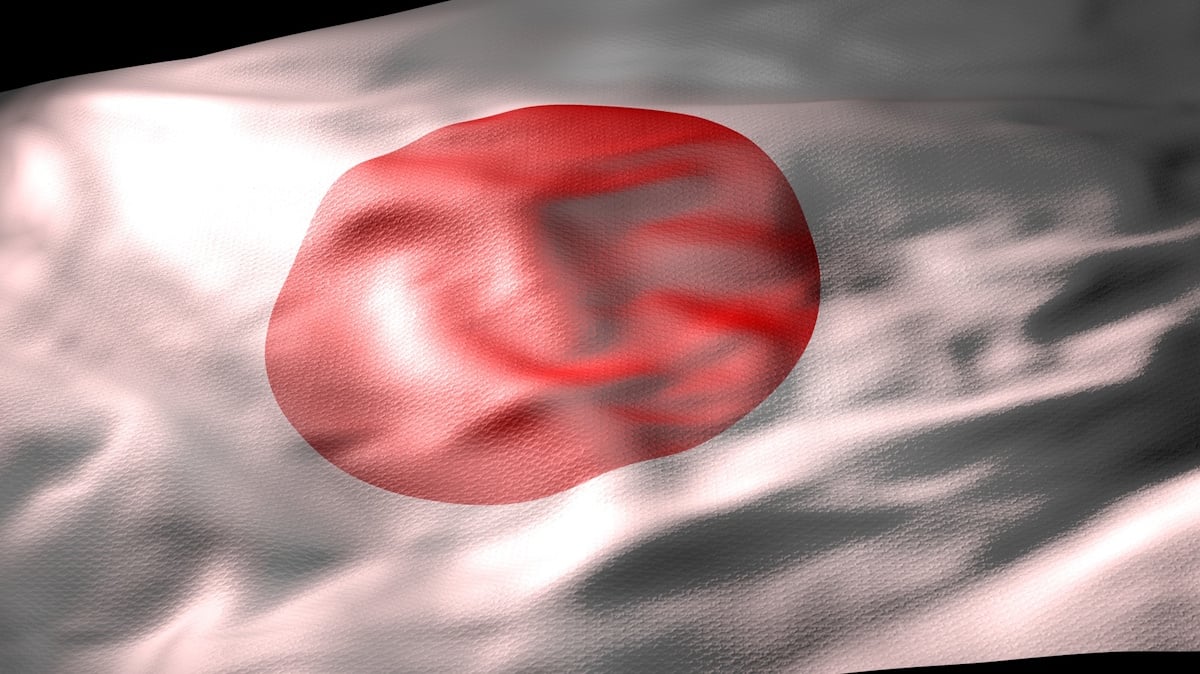


In the Japanese parliament, a conservative coalition comprising the Liberal Democratic Party (LDP), the Innovation Party (Isshin no Kai), and Sanseitō signaled that it is “moving towards” passing a law establishing legal penalties for defacing the Japanese flag.
The statement comes after outrage among Japanese conservatives over a demonstration where a college student waved a Japanese flag that had been crossed out with black paint in protest of Sanseitō’s “Japan first” politics. Critics argue that the law would violate Article 21 of Japan’s Constitution, which protects political freedom of speech and the right to protest.
Reactionary outcry after protest
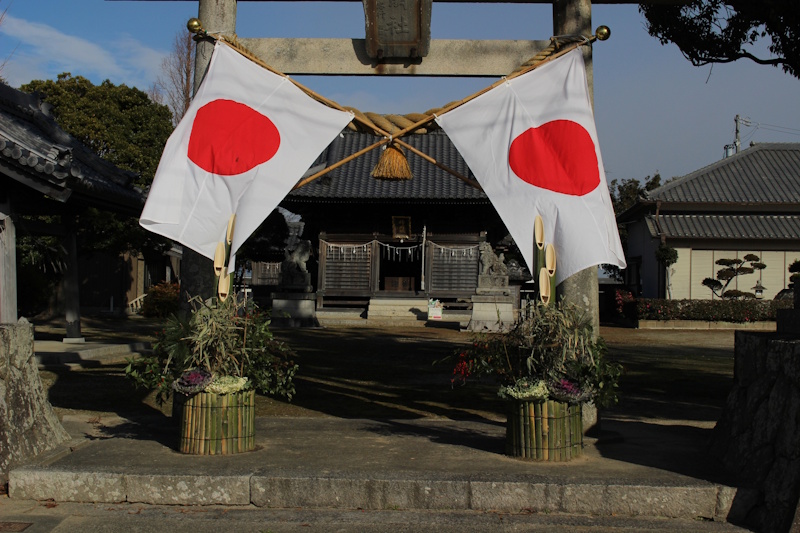
The controversy began back in July, just ahead of the most recent parliamentary elections, at an outdoor Sanseito rally headlined by party leader Kamiya Sōhei. Alongside more than ten thousand supporters, counterprotesters gathered holding signs reading “Japan first is discrimination.” Among them, one young college student waved his crossed-out flag, drawing ire from the conservative movement both on the ground and online.
At a press conference in October, Kamiya revealed that he had begun talks about the defacement bill a few days after the incident. Later that month, Sanseitō introduced a bill in the House of Councilors that would punish any flag defacement “with the intent to disrespect Japan.” The bill would impose a penalty of up to two years in prison or a fine of up to 200,000 yen ($1,300).
This isn’t the first time in recent history that Japan’s conservative government has put flag defacement in the crosshairs. A similar bill was proposed back in 2012, on the grounds that Japan already has the same legal punishments in place for defacing foreign flags, something that distinctly differentiates the discourse from similar problems in other countries. That push for reform fell apart, though, as the governing coalition dissolved before the law could pass.
Protestor response
The protestors in question are an independent group whose main political project is opposing Japan’s maintenance of its imperial system. Although it isn’t their primary objective, they say they are also concerned with the hardline conservative direction that Japan’s government is taking, especially the recent explosive growth of Sanseitō’s far-right movement.
In response to the news of the new bill’s introduction, members of the small group expressed fear and concern about the country’s future, arguing that the bill’s “intent to disrespect” language is dangerous because of its broad ambiguity. One member identified that such a law could be used to target political enemies at the government’s discretion.
The group initially faced widespread backlash online for the crossed-out flag, including from liberals. However, they say that the tide of opinion has shifted back toward freedom of expression since Sanseitō brought the conflict into the legal realm. The damage to Japan’s legal system, however, may have already been set in motion.
See a side of Tokyo that other tourists can't. Book a tour with Unseen Japan Tours - we'll tailor your trip to your interests and guide you through experiences usually closed off to non-Japanese speakers.

Parallels to Trump
Should the bill pass, it would contravene established legal precedent on freedom of political expression. According to Waseda University constitutional law professor Shida Yoko, protestors waved the crossed-out flag as an expression of political discontent (either with the state of the country, or with the state of the Sanseitō party). That means it falls firmly in the realm of free political expression guaranteed by Article 21 of Japan’s Constitution.
This precedent has been upheld as recently as 2019, when two people were detained by police after heckling a Abe Shinzō rally in Hokkaido. In the lawsuit that followed, the court held that the police officer’s conduct violated the couple’s right to free political expression. According to Shida, the fact that the 2025 protest involved defacing the Japanese flag does not constitute a legal ground for an exception to this well-established constitutional law.
Japan’s flag defacement law comes in parallel with Donald Trump’s unilateral August declaration via the White House official website. The statement declared that burning the American flag would be prosecuted by the US Attorney General as speech “likely to incite lawless action.”
Much like Kamiya’s bill, Trump’s statement is in direct contradiction to decades of legal precedent protecting flag burning as political free speech. While it is uncertain whether the two governments are taking direct cues from each other, it’s clear that the global right-wing political movement is aligning itself against political free expression on both sides of the Pacific.
Though their goals are aligned, Kamiya’s push in the Japanese parliament has stronger political grounding than Trump’s erratic write-up on a web page. As it stands, the U.S. Attorney General has no legal obligation to pursue prosecution, which would certainly result in a lengthy and likely embarrassing appeals process. If Sanseitō has its way with the new law, though, the Japanese legal system’s commitment to free speech would be put firmly to the test, as it would have to strike down an actual law directly.
A complex history with writing on flags

In spite of the parallels with America, Japan’s existing flag defacement law raises a more nuanced question of legal reform than in America, where all flag defacement – foreign or American – is protected speech.
The precedents for laws prohibiting the defacement of foreign flags in Japan were established in the 1960s. In one incident, protestors for Taiwanese independence caused an international incident by defacing the Chinese flag with pro-Taiwan slogans outside the Chinese consulate in Tokyo. The Japanese Supreme Court ruled that the protestors had put national security at risk with their “intent to disrespect” China.

Want more news and views from Japan? Donate $5/month ($60 one-time donation) to the Unseen Japan Journalism Fund to join Unseen Japan Insider. You'll get our Insider newsletter with more news and deep dives, a chance to get your burning Japan questions answered, and a voice in our future editorial direction.
While there is some rationale here, the clear double standard between Japanese flag defacement and foreign flag defacement in political protests also raises some reasonable calls for reform. For example, if Japanese protestors defaced the Russian flag in protest of Putin’s aggressive war in Ukraine, they could face legally codified punishment for their political speech. In some sense, then, the current right-wing attack on free speech has its foundation in a legal code that was already split on the issue of political expression, prioritizing the country’s diplomatic relations over individual rights.
Whether Kamiya’s bill passes or not, the latest controversy has drawn the country’s attention to a legal contradiction that warrants consideration. Supporters of free speech would hope that Japan would move to protect all forms of political protest. But as long as the conservative coalition is at the helm, such changes look a long way off.
The incident, along with another anime-related collab controversy, is a sign of increasing tensions between Japan and China.

One lawmaker warns that proposed spy legislation could tread on a booming business in Japan: support for one’s favorite idol or star.

The woman who may be Japan’s first prime minister is under fire for her “fossil-like thinking” on women’s rights.
Sources
「国旗損壊罪」創設に現実味 自民、維新、参政が刑法改正に前向き. Mainichi Shimbun
「日の丸にバツ印」掲げた大学生 あいまいな国旗損壊罪に「怖い」. Mainichi Shimbun
高市首相、悲願の国旗損壊罪 「愛国心の強制」自民からも懸念の声. Mainichi Shimbun
刑法第92条. Wikibooks
