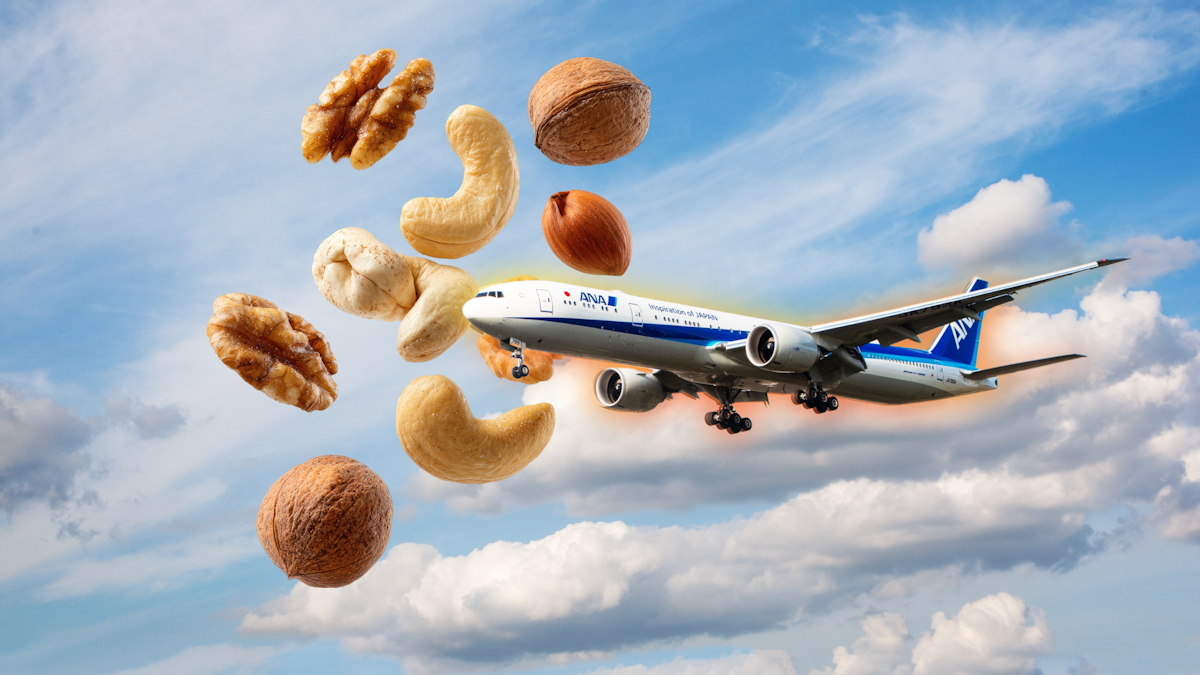


I live in Japan. I’m also married to someone with a nut allergy. And let me tell you, there are pitfalls everywhere.
Many commercial products these days (like desserts at a combini) are labeled clearly with the allergens they contain. However, the labeling is inconsistent – and, sometimes, nonexistent.
Going to cafes is a crapshoot as well. At some shops, desserts are produced off-site, and staff are fairly uneducated about what they contain.
There’s a reason many people seem not to care about what contains nuts here: they haven’t had to. Historically, nut allergies haven’t been prevalent in Japan.
However, just like with hay fever, that’s quickly changing. In the absence of regulations, Japan’s airlines are addressing this rapid rise in various ways to keep passengers safe in close quarters. Here’s how the best airlines here are handling it – and how to stay safe on your trip to Japan if you have a nut allergy.
Japanese airlines split on how to handle nut allergies
In a recent write-up on Japanese airline policies regarding nuts, FNN Prime Online cited a viral incident from 2025 involving TikToker Dan Kelly.
Kelly regularly asks cabin crew to make “nut-free” announcements before flights and posts the interactions on social media. One video racked up over 10 million views and 7,000 comments. While most people seemed understanding, some branded Kelly as “selfish” for wanting to save his life.
“One person shouldn’t dictate what a plane load of people can and cannot eat,” one user huffed.
The viral incident raised questions in Japan about how domestic airlines handle nut allergies. The answer is: it varies. A lot.
One of the best is All Nippon Airways (ANA). The airline now has a “special cleaning” service for passengers with severe peanut allergies, wiping down armrests, seatbelt buckles, overhead bin handles, and more before boarding.
Between April 2025 and early 2026, ANA carried out 334 such cleanings. The airline also offers allergen-labeled in-flight meals covering all 28 items that require labeling under Japanese law, and has removed nuts entirely from its complimentary snacks.
However, ANA doesn’t make cabin announcements asking other passengers to avoid eating nuts. British Airways, by contrast, routinely broadcasts such requests when an allergic passenger is on board.
Planning a trip to Japan? Get an authentic, interpreted experience from Unseen Japan Tours and see a side of the country others miss!

Airlines are essentially making up their own approaches due to the lack of any sort of regulatory standard. Japan’s Ministry of Land, Infrastructure, Transport and Tourism told reporters that allergy accommodations aren’t governed by aviation law and are left entirely to each airline’s discretion.
Ebisawa Motohiro, president of the Japanese Society of Allergology, warns that even opening a small packet of nuts in a pressurized cabin can trigger respiratory symptoms in nearby highly sensitive passengers. For a country where nut allergies are skyrocketing, leaving everything to voluntary corporate goodwill feels like a policy gap waiting for a tragedy to fill it.
Nut allergy cases surge past milk and wheat in Japan
The urgency becomes clear when you look at the stats.
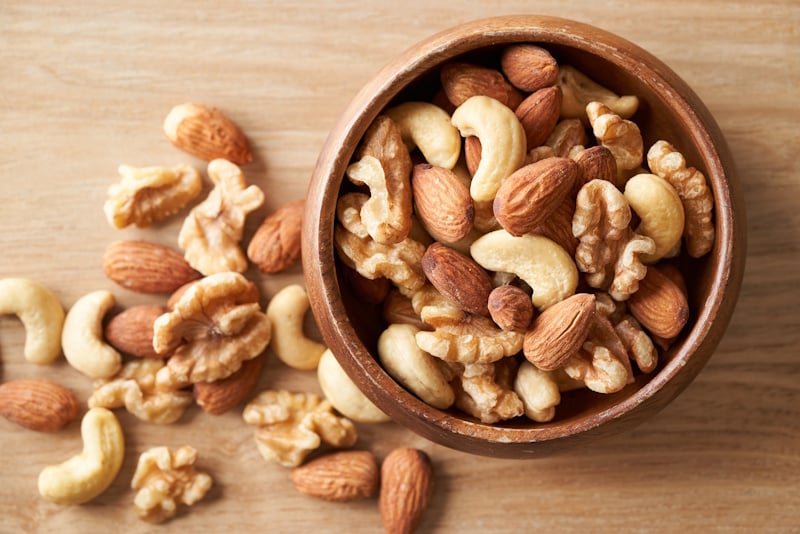
According to a nationwide monitoring survey led by Ebisawa and conducted every three years with allergists across the country, nut allergies have climbed rapidly over the past decade. Nut allergies are overtaking both wheat and milk to become the second most common food allergy in Japan.
In the most recent 2023 survey, eggs accounted for 26.7% of cases and nuts 24.6%. Ebisawa says the ongoing 2026 survey will likely show nuts taking the top spot for the first time.
Nut allergies remain dangerous for those affected because they’re hard to outgrow. Allergies to eggs, milk, and wheat typically appear in infancy and resolve on their own before children start elementary school, with roughly 80% of kids achieving natural remission. For nut allergies, the remission rate is only about 10%.
Nut allergies also tend to develop later in childhood. An analysis of the monitoring data shows that among children aged 3 to 17, walnut is already the single most common trigger. Of the top 10 foods most likely to cause anaphylactic shock, five are tree nuts.
Japan’s Consumer Affairs Agency has responded to the spike by tightening labeling rules. It upgraded walnuts from recommended to mandatory disclosure in 2023. It followed suit with cashew nuts in late 2025, bringing the number of mandatory allergen items to nine.
Staying safe with a nut allergy on your trip to Japan
Researchers point to several possible drivers behind the surge, including rising nut imports and increased use of nuts in processed foods and confectionery. Another possible cause is percutaneous sensitization, in which allergens penetrate the skin weakened by conditions like eczema.
Some argue for a broader “hygiene hypothesis,” which attributes rising allergy rates to overly clean environments that leave immune systems poorly calibrated. However, that hypothesis remains up for debate. Ebisawa notes that, even with improved treatment for infants with eczema, allergy numbers continue to trend upward.
Whatever the cause, the trend line is moving in one direction. And Japan’s regulatory response, both on the ground and in the air, is struggling to keep pace.
See a side of Tokyo that other tourists can't. Book a tour with Unseen Japan Tours - we'll tailor your trip to your interests and guide you through experiences usually closed off to non-Japanese speakers.

What does all this mean if you’re traveling to Japan with a nut allergy? It means you have to be extremely vigilant. If you travel on domestic airlines, for example, you need to ensure they take proper precautions regarding airborne allergens. As noted above, ANA seems better than most in this regard.
Navigating a food allergy can be difficult when you don’t speak the local language. We’ve helped many tourists navigate this thorny issue in Japan with our guided interpretation services. Contact Unseen Japan Tours to ask us how we can help you remain safe on your trip.
Yep or NOPE? Suntory’s New Dr Pepper-Like Soda Confuses Japanese Consumers
Suntory’s new drink NOPE promises lots of flavor. Just WHAT that flavor is, however, has sparked a raging debate in Japan.
This Ramen Shop in Japan Demands You Stay Off Your Damn Phone
The shop in Saitama Prefecture said it instituted the policy after a customer watched an “inappropriate” video.
250 Yen?! Super Cheap Ramen in Japan Draws Mixed Reactions
The cheap bowls are a relief to some trying to stretch their money in difficult times. To others, however, they’re a warning sign.
Sources
Airplane passenger’s life-saving allergy request sparks harsh backlash: ‘Why should everyone else have to worry about you?’ New York Post
日本でナッツ類アレルギー急増 2026年調査、卵上回る可能性. Nikkei
「機内でナッツ食べないで」微量で命に関わる症状も・・・ ナッツアレルギー当事者が抱える“空の旅”の不安 航空会社で対応に差. FNN Prime Online
