
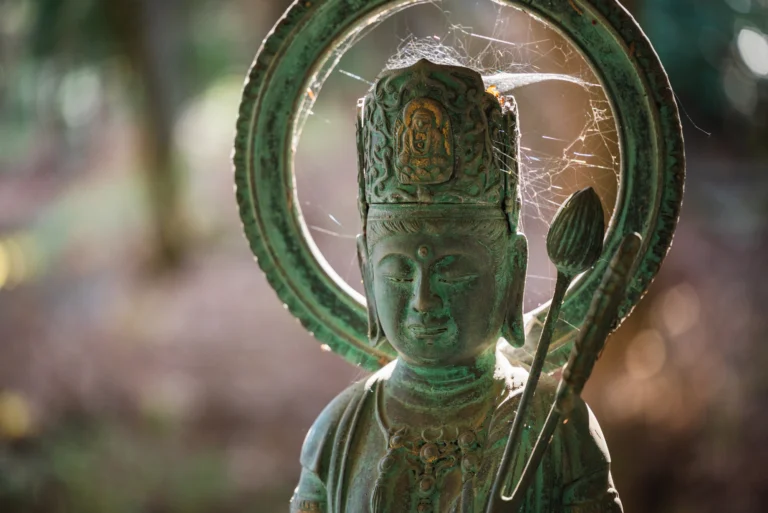
In a November 18 post on X, a former interpreter (@meriyasu4) recalled a question an American tourist had while visiting Japan. Namely, everywhere is so clean, yet at temples, shrines, and popular sightseeing spots, there were quite a few spiderwebs. Why weren’t people cleaning them away?
The interpreter didn’t have an answer, so they shared a personal take: their grandmother had taught them that spiders are considered messengers of the gods and Buddhas, so people shouldn’t kill them.
The post sparked a lot of discussion among X users, and it turned out this well-known Japanese childhood admonition has an unexpectedly international history.
A look at The Spider’s Thread and its backstory
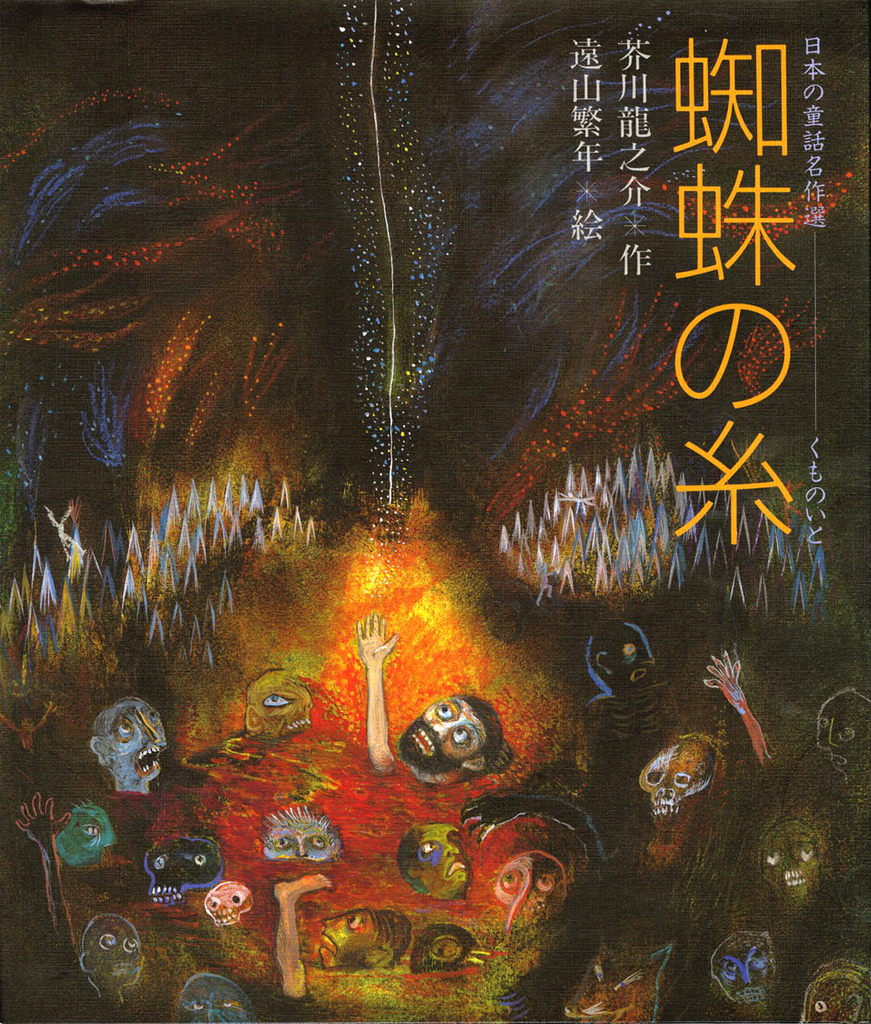
The former interpreter referenced “The Spider’s Thread” (蜘蛛の糸, Kumo no Ito), a short story by Japanese author Akutagawa Ryūnosuke. First published in July 1918 in the children’s magazine Akai Tori (meaning “red bird”), it’s become a staple of Japanese education. Generations of schoolchildren have encountered its memorable lesson about kindness, compassion, and the consequences of selfishness.
The story follows Kandata, a notorious robber and murderer who finds himself in hell. Despite his terrible record, he once did one good deed: when he encountered a small spider in a forest, he spared it rather than crushing it underfoot.
The Buddha remembers this moment of compassion and decides to give Kandata a chance to escape. He lowers a spider’s silver thread from paradise into hell, allowing the robber to climb toward freedom.
However, when Kandata notices other sinners climbing the thread behind him, he shouts at them to get off, wanting to keep salvation all to himself. At that moment, the thread snaps, sending him plunging back into hell.
It has a simple message, one that’s especially impactful for young children: even the smallest act of kindness can make a difference, but selfishness can undo it all.
The American origins of this Japanese classic
Although Akutagawa’s story is firmly rooted in Japanese literature, it began as a Buddhist-themed, English-language story called “Karma,” written by German-born philosopher and author Paul Carus. It first appeared in 1894 in The Open Court, an Illinois magazine that Carus edited.
Carus wanted to introduce Buddhist philosophy to Western readers, using a criminal named Kandata who was offered salvation because he’d once spared a harmless spider. In 1895, a book edition printed in Tokyo introduced some changes, including a more prominent spider-related backstory.
Meanwhile, D. T. Suzuki, an influential Buddhist scholar who worked for The Open Court, brought the story to Japanese readers. He translated it into Japanese in 1898 as Inga no Oguruma (因果の小車, “The Little Wheel of Cause and Effect”). Akutagawa appears to have drawn directly from Suzuki’s translation.
Funnily enough, scholars once thought Akutagawa borrowed the story not from Carus’s “Karma,” but from Fyodor Dostoevsky’s The Brothers Karamazov. That novel contains a parable about an onion with a similar theme: a woman’s one good deed becomes her potential route out of hell.
Do Japanese people really avoid killing spiders?

The interpreter’s grandmother wasn’t necessarily making up the idea of sparing spiders. Japanese folklore includes several beliefs about them, though the rules aren’t as simple as the story suggests.
One familiar saying concerns morning spiders and nighttime spiders. A spider spotted in the morning is considered a good omen, so, traditionally, you’re not supposed to kill it. The saying goes so far as to suggest that you shouldn’t kill a morning spider even if it’s your parent’s enemy.
Nighttime spiders, however, get considerably less favorable treatment. Another version of the same folk belief recommends killing them, sometimes associating their appearance with bad luck or an approaching thief.
There are also practical reasons to leave spiders alone. They eat flies, mosquitoes, and other insects, so keeping them around can be a kind of free pest-control method.
Question: do you like UJ's independent coverage of Japan? Our writers are supported by our members. Join Unseen Japan Insider to get bonus content every week, an ad-free website, and access to our large and growing Insider archive.If you love what we do, help us pay our writers to do more of it by joining Insider. You'll get bonus content every week, an ad-free website, and access to our large and growing Insider archive.
The religious side of things
Another thing to keep in mind is the Buddhist principle of not taking life, including even the smallest lives. Known as fusesshōkai (不殺生戒), the prohibition against killing living beings is the first of the five precepts traditionally given to lay Buddhists.
In that way, it’s pretty fitting that a story meant to help spread Buddhist ideals became so popular in a country where Buddhism is one of the main religions. (The other being Shintoism.)
Of course, there’s no official national policy against touching spiderwebs in temples or anywhere else. It’s more that some people, whether through children’s stories, religion, or culture, may not see spiderwebs as something “dirty” that needs cleaning.
To clarify: yes, temples do clean
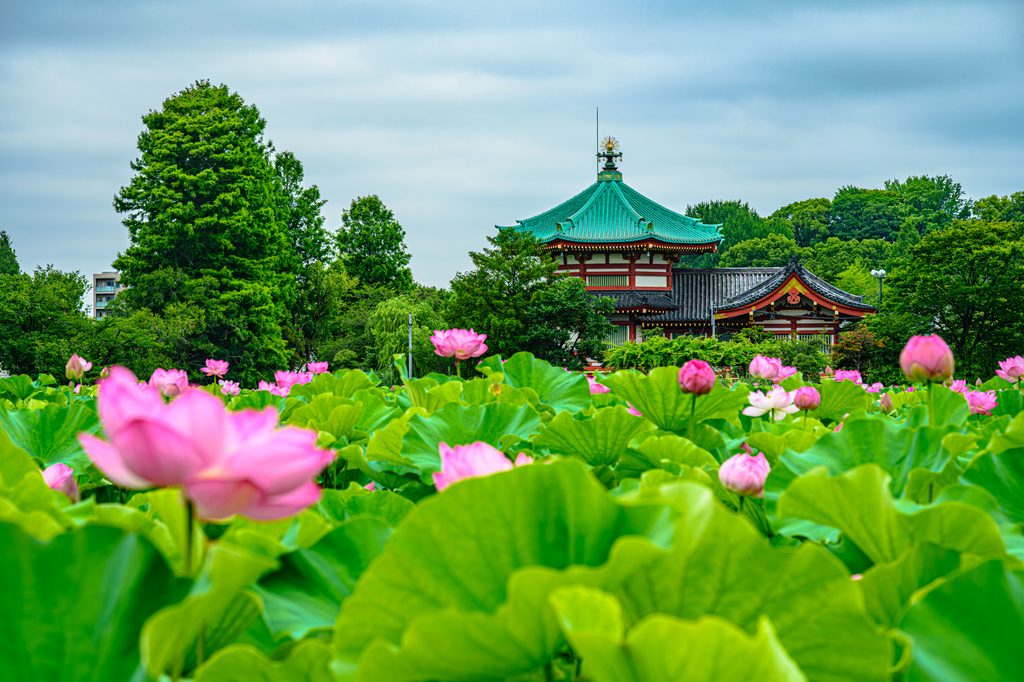
Of course, the existence of spiderwebs doesn’t mean Japanese temples have abandoned housekeeping. One particularly impressive example takes place every December 20 at Kyoto’s Nishi Hongan-ji temple.
During its annual year-end cleaning, monks and laypeople gather to remove accumulated dust from the temple’s enormous Goeidō hall. Using long bamboo sticks, they beat dust from the tatami mats while others fan it away with enormous handheld fans. The tradition reportedly dates back more than 500 years, to the time of the Buddhist leader Rennyo.
In other words, Japanese religious sites take cleanliness very seriously, even if they don’t remove every spiderweb the eye can see.
And perhaps that’s the simplest explanation for the tourist’s observation: spiders are fast little suckers. Even if people sweep webs away, spiders can respin them quickly, especially during Japan’s humid rainy season. Still, it’s interesting to think about how a Buddhist parable traveled across the ocean to become a children’s story.
Keep reading




Sources
以前アメリカ人観光客の通訳を務めた時「日本人は街を清潔に保つのになぜ蜘蛛の巣を取り除かないのか、寺社仏閣や観光地でも見た」と質問されたので「蜘蛛の糸」の話をした Togetter
図書カード:蜘蛛の糸 青空文庫
『蜘蛛の糸』の材源をめぐって 筑波大学リポジトリ
ポール・ケイラスと芥川龍之介:ヨーロッパの仏教説話に対する日本人の反応 桃山学院大学学術機関リポジトリ
「蜘蛛の糸」とその材源に関する覚書 成城大学
Karma, a story of Buddhist ethics Internet Archive
因果の小車 国立国会図書館サーチ
朝蜘蛛(アサグモ)とは? 意味や使い方 コトバンク
朝の蜘蛛は福が来る ウィクショナリー日本語版
不殺生戒(ふせっしょうかい)とは? 意味や使い方 コトバンク
害虫?益虫?家の中に住む大きなクモ『アシダカグモ』 さいたま市
御煤(すす)払い【西本願寺】 京都観光Navi