
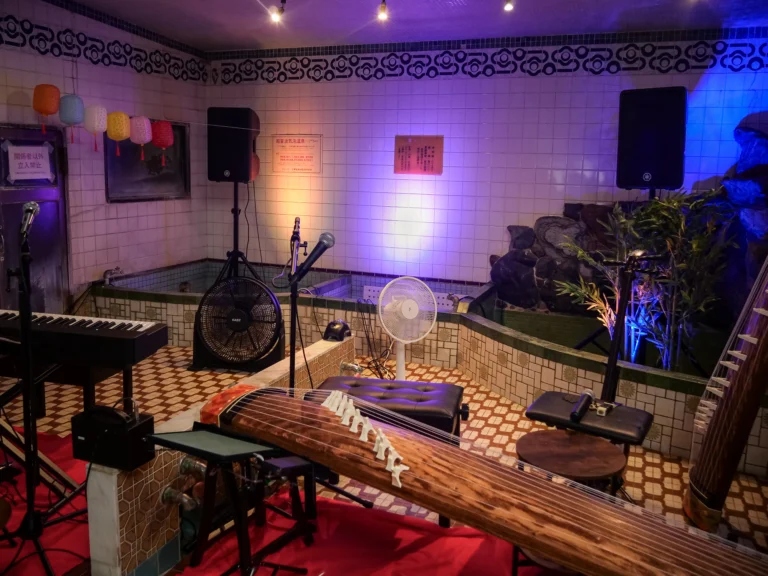
In an old Kyoto bathhouse, the tiled bathing rooms were once filled with the steam of hot water
and conversation. Now, the rooms echo with live music while the audience sips drinks in old
repurposed bathtubs.
Walking in feels much like entering a traditional sentō – pay at the front, change into slippers and
head to the tiled baths. But instead of soaking in the baths, guests come to jam out to live
music.
The bathhouse, Kujo-yu, has reshaped the former men’s section into a concert venue, while the
women’s side has been converted into a bar and restaurant.
This transformation is part of a larger challenge sentōs are facing across Japan: how to
preserve spaces that were once an essential part of everyday life as fewer people rely on public
baths.
The waning interest in sentōs
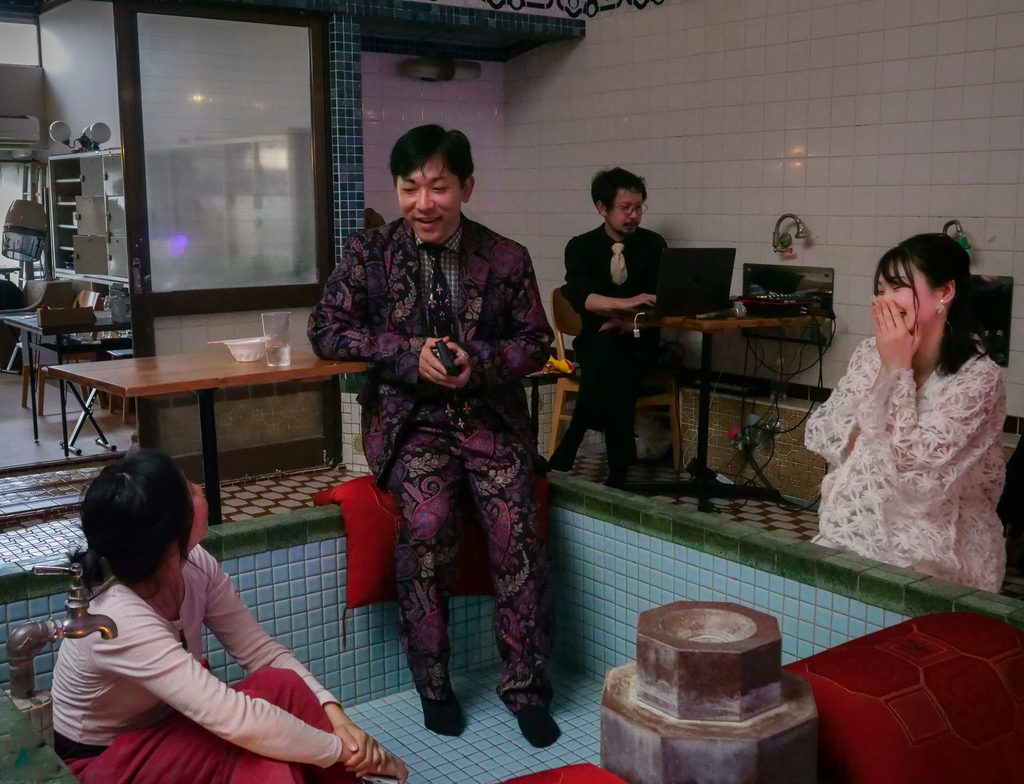
Communal bathing in Japan goes back to the sixth century, when Buddhism brought ritual washing to temples, which offered free baths to the public. The commercial bathhouse arrived much later: the first sentō opened in Edo in 1591. Sentōs gained
popularity in the Edo period (1603-1868) as a place to bathe, socialize, and relax in steamy hot
water.
“Before, people in Japan used to come to sentōs because they didn’t have baths in their
homes,” said 30-year-old Higashi Shohei, who hosts musical performances in the old bathhouse, decommissioned as a sentō before it became a concert venue.
For centuries, many Japanese homes lacked private bathing facilities, making neighborhood
sentōs an essential part of everyday life. As private bathrooms became a standard feature of
Japanese homes from the late 1960s onward, the neighborhood sentō gradually lost its essential role,
contributing to the steady decline of public bathhouses across Kyoto.
At their peak around 1965, Kyoto City alone had roughly 500 sentōs. Today, the Kyoto Prefectural Cooperative of Public Bath-house Operators lists only 100-some sentōs across the prefecture.
Another reason why sentōs have declined so rapidly is that they cost a lot to maintain; that’s
become an increasing challenge as fuel prices have risen in addition to the high labor costs
from cleaning staff and front desk attendants.
Water used in sentōs has to be regularly replaced and heated to stay around bathing
temperature, often 40 to 42°C (104 to 108°F). Even on slow days, that standard holds, resulting in high costs and lower earnings.
Because many sentōs are in buildings that are many decades old, upgrading to new plumbing
and ventilation systems tends to be expensive. Aging buildings cost a lot to maintain and tend to
have poor insulation, which makes it harder to retain heat.
Question: do you like UJ's independent coverage of Japan? Our writers are supported by our members. Join Unseen Japan Insider to get bonus content every week, an ad-free website, and access to our large and growing Insider archive.If you love UJ's independent coverage of Japan, join Unseen Japan Insider to get content every week, an ad-free website, and access to our large and growing Insider archive.
A koto in a bathhouse?!
As operating costs increase and regular customers decline, many remaining sentōs have had to
rethink how they can continue operating. Some have looked for ways to attract new visitors,
while others have transformed into spaces for cultural events and experiences that preserve the
social role sentōs once played.
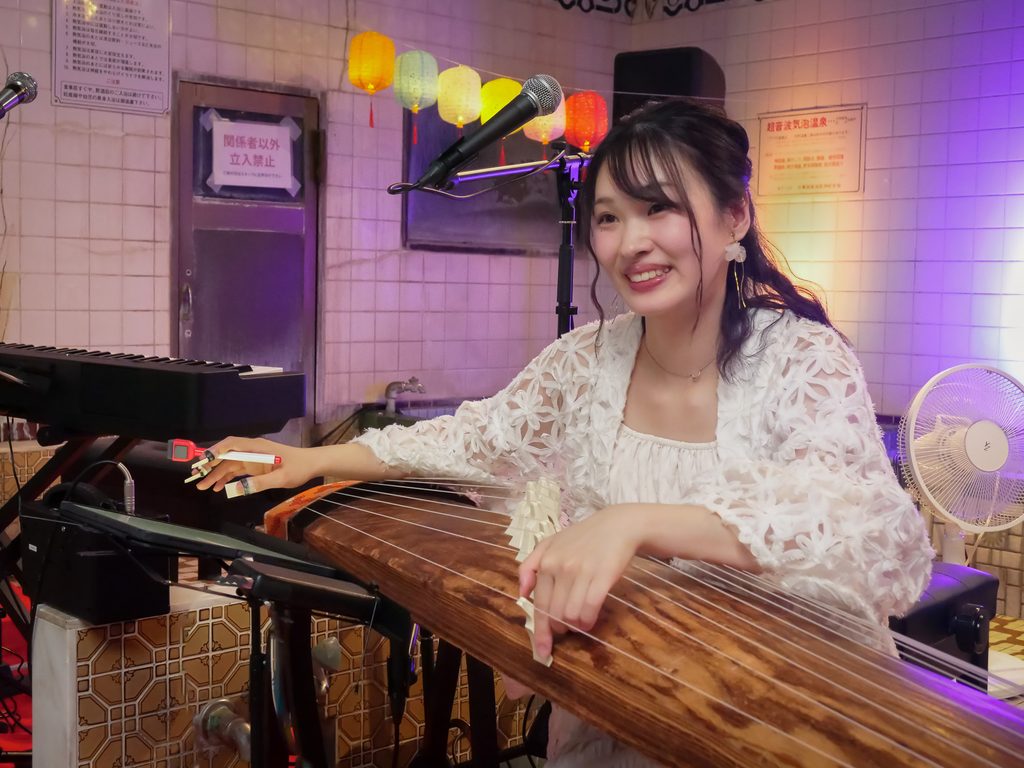
Higashi, a Japanese musician and Kyoto resident, runs Gen, an organization that “plans and
produces wagakki concerts,” performances with traditional Japanese instruments like the koto
and shamisen.
The program, known as “Gen Soundbath Kujo-yu,” is organized in the renovated public
bathhouse as a way to “blend cultural heritage with modern creativity,” offering a unique tiled
space for the instruments to shine.
“Places like these are rare nowadays,” said Higashi. “They’re disappearing.”
Kujo-yu is a former neighborhood sentō in Higashi-Kujo, Minami Ward, Kyoto. According to Kyoto City’s registry of notable buildings and gardens, the nearly century-old building was decommissioned as a sentō in 2008. It is now managed as a community space by Ikai Naoyuki.
About a five-minute walk from Saiin Station, Higashi also runs Gen Home Saiin, a small hands-on
concert in a private Kyoto home allowing only up to nine guests so people can ask questions and
talk with the artists. Guests can see the close-up fingerwork of the koto and even try playing it
after the performance.
After moving to Kyoto from Tokyo in 2020, Higashi asked Ikai of Kujo-yu for permission to
leave flyers for a concert he was organizing, Gen Furusato Saiin. After taking interest in the
event, Ikai offered to let him start hosting events at the sentō.
The bathhouse Higashi hosts at, located about a five-minute walk from Kujo Station, is the only
one in Kyoto doing regular performances with wagakki.
“As far as I know, this kind of regular wagakki performance is unique to this bathhouse,” Higashi said.
Bringing back the communal experience
In addition to communal bathing, sentōs provided a place for people to gather. Higashi is trying
to bring that part of the sentō experience back with his musical performances in the former
bathhouse.
“A bathhouse has a unique sound and echo, quite different from a regular concert hall,” Higashi
said. “The sound of traditional Japanese instruments can be experienced in a more memorable
way.”
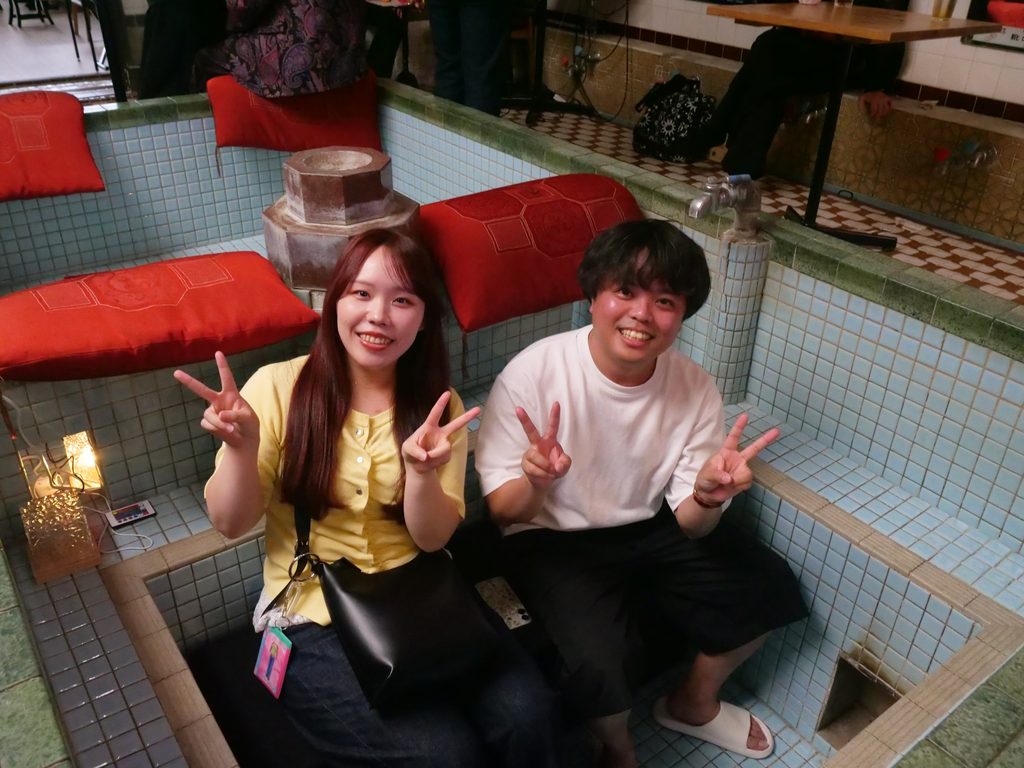
Musicians who performed at the sentō in June combined traditional Japanese instruments with
modern ones like the keyboard, as audience members sat around the former bathing area, now
decorated with lights and cushions inside empty bathtubs.
Kazuhiro Ichi, the artist who played the keyboard at the sentō, has been performing
internationally around Japan and in the United States for 20 years.
“Playing at the sentō was a very special experience,” Kazuhiro said. “The atmosphere inspired
me and gave me many ideas for my keyboard playing.”
For Higashi, who plays traditional instruments such as the koto and shamisen, the bathhouse’s
history gives the venue a distinctly Kyoto character.
The restaurant in the women’s side of the sentō, Darekanchi, operates as a cafe during the day
and izakaya by night separately from Higashi’s concert venue next door. Renting out part of the
sentō, explained the bar staff, makes the space a “different setting with a very Kyoto vibe.”
At the concert in June, the izakaya collaborated with Gen Soundbath Kujo-yu with
complimentary food and drinks for audience members who had paid the entrance fee. After the concert, some audience members moved to the women’s section of the sentō and sipped coffee in the relaxing atmosphere of the restaurant.
The collaboration is a first of many, according to Higashi.
“I’m planning monthly performances here for now,” he said. “Hopefully with more funding we can
make them more frequent in the future.”
Gen Soundbath Kujo-yu will be hosted at the sentō on the last Saturday of every month
beginning in July 2026.
Keep reading

Sources
【公式】京都銭湯 京都の銭湯100軒以上をご紹介 京都府浴場組合
後世に残したいまちかど遺産! 京都の旅のシメはレトロな銭湯へ 京都観光Naviぷらす
旧九条湯 京都を彩る建物や庭園
九条湯とは コワーケーションスペース九条湯
絃 湯響 九条湯 | Gen Soundbath Kujo-yu 絃
Gen Home Saiin | 絃 故郷 西院 絃
京都の「銭湯」で楽しむ和楽器コンサート『絃 湯響 九条湯』が2024年12月16日(月)にオープン! PR TIMES
「銭湯業界」の動向調査(2025年度見通し) 帝国データバンク
銭湯の歴史 東京都浴場組合