


This past week, advocates for marriage equality in Japan won another victory. The High Court of Nagoya sided with plaintiffs in ruling Japan’s refusal to recognize same-sex marriages as unconstitutional.
The case, as reported by Mainichi Shimbun, was brought by a same-sex couple in their 30s. It asked for both the court to find the denial of full marriage rights illegal, as well as for damages. The couple appealed a lower court ruling that found the restrictions illegal but not unconstitutional.
The Nagoya court ruled positively on the former, finding that the denial violates the couple’s guarantee of equality under the law under the 14th Amendment of Japan’s Constitution, and also the 24th amendment respecting the sanctity of the individual and the equality of both genders.
Like other courts, however, the court ruled that the country was not negligent in failing to provide a framework enabling marriage equality. As such, it denied the plaintiff’s request for financial damages.
The ruling is the fourth victory out of six lawsuits in a High Court in Japan that found Japan’s lack of acknowledgement of marriage unconstitutional. Courts in Sapporo, Tokyo, and Fukuoka have issued similar verdicts, also without financial damages attached.
Separate but not equal

Japan has seen a lot of progress in LGBTQ rights and awareness over the past decade. Local governments in particular have addressed the lack of marriage equality by creating partnership systems that grant couples some of the same rights of marriage, such as signing joint contracts and making medical decisions on each other’s behalf.
Tokyo implemented a metropolis-wide partnership system in 2022. Today, according to Niji Bridge, partnership systems cover 85.1% of Japan’s population. 7,351 couples have registered their relationships under these systems.
Planning a trip to Japan? Get an authentic, interpreted experience from Unseen Japan Tours and see a side of the country others miss!

However, partnership systems can’t grant rights covered by the national government, such as inheritance rights. They’re also tied to one’s current municipality, meaning couples could lose their recognition if they have to move (e.g., for a job transfer).
Even in areas where same-sex partnerships are recognized, discrimination still exists. We wrote in 2023 about a lesbian couple in Tokyo who found it difficult to find a hospital that would give them pregnancy care.
Advocates for marriage equality, such as Matsuoka Soshi, head of the organization fair, responded to the ruling positively. “People are asking the country to move swiftly to make marriage equality a reality,” he wrote.

The parade in Hitachi, Ibaraki Prefecture, shows how Japan’s LGBTQ+ citizens are committed to raising awareness in smaller cities and towns.
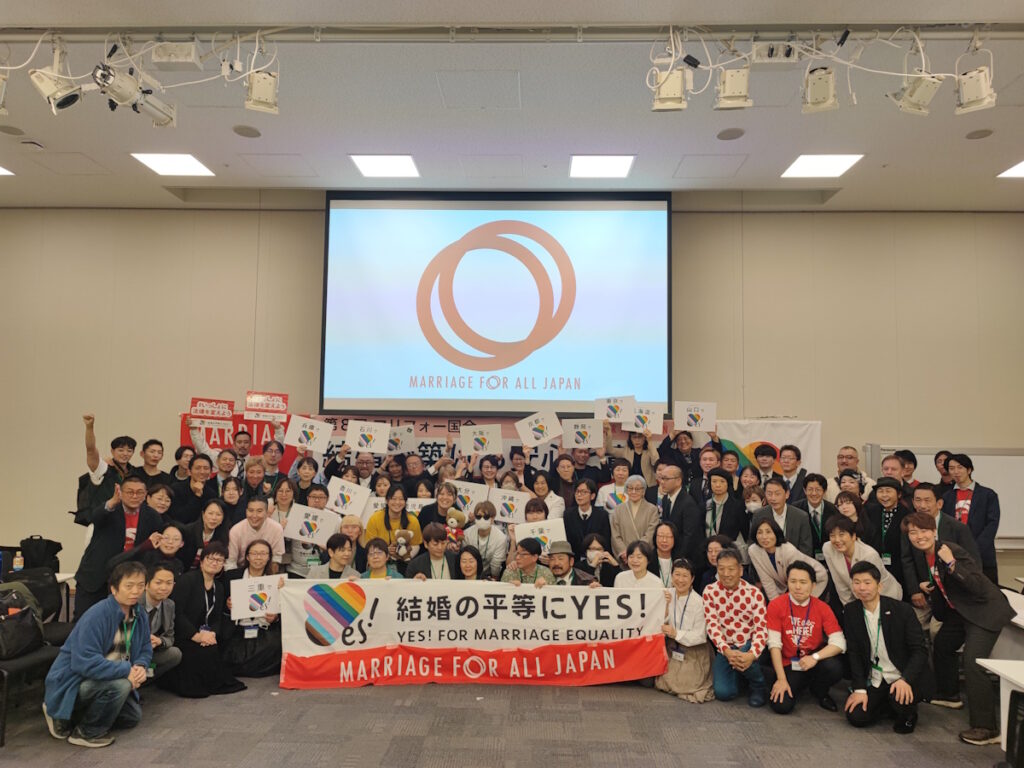
After a bitter court loss, LGBTQ people in Japan continue pressing politicians for fast action.
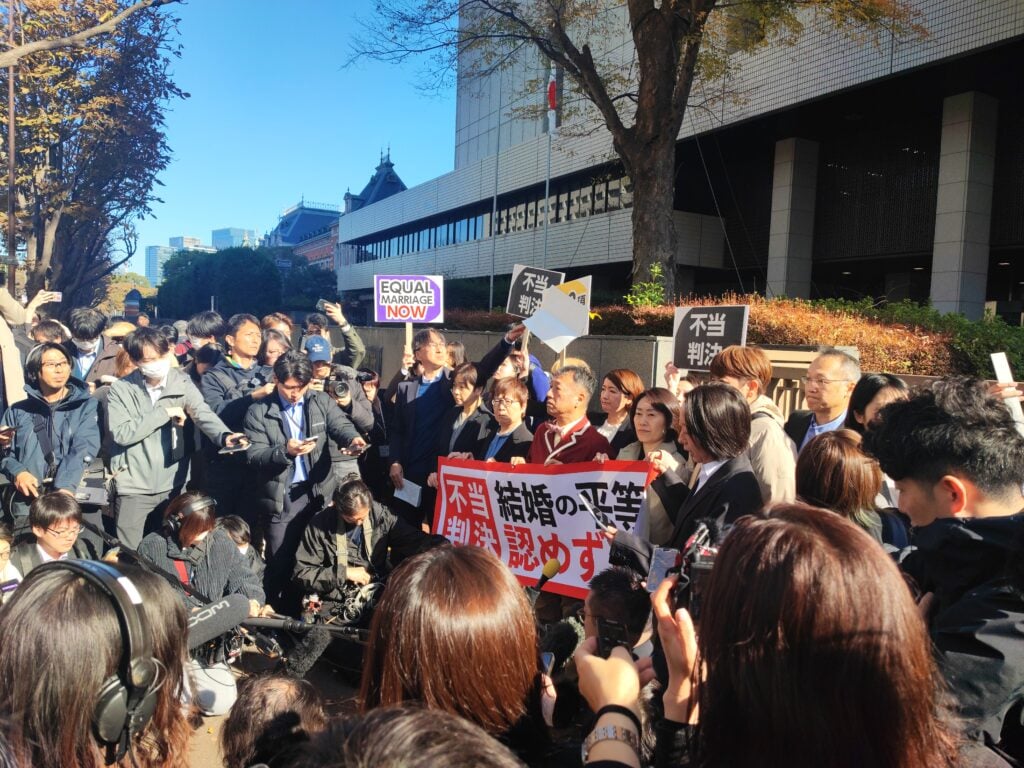
Supporters of marriage equality in Japan were met with an unexpected setback after a series of affirmative rulings.
