


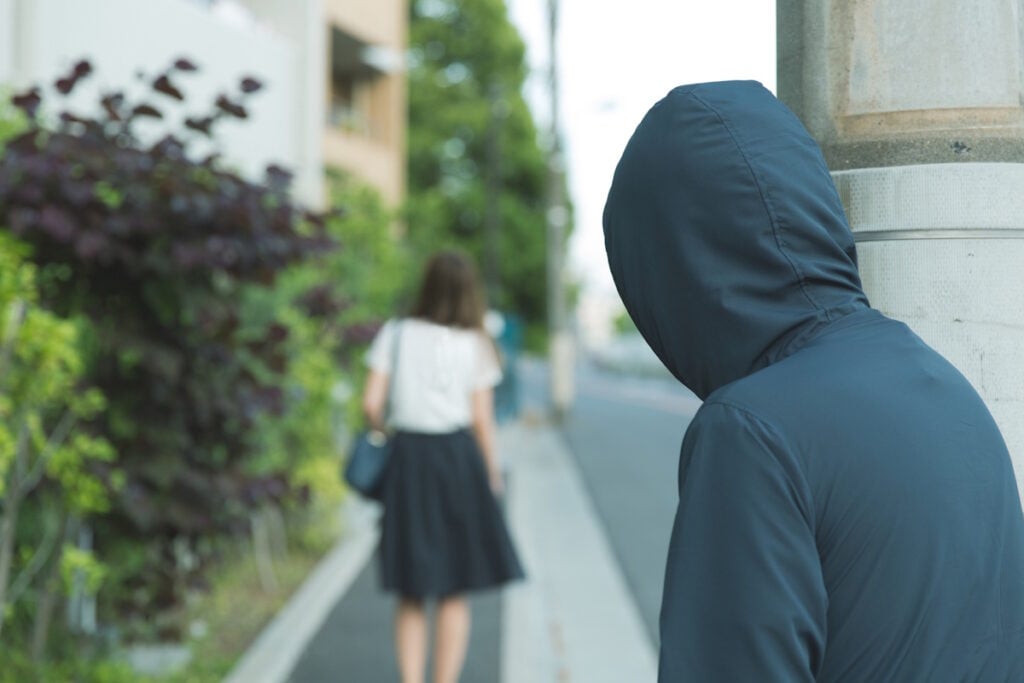
Japan has long struggled to combat sexual crimes against women – particularly nonconsensual photography. Now, news reports say that schools are struggling with how to handle a spike in nonconsensual photography among students.
Statistics show a general rise in nonconsensual photography (盗撮; tousatsu) cases across the country. In 2022, Japan had 5,737 reported cases. In 2023, that spiked by 1,196 cases to a total of 6,933.
The spike came despite a new law passed in 2023 that created a uniform penalty for nonconsensual photography of up to three years in jail. Before then, the crime fell under Japan’s Nuisance Laws, which all prefectures enforce differently.
Sadly, Japan’s schools aren’t doing much better. As more young people carry smartphones, cases of nonconsensual photography are spiking in schools, too. Last year, there were 169 reported cases from schools and daycares. That’s over twice the number (75) reported in 2022.
Authorities say that, while many cases are of adults taking pictures of kids, they’ve seen an increase in kids committing the crime against their peers. In some cases, the assailants upload the images to social media or share them among friends.

However, some schools aren’t pursuing these cases as crimes. In one case noted by LiveDoor News, a male student snuck photos of a girl while she was changing. Instead of reporting the case to the police, the school “taught him how to use a smartphone properly.”
Child sexual crimes expert Sakurai Tsutsumi, a professor at Otemon Gakuin University, says schools need to do more to teach students that nonconsensual photography and distributing nonconsensual photos isn’t a fun prank – it’s a crime.
"Noah [at Unseen Japan] put together an itinerary that didn’t lock us in and we could travel at our own pace. In Tokyo, he guided us personally on a walking tour. Overall, he made our Japan trip an experience not to forget." - Kate and Simon S., Australia

Japan has been working in recent years to combat various forms of nonconsensual photography. In some cases, men have used infrared cameras to capture photos of adult women and minors at sporting events. Sports clothing manufacturers in Japan have developed anti-infrared technology to prevent athletes’ undergarments from showing through in infrared photos. Many sporting events – particularly for minors – have banned photography altogether.
Groping (痴漢; chikan) is also a rampant – and underreported – crime against women in Japan. One study says that as many as 80% of molestation crimes may go unreported.
Along similar lines, many purikura photo booths, a popular activity among young Japanese women, forbid unaccompanied men from using the facilities in a bid to keep women safe.

The average age for wanting kids climbs as more young women in Japan worry about the impact child-rearing will have on their careers.
The ominous spike could be a sign that police in Japan are finally starting to take women’s allegations seriously.

Five women in their 20s and 30s challenged a 1996 law that prevents them from controlling their own biology.
Sources
【盗撮】学校で生徒同士の被害も増加 防ぐために必要なことは. Livedoor News
「撮影罪」施行から1年も“盗撮被害”は増加の一途…専門家が指摘する「卑劣な犯行」が減らない“根本的要因”. Ben54
