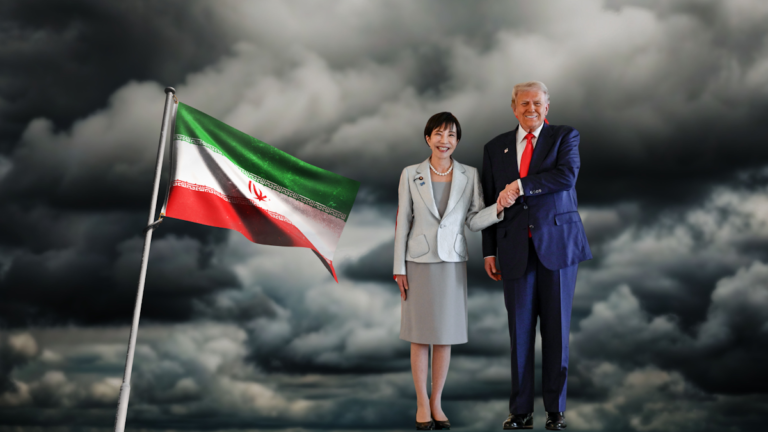

Source: @nikkan_gendai on X (2026-04-17)
Overall verdictOverwhelmingly negative, with the phrase flipped right back at her. When LDP freshman Kado Hiroko called the 30,000-person “penlight demo” outside the Diet “playing pretend,” reply-guys on both left and center turned the insult around on her. The top reply, with over 3,500 likes, reads simply: “Tell your useless prime minister to stop playing pretend at being PM.” Across the 384 most-engaged replies, a clear majority defended demonstrations as a core of democratic participation, with many calling Kado condescending, out-of-touch, or unfit for office. A secondary vein of mockery hit Kado personally, as a well-known block-happy LDP backbencher and ex-METI bureaucrat who had supposedly forgotten that citizens, not donors, put her in her seat. A smaller but loud supporter camp argued the protest numbers were inflated, that the crowd was JCP-adjacent, and that demos don’t move election results. But the dominant tone was indignation, not debate, and even some of Kado’s defenders conceded she had chosen her words poorly on national TV.
Note: Comments on X (formerly Twitter) in Japan tend to skew toward the political right, though individual threads may lean left depending on the original poster and topic. These comments are not necessarily representative of the Japanese population as a whole.
What the tweet was about
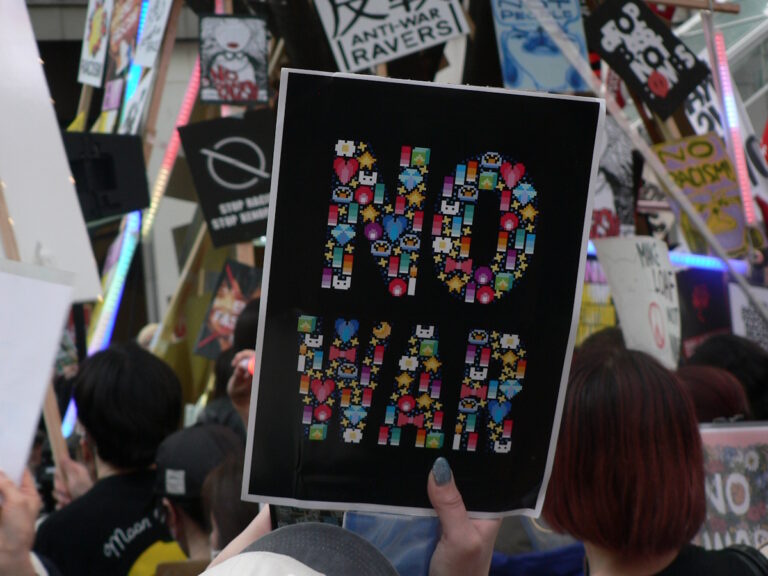
On an April 14 broadcast of Abema Prime, Kado Hiroko — a 45-year-old first-term LDP Lower House member and former METI bureaucrat — was asked about a 30,000-person protest outside the Diet opposing PM Takaichi Sanae. She replied, “Gathering at the Diet and waving penlights isn’t going to change the government. Everyone knows that. Taking that kind of action and feeling like you accomplished something — I know this sounds harsh, but to me it just looks like playing pretend” (ごっこ遊び, gokko asobi).
The phrase detonated. Kado’s usage implied the protest was childish, symbolic at best and LARP at worst. Critics noted that the April 8 protest was one of a multi-month series of demonstrations against Takaichi’s push to revise Article 9 of the constitution and to enact new surveillance legislation — the same 30,000+ who have been the main counter-force to the LDP’s supermajority since the snap election.
Nikkan Gendai’s post describing the backlash hit 22,000+ likes within a day. Kado later clarified on her own account that she meant demonstrations alone, without also building parties and running candidates, were insufficient — but the clarification landed with a crowd that was already reading her as dismissing citizen speech on principle.
Sentiment distribution (engagement-weighted)
as democracy
back at the LDP
Highest-engagement comments
Activity timeline (JST, 2026-04-17)
Key themes in detail
🚫 Democracy is no game · 53.3% of engagement
The dominant reply framed Kado’s remark as an attack on democratic participation itself. Respondents argued that protest, assembly, and criticism are constitutional rights regardless of whether they move the dial on the next election, and that a sitting Diet member treating constituent demonstrations as child’s play disqualifies her from office. Several invoked Tanaka Kakuei’s dictum that “a politician who can’t feel the people’s pain can’t do the job.”
The free-assembly principle came through repeatedly: “Democracy isn’t only voting,” “Hating the freedom of assembly is the mark of a fascist,” and a sociologist-quoting reply citing Oguma Eiji on “a society that can demonstrate.” A significant subset called for Kado to resign outright, with hashtags like #門寛子やめろ and #門ひろこを落とそう gathering dozens of attached replies.
🪞 Attacks on Kado · 17.4% of engagement
A second major vein went after Kado personally. Multiple top replies pointed out that Kado is a notorious blocker on X — respondents who had criticized her said they’d been silently blocked without interaction — and described her as a “Takaichi Child” (高市チルドレン), a backbencher whose entire career rests on loyalty rather than independent standing.
“This person is the one playing at being a politician,” went the flip. Critics noted that as an ex-METI bureaucrat, she represents exactly the kind of credentialed, elite, party-machine politician whom voters encounter only as a gatekeeper. Many posts paired this with Kado’s rumored alignment with the pro-male-line imperial succession faction, framing her as patriarchal and out of touch.
🎭 Flip on Takaichi · 13.5% of engagement
A parallel thread used Kado’s phrase as a weapon against PM Takaichi’s entire governance. “Takaichi’s summit diplomacy is the real ‘playing pretend,'” wrote one commenter with nearly 200 likes: phone calls lose the first ten minutes to interpreter pleasantries, and the Macron visit reportedly involved Takaichi reading prepared remarks off paper. Another contrasted the demo’s “pretend” with Takaichi’s “hug diplomacy,” self-defense-force photo ops at the party convention, and an LDP youth-wing scandal involving a reported swingers’ party.
A sarcastic variant offered to take Kado at her word: “So there’s no problem if we keep doing it, right? If it’s just pretend play, let’s all grab penlights and pretend-protest at scale. And when the police show up, we just say ‘we’re playing pretend, officer.’ Peaceful, everyone wins.”
👍 Agree with Kado · 9.5% of engagement
A minority of replies, mostly from accounts that read as LDP-aligned or anti-opposition, defended Kado’s core claim. Their argument: organizer-claimed attendance of 30,000 is an inflation of perhaps 3,000 actual attendees; the protests are dominated by the JCP or fringe student groups like Zengakuren calling for “violent revolution,” which makes the penlights look grotesquely naive; and three election losses in a row show that demonstrations don’t convert into ballots.
“The LDP just won a snap election three months ago on the explicit issue of a mandate for Takaichi. If you understood democracy, you’d know 30,000 at the Diet isn’t a mandate,” one top-tier reply said.
🧷 Framing debate · 6.4% of engagement
A smaller thread focused on how the protest itself is being narrated. Several respondents pushed back specifically on the identification of the penlight demos with Zengakuren (全学連) or “violent revolution” rhetoric, noting that the actual April 8 rally was organized by a coalition including “WE WANT OUR FUTURE” and the “Don’t Break Article 9 Committee,” with most turnout driven by individual callouts. Zengakuren affiliates appeared as participants but weren’t the organizers, and conflating the two, commenters argued, is how Abema’s producers built the segment that Kado walked into.
A related argument framed penlight demos as a Reiwa-era, K-pop-influenced, individual-participation style closer to South Korea’s candlelight protests or NO KINGS rallies in Taiwan, not the Showa-era student-sect protests that Abema was implicitly comparing them to. “Demo equals violence is such a Showa worldview,” one reply noted.