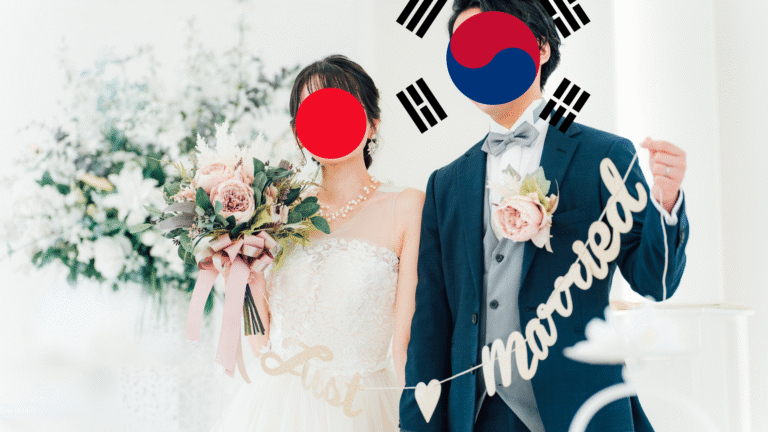

Source: @YahooNewsTopics on X (2026-05-01)
Overall verdictSkepticism, hostility, and a viral fact-check. A Yahoo News Topics headline announcing a surge in Korean-Japanese marriages ignited a firestorm on X, but the most-liked comment (3,228 likes) was a measured correction: the article describes Korean domestic marriage statistics, not Japanese women abandoning Japanese men. Below that top reply, the thread fractured into hostile camps. DV warnings dominated one flank, with users citing countries that have restricted marriages to Korean nationals and sharing anecdotes of abuse. Nationalists demanded the women renounce their citizenship and move to Korea. A gender war erupted in the middle, with some users mocking Japanese men as undesirable and others calling the women foolish. The smallest but most substantive thread analyzed the economic pressures driving the trend, particularly Korea’s crushing marriage costs.
Note: Comments on X (formerly Twitter) in Japan tend to skew toward the political right, though individual threads may lean left depending on the original poster and topic. These comments are not necessarily representative of the Japanese population as a whole.
What the tweet was about
A Nishinippon Shimbun article reported via Yahoo News that marriages between Korean men and Japanese women registered in South Korea rose 26.1% in 2025 to 1,483, following a 40.2% increase the year before. The article attributed the trend to cultural proximity through K-pop and dramas, improved Japan-Korea relations under the Yoon administration, and the appeal of sharing marriage costs. Korean tradition expects the groom’s family to provide housing, which in Seoul can run over 34 million yen.
The Yahoo News Topics account shared the story with the headline “Korean Men and Japanese Women: Marriages Surging.” But as the most-liked reply (3,228 likes) quickly noted, the framing was misleading. The data reflected Korean government statistics about marriages registered in Korea. The story was really about Korean men increasingly choosing Japanese women as partners within Korea’s own marriage market, not about Japanese women leaving Japan in droves.
The distinction mattered enormously to the commenters, many of whom read the headline as an attack on Japanese masculinity or a piece of pro-Korean propaganda. The thread became a proxy battlefield for Japan’s ongoing anxieties about gender relations, demographic decline, and cultural influence from South Korea.
Sentiment distribution (engagement-weighted)
top correction
engagement
Highest-engagement comments
Activity timeline (JST, 2026-05-01)
Key themes in detail
📰 Misleading Headline & Media Skepticism · 43.3% of engagement
The dominant reaction was not about intermarriage itself but about the headline. Dozens of commenters pointed out that the article described Korean domestic marriage statistics, meaning Korean men in Korea were choosing Japanese women as partners, not that Japanese women were flocking to Korean husbands. The most-liked reply (3,228 likes) laid this out clearly, and several others echoed it with varying degrees of frustration.
Beneath the factual corrections sat a deeper layer of media distrust. Users accused Yahoo News and the Nishinippon Shimbun of deliberate “impression manipulation” and pro-Korean bias. Some dismissed the story as outright fake news. Others invoked the Unification Church’s mass wedding history, suggesting the numbers might be inflated by organized religious matchmaking rather than organic romance. The thread’s Community Note being triggered on the original tweet only reinforced the sense that the framing had been deceptive from the start.
⚠️ DV & Safety Warnings · 21.6% of engagement
The second-loudest chorus was a wall of domestic violence warnings. Multiple highly-liked replies cited claims that several countries have restricted or banned marriages to Korean nationals due to DV rates. One commenter (505 likes) simply wrote: “I’m telling you, if you don’t want DV, stay away.” Another shared a story of a friend who was threatened with a knife when she tried to break up with a Korean boyfriend.
A Korean woman’s warning (778 likes) that Korean men are discriminatory toward Japanese people was widely shared. Several commenters pointed to Korean patriarchal culture rooted in Confucianism, warning that the gentleman behavior seen during courtship would vanish after marriage. Others asked why the media wasn’t reporting the voices of Japanese women who had experienced abuse in these marriages. The DV theme cut across political lines: both nationalists and feminists invoked it, though for very different reasons.
🇯🇵 Nationalist Rejection · 17.9% of engagement
A significant faction rejected the marriages on ethnonationalist grounds. These replies ranged from demands that the women give up their Japanese citizenship and live permanently in Korea, to outright racial slurs and dehumanizing language. One highly-liked reply (378 likes) told women not to “create humans with no education at the genetic level.” Others called the women traitors, spies, or sell-outs.
Some commenters questioned whether the “Japanese women” in the statistics were actually ethnic Koreans with Japanese citizenship, a common conspiratorial framing in Japan’s online right. Others demanded that Japan pass laws prohibiting Korean marriages entirely. The most extreme comments called for women who married Korean men to never return to Japan. This faction treated the headline as an existential threat rather than a demographic footnote.
⚔️ Gender War Dynamics · 6.5% of engagement
The thread became a proxy for Japan’s simmering gender war. One camp mocked Japanese men as unattractive, lazy, and unromantic, arguing that Korean men’s willingness to do housework and express affection made them better partners. “Japanese men don’t do housework. Their share of domestic labor is among the lowest in the world,” one commenter wrote. Others taunted: “The obvious losers are losing their minds.”
The opposing camp fired back with misogynistic insults toward the women, calling them stupid, brainwashed, or sexually loose. Some demanded that Japanese men “step up” rather than blame women. The gender war dynamic was notable for how quickly the discussion moved away from the actual Korean-Japanese marriage data and became a referendum on Japanese masculinity, with both sides using the headline as ammunition for pre-existing grievances.
💴 Economics Behind the Trend · 7.1% of engagement
The most measured thread focused on the economic mechanics. Korea’s marriage tradition requires the groom to provide housing, and with Seoul apartment prices soaring past 34 million yen, the financial barrier to marriage has become crushing. Several commenters noted that Japanese women’s willingness to “start small together” made them attractive partners precisely because they did not expect a fully furnished home on day one.
Others drew broader conclusions about Japan’s relative economic decline, pointing out that the weak yen and stagnant wages were making Japanese men less competitive in the international marriage market while Korean economic growth made Korean men more attractive. One commenter observed that the reverse pattern (Japanese men marrying Korean women) had been declining in lockstep with the yen’s fall. A few users ran the actual numbers, noting that 1,483 marriages in a year was statistically tiny and hardly warranted the “surge” framing.
🎶 K-Culture & Cross-Cultural Takes · 3.5% of engagement
A large volume of comments, particularly from lower-engagement accounts and international users, attributed the trend to Korean cultural soft power. K-pop, Korean dramas, and social media were cited repeatedly as the bridge that made cross-cultural romance feel normal for younger generations. Some commenters offered balanced takes, noting that cultural proximity could be both an advantage and a trap if people confused drama characters with real partners.
Personal anecdotes dotted this thread: a friend whose Korean husband cooks on weekends, a commenter who dated a Korean woman in Busan, someone who saw more Japanese-Korean couples in their neighborhood. These were drowned out by the hostile majority but represented the most human responses in the thread. A handful of users simply wished the couples well, noting that marriage is a personal choice regardless of nationality.