Overall verdictWidespread condemnation, with a sharp political edge. When @livedoornews reported that a man in his 50s had been arrested for apparently setting fire to the Shibuya Scramble Crossing and said he did it to “let the world know the current state of Japan,” the reply section did not erupt into debate about his motives. It erupted into anger at the act itself, and at the political world the man appeared to inhabit. The most-liked comment compared him to low-intelligence environmental activists. The second most-liked was a flat dismissal: “What’s in disrepair isn’t Japan’s condition, it’s yours.” The thread quickly drew a line between the man and the far-right online spaces he was linked to, including the Sanseito party. And a sharp secondary debate emerged: when right-wing sources initially suggested the suspect was a foreigner, several commenters publicly called out those accounts for deleting their posts when a Japanese man turned himself in.
Note: Comments on X (formerly Twitter) in Japan tend to skew toward the political right, though individual threads may lean left depending on the original poster and topic. These comments are not necessarily representative of the Japanese population as a whole.
What the tweet was about
On the evening of April 3, 2026, a man doused the Shibuya Scramble Crossing with a gasoline-like liquid and set it alight. He then turned himself in to police, and was arrested on suspicion of obstruction of traffic (往来妨害). In his statement to investigators, he said: “I set fire to the Scramble Crossing. I did it to let the world know the current state of Japan.” A piece of cardboard bearing a handwritten message had been placed at the intersection, suggesting the act was intended as political protest.
Crucially, no one was injured. Police and passers-by responded quickly. But in the immediate aftermath, a detail emerged that was reported by multiple commenters: the man had attempted to rent a car beforehand and was refused. Several users noted this openly, with one comment earning 48 likes: “He couldn’t rent a car. When you think about what he was planning to use it for, it’s terrifying.” The implication that a vehicle attack might have been his original intent sent a chill through the thread.
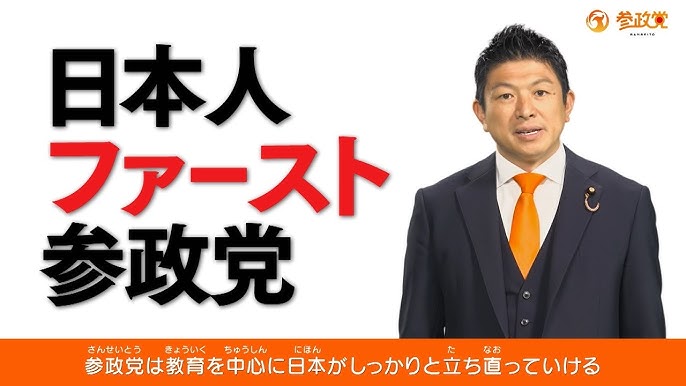
By the next morning, the suspect’s social media accounts had been identified online, and screenshots of his posts circulated widely. One commenter who viewed them described him as “clearly disturbed” and noted he had been publicly signaling violent intentions before the event. His apparent ties to far-right online communities, including apparent support for the nationalist party Sanseito (参政党), became a focal point. We have previously covered Sanseito’s rise and its use of MAGA-style tactics on Japanese social media, as well as how anti-immigrant rhetoric from those circles is not supported by crime data.
In the broader political context, this incident follows a pattern of right-wing online communities in Japan spreading disinformation, including false rumors about attacks being carried out by foreigners or naturalized citizens. When the Shibuya fire was initially reported, some far-right accounts claimed the suspect must be a foreigner. When a Japanese man turned himself in, those posts were quietly deleted. Several users drew direct comparisons to similar false claims that had circulated after an incident at the Chinese Embassy and after the Ikebukuro Pokémon Center incident.
Sentiment distribution (engagement-weighted)
top comment
voices defending him
Highest-engagement comments
Activity timeline (JST, April 4, 2026)
Key themes in detail
🔴 Mockery and swift dismissal · 32.1% of engagement
The dominant mood in this thread was not outrage, exactly: it was contempt. The most-liked comment drew a flat comparison between the suspect and climate activists who throw paint on famous artworks or vegans who dump milk in supermarkets, implying all of them share the same kind of attention-seeking futility. The second most-liked turned the man’s stated motive against him: the problem isn’t Japan’s situation, but his own. This kind of dismissal, quick, deflating, and a little cruel, suggests that commenters did not feel the need to engage with the politics at all. The act was so obviously counterproductive that any claimed message was immediately discredited.
🟣 Far-right and conspiracy theory critique · 24.2% of engagement
Once the suspect’s ties to far-right online communities were identified, a substantial thread of commentary linked the act directly to the political ecosystem he came from. One comment received 146 likes for the simple observation that there is a natural affinity between people who fully commit to conspiracy theories and acts of political violence. Another, receiving 128 likes, named Sanseito specifically, describing the man’s stated grievances as a mixture of party disinformation and personal paranoid delusion, and calling him an enemy of social order rather than a political dissident. We have previously covered Sanseito’s rise and its use of social media radicalization tactics, which several commenters referenced.
🔵 The disinformation callout · 16.7% of engagement
A recurring and pointed thread of comments focused not on the man himself, but on the far-right accounts that had rushed to blame foreigners, naturalized citizens, or foreign spies in the hours before he turned himself in. One comment received 60 likes for listing three separate incidents, including an attack on the Chinese Embassy and the Ikebukuro Pokémon Center, where right-wing accounts had made the same false claim about foreign perpetrators, only to quietly delete those posts when a Japanese person was identified. The commenter’s conclusion: spreading disinformation, then deleting it and moving on, is a form of moral rot. This secondary debate, about who creates dangerous narratives, attracted nearly as much attention as reactions to the incident itself.
🟡 The car rental detail and what it implied · 12.1% of engagement
The most chilling note in the thread was not about the fire itself, but about a detail in the original reporting: the man had attempted to rent a vehicle before the incident and was refused. A comment flagging this received 48 likes. A follow-up comment took the logic one step further, pointing out that if his stated goal was only to spread a message, arson was unnecessary, and if he had successfully rented a car, it would have been entirely plausible that he would have driven it into the crowd. The comparison to vehicle attacks in other countries went unspoken in most comments, but hung over the thread. A more analytical comment, receiving 21 likes, made an important legal and ethical distinction: once an act of expression crosses into public endangerment, society has to focus on the method and not the content.
⚖️ A small note of political balance · 5.4% of engagement
A handful of commenters tried to inject some symmetry into the discussion, suggesting the incident proved that dangerous extremism exists on both right and left. One comment read: “Now the left and right are even.” Another user sarcastically addressed users of the left-leaning term “puyoku” (a derogatory spelling of “sayoku,” or leftist), implying hypocrisy. These posts received little engagement and no visible pushback, perhaps because the thread had already settled on its consensus: whatever the politics, this act was indefensible and its apparent ideological home was a specific online ecosystem.