Source: @picec_of_cake on X (2026-04-20)
Overall verdictSafety nostalgia meets immigration panic. The viral post reframed a practical public safety warning as something darker, claiming criminals were shutting off water mains to lure women outside to attack them, not simply stealing meters for scrap. Replies skewed overwhelmingly alarmed, but the dominant emotion was grief more than fear. The most-liked reply, from the poster themselves, reminded men that they too could be targets of waiting gangs. A substantial minority jumped to blame foreigners or the Takaichi government’s immigration policy outright. A handful of reasonable voices pushed back, noting the specific lure-and-attack claim lacks documented evidence and risks amplifying fear without basis.
Note: Comments on X (formerly Twitter) in Japan tend to skew toward the political right, though individual threads may lean left depending on the original poster and topic. These comments are not necessarily representative of the Japanese population as a whole.
What the tweet was about
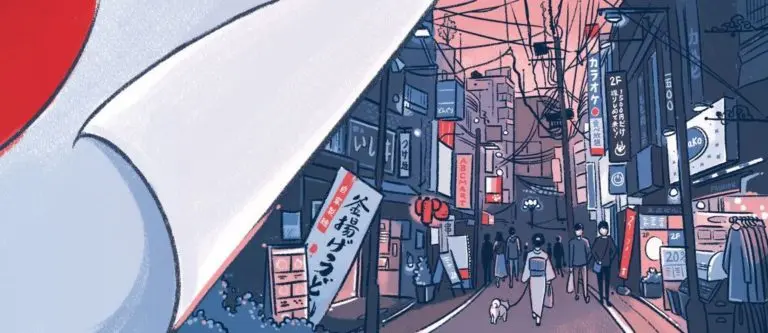
On April 20, 2026, Japanese illustrator @picec_of_cake posted what read as a public safety warning: when your water stops, don’t rush outside to check the meter. The thread claimed that the recent wave of water meter thefts in Japan may actually be cover for a more sinister pattern, criminals closing the water main valve to lure women, especially those living alone, out of their homes to attack them. The original poster advised always checking the water main from inside first, and calling police immediately if it had been shut off.
The thread racked up over 72,000 likes in three days. In follow-up posts, the OP expanded the warning to note that April is moving season, when many first-time solo renters are especially vulnerable, and that similar tactics have been reported with gas and electricity shutoffs. The OP also urged men not to assume they were safe, citing the risk of organized ambushes.
Context matters here. Japan has recently seen a documented wave of water meter thefts, often attributed to foreign crime rings selling the brass abroad. Just days before, a Turkish national was arrested in Aichi Prefecture after entering train tracks with metal-cutting tools. Public discourse around foreigner-linked crime, alongside the Takaichi administration’s broader immigration policies, has been running hot on Japanese social media.
Sentiment distribution (engagement-weighted)
three days
foreigners
Highest-engagement comments
Activity timeline (JST, 2026-04-21)
Key themes in detail
😔 Safety Collapse Lament · 9.2% of engagement
The single largest thread of response was not panic but grief. Replies repeatedly framed the warning as confirmation that Japan’s decades-long reputation as one of the world’s safest countries is slipping away. “When did Japan become this scary country?” one user asked, listing unlocked doors, unattended bikes, and ubiquitous unmanned shops as relics of a lost era. Others mourned that Showa-era smog was a fair trade for the safety of that era, or wrote that their own neighborhoods had become unwalkable after dark.
The tone was often nostalgic rather than angry, with users writing “Is this really Japan?” or “Who made Japan like this?” The warning itself was less the news than the feeling it validated.
🛡️ Safety Protocol · 78.8% of engagement
A substantial share of replies, including the OP’s own most-liked follow-up, stayed constructive. The consensus: never go outside alone to check a utility problem, especially at night. Call the water bureau (0570-091-100) or police (110) from inside first. Multiple commenters stressed that this advice applied to men too, since organized groups may be waiting. Others pointed out that April’s flood of first-time solo renters made this information especially urgent to share.
A subset of these commenters went further, suggesting locked meter boxes, home security cameras, or even recording a YouTube livestream while doing outdoor checks. The practical energy of this cluster was, in many ways, the healthiest signal in the thread.
😡 Immigration Backlash · 4.6% of engagement
Roughly a fifth of replies explicitly blamed foreigners or the government’s immigration policy. Some used dehumanizing slurs: one commenter with 294 likes called foreigners an “invasive chimpanzee species” destroying Japanese public order. Others framed the warning as political, directing anger at the Minister for Orderly Coexistence with Foreign Nationals, or naming the Takaichi cabinet and the LDP as responsible for “opening the gates” and “letting crime collapse public safety.”
Several called for mass deportation, invoking Germany, France, and the UK as cautionary tales. The warning about a concrete crime tactic became, in this cluster, a vehicle for broader grievances already primed by recent coverage of foreigner-linked theft.
📖 Personal Experience · 6.6% of engagement
A surprising number of replies recounted their own similar incidents. One user described a sudden outage while bathing alone, realizing later that the main had been deliberately shut. Another had gas cut off as a student. A commenter who went outside to investigate at the management company’s suggestion returned to find the valve manually closed, and wrote that their rough appearance may have been what saved them from an attack that never came.
These testimonies lent the warning credibility that no single story could. Whether or not every case was a deliberate lure, the pattern of utilities being tampered with was clearly familiar to a non-trivial slice of the audience.
🤔 Fact-Check Pushback · 0.4% of engagement
A smaller but consistent strand of replies pushed back on the framing. Several users, some writing long measured responses, pointed out that the vast majority of water outages trace to routine causes: construction, unpaid bills, pipe trouble, scheduled work. The specific claim that criminals were cutting water mains to lure women outside, these commenters argued, lacked documented case evidence and risked amplifying fear rather than informing it.
The pushback mostly agreed that not going outside alone at night is good practice, but wanted the warning stripped of its worst-case framing. “Security awareness should be based on realistic risks, not worst-case scenarios,” one wrote. These skeptical voices were outnumbered but notably thoughtful.
👥 Women as Targets · 0.4% of engagement
A smaller but distinct strand zeroed in on the gendered framing. Several male commenters noted that this would not have occurred to them as a risk, and thanked the poster for thinking of women living alone. A few women shared their own near-miss stories with bathing interrupted or elements mysteriously cut. Korean and English-language replies took the gendered dimension further, with one Korean comment asking how low Japanese men would stoop.
The men-also-at-risk correction from the OP was widely shared, but did not fully displace the thread’s core anxiety, that this tactic was designed with women alone in mind.