
In Japan, Single People Using Dating Apps to Cheat is Leading to Lawsuits

A woman in Japan just won a lawsuit against a former lover. The reason? He failed to divulge a teensy tiny detail: his marriage. The case marks a rising trend in the country, as more people (let’s be honest: men) use dating apps, not to find the love of their life, but to cheat on their spouses.

A spike in complaints – and lawsuits

Dating app
Picture: タカス / PIXTA(ピクスタ)

In the past, people in Japan would rely on in-person matchmaking services to find, if not the love of their live, then at least a life partner who didn’t suck. Today, that role is increasingly played by online dating apps. A survey by the Japanese government’s Children and Families Agency found that 25.1% of couples found one another via an app.

That’s led the Japanese government and local jurisdictions to invest serious money in dating apps. The hope is that, by making it easier and safe for people to meet, the country can put the brakes on its rapid population decline.

With increased use, however, comes increased abuse. In 2019, the Tokyo Consumer Affairs Center said it received 80 complaints about dating apps. By 2024, that number had risen to 809 incidents a year.

The majority of consultations are about marriage scams. However, the Center also receives calls from people who’ve discovered or suspect that their “single” partner is already married.

The phenomenon has led to multiple lawsuits – and courts are ordering the deceivers to pay up. In 2021, a woman received 2 million yen ($14K) after discovering that the father of her unborn baby had a wife.

Another 40-year-old woman sued a man she met in 2021 who told her he was a single pilot. Neither of those things was true. The woman sued him for three million yen ($21K) for causing her lost time and “the opportunity to have a child.” Last month, a court ordered the man to pay her 880K yen ($6,160) for the deception.

Some apps now require identity verification
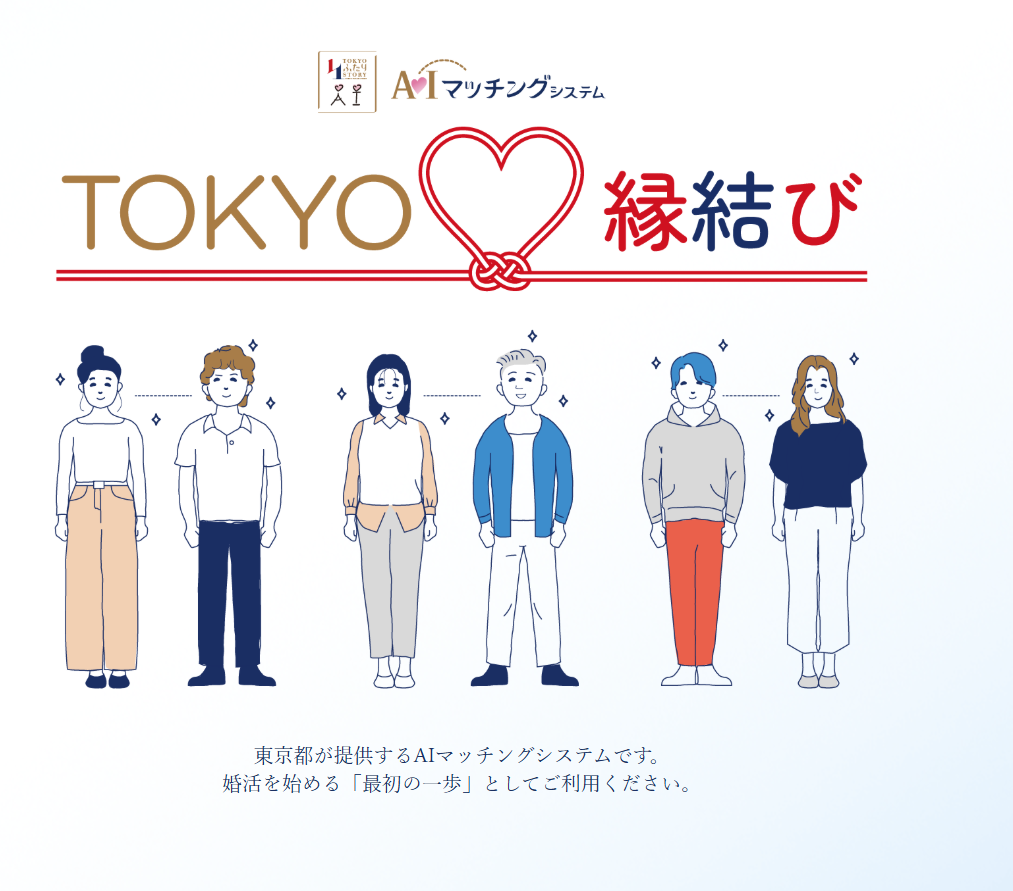
Tokyo’s official dating app makes you verify your identity and single status.

Japanese municipalities can issue a Proof of Single Status document. Many in-person matchmaking services require submitting this document as a condition of use.

Currently, almost no online dating app services require submitting such a document. That’s made them a breeding ground for fraud and deception. In response, some apps are adding verification as either an optional or mandatory feature.

Since its inception, the official dating app from Metropolitan Tokyo, Tokyo Futari Story, has required an extensive background check. Users must not only verify their identity, but also submit a copy of their family registry, which proves that they’re single.

Most commercial apps have yet to follow suit. Tapple recently became the first private company to support confirming one’s bachelor or bachelorette status. Users can use their My Number national identification card, which contains information about their marital status, to verify that they’re truly single. Once verified, the user gets a special badge on their profile.

Most Japanese users overwhelmingly support adding marriage status verification to dating apps. One survey of 98 men and 254 women found that 50% approve of marriage status verification being mandatory. Another 32.1% said displaying one’s verified status should be an option.

I’m sure fraudsters and cheaters will still find ways to game a verification system. (Identity theft is always on the table, for example.) However, anything that makes their lives harder and reduces abuse is a step in the right direction.

Sources

婚活アプリで「独身」とウソ 慰謝料200万円命じる判決も. Asahi Shimbun

マイナカード“独身証明”でマッチングアプリのトラブル防止へ. NHK News

「独身」偽り婚活アプリ 300万円の慰謝料請求、男性が払った代償. Asahi Shimbun

「独身偽装」防ぐ公的証明書 マッチングアプリで必須化は難しい?Mainichi Shimbun

Tokyo’s New Dating App Wants All Your Personal Information

The Tokyo Metropolitan Government (TMG) is launching a government-run dating app that employs AI to pair marriage-hunting users.  The goal is to promote marriage and families as Japan’s population continues to decline. However, it’s gonna require a lot of info from you if you want to use it, up to and including your current income.

How it works

AI and love
Picture: Graphs / PIXTA(ピクスタ)

“Please use this as ‘the first step’ to begin marriage-hunting,” the app’s website says.

The launch caught the eye of billionaire Elon Musk, who took to X to praise the TMG’s move.

“I’m glad the government of Japan recognizes the importance of this matter. If radical action isn’t taken, Japan (and many other countries) will disappear!” Musk wrote on June 5th.

The app, Tokyo Futari Story, has been in testing phases since last December and will be fully operational this summer. A user fee is currently in discussion.

Users take a “values diagnostic test” and optionally list the desired traits of a future partner.

“Based on your values and the values you seek in a partner, which can be determined by taking a diagnostic test, AI will introduce you to a compatible person,” the website says.

Users must be single and over 18 years old, have a desire to marry, and reside in Tokyo.

Background check is thorough

Unlike dating apps run by private companies, the Tokyo Metropolitan official dating app mandates users to submit personal documents that include ID, proof of income (withholding tax certificate, etc.), and proof of single status, such as a family registry certificate. The TMG says these submissions are “to prevent trouble.”

In a 2021 study, about 60% of dating app users reported they had “troubling and difficult experiences,” according to the major think tank Mitsubishi UFJ Research and Consulting. Adverse experiences included mismatches between dates’ profile photos and real appearances, false profiles, and lies about marital status.

Dating apps have even been implicated in sex offenses and burglaries. Japan’s so-called “matching apps” (マッチングアプリ, macchingu apuri) are a fertile ground for scammers. Announcements in nightlife spots such as Kabukicho warn visitors about invitations to bars they received from someone on a matching app, as they’re usually a scam engineered to stick the victim with a high bar tab.

Tokyo Futari Story users must also complete a pre-interview and sign a pledge that they’re looking for love – not a booty call.

Dating profiles make height, occupation, income, and academic background viewable to seekers.

Income disclosure?!

A woman holding money
Picture: PIXTA(ピクスタ)

 If prospective users have no income, they must fill the income column with “0.” A spokesperson said, “The Tokyo Metropolitan Goverment has no intention of barring users based on how high or low their income is. We believe that even people without an income can find their partner.”

In support of requiring users to disclose their income status, Tokyo Governor Yuriko Koike said, “Income is a measuring factor for marriage. Isn’t it one of the things to consider when planning your future and life?”

However, according to Ito Saki, chief editor at Match Up, a website that shares dating app information, “In general, men who either have zero or low income do not find matches.”

“There are probably no apps that require users to submit proof of singlehood. There is a possibility that a certain number of people who want to feel safe but have felt scared will register. The TMG app’s users will probably take this very seriously,” Ito says.

The state of marriage and official dating apps in Japan

Rates of unmarried people at the age of 50 are the highest in Tokyo––32% for men, and 24% for women. In comparison, the national average is 38% and 18% for men and women, respectively.

The TMG found in a 2021 study that over 67% of Tokyo residents who want to marry “are not participating in marriage hunting activities.”

Meanwhile, dating apps have played a pivotal role in forming marriages. 25% of couples who married in the past year met on a dating app, according to an online study conducted last fall by Meiji Yasuda Life Insurance Company.

A spokesperson for the TMG emphasizes that whether a person marries is based on “individual freedom.” They designed the app, they say, for those who desire to marry but don’t trust existing solutions.  

“The TMG wants to support those who are interested but have been unsuccessful in marriage. For those who felt anxious about using apps in the past, we hope that this government-run app provides a sense of safety so they can take the first step of marriage hunting.”

Population increase via technology?

Mom and dad holding baby
Picture: metamorworks / PIXTA(ピクスタ)

The TMG’s end goal is not more weddings but more births as Japan’s population continues to decline.

While the population of Tokyo is increasing, the number of births in 2022 decreased by 15.2 percentage points from 2012. Tokyo’s fertility rate is the nation’s lowest––0.99.

A few years ago, Japan’s government announced it would help local governments develop AI-powered dating apps. As a result, multiple prefectures are running their own versions of Tokyo’s app now.

Saitama Prefecture created an online matchmaking service in 2018 that has about 20,000 registered users as of this March and has resulted in 458 marriages. Miyagi Prefecture, which has the nation’s third-lowest fertility rate (1.07) after Hokkaido (1.06), launched its own matchmaking website in 2021 with about 1,700 users today. Both Saitama and Miyagi require users to report their income and singlehood backed with supporting documents.  

In Kyoto, where 2,000 people have registered in the prefecture’s matchmaking service, proving singlehood is required. However, reporting income is unnecessary because it “shrinks the pool of options” for finding partners, a spokesperson says.

Aichi and Okinawa plan to launch their own online matchmaking services this year. Although Okinawa has the highest fertility rate (1.60), its “average age of first marriages is rising. So is the rates of unmarried residents,” a spokesperson says.

Sources

東京都がマッチングアプリ、夏にも実用化 「独身」「年収」証明必須. 朝日新聞