Special Udon-Themed Hotel Room in Shinjuku is Already Booked Solid

Wanna stay in a Shinjuku hotel room in Japan that’s as over the top as possible? So do a lot of other people, it seems. A Shinjuku hotel just announced a new collaboration with a famous noodle maker that already appears to be booked solid. Fortunately, they have other rooms where you can get your Japanese geek on.

Nissin, the famous maker of Cup Noodle, and the Shinjuku Washington Hotel launched the special room fashioned after Donbei, Nissin’s instant kitsune udon product. It opened booking two days ago, enabling guests to book it from February 17th to March 15th.

The room is slated to feature Donbei decor on the walls, as well as the distinctive feature of kitsune udon, an abura-age (fried tofu) shaped pillow. The hotel will also offer a number of Donbei-themed souvenirs for guests to take home with them.

Originally slated to run 10,000 yen (USD $65) a night for one person and 20,200 yen ($130) a night for two people, the room appears to be a huge hit. According to the reservation website, it’s currently booked for every night of its limited edition run. There’s no word yet on whether Washington Hotel will theme more rooms and open them up to the public to meet the high demand.

It’s not all bad news, however. Fujita Kanko, which runs the Shinjuku Washington Hotel, also has a number of other “concept rooms” in its other properties. Besides the famous Toho Cinemas Godzilla room operated by the chain in Shinjuku, it also runs the train and Panda House rooms in Akihabara, kabuki rooms in Kyoto, and a stunning “ocean room” in Naha, Okinawa.

Ocean room in Naha, Okinawa

Amazingly, the Godzilla room in Shinjuku still has bookings in February and March, with nights averaging around 47,000 yen ($300). The rooms in Naha are especially plentiful as well as cheap: there are plenty of bookings for February and March left, with prices ranging from 15,900 ($102) to 25,600 yen ($164) a night.

Is Tokyo’s Expensive Projection Mapping Tourist Draw Worth It?

Tokyo is pouring a lot of taxpayer money into a nighttime light show screening Godzilla and other artworks on a scale that won a Guinness World Record. The project’s expense is drawing negative attention at a time when incumbent governor Koike Yuriko can least afford it.

Tokyo spends big bucks on a big light show

正太 on X (formerly Twitter): “都庁 ゴジラ プロジェクションマッピング3 pic.twitter.com/TmjVFWp3mi / X”

都庁 ゴジラ プロジェクションマッピング3 pic.twitter.com/TmjVFWp3mi

Godzilla blows a hole in the Tokyo Metropolitan Building in projection mapping exhibit.

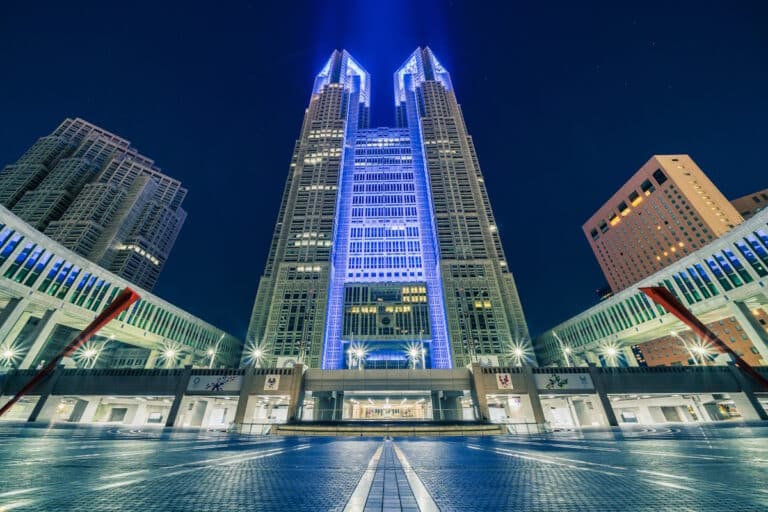
The Tokyo Metropolitan Government Building displays the largest architectural projection-mapped display recognized by the Guinness World Records. Since late April, a 100-meter Godzilla has illuminated the capital’s landmark.

The 70-year-old franchise won its first Oscar for best visual effects in March with Takashi Yamazaki’s “Godzilla Minus One.” This is the seventh projection-mapping artwork since the government launched “Tokyo Night & Light” in February.

Dubbed “a new tourist resource to add color to Tokyo at night,” the project cost 1.8 billion yen (about 11.5 million USD) in FY2023 and is now running on a budget of 950 million yen (about 6 million USD) for FY 2024.

Officials and citizens have criticized the gross expenditure of taxpayer money on these light shows, to which Tokyo Governor Yuriko Koike responds with optimistic projections of a high payoff.

At a press conference in March, Koike said that the “killer technology” would create “an economic ripple effect of 1.8 billion yen.”

Godzilla and more art wows

 Year-round screenings will begin every day from sunset to around 9:00 pm. The 6-minute screening for “GODZILLA: ATTACK ON TOKYO,” created by movie director Kazuhiro Nakagawa, 38, now runs on weekends and holidays, once every hour starting at 7:30 pm.

Other artworks include “Ukiyo” by Berlin-based creators John Tettenborn and Kourtney Lara Ross, works by Japanese signer Aimer, and more.

People who visited Godzilla’s first screening told reporters how amazed they were to see the monster on such a grand scale. “The screen was bigger than in the movies. It was really impactful,” a boy told TBS News.

1.8 billion yen spent

Tokyo governor race billboard with Koike Yuriko and others
A billboard from the 2020 election featuring Koike Yuriko and other challengers. (Picture: Shutterstock)

Other citizens were less enthusiastic about the show. A 52-year-old woman told reporters that she would rather have the city invest in school infrastructure. “The public high school my son went to had a building that was crumbling apart. I want the city to use its money on the children,” she said.

Tsuyoshi Inaba, representative of Tsukuroi Tokyo Fund, a support group for impoverished people, says that the 1.8 billion yen spent on the project last year alone could secure housing for the many people living in internet cafes and other insecure situations. “Instead of using the budget to improve the city’s appearance, I want them to allocate the budget to supporting people who are suffering,” Inaba said.

Tourism experts say that even they are confused about why Tokyo officials are investing so much in projected screenings when reviving travel in rural areas should take priority.

“Projection mapping has been done in every theme park like Disney Land. I wonder, why this now? Its attractive force for tourists will probably be weak,” said Professor Yoshihiro Sataki, a scholar who teaches tourism studies at Josai International University. He adds the Shinjuku attraction goes against the recent trend of pushing tourists to the countryside to ease overtourism.  

The controversy comes as Koike is considering a run for another term as governor in July’s elections. She faces a staunch opponent in the form of liberal politician Renho. As of today, Koike has still not officially announced her candidacy.

Sources

都庁プロジェクションマッピング知事「経済効果18億円」. NHK

億単位のカネが光と音に化ける…東京都庁プロジェクションマッピング「都立高校ボロボロ」「困窮者支えて」の声も. 東京新聞

ゴジラが都庁に襲来?プロジェクションマッピングで登場. NHK

議論呼ぶ都庁のプロジェクションマッピング 予算7億円 妥当性は?. NHK

Oscar Noms for Miyazaki’s Boy and the Heron, Godzilla

So far, the 2023 awards season has been kind to Japanese cinema – especially that of the animated variety. Miyazaki Hayao’s vaunted (potential) swan song, The Boy and the Heron (「君たちはどう生きるか」), took home Best Animated Film at the Golden Globes. It accomplished this amidst stiff competition, especially from the popular and well-regarded second Spider-Verse film. In doing so, it became the first anime film to ever win a Golden Globe. But for many, the true prize is an Oscar – and now we know which Japanese films have a chance to take home one of those famed statuettes.

This morning, US-time, stars Zazie Beetz and Jack Quaid officiated a live ceremony announcing the nominations. Amongst the major Hollywood films (Oppenheimer, Barbie, Killers of the Flower Moon, Poor Things), nominated for numerous categories, were the names of three Japanese films (although none were in direct competition with the aforementioned, nor with each other).

Two were potential surprises. Godzilla Minus One, a breakout financial and critical hit, managed to make its way to the Oscars with a nomination in the Visual Effects category. More unknown is Perfect Days. A quiet drama starring Koji Yakusho (Shall We Dance?, 13 Assassins), and directed by filmmaker Wim Wenders, the film has been nominated for Best International Feature Film. A Japanese-German co-production, it was put forward as Japan’s entry for the award.

The least surprising nomination is, of course, for Studio Ghibli’s The Boy and the Heron. The Oscars have a long history of respecting and courting director Miyazaki Hayao. Now, the question will be, which of these can win?

Heron Flies High

The Boy and the Heron finds itself in a Best Animated category unusually stacked with quality films. While popular opinion sees the award as dominated by big-named Disney features, Walt Disney Animation Studios actually failed to have its most recent release, Wish, nominated. (Nor was Illumination’s blockbuster fan-pleaser The Super Mario Bros. Movie nominated, which similarly failed to wow critics.) Instead, Heron is up against some critically lauded competition.

Heron, winner of numerous regional critics’ awards and a Golden Globe, has a fairly high chance of victory come March. Its assumed biggest competition is Spider-Man: Across the Spider-Verse, the visually and aurally stunning follow-up to 2018’s Into the Spider-Verse. Also in competition is Nimona, a fan-favorite Netflix refugee from Disney’s buy-out of Fox’s now-defunct Blue Sky Studio. Animation giant Pixar has their usual nomination with Elemental, which has had a relatively lukewarm reception. Rounding out the category is the dialogue-less Spanish-French coproduction Robot Dreams, which has charmed many a reviewer.

Miyazaki and the animation studio he co-founded, Ghibli, have a strong history of nominations at the Oscars. The Boy and the Heron marks the sixth Ghibli film to make its way to the Academy’s ballots. (Seventh, if we include the Ghibli-distributed The Red Turtle, by Dutch director Michaël Dudok de Wit.) If it finds victory, it will be the studio’s second win (following Spirited Away‘s shock success in 2002, which paved the way for Ghibli’s critical rise in North America).

Review: Miyazaki’s New “How Do You Live” (The Boy and the Heron) Marks an Eerie Return

After a decade, master director Miyazaki Hayao is back with a full-length animated film. How does Studio Ghibli’s mysterious” How Do You Live” (Kimi-tachi wa Dou Ikiru Ka) stack up?

Watch our release day review of The Boy and the Heron.

Godzilla Raids at Last, amidst Perfect Days

For many moviegoers, Godzilla Minus One‘s Visual Effects nomination will be a reason to cheer. The Occupation-era set monster film has been a major critical and financial success, and a dark horse favorite movie of the year for many a viewer. This is also the first time a Godzilla film has ever achieved a nomination in the franchise’s massive 70-year history. (And it did so on a budget of reportedly less than $10 million – against fellow nominee Guardians of the Galaxy vol. 3‘s $250 million.)

Even more of a dark horse is Perfect Days, a quiet German-Japanese coproduction that’s so far received sparse fanfare. (Still, far from bad for a movie that originated from the Tokyo Toilet Project!) Its director, Wim Wenders, emerged from the New German Cinema era. He’s no stranger to the Oscars; Wenders has three other nominations under his belt, all for documentaries: Buena Vista Social Club (1999), Pina (2011), and The Salt of the Earth (2014). Perfect Days has been well-received at various film festivals, with special praise given to veteran actor Kōji Yakusho, who plays a toilet cleaner.

Godzilla may have a fighting chance, especially given the movie’s popular buzz. Perfect Days, sadly, will likely have a harder time of it; it’s up against the German Holocaust film The Zone of Interest, which is itself up for overall Best Picture. In past years, foreign-language films that managed to break into both categories have been easy bets for at least winning in the international group. (In 2022, Hamaguchi Ryusuke’s Drive My Car did exactly that.)

Miyazaki and the Oscars: An Ambivalent Relationship

The Academy Museum of Motion Pictures’ first exhibit is all about Miyazaki Hayao. But the master director and the Oscars have a complex history.

Learn about Miyazaki Hayao’s interesting relationship with the Oscars in our video.

Three Japanese Films Off to Primetime

Overall, a strong batch of nominees for the Japanese film industry. Ever since emerging onto the world stage in the 1950s, Japanese cinema has been a favorite of film critics and professionals in the English-speaking world; even so, there have been years when no Japanese films have been nominated at all. Three is a good get for the industry, which has been somewhat overshadowed by highly acclaimed films from neighboring South Korea in recent years.

Some will bemoan the lack of a nomination for Shinkai Makoto’s Suzume in the animation category. (It was nice to see it make the grade at the Golden Globes, at least.) And, personally, I wish composer Hisaishi Joe had managed to repeat his Golden Globes nomination success with a corresponding nom at the Oscars. Beloved for his numerous scores for Ghibli and director Takeshi Kitano, Hisaishi is one of the world’s great film composers; he deserved to finally have a moment in the Oscar limelight.

The 96th Academy Awards will be held on March 10th in Los Angeles, California.

Kings of the US Box Office: Miyazaki’s The Boy and the Heron and Godzilla Minus One

Japanese media has never seemed as mainstream in North America as it does today. From the films of Kurosawa Akira opening in American theaters and the popularization of Americanized Godzilla films in the 1950s, to Astro Boy and Speed Racer enticing children to gather around TV sets in the ’60s, to the slow growth of anime from subculture to popular entertainment mainstay from the ’80s till today, the gestation of Japanese entertainment in America morphing from peculiar to conventional seems nearly complete. This weekend, for the first time, two films in the North American box office top-three will be Japanese movies.

The films in question are beloved animation director Miyazaki Hayao’s potential swan song, The Boy and the Heron, and the first new Japanese Godzilla film in seven years, Godzilla Minus One. Both films belong to parts of Japanese pop culture that have now firmly endeared themselves amongst fans worldwide. Godzilla has been thrilling viewers abroad for 3/4ths of a century; the output of Studio Ghibli, first formed by Miyazaki and Takahata Isao in the mid-80s, made its breakout in North America with 1997’s Princess Mononoke, and has slowly become as beloved and iconic for some overseas fans from younger generations as are the films of Walt Disney.

Despite passionate fanbases, the idea of two Japanese-language films resting at the top of the North American box office would still have been inconceivable only a decade ago. The previous Ghibli and Japanese Godzilla films didn’t exactly rock the world with their opening weekends; Anno Hideaki’s 2016 Shin-Godzilla made a mere $458,342 in its NA opening weekend. Meanwhile, Miyazaki’s The Wind Rises (2013) managed a relatively impressive $1.5 million during its first weekend in wide release. [1]

So, conceive of this: the top two movies in the United States and Canada this Friday were both Japanese.

US poster for The Boy and the Heron.

Unprecedented Box Office Success

Godzilla Minus One and The Boy and the Heron have crushed their predecessors’ opening weekend grosses in only their first Friday in theaters. Minus One made $4,726,373 on Friday, December 1st; this weekend (December 8th), Heron opened to a Friday (inclusive of previews) of $5.2 million. (That’s more than many Miyazaki films made in their entire North American runs.)

Right now, The Boy and the Heron is projected to take in at least $10 million over the weekend. [3] Minus One will likely come in as number 2 or number 3, facing most of its competition from Hunger Games: Ballad of Songbirds & Snakes.

This opening marks several milestones for Studio Ghibli in the United States. It’s the biggest Miyazaki opening ever, and the only non-franchise anime film to ever be #1 at the NA box office. Additionally, it’s the first 2D-animated film to reach #1 since Disney’s The Princess and the Frog, way back in 2009. [4]

With this, Heron should be on track to best 2010’s Arrietty as Ghibli’s best-ever performer in North America. (Arrietty, an adaptation of the classic British children’s novel The Borrowers, made $19,202,743.) It will join other recent anime films with impressive box office runs. These include Demon Slayer: Mugen Train, which made a whopping $47.7 million. In 2022, the CG-animated Dragon Ball Super: Super Hero made $38.1 million, and also topped the box office for a weekend.

Review: Miyazaki’s New “How Do You Live” (The Boy and the Heron) Marks an Eerie Return

After a decade, master director Miyazaki Hayao is back with a full-length animated film. How does Studio Ghibli’s mysterious” How Do You Live” (Kimi-tachi wa Dou Ikiru Ka) stack up?

Watch our review of The Boy and the Heron.

A Bright Spot in a Tarnished Local Box Office

The relative and impressive success of Heron and Minus One comes amidst a notable downturn for the US box office. A series of major US releases have failed to meet expectations; DC’s The Flash, Marvel’s The Marvels, and Disney’s Wish have all been unqualified box office bombs. While all three films will likely make more than Heron and Minus One combined, the two Japanese films are outperforming expectations. Minus One, with a reported budget of around $13 million, will be highly profitable.

This weekend is also light on major domestic releases, making for a perfect window for these anticipated Japanese films to shine. Early December is often a dead zone for American theaters, with families being busy with preparations for the upcoming winter holidays. The successful industry strikes of the past year have also left theater marquees bereft of major releases.

So, there could be no better time for these two movies to soar into North American theaters. Together, they’ve accomplished something new, and impressive, and shown just how much of a hold Japanese popular culture continues to have on the hearts of many the world over.

Sources:

[1] The Wind Rises. Box Office Mojo.

[2] Murphy, J. Kim. (Dec 9, 2023 8:08am PT). Box Office: ‘The Boy and the Heron’ Rises to No. 1 in North America With Projected $10 Million Debut. Variety.

[3] D’Alessandro, Anthony. Hayao Miyazaki’s ‘The Boy And The Heron’ Growing To $10M-$12M Opening; ‘Renaissance’ Loses Glam With -74% Drop – Box Office Update. Deadline.

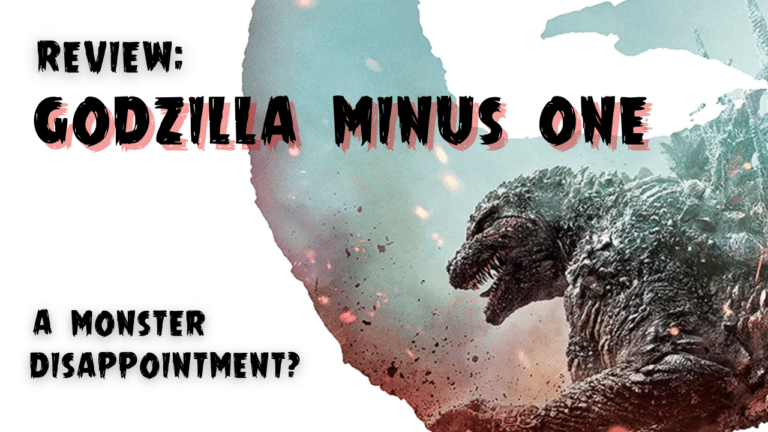
Review: Godzilla Minus One is a Monster Disappointment

In 1954, the original Godzilla premiered in a newly autonomous Japan, only recently emerging from seven years of U.S. military occupation. In 2016, Shin Godzilla premiered in a Japan still reeling from the 2011 Fukushima Daichi disaster.

And, now, in our current year of 2023, Godzilla Minus One has premiered, reverting the setting to a decade before the original even existed. There are quite a few differences between these films – not least of which being that Godzilla and Shin Godzilla are highly contemporaneous masterpieces, and Godzilla Minus One… isn’t. 

The first theatrical live-action Godzilla film from Japan in seven years, Godzilla Minus One does have a very interesting concept going for it. The movie, timed for release alongside Godzilla’s 70th anniversary, is set in the very early aftermath of World War II. The long-running Godzilla series, eternal king amongst the kaiju monster franchises, has always featured Japan being subjected to various forms of destruction.

Minus One asks, what if Japan was already at its lowest point… and then was forced even lower? Hence the early postwar setting amidst bombed-out rubble, with a society barely emerged from apocalyptic defeat faced with even more ruin. 

The problem is that despite the interesting risks it takes, Minus One still collides head-on into the two most hoary of Godzilla stumbling blocks: poor characterization of human leads, and, tragically, just not enough of the King of Monsters himself. Sadly, the movie adds a new failing into the Godzilla wheelhouse: being a poor period piece. Compared to its immediate Japanese predecessor, the timely and highly memorable Shin Godzilla, Minus One just can’t help but feel like a lesser entry.

Godzilla Minus One, Plus the Zero Fighter

The film’s plot centers around failed kamikaze pilot Shikishima (Kamiki Ryūnosuke). We meet him in the final days of Japan’s doomed attempt to stave off defeat in World War II. He’s landed his fighter plane on a small island near Tokyo Bay, having feigned engine problems to get out of the final flight that tended to be an unavoidable occupational hazard for those in the kamikaze. Shikishima has clear signs of PTSD, which isn’t helped by the traumatic experience of encountering a small (as in only three-story-tall), pre-irradiation Godzilla, who goes about massacring the imperial military garrison on the island.

Shikishima survives the incident, but Godzilla continues to haunt his dreams upon our protagonist’s return to the burnt-out shell of Tokyo. He attempts to make a life in the rubble of the nation he was meant to give his life for. Then, a newly embiggened Godzilla returns to attack the already-battered Japanese mainland. Will Shikishima have a chance at redemption when faced with his greatest nightmare?

The main poster for the film.

Human Failings

This setting, in the bombed-out desolation of early post-war Tokyo, is Minus One‘s best aspect. The sheer desolation of the early post-war is well portrayed; soldiers who survived the war find they have no one to come home to. Shikishima is left living in a space that could charitably be described as a hovel. He feels completely hopeless; this reflects the reality of Japan immediately after its unconditional capitulation. Many Japanese citizens, bereft of purpose after decades of being subject to intense propaganda, were left in a state called kyodatsu (虚脱) – utter despondency.

Our cast of characters lives in an environment that reflects that desperation, existing amongst shattered concrete, subsisting from bustling black markets that have replaced formalized infrastructure. As time goes by, we see the environment evolve, taking on slight signs of recovery – but still far from a complete return to normalcy.

Acting the Part

A few issues serve to poke holes in the immersive period setting, however.

The first is that none of the cast really feel like they belong in 1945. Despite some big-name actors, (mega-popular Hamabe Minami in a thankless role, the great Ando Sakura doing her best as a bereaved neighbor) our leads all deliver performances that I can only describe as highly cheesy; not in a throwback 1940s sense, mind you, but rather in a more modern, nuance-less form of overacting.

There is no lack of sudden bouts of screaming and overwrought shaking, nor of guileless, gee-wiz smiles and false-ringing comradery. I’m sad to report that lead Kamiki Ryūnosuke comes out among the worst in this aspect. There are moments here where the acting makes the movie unintentionally funny. (A bit of an issue in a film almost completely lacking in purposeful levity.)

Anno Hideaki’s Shin Godzilla (2016) had some stilted acting itself. But that was a more stylized movie. There is very little in terms of style here, beyond a drab “post-war” grey-and-orange filter. The acting continually breaks immersion. Because this movie consists of so, so many scenes of human drama, this is an especially egregious issue. This is unfortunate since Kamiki is given a character arc which, on paper, should be interesting, but the execution is plodding and obvious – yet still overlong.

(Length is another issue for this film. At 125 minutes, it’s among the longest Godzilla films ever. It could easily have been half an hour shorter.)

The main cast of Godzilla Minus One features on a massive IMAX poster at the Shinjuku Toho Cinemas.

An Occupation without Occupiers

The other issue is more of a direct failing of the period setting. The movie takes place in 1945-1947; in other words, directly in the midst of the US-administered Occupation of Japan. And yet, I did not spot a single US GI uniform. The only time an occupation official appears on screen is when Supreme Commander Douglas MacArthur is referred to via awkward newsreel footage.

In real life, Tokyo was swarming with US GIs. They were an unmistakable part of life in occupied Japan, an ever-present symbol of Japan’s defeat and submission to a foreign power. English signage was everywhere, although none is to be seen in this movie. The presence of US military personnel impacted everything from the nightlife districts to the military surplus illegally available in the numerous black markets near major train stations.

Godzilla Minus One barely gives more than lip service to one of the most important aspects of Occupation life; Godzilla destroys some American ships off-screen. The defense of Japan is left to the Japanese civilian government and a cadre of ex-navy officers – something that’s historically ridiculous, given how completely disempowered Japan was at the time. Isn’t that the entire point of a setting like this?

Of course, there are two reasons for this treatment. One is practical, the other narrative. Hiring foreign-appearing actors requires effort and capital. Despite a large roster of foreign-born actors in Japan, most Japanese films skip the process of bringing on foreigners for most roles, even when their presence would make sense.

(Just look at the fully Japanese cast portraying time-traveling ancient Romans in 2012’s Thermae Romae. For an alternative, see Shin Godzilla, where the phonetically memorized English of an American main character is often cited as one of the film’s low points. Regarding the experience, actor Ishihara Satomi said “Sometimes it’s so frustrating, I just wanted to cry.”)

American GIs fraternize with Japanese women at the ‘Oasis of Ginza’ Hall. 1945.

Yamato-damashii in Action

The Spirit of Yamato: Samurai holding sword in front of an army
Picture: metamorworks / PIXTA(ピクスタ)

Narratively, however, this is a film about Japanese characters overcoming material and spiritual defeat as a stand-in for the nation as a whole.

Most of the primaries are former imperial military personnel. They find themselves cheerfully defending Japan, using relics from the shuttered military and a can-do spirit to achieve what they failed to do in wartime. The focus is entirely on Japan’s perception of inward devastation and recovery.

The American military, architects of that defeat and overlords during the film’s historical setting, are an unseen presence. It’s barely commented on that it’s the US’s nuclear testing that brings about the film’s motivating threat. Shin Godzilla remains a much more pointedly critical film when it comes to the US-Japan relationship. (And a more meaningful portrayal, I’ll add.)

In a way, the ambiguous presence of the Occupation harkens back to the actual films of Japan’s 1940s. In contemporary Occupation-era movies, you’d hardly ever see a GI or a foreign-appearing face. Movies went through SCAP censors before hitting cinemas and had to reflect the policies of Occupation HQ. The presence of GIs on screen was thought to bring up negative feelings, so they were omitted.

Films that commented on the sorry state of post-war Japan would have to reference the US military by way of omission. Kurosawa Akira’s 1948 yakuza flick Drunken Angel (醉いどれ天使) is a good example of this.

In Godzilla Minus One, the omission just makes the setting feel incomplete. This is a movie that some will view as nationalistic; while characters criticize the unfeeling former military government, which sacrificed so many soldiers for naught, it also features a kamikaze plane as the ultimate expression of the Japanese spirit. The film seems to say that the spirit was in the right place, but should be tempered by a greater appreciation for life. The former military government and the Occupation hover in the background, remarked on but essentially non-entities. And Godzilla himself? He’s not that different.

The titular King of the Monsters in one of Minus One‘s more memorable scenes.

Not All It Could Be

I haven’t written too much about Godzilla himself, because he doesn’t seem to be in all that much of the film. The few scenes we get are memorable; Godzilla is overwhelmingly powerful, menacing our characters in a fairly satisfying way. He looks pretty good on screen, at least in most of his scenes. Depictions of Godzilla smashing WWII-era naval ships and destroying post-war Ginza make for an enjoyable spectacle.

Sadly, I have a hard time avoiding comparisons to Shin Godzilla. The Godzilla in that film was truly terrifying; his swath of destruction much greater and more impactful. The monster also received much more attention and drove almost all the on-screen drama. Godzilla is at the center of Shin Godzilla, but really takes a backseat in this film. Here, we don’t even get to see Godzilla come on shore during his first incursion – he’s just suddenly in Ginza. The character’s actions around him are also improbable and a bit silly.

Godzilla menacing Shinjuku
Godzilla menacing the citizenry and tourists in Tokyo’s Shinjuku. (Picture: DepositPhotos)

But the comparison is most damning when it comes to the actual meaning of the film. As a standalone Godzilla movie, Minus One misses out on the thematic relevancy that makes Godzilla (1954) and Shin Godzilla (2016) enduring classics. Both use the kaiju as a visually arresting metaphor for the great worries of their respective periods. In 1954, the anxiety of nuclear testing and of slipping back into the oh-so-recent devastation of war. In 2016, of bureaucratic inaction and outright failure in the face of a new nuclear disaster.

Minus One seems to say, “Get over your trauma, Japan! Embrace what makes our country great and rise above!” But by steeping the film in the post-war period, all sense of timeliness is lost. We’re left with an overlong monster movie with poorly executed drama, some nice visuals, and a decent central monster.

But meaty central themes? There’s not much to sink your teeth into in Godzilla Minus One.

What to Read Next:

Review: Shin Ultraman is no Shin Godzilla – But That’s Not a Bad Thing

Sources:

[1] Ragone, August. (September 22, 2015). “Next Godzilla Now Entitled “Shin Godzilla” Toho Announces Three Principal Cast Members!”The Good, The Bad, and Godzilla.

Occupied Japan 1945 – 1952: Gender, Class, Race. Maryland Institute for Technology in the Humanities.

Dower, John. (1999). Embracing Defeat: Japan in the Aftermath of World War II. Penguin Books.