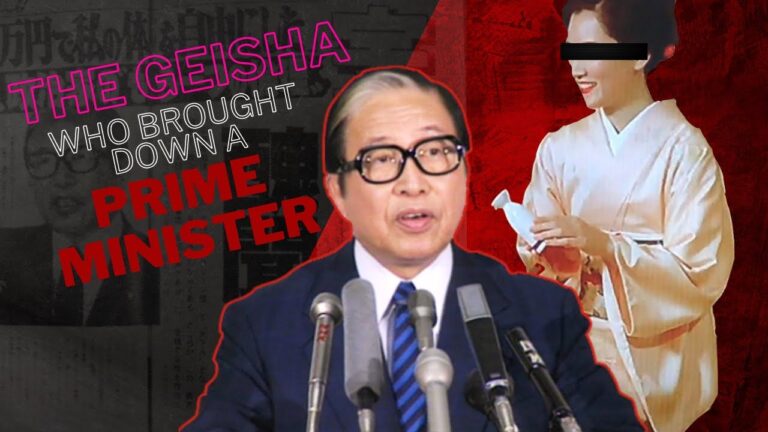
The Geisha Who Took Down a Prime Minister

In 1989, the twelfth-floor office suite of media mogul Tokuma Yasuyoshi played host to an unusual guest. Mr. Tokuma, head of Studio Ghibli’s parent company, was one of the great wheelers and dealers of the Japanese media world. He was well-acquainted with a wide variety of power brokers, be they politicians, celebrities, or yakuza. Still, there was something notable in having Uno Sōsuke, the Prime Minister of Japan, essentially living in Mr. Tokuma’s private suite. [1]

While employees worked on distribution deals for movies, books, and CDs on the floors below, the Prime Minister did his best to stay out of sight. (Something made difficult thanks to the highly recognizable streak of white in his otherwise black hair.) The leader of Japan, only weeks into his tenure as PM, was actively trying not to be seen. At that moment, he was embroiled in a major scandal – and all because of a single geisha.

It was the first year of the Heisei era, and Japan’s economic boom years of the Bubble era continued unabated. The idea of a powerful man being involved with a geisha was nothing overly shocking. And yet, when Nakanishi Mitsuko stepped forward to tell of her relationship with Uno, it spelled the end of his promising, decades-long career. Uno Sōsuke would go down as one of the shortest-tenured Prime Ministers in Japanese history, the veritable Liz Truss of his day.

But Nakanishi Mitsuko did more than simply bring low her powerful paramour. By emerging from the shadowy world of the geisha industry, she broke a centuries-old code of silence. From the position of a kept woman, she challenged the mores of her society, in which men cheating on their spouses was the natural assumption. The flurry of discourse that surrounded Prime Minister Uno Sōsuke and Nakanishi Mitsuko shook the power centers of the nation – prompting questions about Japanese society that ring true even today.

Former geisha Nakanishi Mitsuko in a simple brown shirt, appearing on TV channel TBS. A scroll bearing kanji is on the wall behind her, and a picture of Prime Minister Uno Sosuke is superimposed.
Former geisha Nakanishi Mitsuko speaks to TBS. 1989.

Born in Scandal

Uno Sōsuke’s meteoric rise and stunning descent were born of yet another scandal – the largest of its time. The Heisei era had just begun, and the ruling Liberal Democratic Party (自由民主党) was already in crisis.

It began in 1988, the year before Hirohito, the Showa Emperor, would pass away and the era would change. In that year, the so-called “Recruit Scandal” had shaken Japan’s belief in its public institutions to the core. Academic Yayama Taro, writing in 1990, explained the depth to which the insider trading scandal impacted Japanese society:

“Like a single match, the Recruit scandal has touched off a conflagration of skepticism that threatens to envelop all things political in Japan. But feeding the flames has been a whole complex of factors: not only the resentments and fears of ordinary citizens whose dreams of home ownership have been shattered by the skyrocketing prices of land… but disgust for the politicians who seem to be the only ones making easy money from stocks and political contributions, and anger at the corruption of top officials in such central government agencies as the Ministries of Education and Labor.” [2]

A landmark series of articles by the Asahi Shimbun revealed that human resources company Recruit Holdings Co., Ltd., had bribed numerous high-level politicians and business leaders with shares of a subsidiary prior to going public. The sums were large enough, and the web of persons involved so far-reaching, that the affair was soon hailed as the worst since the infamous Lockheed Scandal of the mid-’70s.

The Asahi Shinbun reports on Prime Minister Takeshita’s resignation during the Recruit Scandal.

Uno Sōsuke, Unlikely Prime Minister

As the Recruit Scandal wound its way through endless media coverage and, eventually, the courts, LDP leadership dropped like flies. Prime Minister Takeshita Noboru, already unpopular for initiating Japan’s first consumption tax, resigned. Numerous cabinet members followed. The reputations of other Prime Ministers, past and present, were deeply affected. In 1990, Shinto Hisashi, president of telecommunications giant NTT, was sentenced to two years in jail.

The LDP was in shambles. A new leader was needed, but so many of the party’s top players were implicated in the scandal. The furor around the bribery, the media coverage of which left “the impression… that everyone was on the take”[3], seemed to threaten the LDP’s nearly 4-decade stranglehold on national power. All the LDP could do was promise political funding reform alongside the selection of someone squeaky-clean to lead the party. In effect, this meant someone “whom the Recruit company had considered unimportant to the point of not offering a stock bribe.” [4]

The man for the job, it was decided, was Uno Sōsuke.

Prime Minister Uno Sōsuke, 1989 (his sole year in office). From the Prime Minister’s Residence homepage. (CC 表示 4.0.)

From the Gulag to the Prime Minister’s Office

Just who was this unlikely new Prime Minister, selected for both his unimpeachable character and relative obscurity within the party?

Uno Sōsuke (宇野 宗佑) was born in 1922 in Shiga Prefecture, in a town near Lake Biwa, Japan’s largest body of water. He came from a family of wealthy sake brewers notable for their local political power; his recent ancestors had been town elders during the Edo era, and his grandfather had twice been mayor.

It may well be that his family’s prominence in local affairs spurred him to enter government for himself. In 1943, as the Pacific War raged, he entered Kobe College of Commerce (modern Kobe U) with an eye towards becoming a diplomat. Only two months later, however, Uno was called up to the front. He would never return to university.

War Comes for Uno

Following training, Uno spent the remainder of the war as a military accountant in Hamhung, northern Colonial Korea. In August of 1945, the war ended with a total Japanese defeat; the Soviet army entered Korea, and Uno’s regiment was disarmed. He soon found himself in detention, and then on a Soviet ship, bound for Nakhodka – the same port city where Sugihara Chiune, “the Japanese Schindler,” would soon spend a year waiting for repatriation to Japan.

But Uno had worse waiting for him – two years in a Siberian POW camp. The Soviet intendants forced Uno and his fellow prisoners to do hard labor in -35c temperatures; the prisoners suffered from insufficient nutrition and invasions of blood-sucking ticks. Uno tried to keep spirits up by organizing haiku gatherings. During his first New Year’s Eve at the POW camp, he composed the following:

捕虜の顔喜怒失せ白き息かよふ/Human emotions fade From the faces of prisoners White mist on our breath

After a year and eight months, Uno Sōsuke’s ordeal came to an end. One of the millions of Japanese repatriated from the former imperial holdings after the war, he suddenly found himself back in his hometown in Shiga. There, a family connection in the publishing industry helped him get his diary released as “Damoi, Tokio” (“Homeward, Tokyo” in Russian, after what he’d heard Soviet soldiers tell him) – one of the first memoirs of a Japanese military man’s experience in Siberian captivity. The book was a major success, and was Uno’s first claim to fame. [5]

A pencil sketch of Siberian prison camp, with barb-wire fences and wooden outbuildings. Drawn by Prime Minister Uno Sosuke.
A sketch of Uno’s POW camp in Siberia, from “Damoi, Tokio.”

Uno gets Married

In 1949, Uno made his way to Kyoto, to the home of a compatriot from the Siberian internment camp, Hirose. There, he happened to meet his friend’s younger sister, Chiyo. The two prayed together at Kitano Tenmangu shrine, soon falling in love. They were married, and Chiyo changed her name to Uno Hiroko.

In 1951, Uno Sōsuke won his first public office, becoming a part of the Saga Prefectural Assembly. By 1955 he’d risen to prefectural vice-chairman.

It was just around this time that a young baby was born – though not a child of the Uno family. Somewhere out there in Japan, Nakanishi Mitsuko was coming into the world. While Uno Sōsuke was enjoying the first years of his assumed wedded bliss, the woman who would grow up to be a geisha, and with whom Uno would entangle himself, was breathing her first.

Young Uno Sosuke, standing in a suit in front of a microphone.
Uno giving a speech while in his 30s, 1952.

The Story of Nakanishi Mitsuko

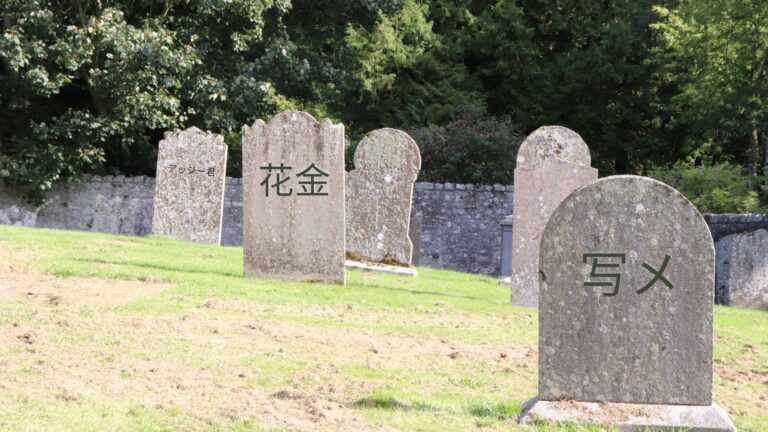
As to the background of the woman who took down Uno Sosuke, much remains a mystery. While Nakanishi Mitsuko (中西ミツ子) exploded into the public consciousness in 1989, and has maintained some notoriety since, occasionally granting interviews, she emerged from the highly secretive world of “Flower and Willow” (the euphemistic name for the Geisha industry). And given the turbulent effects her decision to go public had on both powerful politicians and those in her one-time industry, it’s not surprising that she’s attempted to live a relatively private life since her revelations.

But, while the usual data points – birth date, hometown – are hard to come by, she has still spoken about many other aspects of her life.

Nakanishi Mitsuko was born in the early post-war years, the youngest of nine children. These were tough times throughout Japan, as the country tried to emerge from the utter devastation of defeat in WWII. Nonetheless, there was a set pattern for the “average” woman in post-war Japan, and Nakanishi bucked almost all of those trends.

She married and had a son. That much is standard – but divorce, still taboo in those days, came not long after. Nakanishi took a job as a law firm “OL,” an “office lady,” which brought home the paltry equivalent of $900 a month. Meanwhile, her ex-husband was moving on. “My ex-husband had remarried and he wanted to raise my child,” she said during a 1989 press conference. “So I made up my mind to get up and do something.” [6]

Nakanishi Mitsuiko in another 1989 televised interview.

Into the World of the Geisha

Nakanishi needed a better income if she wanted to maintain custody. But what was a divorced OL to do? She thought back on her training as a young woman in the traditional arts; playing the three-string shamisen, learning utai singing and dance. Traditionally womanly arts, and all associated with the highly skilled – and highly secretive – world of the geisha.

The 1980s were a boom time in the geisha world. Geisha had emerged as highly sought-after companions – skilled dancers, singers, musicians, and conversationalists – during the Edo era. After the economic ruin of the war, the industry had faltered, giving way to cheap, government-sponsored prostitution for the incoming occupation troops. Many geisha houses shuttered; meanwhile, prostitutes servicing the American GIs in the “amusement association” often wore makeup and kimono in the fashion of the geisha before them. When servicemen returned to the US, they brought back the idea of “geesha girls” as prostitutes, conflating the two (related but separate) industries.

As Japan recovered from the war, and entered a period of incredible economic growth, there emerged among the upper class a desire to return to old forms. By the 1980s, when the Bubble Era meant many businessmen had extraneous cash and, more importantly, expense accounts like nothing seen before, the hiring of geisha came back into style. Paying a geisha to appear at business dinners is an extravagance and a status symbol, and the roaring 80s were all about economic status.

This is the era in which Nakanishi Mitsuko entered Tokyo’s Kagurazaka Hanamachi – one of the capital’s most prominent geisha districts. And while Nakanishi had some reservations about the industry – especially the submissiveness it demanded of the women who engaged in it – she says she “made up my mind to just cut it from my thoughts.”

It was in 1985, only a month into her new career, that Nakanishi met one Uno Sōsuke.

A US serviceman with geisha.

No Stranger to Affairs

Uno Sōsuke, it seems, had long enjoyed the company of geisha. Unfortunately, he wasn’t always the most accommodating or kind companion. Following Nakanishi’s public condemnation of her former patron, other erstwhile mistresses came forth, including a geisha who claimed she’d been in a relationship with the politician for a full decade. At the time of the scandal, the Washington Post reported the following:

“A geisha with the professional name Hatsuko who said she maintained an affair with Uno from 1975 to 1984 and received 100,000 yen (about $700) a month throughout most of the period… Hatsuko described Uno as an extremely cold man, and said that when she sought some affection from him on the occasion of their 10th ‘anniversary,’ he replied curtly, ‘We’ve been doing it for 10 years?’ Immediately thereafter Uno ended the relationship, she said.” [7]

Other reports showcased claims from partners going back to 1960 – when Uno was just coming into his political own. Salacious as these stories may seem, their contents were considered par for the course when it came to powerful men. It was fairly standard for a man like Uno to count on his wife to take care of things back home. Meanwhile, he continued to concentrate on his political work, engaging in long-lasting affairs on the side.

Uno’s Rising Star Blazes

Uno’s national-level political ambitions took center stage starting in 1958. After a series of losses, he finally made his way into the Lower House of Parliament in 1960 as a member of the LDP – despite coming in second in terms of overall votes to a Socialist Party nominee. Uno became close with the powerful Takeshita Noboru, who would eventually be his scandal-laden PM predecessor; in 1960, the two visited the Indian subcontinent in order to initialize what would become the Japan Overseas Cooperation Volunteers – Japan’s answer to the U.S. Peace Corps. This began Uno’s long association with foreign affairs.

A decade and a half later, Uno’s star reached new heights with his first cabinet appointment. Named Director General of the Defense Agency by “Shadow Shogun” Prime Minister Tanaka Kakuei, Uno faced an immediate crisis. On November 9th, 1974, the Japanese gas tanker Yuyo Maru No.10 collided with a Liberian freighter traversing Tokyo Bay. Within hours, a massive explosion rocked the ship; over thirty sailors perished. The fires on the Yuyo Maru burned uncontrollably for weeks, with the coast guard and firefighting vessels unable to calm the blaze. At long last, Uno called up the Maritime Self-Defense Force. MSDF destroyers shelled the Yuyo Maru, with submarines firing torpedoes from below. The burning vessel was sunk to the depths of Tokyo Bay.

The large tanker Yuyo Maru is on fire, billowing smoke from its prow.
The Yuyo Maru No.10 blazes in Tokyo Bay. 1974.

Avoiding Corruption in a Corrupt World

Tanaka Kakuei’s time as prime minister met a sudden end just as the Yuyo Maru was coming to rest of the seafloor; implicated in corruption, including using the name of a geisha he was involved with for various financial dealings, Tanaka resigned before yet another woman he was having an affair with could be called to the stand. With the collapse of the Tanaka cabinet, Uno lost his ministry credentials in a blink of an eye. He needed not to have worried, though; there would be plenty more where that came from.

In ’76, Uno joined the Fukuda Takeo cabinet as Director General of Science and Technology Agency. In this capacity, he worked alongside US Trilateral Commission head Gerard C. Smith on issues related to nuclear technology; Smith called Uno “the first Japanese to say things as they are.” Various other cabinet positions would follow over the years.

In the background, Uno reportedly continued to engage in a series of extramarital affairs. Now continually located in Tokyo, he was compared to a feudal samurai lord, forced to live in the capital far away from his home province; his affairs were part and parcel of his lifestyle, distant as it was from his home life. He could scarcely imagine that these affairs, completely normalized as they were, would be his downfall.

A Chance Encounter

In 1985, that lifestyle led him to his first encounter with Nakanishi Mitsuko, then a geisha of the upscale Kagurazaka district. Nakanishi would later describe it as “like a meeting ordained by fate.” For Uno, she was simply the next in a long line of geisha.

“Uno-sensei hit a red light on the Nakasendo. If he’d been any later, we wouldn’t have met. I was already finishing up, so we could easily have missed each other… He was by himself. He kept on staring down at my face.”

Uno took an immediate liking to her.

Uno asked, “You’re a newcomer, right? Do you know who I am?” Nakanishi replied with an honest “no.” She would later recall “That was a funny thing for a geisha to say.” Uno, for a moment at a loss for words, ordered the matron to bring over one of his books to prove his stature. “Hey, old bag, hurry up and bring it over!” His uncouth words, spoken in the rarified air of the geisha, shocked Nakanishi. They were a portent of things to come.

A ryotei, the type of upscale traditional restaurant often used for banquets with geisha.

Far from an Ideal Partner

Uno continued to pursue this new geisha who had caught his eye. At last, he finally arranged a meeting to become her danna, her patron – with all the nocturnal activities that could entail. His method of solicitation would become one of the most discussed aspects of the coming scandal. “He grabbed three of my fingers (三本握), saying ‘if we become lovers, I can give you this much.'” Nakanishi assumed this meant ¥3,000,000 per month, a standard allowance for a kept Kagurazaka geisha. Uno actually meant a mere ¥300,000.

That night, she says she denied his request to go to bed together. Eventually, though, she acquiesced to the offer. She’d later say that “in the geisha world it’s hard to say no… I had just gotten divorced and I was not confident in myself.” Their first night came months later at the Hotel New Otani; Uno upset Nakanishi by barking about how “that money must have really helped you.”

Uno continually failed to ingratiate himself to Nakanishi, often acting boorishly. The Washington Post recorded that:

“…at a small New Year’s occasion, Uno humiliated her by gesturing derisively when he was asked by an older geisha if it was true that he and Nakanishi were carrying on a special relationship. Later, when the okaasan of her geisha house sought to entertain Uno by performing a special dance for him, the future prime minister made little attempt to disguise his scorn for the old woman’s efforts.”

(That same okaasan would later back up Nakanishi’s stories of Uno, while simotaneously chiding her for breaking the industry wall of silence. “I understand a bit why she wanted to speak out. But a real geisha never talks.”[6] )

Uno eschewed geisha-danna decorum at almost every turn. He would promise gifts, but Nakanishi says he never gave her any. The final insult came in 1986, when he suddenly broke off their year-long relationship. He claimed that a physician issued him a dokuta-stoppu (“doctor stop”), forbidding him medically from carnal relations. No traditional parting gift was forthcoming, a major taboo in the geisha world. Nakanishi was left in shock.

The entire relationship, the type which is supposed to provide a geisha a comfortable retirement, had reaped Nakanishi perhaps $21,000.

Left Behind, and a Trip to the Middle East

Nakanishi, bereft of a patron and in debt for the expensive, elaborate kimono all geisha must own, left Kagurazaka behind. Her time as a geisha was fairly brief, not lasting much longer than her relationship with Uno Sōsuke. She moved on to other vocations, trying her best to get by. Eventually, lacking anywhere to turn to, she joined a Buddhist nunnery in Kagoshima.

Uno, meanwhile, was about to start his career-making cabinet position as Minister of Foreign Affairs.

In 1988, serving under his longtime colleague, Prime Minister Takeshita Noboru, Uno became the first Japanese cabinet-level official to visit Israel; this was an especially notable event, given Japan’s historically cool relations with the Jewish state. In 1972, the two countries briefly came together during the response to the Lod Airport Massacre, in which members of the rouge “Japanese Red Army” had killed 26 people. The 1973 OPEC Oil Embargo, however, put an end to any warm relations between Israel and Japan, the latter of which bought 70% of its oil from Arab states.

Meeting with his Israeli counterpart Shimon Peres in Jerusalem, Uno reportedly urged Israel to pull out of occupied areas in the West Bank, Gaza, and the Sinai Peninsula. “Japan’s prosperity is a crystalization of its citizen’s sweat and tears,” he told Peres. “We will not be giving a single monetary unit to a country that takes land by military force.”

(Uno, of course, had been a soldier in Imperial Japan’s occupied colony in Korea. Either way, the economic floodgates had already opened – Mitsubishi had already become the first Japanese car company to enter Israel the same year.) [8]

Shimon Peres, with whom Uno met.

Welcome to the Prime Minister’s Residence, Uno Sōsuke

In 1989, Nakanishi Mitsuko, no longer a geisha, happened to see a familiar face on the news. The media was in a frenzy over discussions of who would be replacing the disgraced Prime Minister Takeshita; then, at long last, the name of Foreign Minister Uno Sōsuke was put forward. Nakanishi was shocked to see Uno’s white shock of hair on the TV screen; how far her former paramour had risen!

It had all happened behind closed doors, as various LDP power brokers searched for a squeaky-clean Prime Minister who could regain the lost trust of the masses. English language media seemed somewhat positive about Uno as a political operative – “Uno, 66, is a voluble, piano-playing veteran politician of considerable intelligence who has earned generally high marks as foreign minister since November 1987,” said the Washington Post. [9] But it was also wondered whether he was simply a caretaker PM, doomed to be ousted when the LDP faced difficult elections in the coming months.

Uno’s new position was just as much of a surprise for Nakanishi as was for the nation. She decided to reach out. She called up his office and managed to get the new Prime Minister on the phone. When she offered his congratulations, his annoyed response was simply “I can’t have you calling me.” [10]

The phone call ended, and Nakanishi felt her hackles rising. Despite reservations, she decided to act; the people of Japan needed to know Uno Sōsuke as she did.

Uno meets with Soviet leader Mikhail Gorbachev, 1989. (外務省ホームページ, CC 表示 4.0)

Uno Triggers the Reverse Card

Uno’s sudden rise was seen by many in the political world as a “windfall,” and perhaps an unearned one. He’d leaped over more qualified, hand-picked would-be successors by sheer dint of being a minor player. Some former Soviet internment camp POWs have all the luck, they surely grumbled.

All that luck would last a mere three days. The Uno cabinet launched its running of the country on June 3rd, 1989. On June 6th, Sunday Mainichi broke the story of Nakanishi Mitsuko’s tales of an upjumped, unkind lover. The rumblings of Uno’s downfall could already be heard, even if dimly.

Nakanishi had phoned various newspapers, telling them of how cruelly she felt Nakanishi had treated her, but few had expressed interest in her story. At long last, one paper decided to run an interview with her – the Sunday Mainichi. Its then-editor-in-chief, Torigoe Shuntarō, would later explain his decision to run the story – that Uno’s “three fingers” statement made this a case of prostitution, rather than a mere affair. (In 2016, Torigoe’s attempts to run for governor of Tokyo would be forstalled when his own sex scandal came to light.)

Few outlets picked up on Sunday Mainichi’s scoop. After all, it was thought, how a Prime Minister runs his bedroom had little to do with his running of the state. A general unwritten rule about not covering political sex scandals pervaded; considering the amount of infidelity going on in the Japanese political world, one spurned geisha didn’t seem worth the effort to break that taboo.

An International Incident

Within weeks, this all changed. The impetus came, as it sometimes does with Japanese scandals, when foreign media took notice. The Washington Post began covering Uno’s geisha-related woes, and the now international nature of the story spurred local newspapers to react. What started as a non-story quickly became the biggest media-feeding frenzy in Japan.

Reactions were varied, with some seeing Nakanishi as an angry, jilted lover; others felt that anything “below the belt” should be kept out of political debates. But the lurid details of the controversy left many women in Japan with a supremely bad impression of their new Prime Minister. The Los Angeles Times went so far as to say that “Nakanishi stands as the unlikely symbol of a budding feminist insurgency that is turning the political and social worlds here topsy-turvy.” [6]

“Until now, I’ve kept quiet. I’ve cried all by lonesome,” said Uno in an interview. “But when I saw that man become prime minister, I knew I had to do something. This couldn’t be allowed to stand… People say this is just an issue of ‘the lower half of the body.’ But it’s not. It’s about humanity.”

“The Feminist Geisha”

Nakanishi was candid in her discussions with media outlets, both local and international. She spoke of frustration with women’s subservient roles in Japan, epitomized by her own former position as a geisha; chief among her complaints was the rife cheating culture in Japan, which saw women “putting condoms in their husband’s luggage” when they went on business trips.

Nakanishi’s message rang true; women’s groups began to picket Uno’s public appearances. LDP fixers could see the writing on the wall, and urged their hand-picked PM to avoid giving stump speeches for any of their nominees for the upcoming elections. Uno went into veritable hiding high up in the Tokuma Shoten skyscraper, refusing all calls to respond to the controversies roiling the Tokyo streets below. His wife, however, stood by his side, saying she believed none of the claims against him; “I consider all of it to be mere fabrications.” (「デッチ上げだと思っております。」)

Then came the House of Councillors election, taking place only a month after Nakanishi had gone public. The results were dramatic. Between the unpopular income tax, the aftereffects of the Recruit Scandal, and Uno’s “geisha problem,” the LDP suffered its first national defeat since its formation in 1955. The Socialist Party emerged victorious, led by Doi Takako, the first woman to lead a major Japanese political party. The LDP’s ability to pass legislature would be starkly curtailed.

The very next day, Uno Sōsuke announced his resignation as Prime Minister. He’d held the post for a mere 69 (!) days.

(If you want to understand how easily prime ministers can come and go in Japan, Uno is only the 4th shortest-tenured PM in Japanese history.)

A Japanese election poster featuring Prime Minister Uno Sosuke, wearing black rimmed glasses, a suit, and the recognizable white streak in his hair.
An Uno Sōsuke election poster promising “decisive action!” His short time in office meant none was possible.

Bidding Farewell to Scandal

Uno retired from politics 1996, by which time he had seen his party continue to be involved in numerous scandals; the LDP finally fell from power entirely for the first time in 1993. He died of lung cancer in 1998 at the age of 75, the first of the Heisei-era prime ministers to pass away.

With Uno out of power, his “geisha problem” faded from the headlines. But for Nakanishi, the ramifications of her coming forward were more permanent. She felt she was unhirable, and languished in depression.

“Wherever I went, I was stared at,” she said in a rare interview at the age of 61. “I couldn’t set foot in Tokyo. My parents were dead, I was divorced, I had nothing to do with my son and nowhere to go. An acquaintance introduced me to a temple in Shiga Prefecture, and I joined as an acolyte.”

Interviewers continued to hound her. She soon found work elsewhere, and eventually became a licensed masseuse. She re-married, but went through a second divorce, swearing off the maritial institution.

Eventually, however, she found peace.

For a time, Nakanishi was the most infamous woman in Japan; she sparked conversations about the role of women in the country, and about the culture of subservience and infidelity. She’d played a major role in bringing down a prime minister.

In 2019, Nakanishi Mitsuko was asked about what her state of mind had been like lo those three decades ago, when she’d prematurely ended Japan’s Uno era:

“My state of mind? It was my life, so rather than regretting not doing something, better to have regrets for actions actually taken. I was deadly serious, but then again, so was Mr. Uno. I couldn’t weigh the pros and cons in that moment. The end results may not have benefited me, but I think there is meaning in what I did all those years ago.” [10]

Sources

[1] Alpert, Steve. (2020). Sharing a House with the Never-Ending Man. p.27

[2] Taro, Yayama. (1990). The Recruit Scandal: Learning from the Causes of Corruption. Journal of Japanese Studies, 16(1), 93–114.

[3] White, James W. (1993). The Dynamics of Political Opposition. Postwar Japan as History. (Quoted in Mitchell.)

[4] Mitchell, Richard H. (1996). Political Bribery in Japan. University of Hawaii Press. 124-126.

[5] 蚤野久蔵. (2014). 書斎の漂着本(30) ダモイ・トウキョウ. Bungenkyo.

[6] Blustein, Paul. (July 23, 1989). The Geisha Who Jolted Japan’s Numero Uno. Los Angeles Times.

[7] Blustein, Paul. (June 29, 1989). Geisha Affair Troubles Japan. The Washington Post.

[8] Hiatt, Fred. (May 30, 1988). JAPAN’S FOREIGN MINISTER SCHEDULES FIRST CABINET-LEVEL VISIT TO ISRAEL. The Washington Post.

[9] Hiatt, Fred & Shapiro, Margaret. (June 1, 1989). PARTY CHIEFS PICK FOREIGN MINISTER TO LEAD JAPAN. The Washington Post.

[10] 元木 昌彦. (2019年6月4日). 平成挽歌―いち雑誌編集者の懺悔録(5). NetLB-NEWS.

(2022.07.31). 宇野宗佑は女性問題のスキャンダルで退陣。愛人の中西ミツ子が指三本の秘密を暴露. アスネタ!

Fukui, Haruhiro. (1989). Japan in 1988: At the End of an Era. Asian Survey, 29(1), 1–11.

Loose Socks and the Rise of the “Heisei Retro” Trend

On May 1st, 2019, Emperor Akihito officially abdicated the throne and the “Reiwa” era began. This ended the Heisei era, which had begun in 1989 and lasted for 30 years.

Although we are only three years into the Reiwa era, a surprising trend has emerged. Heisei fashion, goods, and accessories have already begun to be deemed “retro” among the younger generation. Today, Gen Z has embraced the trend of “Heisei retro,” bringing back trends such as loose socks, flip phones, and toys and electronics from the late 90s and early 2000s.

What caused the recently-ended Heisei era to be seen as “retro” so quickly? Why are Heisei fashions and other trends making such a comeback among the youth?

The answer is a complex one. As with all “retro” fashion trends, it draws from nostalgia. Many long for a time when things were different, and possibly better, than they are now.

The “rebellion” element of Heisei-era fashion also draws in modern teens. They appreciate the growing freedom and independence represented by gadgets like early flip phones.

Loose Socks: The Heart of “Heisei Retro” Fashion

The most popular “Heisei retro” fashion items are definitely loose socks. Loose socks, as the name suggests, are a type of baggy sock primarily popular among women and girls. They are generally calf- to knee-length, although some thigh-high variants are available. You can wear them pulled high on the leg or pushed down around the ankle.

Loose socks deliberately have a baggy, rumpled appearance. Most loose socks feature a knitted pattern such as ribbing, making them bulky and comfortable. White is the most popular color for loose socks. However, black and pastel hues like pale pink are also popular. Some people attach their loose socks to their legs with skin-friendly adhesives to prevent sagging or drooping during the day.

The popularity of loose socks arose as an act of protest and rebellion against strict school dress codes in Japan. Most Japanese junior high and high schools have uniforms. Socks are one of the few parts of their “look” a student can customize. Loose socks, with their deliberately baggy appearance, contrast visually with neat, pressed school uniforms. Today, teens still wear loose socks with uniforms but also pair them with street clothes and cosplay outfits. Loose socks are often part of a gyaru, kogal, or fairy kei fashion look. [1]

What Else Qualifies as “Heisei Retro?”

Playstation 1
Picture: DepositPhotos

The “Heisei retro” trend encompasses far more than just loose socks. Toys and sweets from the 1990s and 2000s are regaining popularity, including the talkative stuffed animal Furby and Glico brand Pocky, Caplico, and Cream Collon biscuits.

Video game fans are purchasing and playing vintage consoles such as the Sega Dreamcast, Sony PlayStation 1 and 2, and Nintendo DS. Heisei nostalgia in the video game sphere may be spurred at least in part by the recent remakes and re-releases of popular games from that era including the original Final Fantasy and Super Mario Bros. titles.

While iPhones and other brands of smartphone are becoming more advanced every year, fans of the “Heisei retro” trend are instead opting for out-of-date flip phones with no Internet connection and only basic texting functions. These phones are sometimes colloquially known as “Garakei,” short for “Galapagos phones” – referring to the notion that Japan is a Galapagos island whose technology is distanced from (and behind) the rest of the world.

Although these phones are seen as cheap today because they are so out-of-date, the growing popularity of the “Heisei retro” style has led some early 2000s flip phones to skyrocket in price. Teenagers and young adults using these phones decorate them with colorful straps, often featuring stuffed animals and characters such as Hello Kitty. [2]

Why Did “Heisei Retro” Take Off During the Reiwa Era?

Japan is no stranger to “retro” trends. “Showa retro,” which typically refers to the period just after World War II, emphasizes plain fashion and designs, simple, modest living, and traditional Japanese music and architecture. It celebrates what some see as a “golden age” for Japan, as the country recovered following the two World Wars and became globally influential while still celebrating all things Japanese.

“Taisho retro,” which hearkens back to an even earlier era, is a vintage fashion movement that also gained popularity in recent years. It may have been somewhat inspired by the success of manga and anime Demon Slayer: Kimetsu no Yaiba, which takes place during that era. [3]

But what caused the Heisei era to become “retro” just a few years after it drew to a close? There is no singular answer to this question. Some who embrace the “Heisei retro” trend feel nostalgia for a more economically successful period, when Japan’s “bubble” had not yet popped. [4]

Others feel frustrated by the rapidly changing and advancing technology and feel drawn to simpler phones or vintage gaming consoles as a result. It may also have something to do with the COVID-19 pandemic, as people long for a time before lockdowns and quarantines became a common part of everyday life. [5]

Heisei Retro Is Here To Stay

"Garakei" phones from Japan
Picture: Ayleeds / PIXTA(ピクスタ)

Regardless of its origins, it seems that “Heisei retro” is here to stay. During an informal SNS survey, both junior high school and high school-aged users voted the word one of 2022’s most popular slang terms. It has begun to appear as a popular hashtag on sites including but not limited to Twitter, Instagram, and Pinterest.

And loose socks are no longer limited to niche costumes. These once-again trendy garments can be found in high-end fashion stores throughout Japan.

Although it’s only been a few years since Japan said “goodbye Heisei, hello Reiwa,” the not-so-long-gone era may have come back sooner than anyone expected.

Sources

[1] Business Journal. “90年代女子高生の「足元事情」、覚えてる!? ルーズソックス、ローファー、そして……” 17 June 2019. Link.

[2] Withnews. “平成レトロと「エモい」の深い関係 「〝時代〟は振り返っていない」” 27 December 2022. Link.

[3] Wallin, Lisa. “The Showa Revival in Japan: Why It’s Happening and Where to Get Your Retro Fix.” 6 June 2017. Link.

[4] Asahi Shinbun. “えっ、平成ってもう「レトロ」? 懐かしのグッズ 令和でも魅力” 30 November 2022. Link.

[5] PRESIDENT Online. “平成レトロが大ブーム…なぜイマドキの10代はiPhoneよりガラケーに憧れるのか” 29 May 2022. Link.

All About Reiwa, Japan’s New Era

Back in January, Alyssa Pearl Fusek wrote about what would become one of the year’s biggest events: the new Imperial Era name. As Alyssa wrote, with Emperor Akihito abdicating his throne this year, and Crown Prince Naruhito assuming the position of Emperor, the government of Prime Minister Abe Shinzo had to decide on a new name for the Imperial Era – an older but still respected system for measuring the current year.

The selection process was run under intense secrecy. Experts who were called by Abe to serve on the committee had to hand over their cell phones and any other electronic equipment whenever they met. Speculation was rampant for months, with people making betting pools as to what the initial sound of the new era name would be. Teams of computer scientists used Big Data analytics to make their best-educated guesses.

In the end, however, pretty much everyone was taken aback when Cabinet Secretary Suga Yoshihide unveiled an option that no one had predicted: Reiwa (令和).

Cabinet Secretary Suga holding up Reiwa
Cabinet Secretary Suga Hideyoshi unveiling the new era name on live television. (Screenshot: NTV)

The Meaning – And The Also-Rans

As soon as the new era name was announced, it sparked a heated debate on Twitter among Japan-watchers over its meaning. The first character, 令, commonly carries a meaning of “following orders from above,” and is most used in words such as 命令 (meirei, order) and 司令部 (shireibu, headquarters). Many people, both in and outside of Japan, instantly raised suspicions that Abe – a right-leaning nationalist who’s passed most of his legislation by simply bulldozing over the objections of Japan’s minority parties – had specifically selected Reiwa for its “authoritarian” implications.

(Personally, I think that’s nonsense. However, as I argued on Twitter at the time, it was odd that Abe & Co. chose a name that opened it up to such obvious criticism.)

However, kanji (Chinese characters) often have multiple meanings. 令 is no exception. The characters were selected from one of Japan’s oldest collection of poems, the Manyoshu (万葉集), where it was used in the following poem (translation by Edwin Cranston):

It is now the choice month of early spring; the weather is fine, the wind is soft. The plum blossoms open–powder before a mirror; the orchids exhale–fragrance after a sachet.

In this case, 令 is used in the word 令月 (reigetsu), where its meaning is more along the lines of “good” or “excellent”. 和, by contrast, typically can mean “peace” (平和 – heiwa; peace) or even “Japan” (和食 – washoku; Japanese food), but here, it is used in the expression 風和らぎ (kaze yawaragi), or “soft wind.” (The fact that the full word was taken from two separate words across the span of a poem is part of what made it so hard to predict.)

The entire expression of Reiwa, taken when put in context of the poem, carries the sense of a renewal – a blossoming of flowers after a hard winter. As Prime Minister Abe Shinzo put it:

悠久の歴史と香り高き文化、四季折々の美しい自然、こうした日本の国柄をしっかりと次の時代へと引き継いでいく、厳しい寒さの後に春の訪れを告げ、見事に咲き誇る梅の花のように、一人一人の日本人が明日への希望とともにそれぞれの花を大きく咲かせることができる、そうした日本でありたいとの願いを込め、令和に決定致しました。

Like plum blossoms that blossom splendidly and signal the coming of spring after a harsh winter, it will allow each Japanese person with their hopes for the future to transmit our national character – its eternal history and richly redolent culture, its beautiful nature with its changing four seasons – to future generations, and make many flowers bloom to their fullest. It was with this desire for the Japan we wish to be that we decided on Reiwa.

Japan’s Foreign Ministry later tried to cut off speculation around the era name’s “real meaning” by announcing that the official English translation was “beautiful harmony.” And, much to its credit, the administration also released an official Japanese Sign Language sign for the new era.

The selection of Reiwa is a departure from past era names, which were all drawn from Chinese classics. This is the first time that Japan explicitly sought to pull an imperial era name from its own literary history. “Reiwa” was the ultimate winner from a list of six candidates, which included: 広至 (kouji); 万和 (banna); 万保 (banpou); 英弘 (eikou), and 久化 (kyuuka).

The selection is drawing favorable reactions from Japan, with 73.7% of respondents to a Kyodo News Service poll reacting well to the selection. The announcement has also given a hug favorability boost to the Abe admin, which saw its favorability ratings spike by 9.5 points to 52.8% – its highest levels since April 2017.

Reiwa 1 and The 10-Day Holiday

With the name of the new era decided, Japan will now move forward with the official abdication of Akihito, and the ascension of Naruhito (a fairly elaborate and somewhat expensive process that’s draw criticism from inside the country). May 1st, Ascension Day, will mark the official start of Reiwa.

The immediate upshot for most people in Japan is that most people are about to get one hell of a vacation.

The ascension of the new Emperor comes right at the tail end of the country’s famous Golden Week, a series of national holidays that have traditionally meant a week-long vacation for most residences. However, the Abe admin officially declared Ascension Day a holiday. Additionally, according to Japan’s Holiday Law, any day that comes between two national holidays must also itself be a day of rest. So this year’s Golden Week works out as follows:

DayReason for Holiday
April 27thSaturday
April 28thSunday
April 29thShowa Day
April 30thIn-Between Day
May 1stAscension Day
May 2ndIn-Between Day
May 3rdAnniversary of the Constitution
May 4thSaturday – Green Day
May 5thSunday – Kid’s Day
May 6thCompensatory Holiday

As a result, the country will basically have a large “Closed for Business” sign on its doors until May 7th. If you’re in business and have important information to communicate to your Japanese colleagues, make sure to get it to them by April 26th!

Reiwa Chocolates, and Even a Song

Post-announcement, Japan found itself in “Reiwa Fever.” News programs were pretty much “All Reiwa, All The Time” in the two days following the announcement. “Reiwa sales” could be seen everywhere, and Reiwa merchandise was even starting to hit the streets.

Amidst all the hype, two pieces of news really stood out to me – one sweet, one corny. On the sweet side (figuratively and literally), 116-year-old Tanaka Kane, the world’s oldest living person, received this large chocolate showing with the new era name, as a way to celebrate the fact that she’s now managed to live through four successive imperial eras – Meiji, Taisho, Showa, and Heisei.

Mulboyne on X (formerly Twitter): “116 year old Kane Tanaka, the world’s old living person, being presented with a chocolate rendering of the characters for Reiwa. She was born in 1903, which is the 36th year of the Meiji, so has already lived in four eras. pic.twitter.com/xRWB91dwE0 / X”

116 year old Kane Tanaka, the world’s old living person, being presented with a chocolate rendering of the characters for Reiwa. She was born in 1903, which is the 36th year of the Meiji, so has already lived in four eras. pic.twitter.com/xRWB91dwE0

And on the corny side, we have Golden Bomber. The famous air band group, best known for its 2009 song Memeshikute (女々しくて; “effeminate”), apparently saw the opportunity to be known for more than one song and seized it. Within less than 48 hours, the group had written, put together, and performed their new song, “Reiwa,” on NHK’s show Utakon, in a production that can only be described as…well, see it for yourself and fill in your own blanks. (Note – Tweet deleted.)

“Reiwa Debit Card Sagi”: The Reiwa Crime Wave Has Already Started

The Reiwa announcement wasn’t all songs and confections, however. It was also an opportunity for criminals to fleece people out of their hard-earned money.

I’ve written previously about various kinds of scams targeting primarily elderly people in Japan – such as the “Apo-den scam,” in which a scammer impersonating a family’s son attempts to convince someone to yank a bunch of cash from the bank, which the scammers then steal by breaking into the apartment. The introduction of the new era name provided scammers an opportunity to invent an entirely new form of deceit, in which they ring up elderly people and convince them that their debit cards are now “expired” due to the advent of Reiwa, and need to be turned in. The scammers then show up and confiscate both the card and the victim’s PIN, and use both to withdraw as much cash as they can.

https://www.sankei.com/west/news/190402/wst1904020011-n1.html
(JP) Link: Caution Needed on New Era Scams; Elderly Victims of “Cash Card Will Change with New Era”

At least five elderly women have fallen victim to the scam already.

It’s sad to think that, in the lead-up to the era announcement, some people sat around tables in smoke-filled rooms and debated the best schemes they could deploy to take advantage over the ensuing confusion. No matter where you live, it seems, someone’s always looking to make a quick buck at other peoples’ expense.

Japan Will Give The New Era Its True Meaning

tkasasagi 🐻 on X (formerly Twitter): “Newspaper today. How to beautifully write Reiwa. This is why I like this country so much. 😌 pic.twitter.com/4t66zchsvQ / X”

Newspaper today. How to beautifully write Reiwa. This is why I like this country so much. 😌 pic.twitter.com/4t66zchsvQ

Names are always ripe with meaning and open to interpretation. This is especially true with Japanese, a language with an extensive literary history that dates back to pre-Christian China. Officially, “Heisei” (平成) – the current era – was meant to symbolize “the establishment of people – inside and outside of Japan, in Heaven and on Earth.” However, some took advantage of the alternate meanings of the kanji to sneer that it really meant “flat growth” – a reference to the Japanese economy’s lackluster performance since the bubble of the 90’s.

Ultimately, only 39.8% of respondents to a Kyodo poll said they viewed Heisei favorably. (19.9% viewed it unfavorably; 40.3% were undecided.) So, how will people come to view Reiwa? Much of that will depend on how well the country’s leaders can respond to the various challenges Japan faces, such as de-population, immigration, economic growth, health and welfare, and protecting the rights of women and minorities. And it will also depend on the new Emperor, Naruhito, and the type of symbol he becomes for his people.

In the end, no scanning of kanji etymology will give Reiwa its meaning. Only the people of Japan – and the passage of time – will tell us what Reiwa truly means.

Sources

【全文書き起こし】新元号「令和」は万葉集から 安倍首相「『人々が美しく心を寄せ合う中で文化が生まれ育つ』という意味込めた」. ITMedia

Dawn of a New Era: Why Japan’s Calendars Will Change With the New Emperor

Abdication isn’t uncommon in Japanese history. Many emperors in pre-modern Japan were forced to abdicate due to sickness or political turmoil. However, Akihito’s abdication will be a seizen tai-i (生前退位) or “living abdication.” Since 1889, an emperor has to reign until his death — then, and only then, can an heir ascend the throne. Akihito’s abdication is especially rare in that he is willingly giving up power in favor of his son.

So how did this “living abdication” come about? Not easily, and not without heated debate.

Akihito’s Long Road to Abdication

It was a turbulent road for Emperor Akihito to secure his abdication, mostly due to the absence of legislature allowing a living emperor to abdicate.

Despite his status as Emperor, and therefore the living embodiment of Japan, Akihito isn’t free to act on his own accord. He can’t just up and retire to the countryside. The act of abdication involves ceremonies and rituals honoring the imperial family and the people as they ease into a new reign.

Officials close to the Emperor revealed that the emperor had been hinting at abdication for years, with 2010 being the earliest recorded date of abdication talks. In 2016 NHK aired a rare televised video message Akihito recorded for the people. Akihito’s decision to make a public address can be construed as a carefully calculated move; he forced the government to get involved by appealing to the people. With media outlets jumping on the news, both abroad and national, the government had no choice but to come up with a way to allow the emperor to abdicate.

天皇陛下「お気持ち」表明 ビデオメッセージで公開(16/08/08)

天皇陛下は、象徴天皇のあり方や公務についての今のお気持ちをビデオメッセージで国民に向け表明されました。 ・・・記事の続き、その他のニュースはコチラから! [テレ朝news] http://www.tv-asahi.co.jp/ann/

Emperor Akihito’s public address in August 2016, where he alludes to his desire to abdicate due to his age and health. One could say his decision to broadcast this message to the public was a shrewd way of forcing the government to take him seriously without actually calling them out.

As mentioned above, Akihito will be the first living Emperor to abdicate in over two hundred years. The last Emperor to do so was Emperor Kokaku (光格; Kokaku). He ruled from 1779-1817 and stepped down as Emperor to make way for his only living son. Emperors who abdicate become joko (上皇), or retired emperor, and the empress becomes a retired empress, joko-gou (上皇后). Even as a joko, Kokaku still exerted some power behind the throne, and many fear that this may happen with Akihito. Many have also voiced concerns that “coexistence of an emperor with a former emperor may…weaken the unity of the position’s symbolic nature and authority” (Hidehiko). However, there doesn’t seem to be any indication that Akihito intends to act behind the scenes; he seems to be fully withdrawing from imperial duties.

The Imperial Household Law

The imperial family is fairly restricted in their movements due to the Imperial Household Law (皇室典範; koushitsu tenpan). First established in 1889, the Imperial Household Law governs the issues of succession, marriage, regency, and other administrative matters.

When it became clear Akihito was serious in his wish to abdicate, a troubling question needed answering: should the abdication be a one-time thing specific to Emperor Akihito, or should it be codified into law for future Emperors wishing to abdicate? It fell to the Imperial Household Council (皇室会議; koushitsu kaigi) to make that decision. Headed by Prime Minister Abe and consisting of Diet and House members, the council convened to discuss how to address the abdication issue.

Inside the Imperial Abdication Panel: A Legal and Political Balancing Act

In the wake of a rare televised address in which Emperor Akihito obliquely conveyed a desire to step down, Prime Minister Abe Shinzō formed a six-member advisory panel to hammer out a legislative solution, given the lack of provision for abdication under current Japanese law.

One article in particular, Article 4, has been the crux of the debate for abdication. Article 4 states that a new heir will ascend to the throne only after the Emperor’s death. No exceptions. Past discussions of Article 4 have been invariably tangled in politics and war. The Imperial Household Law went into effect the same day as the Meiji Constitution in 1889. Political motives and fear of the Meiji emperor’s power severely curved the potential of Article 4 at that time. When the Law was revised again in 1947, Emperor Hirohito’s position in relation to war responsibility came into conflict with the draftees’ intentions, and Article 4 was left alone despite heated discussions. Article 4 remains unchanged since the Meiji era, and many say that’s not a good thing.

In a September 2018 Huffpost Japan interview, historian Kazuto Hongo of Tokyo University talked about imperial abdication and the legislature:

だけど、近代日本は法律、皇室典範が強く働いている。天皇陛下がお体を気になさって退位を望まれるのは誰しもが納得することだけど、そこで退位ができないのはやはり法律の不備。皇室典範をどうするかというのは問題になったが、特例法で対応することになった。

However, in modern Japanese law, the Imperial Household Law is strongly effective. Everyone understands that Emperor Akihito is concerned about his health and desires to abdicate, but there are inadequate laws in place that don’t allow the emperor to abdicate. How to deal with the Imperial Household Law was a difficulty, but it was eventually decided to respond with the special legislation.

(JP) Link: How Should We Face the “Joko” for the First Time in 200 Years? We Ask Professor Hongo of Tokyo University Before the Abdication

(Note: Link is no longer active)

In a survey conducted by Kyodo News in May 2017, a large majority supported a revision to constitutional law allowing future emperors to abdicate, with a clear opposition to the government’s idea of an ad hoc abdication law applicable only for Akihito. Nowhere in this Law has there been a provision made for living emperors to abdicate — until May 19, 2017 when the council announced that it would send a bill to the Diet for consideration. Much to the public’s dismay, it was an ad hoc provision solely for Akihito, and the Diet passed the bill in June 2017.

Aside from the abdication, another issue needs to be handled with as much delicacy as the abdication, and that is the selection of a new era name.

The Pre-Modern History of Era Names

Ancient Japan adopted many things from China — kanji, Buddhism, and the era name system, or gengo (元号; gengou). A gengo is a name given to a specific time period, usually an emperor’s reign. There were many false starts when this system was first implemented, with some emperors failing to reinstate it after a previous emperor’s death, leaving some time periods in Japanese history officially unnamed. Finally, in 701, the gengo became part of the Japanese calendar, and the succession of gengo has gone uninterrupted ever since.

For a long time, it wasn’t the rule to pair one emperor with one gengo, unlike in China. In pre-Meiji Restoration Japan, major events like natural disasters prompted the assignation of a new gengo. Sometimes two emperors would share a single gengo. Emperor Kokaku, the last emperor to abdicate prior to Akihito, reigned under five different gengo.

Emperor Kokaku was the last emperor to abdicate in favor of a successor. After his abdication, Emperor Kokaku traveled to the Sento Imperial Palace in Kyoto to live out his remaining days as a joko (上皇; *joukou*). (Source: Wikipedia)

“One Reign, One Era”

The 1868 Meiji Restoration brought revolutionary changes to Japan’s calendar system. With the Meiji Emperor’s ascension came the establishment of issei ichigen (一世一元), or “one reign, one era.” From then on, era names were subject to change only when an emperor’s reign came to an end. Other than some exceptions during the Heian period, gengo are typically made up of two kanji compounds taken from selected Japanese texts.

The Historical Background of How Japan Chooses Its Era Names

Japan counts years using a system of era names. The current era is Heisei, which began when Emperor Akihito succeeded his father in 1989. A new era will begin when his heir takes the throne. This article explains the historical background of the system and the procedures by which it is now implemented.

With the practice of issei ichigen, it became inevitable for an emperor to be automatically associated with a gengo. Indeed, emperors are posthumously named after the gengo of their reign. Emperor Hirohito, the current Emperor’s father, is also known as the Emperor Shōwa.

More Than Just a Name

A gengo is more than just a demarcation of time or an earmark in the long history of Japanese imperial reign. A gengo encapsulates an entire mood atmosphere, as well as any significant events that irrevocably changed the nation. It’s similar to how some Americans reminisce about the early 2000s and the ‘90s.

When asked to summarize the Heisei era in one word, Professor Hongou had this to say:

一言では言えない「混迷」の時代だったんだと思う。「昭和」と聞いた時に「右肩上がり」「高度経済成長」といったイメージはみんな見えていて、「昭和文学」のように「昭和○○」というのはいろいろなところで使われていた。ところが「平成○○」というのはあまりない。

I can’t say in a single word it was an era of “confusion.” When people hear “Showa” [the era name before Heisei], images of “expansion” and “rapid economic growth” come to mind, and as with “Showa literature”, the “Showa—” prefix was used in various places/ways. However, “Heisei” wasn’t used like that very much.

The Potential of Political and Societal Upheaval

Despite the public’s support for the Emperor’s abdication, the political world had other things to say about it. The timing of Akihito’s abdication couldn’t have been more upsetting, depending on your viewpoint. The abdication comes at a time when Prime Minister Shinzo Abe is reinforcing his rhetoric for constitutional reform, and the ascension of the new Emperor coupled with the establishment of a new era name will delay his plans, something his opponents will no doubt take advantage of.

Concerns for the widespread social effect have also played a factor in determining the date for Akihito’s abdication. Japan is known for its numerous national holidays, notably Golden Week. How to best accommodate the Emperor’s abdication and Naruhito’s ascension without coinciding with notable holidays? Taking consideration of Akihito’s wishes and those of the people, the date of April 30 was finally selected.

The abdication has an economic impact as well. Japan still uses era names in daily life. Everything from daily planners, court documents, guidebooks, calendars — they all use the gengo simultaneously with the Western calendar system. Until the new gengo is revealed in April before the abdication, publishers and companies alike will have to wait.

https://unseen-japan.com/japan-daylight-savings-it.html

Akihito’s abdication will take place on April 30, 2019, bookended by ceremonies and ritual observances meant to ease the transition between old and new. Many will remember him as the “traveling emperor,” one who visited disaster-struck areas and comforted the people. As for the Heisei era, many will know it as a time of great devastation and great renewal. Hopefully the new “gengo” will reflect hope for the future.

Sources

Hidehiko, Kasahara. “The Compromise and Contradictions in Emperor Akihito’s Abdication Legislation.” Nippon.com, April 18, 2017. Accessed Jan 6 2019. https://www.nippon.com/en/in-depth/a05402/