Japan Can Soon Revoke Permanent Residency for Missed Taxes, Forgotten ID

It’s official. From 2027, forgetting to pay taxes or carry your residence card can cost you your permanent residency in Japan. Legal revisions last week put foreign nationals living long-term in Japan on edge. Ironically, Japan also paraded new initiatives to become the go-to place for foreigners looking to work abroad.

Stay or go?

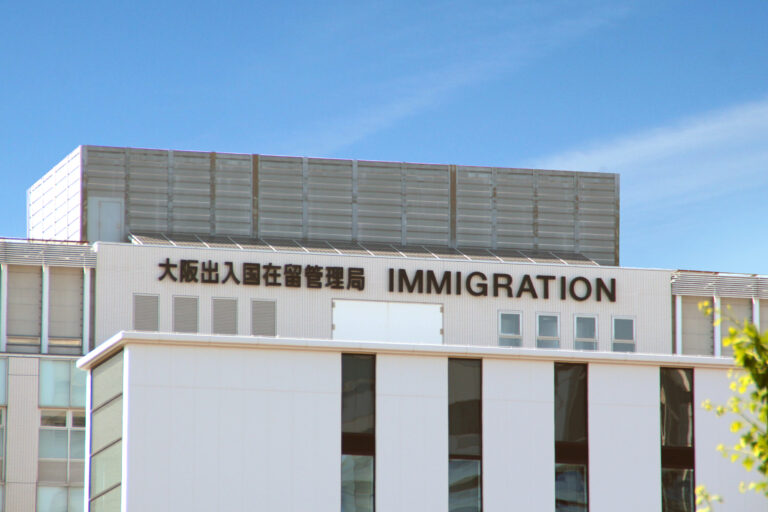
Japan immigration
Picture: imageteam / PIXTA(ピクスタ)

On June 14th, Japan’s parliament enacted revised immigration laws. The revisions give the government broader ground to strip foreigners of permanent residency. The same legislation replaces the current technical intern system. The new training program is designed to reduce abuse and encourage foreign nationals to stay longer.

Japan grants permanent residency to foreign nationals who have lived in Japan for over 10 years. Foreign spouses of Japanese nationals and foreign nationals who have acquired “advanced skills and knowledge” are also eligible. Highly-compensated workers and people with advanced education can earn PR status in as little as a year.

26% of foreign nationals living in Japan have permanent residency. The largest demographic of permanent residents is Chinese (330,000), followed by Filipino (130,000), Brazilian (110,000), and Korean (70,000) nationals.

Boosting workers, booting residents

A majority of the Diet approved changes to the Immigration Control and Refugee Recognition Act at the Upper House plenary session on Friday. The Liberal Democratic Party, Komeito, and the Japan Innovation Party supported the bill. The Constitutional Democratic Party, Japanese Communist Party, and other opposition parties voted against it.

The revisions entail expanding revocation criteria for permanent residency beyond a one-year prison sentence. At the same time, the government sees the new trainee program as a potential boost to immigration.

Under the new provisions, residents can lose their PR status due to:

The law is written in such a way, however, that it gives immigration officials wide discretion. That means that being unable to pay taxes (e.g., due to an illness) or even forgetting to carry one’s residence card with them at all times could be grounds for losing PR status.

Outcry over revoking status

Permanent residents, lawyers, NPOs, and opposition lawmakers have opposed the new revocation criteria.

Groups of pro-Seoul Korean and Chinese residents in Japan held protests and issued statements ahead of Friday’s vote. They called the criteria “a threat to the lives and human rights of permanent residents” and “severe discrimination.”

“The government can collect overdue taxes and foreclose on them in the same manner as Japanese nationals. Taking away residency status is an excessive and discriminatory sanction,” lawyer Ibusuki Shoichi told reporters.

Concerns are mounting against the criteria’s unforgiving nature. Unintentional failure to pay taxes and carry resident permits are also substantial causes for revocation.

 “Losing my permanent residency over forgetting to put my residence card in my wallet would be too harsh,” said Solana Mitsu, 44, who has lived in Japan for 18 years.

Taiwan-born Akutagawa Prize-winning novelist Li Kotomi, 34, and permanent residents from 6 countries including the US, Brazil, Myanmar, and Korea attended a meeting in Parliament on June 10th, pleading with the government to scrap revisions.

“We live the same life and pay the same taxes as Japanese people. I feel like the Japanese government has told us that we are second-class citizens and that it can take our lives away from us at any time,” Li said.

New name, not much better program

Workers talking to one another
Picture: Fast&Slow / PIXTA(ピクスタ)

Japan’s new trainee program is stirring just as much controversy as the legal revisions laid in place for it to commence.

Replacing the technical intern training program that began in 1993, the new system will allow trainees unprecedented mobility within the same industry for 3 years. After up to 2 years, trainees will be able to change jobs. Upon completing the program, foreign nationals can obtain a five-year “specified skilled worker No.1 visa.”

No longer bound to one workplace, trainees who earn illegally low wages or are subject to violence and harassment can now seek out safer opportunities––on paper. Experts say they are not optimistic that the revisions will change much.

“There’s probably no company that will accept an incoming trainee who only has one year left,” Shoichi said. “The government just changed the program’s name and made it just to dodge criticism for running a ‘slave system.'”

Authorities, opting to substitute what critics dub ‘cheap labor’ with ‘human resources,’ cannot deny that Japan has very few options but to rely on immigrants to plug its labor shortage created by the country’s demographic crisis.

Kishida has repeatedly declared to make Japan “the country foreign talent chooses.”

Sou Tokushin, 84, a Yokohama resident of Chinese descent, who has spoken to Parliament in protest of recent revisions said “The government is putting so much weight on the ‘resources’ part of ‘human resources’ that it is forgetting the ‘human.'”

Sources

不注意や病気でも永住資格を失うなんて…改正入管難民法で日本は本当に「外国人材に選ばれる国」になるのか?. 東京新聞

「二級市民と言われた気が」 芥川賞作家ら、永住権取消し反対集会. 毎日新聞

「永住権取り消し」規定、在日韓国人らが削除求める 在留カード不携帯でも適用可…「人権脅かす重大事案」. 東京新聞

「看板掛け替えただけ」新設の育成就労に支援者らー改正入管難民法成立. 時事通信

【2024年6月可決成立】「育成就労」制度とは?技能実習・特定技能制度の改正について解説. まなびJAPAN

日本で永住権を取得する方法とは?. Skilled Worker

Japan’s New Bill to Strip Permanent Residency Based on Shaky Data

The government is halfway to making it possible for permanent residents to lose their status due to unpaid taxes and social insurance premiums. However, the bill making this happen is based on inconclusive data. Some argue that’s enough reason to scrap it.

More power lurking over permanent residency

On Friday, the House of Representatives approved a bill on a majority vote that will allow the government to revoke permanent residence permits of foreigners if permit holders intentionally fail to pay taxes or social insurance premiums.

The provision to revoke permanent residency will only apply to some “malicious cases,” Prime Minister Kishida said on Wednesday at the meeting of the Judicial Affairs Committee of parliament’s lower house, according to news agency Jiji Press.

Justice Minister Koizumi Ryuji echoed Kishida’s cautionary defense of the bill, assuring that it will maintain leniency for “cases in which, inevitably, permanent residents cannot pay taxes.” For those dire cases, unpaid taxes “will not be cause for revoking their residency.”

Bill based on insufficient data

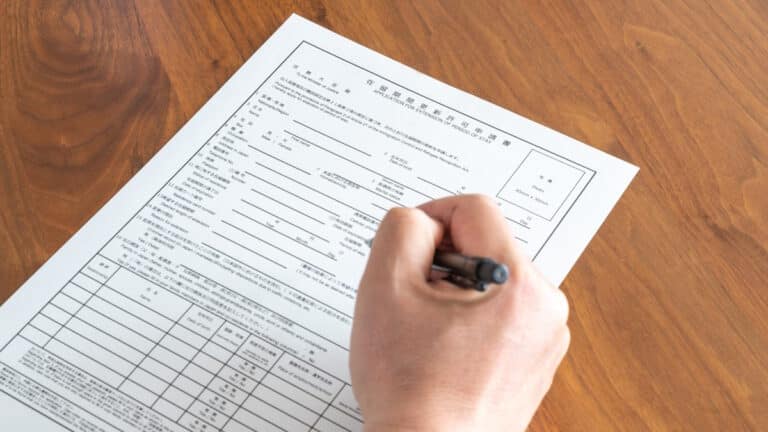
Re-entry permit to Japan
Picture: Yotsuba / PIXTA(ピクスタ)

“The planned rule would not affect the vast majority of foreign permanent residents,” Kishida said on May 15th. His comments came a week after the Immigration Services Agency (ISA) disclosed to the committee inconclusive data showing 10% of permanent residents had not paid their taxes or social insurance premiums.

The agency’s survey only examined 1,825 of the approximately 890,000 permanent residents in Japan, rendering results short of representative. The data also didn’t establish how many of those identified would fall under the proposed new law stripping permanent residents of their status.

Opposition parties that voted against the bill, such as the Constitutional Democratic Party of Japan (CDP), criticized the lack of data supporting the need to crack down on permanent residents evading tax.

“There are no legislative facts based on sufficient data. All provisions related to the system for permanent residency should be eliminated,” the CDP argued.

CDP politician Daiki Michishita argued that “there are more unpaid taxes by Japanese than by foreigners,” without citing comparative studies on tax data.

Others raised concerns that should the bill become a law, it would put permanent residents in a precarious situation.

The bill will be in the hands of the House of Councillors next week. If the upper house committee approves the bill, it will become a law and likely go into effect by 2027 and affect the current 27% of foreigners living in Japan.

Part of a bigger change

Japan immigration
Picture: imageteam / PIXTA(ピクスタ)

The controversial provision that will make unpaid taxes cause for revoking permanent residency is part of a larger bundle of proposals to amend laws related to a new training and employment system.

The government is in the process of abolishing the current technical intern training program that began in 1993 and replacing it with a new program.

Kishida has praised the transition and legislative changes to implement a new program. The PM says it’s a step toward procuring inbound talent that will help plug Japan’s labor shortage resulting from falling birthrates, population decline, and an aging society.

“As the competition to secure international human resources intensifies, it is important to make our system for integration more appealing and work towards the realization of a society in which we coexist with foreigners so that Japan becomes a country people choose to work in.”  

Critics say that the current bill raises the stakes too high for foreigners, going against Kishida’s aim of making Japan more welcoming for work.  

Lawyer Komai Chie says that “even in cases of unpaid taxes and social insurance premiums due to sudden illness and layoffs will be considered ‘intentional’ in legal terms.”

Another provision, which will allow officials to revoke the permits of those who go out without their proof of permanent residency, is also under scrutiny.

“It is possible for people to accidentally forget their residency card at home, making this a significantly strict law,” Komai says.

Sources

首相 新たな育成就労制度の導入に理解求める 衆院法務委. NHK

「強制送還におびえながら暮らすことに」 新たな「永住権取消し」法案を当事者ら懸念 税金滞納なども対象に. 東京新聞

永住資格、不安定化に懸念 「選ばれる国」逆行もー入管法改正. 時事通信

「育成就労」法案可決 税金未納などの場合は永住許可取消しも. 毎日新聞

永住者の税など「未納は1割」に広がる誤解。入館が示した「滞納」データが、立法事実の根拠にならない理由. HUFFPOST

岸田文雄首相、永住許可取り消し「一部の悪質な場合」. 日本経済新聞

Japanese-Brazilian Woman Told “Go Back to Your Country” by Welfare Office

A Japanese-Brazilian woman who has been a permanent resident of Japan for 10 years was denied public assistance recently and told she should consider going back to her country. The woman is now speaking out about her experience to prevent it from happening to others.

The story was broken by Japan’s Mainichi Shimbun. The woman, 41, lives in Anjo in Aichi Prefecture. Her husband, who worked in an automotive plant, lost his job due to the pandemic-related economic downturn. Things took an even worse turn when her husband was arrested recently for driving without a license.

The woman, who has two sons, told Mainichi in tears about how she watered down milk that friends gave her to the point that it was “like water.”

Friends assured the woman she’d qualify for public assistance. But when she visited the city welfare office, a city worker refused her petition. The city worker told her (incorrectly) that she wasn’t eligible for public assistance because she isn’t a Japanese citizen. The woman further told her that “it’d be better if you returned to your country” and also implied that she’d lose her spousal visa due to her husband’s arrest.

The woman eventually obtained the assistance she was seeking. She also received an apology from the city for the worker’s discriminatory behavior.

“It was frightening going to city hall and feeling emotionally cornered,” she told Mainichi. “I wish foreigners would be seen as people.”

It’s a common refrain from Japan’s right-wing that foreigners are bleeding Japan dry through public assistance. In reality, few foreigners in Japan receive public assistance of any kind. Permanent residents were not even eligible to receive assistance until a 2018 change in the law passed under former Prime Minister Shinzo Abe.

Currently, most approved assistance goes to Zainichi Koreans and others who have suffered systemic discrimination in the past. For example, Zainichi Koreans were long forbidden from participating in the country’s pension system.

Sources

「国に帰ればいい」 日系ブラジル人の生活保護拒否、誤情報伝える. Mainichi Shimbun