Review: Shin Kamen Rider is a Fun Step Down for “Shin” Series

In 2013, representatives from film production giant Toho reached out to director Anno Hideaki, legendary creator of the Evangelion anime series. They had a stunning offer in hand; they wanted Anno to helm the first new live-action Godzilla film in a decade, one which would relaunch the famed kaiju series for a new generation.

Anno, in a deep depression following the release of his third Evangelion rebuild film, initially refused. However, the encouragement of friend (and co-creator of Evangelion) Higuchi Shinji helped win Anno over. The two threw themselves into the creation of their new Godzilla film as co-directors.

The resulting film was a smash hit on such a scale that it allowed for a series of modern tokusatsu (special effect beat-em-up) adaptations to come into existence. Now, the third such movie in their “Shin” series has released: Shin Kamen Rider. Does it maintain the high quality of its predecessors?

Well, not quite. But let’s not get ahead of ourselves – what is it that’s made the Shin series so successful, and makes us happy with its continued existence even in the lesser form of Shin Kamen Rider?

Shin Kamen Rider posts at Tokyo movie theater.

Kamen Rider poster at a local Tokyo theater. Photo by author.

It’s All About Shin-cerity

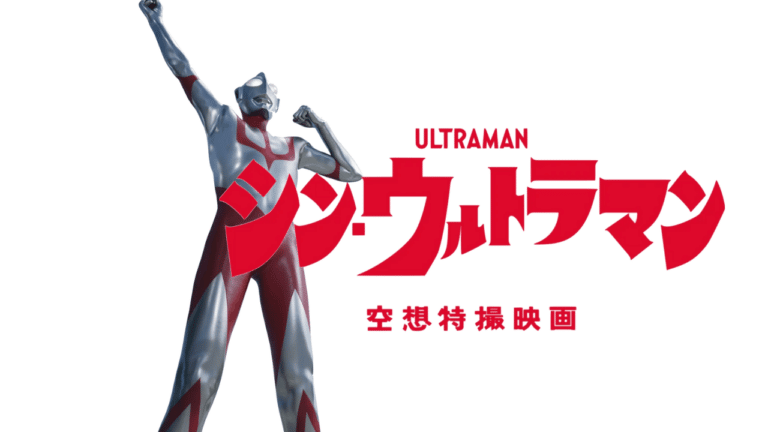
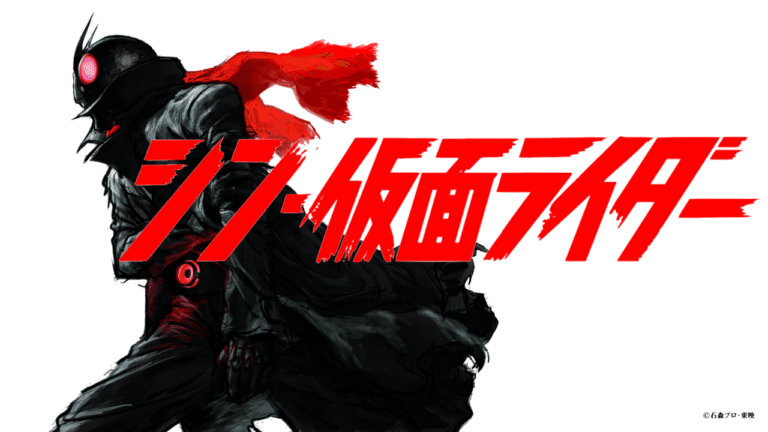
Shin Godzilla (2016), Shin Ultraman (2022, directed by Higuchi), and now, Shin Kamen Rider (2023); all three films in the Shin series manage to faithfully modernize the beloved tokusatsu franchises they originate from. (All while maintaining a patina of nostalgia in the form of era-accurate sound effects, camera shots, and soundtracks.) At the same time, they’re distinctly Anno-Higuchi creations. Shin Godzilla went as far as to directly use part of Sagisu Shiro’s soundtrack for Evangelion; all three movies contain Anno’s themes of apocalyptic existentialism, government overreach, bureaucracy, personal struggles for identity, the hardships of self-sacrifice, and more. How seriously these themes are treated has degraded in descending order; compared to the dark and poignant Fukushima Daiichi disaster theming of Godzilla, Shin Kamen Rider‘s superhero morality posturing seems a bit tacked on.

Anno and Higuchi have been ideal stewards of the Shin franchise as both lifelong obsessors of tokusatsu and revolutionary genre disruptors. Anno’s Neon Genisis Evangelion was highly influenced by giant monster beat-em-ups, and went on to be one of the most influential works in anime and Japanese genre culture following its 1995 television debut. For his part, Higuchi is one of the most successful tokusatsu film directors working today.

In all three Shin films, Anno and Higuchi have brought a level of sincerity (or, dare I say, Shin-cerity) in their love for the franchises they’ve been hired to re-tool. That sincerity helps allow a flawed movie like Shin Kamen Rider to still be a fun romp. It’s enjoyable watching it play straightforward tribute to its source television series, the 1971 Kamen Rider (仮面ライダー), the first of a series of shows featuring the exploits of a grasshopper-masked cyborg motorcyclist hero. (Such was the original Kamen Rider’s popularity that it’s often noted as the catalyst for Japan’s “second kaiju boom.”)

Shin Kamen Rider is the most straightforward of the Shin films, essentially being a series of monster-of-the-week confrontations mostly propped up by a strong core relationship between its two protagonists. Its story, true to its 1970s television origins, is mostly perfunctory set dressing. And that story is…

Kamen Rider Redux

Shin Kamen Rider opens in medias res, with a high-speed chase through the mountains of Japan between the eponymous “rider,” a befuddled university student named Hongo Takeshi, and two massive semi-trucks. Along for the ride on Hongo’s bike is ally Midorikawa Ruriko (a strong turn by actress Hamabe Minami). Hongo transforms into the masked Kamen Rider, violently dispatching the faceless creeps chasing him and Ruriko. The two make their way to a hideout, where Ruriko’s father, Dr. Midorikawa Hiroshi, explains to Hongo that he has been transformed into the ultimate insect-human augment as part of Midorikawa’s quest to defeat the evil organization, SHOCKER. The world-domination-bent secret society makes use of the same technology as Midorikawa; now, Hongo’s destiny has been irrevocably bound to that of both SHOCKER and the Midorikawas – all without his consent.

What follows is a series of battles between Hongo and SHOCKER thugs and fellow augments. Some are more engaging than others, with the deciding factor being how interesting the monster in each segment is. (Also figuring into the enjoyability of each segment is how much CG is used – this film, more than the other Shin movies, doesn’t quite hit the mark in the special effects department.) Interspersed throughout are scenes demonstrating Hongo’s torment over being forced into violence, tempered by his growing dedication to Ruriko. (In this way, Hongo resembles Evangelion‘s troubled Ikari Shinji, Anno’s most famous protagonist.)

Protagonists Hongo and Ruriko.

Along for the Ride

Hongo is portrayed by prolific actor Ikematsu Sosuke, perhaps most recognizable to English-speaking audiences in his first role as the young Higen in 2003’s Last Samurai. Ikematsu fits the conflicted role of the eponymous Kamen Rider well enough, but in truth, there isn’t all that much more to his character. More memorable is Hamabe as Ruriko. Here we have a classic Anno hyper-competent female character whose taciturn facade hides something more intriguing. Nominally a damsel-in-distress for Hongo to save, she emerges as the real driving force behind much of the movie. She feels like more of a protagonist than the often silent Kamen Rider himself.

It’s the relationship between Hongo and Ruriko that makes the movie interesting to a non-Tokusatsu fan. It endows the not-overly-well-staged action with a degree of emotional stakes. The characters in both Shin Godzilla and Ultraman were mostly static placeholders, good enough for the highly interesting events transpiring around them. What surrounds Hongo and Ruriko isn’t nearly so interesting, so it’s on their strength as characters that much of the film manages to hold our attention.

An issue here is that the action, a major selling point of the film, just doesn’t look that great. Part of the fun of tokusatsu is (sometimes silly-looking) fight choreography, but quick cuts and poor CGI fail to capture the shlocky thrill of classic toku shows. One of Kamen Rider’s augment enemies, a bat monster, looks embarrassingly bad in motion; it makes watching his entire segment a chore. Meanwhile, a bee-themed villainess from a later segment ups the schlock factor with minimal CGI, making for a much more enjoyable mini-arc. (It helps that Ruriko is so involved in her part of the story.) Shin Ultraman managed to make questionable CGI part of its retro identity, capitalizing on the inherent fun of redoing campy monster battle classics. Kamen Rider doesn’t manage this most important of tasks.

Shin Kamen Rider advertisement at Tokyo convenience store.

Shin Kamen Rider poster at FamilyMart. Such advertisements currently blanket much of Tokyo.

Low-Level Joy Ride

It’s maybe not high praise that one of the more notable aspects of Shin Kamen Rider is its location scouting; the film is filled with desolate settings amid decaying infrastructure. Sometimes, questionable CG is mapped onto beautifully composed shots of old factories and power stations. Anno’s trademark blocking and framing are also back at it again, displaying characters isolated at the extremes of the camera lens. Empty, sterile space sequesters characters from one another. Such camerawork helps separate these films from rote director-for-hire affairs.

The great cinematography is something all the Shin movies have in question. It’s still the initial entry in this thematically-linked series, Shin Godzilla, that emerges as the best of the lot. It succeeds in being both a reboot and a thematically rich successor to the original Godzilla’s themes of nuclear horror. Shin Ultraman holds onto some interesting theming, but mostly goes all in on being campy, ridiculous fun, and finds some real success in the endeavor. Meanwhile, Shin Kamen Rider is sort of stuck in between, not being thematically rich enough to emerge as a great film nor knowingly silly enough to be all that fun. For me, it comes off as markedly the least of the series.

Still, I have to admit that I’m happy it exists. Not in that it’s really that good of a movie, but more in that it still fulfills the general premise that the Shin series seems to hang on; extremely Anno-ified retellings of nostalgic tokusatsu classics. It has enough of that 1971 spirit to be an enjoyable novelty and enough of those classic Evangelion-esque camera angles and tropes to scratch that Eva itch. I can’t really recommend it on its own strengths, but if you enjoyed what came before, I’d say it’s certainly worthy of a watch. It’s hard not to get a little thrill when a classic Showa-era battle theme starts playing, and you get to see a modern film earnestly recreate the budget-limited battles of TV broadcasts of a long-bygone era.

So, Shin Himitsu Sentai Goranger next, right?

What to Read Next:

Suzume no Tojimari: A New Shinkai Masterpiece?

Review: Shin Ultraman is no Shin Godzilla – But That’s Not a Bad Thing

In 2016, director Anno Hideaki, anime auteur of Evangelion fame, broke into blockbuster live-action filmmaking in a big way. “Big” is the operative word here, given the film in question was the first new Japanese picture starring the oversized lizard king himself, Godzilla, following a massive twelve-year gap. Anno’s take on the King of Monsters, Shin Godzilla, was the perfect mesh of the original 1954 Godzilla‘s ruminations on national disaster and the dangers of the atomic age, combined with Anno’s own idiosyncratic takes on politics and the human condition. The result was a real hit, popular in Japan and abroad. It’s also one of the best big-budget Japanese films of the century thus far. Now, Anno’s production company, Khara, is back with another big-screen modernization of one of his favorite campy Showa-era pop culture staples. But with Shin Ultraman (シン・ウルトラマン), the emphasis seems to be on just that: camp.

Communing with the Ultra

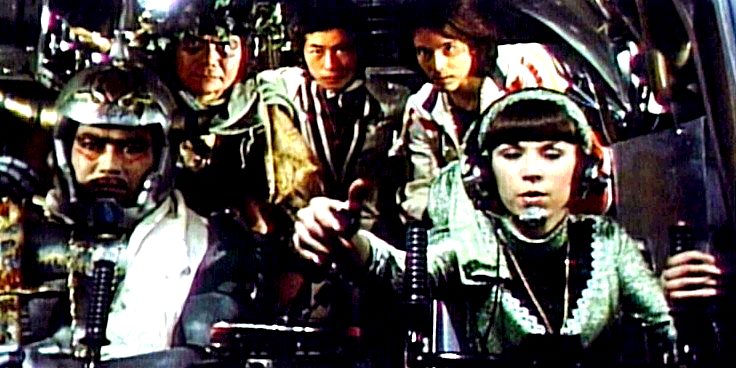
Anno’s love of Tokusatsu monster suit beat-em-ups has been clear ever since his Evangelion days. Eva, despite its deep metaphysical aspects, begins as very much a robot vs. monster-of-the-week show. Anno’s connections to the 1960’s megahit TV show Ultraman go back even farther, however. In the early ’80s, when Anno’s now-famed production company Gainax was just a university fan club called Daicon, he produced an impressive fan film called Return of Ultraman. (Anno even starred as the bespectacled version of the giant hero). Shin Ultraman is the continuation of that fannish spirit writ large.

DAICON FILM – 帰ってきたウルトラマン マットアロー1号発進命令

「増殖怪獣バグジュエル登場」 1983年3月完成/8ミリフィルム プロデューサー:武田康廣、澤村武伺 脚本:岡田斗司夫 特技監督:赤井孝美 総監督:庵野秀明 企画・制作:DAICON FILM

Anno and Daicon’s 1983 fan film, Return of Ultraman.

Along for the ride at Daicon was Higuchi Shinji, who would go on to storyboard much of Evangelion. Anno and Higuchi teamed up for Shin Godzilla, directing that movie together; with Shin Ultraman, the sole directorial torch has been passed to Higuchi. Anno wrote the screenplay and produced the film, and even provided motion capture for the titular hero alongside original 1966 Ultraman, Furuya Bin. (In other words, Anno has now portrayed Ultraman twice on film.)

Shin Ultraman: Summer Camp Blockbuster

The story of Shin Ultraman is, well, the story of Ultraman. Giant aliens, called “S-class species,” are attacking Earth, and, specifically, Japan. The Japanese government responds by forming a team of young go-getters called the S-class Species Suppression Protocol enforcement unit (SSSP) to deal with the growing crisis. Unbeknownst to the team, however, one of their own has gained the power of the giant silvery defender Ultraman. When danger lurks, he strikes a pose, presses the button on a handheld cylindrical device, and transforms into the giant protector of Earth. As the Japanese government and public grapple with the reality of the alien monsters and Ultraman, more extraterrestrials arrive to complicate things on a more political level.

An abrupt shift to a much more stylized version in this outing in the “Shin” series (soon to feature Shin Kamen Rider) is clear in the first minutes of Shin Ultraman. The movie wastes no time setting up the interstellar threat humankind is under; a series of quick cuts (featuring Anno’s trademark too-fast-to-read walls of text) show a series of five attacks by giant lifeforms on Japan. The scenes begin with exactly zero preamble, and it’s a bit refreshing to have a film simply cannonball directly into the plot this way.

These first moments seem almost like a hastily cut newsreel. They demonstrate what is both different and what remains the same about this Shin outing. Like Shin Godzilla before it, these scenes seem taken almost directly from Anno’s directorial style from his seminal anime series Neon Genisis Evangelion. The presence of weirdo giant monsters attacking earth is both taken seriously while also being allowed to look wondrously hokey; this is also much the same as the consistently weird, even silly, giant “angels” that attacked Earth in Evangelion, and the strange-looking juvenile form of Godzilla in Anno’s 2016 film.

Despite not being directed by Anno himself, Shin Ultraman feels cut from the exact same directorial cloth. Numerous camera angles hew extremely closely to the memorably strange cinematography in Evangelion, with characters framed by shots from below desk chairs or room corners.

Character poster for Shin Ultraman shows the five main human characters.
Character poster for Shin Ultraman. The actors give committed, fine performances for their relatively simple characters.

Nary a Serious Scene in Sight

Aesthetic and storytelling similarities abound, with the continuative through-line being the focus on the minutia of political and military responses to superhuman catastrophes. But despite so many aspects that clearly cement this film in the same spiritual continuum as Evangelion and Shin Godzilla, Shin Ultraman ends up a pretty different beast. Anno’s Godzilla film is both tribute to a 1950’s classic and a meditation on ruinous government inaction and gridlock, specifically serving as a harrowing metaphor for the devastating 2011 Great East Japan Earthquake and subsequent disaster at the Fukushima Daiichi nuclear power plant. Shin Ultraman could be seen as having similar themes – but they’re more like window dressing. The meat of this film is, in fact, cheese.

Shin Ultraman is shockingly ridiculous. I don’t mean that in a bad way. Ridiculous is fun. Cheese is fun. But unlike the fairly serious take of Shin Godzilla, this is the sort of presentation where your mileage may vary. Whether or not you find an alien, shaped like a concave, flattened triangle, sneaking into the Prime Minister’s residence in a trenchcoat and fedora hilarious or stupid will be up to your personal tastes. And personally, I love it. It’s made all the better by the movie itself never winking; the film is presented as serious, despite the action on screen being very much the opposite.

(Then again, I have been known to enjoy my schlock.)

The entire film comes off as an endearing love letter to low-budget 1960s sci-fi. As if to emphasize that fact, numerous shots focus on the sci-fi otaku tchotchkes accumulated around the SSSP office; in addition to Space Battleship Yamato, we see numerous close-ups of a model of the NCC-1701 Enterprise. (Especially fitting, given both Ultraman and Star Trek began airing in 1966.) Shin Godzilla emulated the 1954 Godzilla by making liberal use of its soundtrack; Shin Ultraman recreates entire shots, slavishly replicating the cheap-but-endearing look of the 1960s TV show multiple times throughout the movie’s runtime. The result is some impressively silly shots, where Ultraman and his monstrous adversaries, impressive CGI/practical suite mashups, jerk around like they’re being pulled by nonexistent wires. Multiple scenes in this style are so jarring that I actually had to laugh out loud.

Star Trek‘s USS Enterprise in Anno’s ’80s fan animation for the Daicon III convention.

Expertly Crafted Schlock

The thing, though, is that it all feels intentional. The cheesiness comes off as knowing, rather than accidental. And, at least to my mind, that intentional schlock covers up what might otherwise come off as failings for the film. Overall, the movie feels like a condensed TV show, shifting focus to what are essentially four separate plots over the course of the film. The characters are about as deep as you’d expect from the source material, too. They’re serviceable – likable, even. But they’re not exactly fully fleshed out.

So what we’re left with is a gloriously fun modern take on Ultraman. The giant monster battles are impactful, but unlike Shin Godzilla, we don’t feel any of the existential threat they pose. That’s true of the whole movie; some commentary on weak government bureaucracy aside, Shin Ultraman is basically about having a nostalgically goofy, enjoyable time.

Shin Godzilla is a great film, but Shin Ultraman is a great time.

What to Read Next:

The Ultimate Ranking of the Studio Ghibli Universe