Terao Saho: Singer-songwriter-essayist floats between real and ethereal

Terao Saho (寺尾紗穂) begins this year’s “Someone’s melody” with her breathy voice floating down from a piercing high note along with a flowing piano arpeggio. This characteristic, lighter-than-air lilt to her voice has defined Terao’s nearly two-decade-long musical career. But an especially melancholy edge and a full orchestral backing make her 2022 solo effort one of her best albums yet.

Someone’s melody

Listen to Someone’s melody on Spotify · album · Saho Terao · 2022 · 10 songs

“Good end,” an emotional piano ballad with spunk. “Under the black locust,” a jittering, wandering tune with harmonica and guitar solos. The halting plea “Putting aside expectations” featuring artful flute harmonies. These are just a few of the highlights of this unique, affecting album. But Terao’s ethereal voice is the glue that holds it all together.

“I believe the message of a song is the place where my music is born,” says Terao. “I can try out some wordplay and layer the words with atmosphere. But when I sing the lyrics, the message comes from the heart, and that’s what I really want to come across in my music.”

Terao has been active musically, producing two albums in 2020 and a soundtrack in 2021 after her last solo records in 2016 and 2017. But she’s also been focusing on writing more than ever before. She published essay collections focusing on “the things our eyes can’t see” as well as original reporting on World War II history and Japanese society. Terao’s work has yet to be translated into English, so we had a conversation with her to explore her diverse body of work and her differing approaches to music and writing.

Terao’s diverse musical career
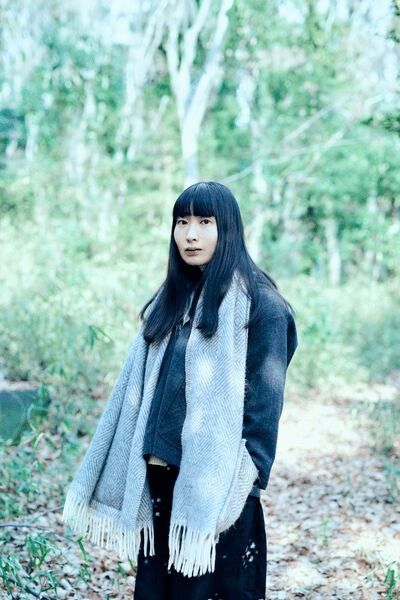
Saho Terao stands in front of forest wearing a long grey scarf and grey jacket.

The Tokyo-born Terao has always made music. “I’ve been singing my own songs since I was three years old,” Terao says. She joined the chorus and her own music club in high school, and then joined a band with classmates from a stargazing club while also researching jazz. This band became the Thousand Birdies’ Legs, where Terao sung and composed music, before playing piano for her own first solo album in 2007, “Onmi.”

Terao says major influences on her composition style include city pop legend Onuki Taeko, Disney, and classic choral music. Meanwhile, encountering Nina Simone influenced her approach to piano and vocal performance. A variety of collaborations has also led to her composing soundtracks and joining the 3-piece band Fuyuni Wakarete, which performs with more funk and jazz flair than Terao’s other efforts but still boasts the pathos of her vocal performances.

“There will always be differences of opinion with a band, so it can be tough during production,” says Terao. “There are times when I cry on the way home from recording [laughs].”

“But the result is music that I couldn’t come up with on my own. I actually prefer live performances to recordings. I’m not very good at recording, re-recording, and fiddling with something over and over again. I think the most important thing is to simply have fun, and to express that in the music.”

Essays and social exposés

Terao’s parallel writing career dates back all the way to 2008 with the publication of Yoshiko Kawashima: A Stranger in Men’s Clothing. This reported nonfiction book tells the story of the life of Kawashima Yoshiko, the Qing dynasty princess who was raised in Japan and served as a spy for the Japanese army during World War II. Six years later, Terao released her first essay collection. Since then, she has released two more essay collections plus works of reported nonfiction on workers in the nuclear power industry, the survivors of the Battle of Saipan, and life in Palau during its days as a Japanese colony.

Terao says that music is more like a home station to her, where inspiration comes in flashes. “In terms of how I come up with inspiration, musical ideas come to me passively, while I need to be active to create works of writing. I hope that my writing can serve as a gateway to understanding the past, reviving the memory of the people who lived through history,” she says.
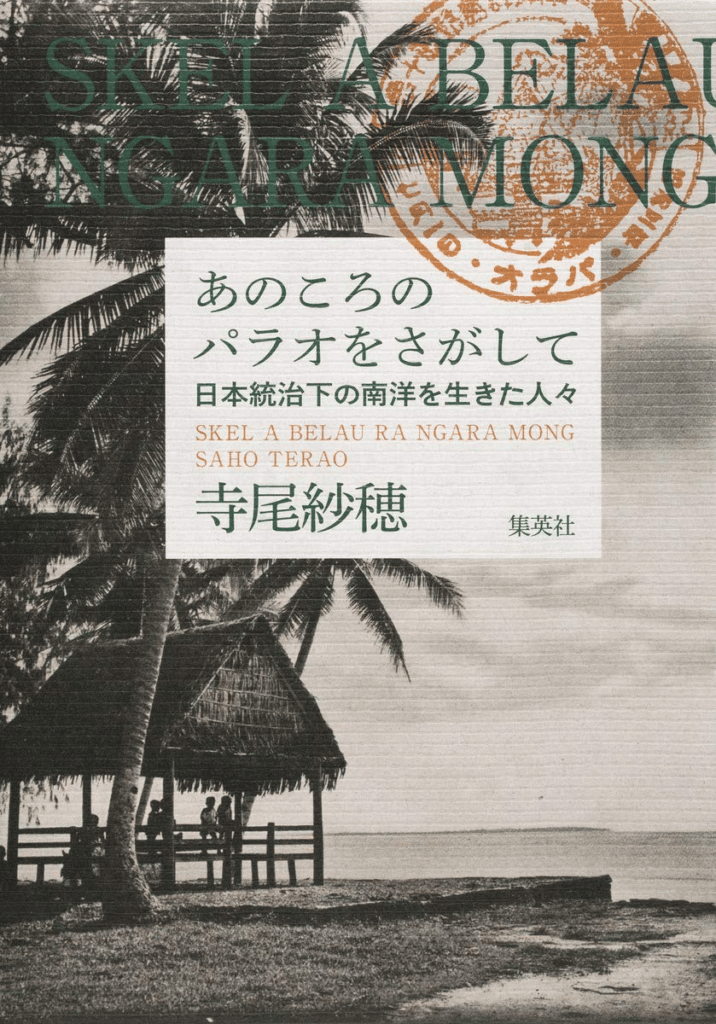
This deep interest in history and especially the memory of World War II shines through with her books on Palau and Saipan. Ano koro no Parao o Sagashite (“searching for the Palau of that time”) revolves around the work of Nakajima Atsushi who lived in Palau during the Japanese colonial period. His story inspired Terao to go to Saipan and interview locals when she was still a student, although she had no idea it would turn into a book for her at the time.

Her nonfiction reporting of working conditions in the nuclear power industry seems, on the surface, to be a very different subject matter. But Terao’s chief concern is the same: the struggles and experiences of everyday people living through adversity, whether imperial occupation or a dangerous working environment. It was a different book, a Higuchi Kenji exposé of the industry, that inspired Terao to begin her own research. “I heard the voices of the former laborers who were suffering. I realized that the energy that people claimed to be ‘clean’ was actually stained with blood,” Terao says.

A longing for “blank space”

A concrete, humanistic concern permeates Terao’s writing. But this subject matter doesn’t clash with the emotional, instinctive approach that Terao takes with her music. In Terao’s lyrics, she often sings not about the black or the white but the gray, not about the sphere but about the ellipse, about blank space, the margins. “The root of singing is the feeling that something is lost and a longing for it,” Terao says.

Terao’s instinctive approach ends up combining with her passion for thinking about real-world problems. “There’s always a hidden feeling inside of me,” Terao says. “On a daily basis, I’m thinking about the problems of the world; war and peace, love and death. And because of some trigger, those feelings get drawn outside, and become songs. The trigger could be scenery, something someone said, or meeting someone new.”

寺尾紗穂 on X (formerly Twitter): “あらためてサントリーホール・ブルーローズ満員御礼、お越しいただきありがとうございました。管弦と音の風をおこす心地よさ。いつも一人奮闘するピアノが仲間を得て喜んでいました。 pic.twitter.com/bSuQ6utETc / X”

あらためてサントリーホール・ブルーローズ満員御礼、お越しいただきありがとうございました。管弦と音の風をおこす心地よさ。いつも一人奮闘するピアノが仲間を得て喜んでいました。 pic.twitter.com/bSuQ6utETc

Terao posting a photo of a recent performance on Twitter

Currently, Terao is working on researching local and folk history in Nagano and Kochi prefectures. She’s also focusing on a book project about Japanese World War II repatriates, including those who went on to immigrate to South America.

Terao embraces the fact that she isn’t sure where her projects are taking her. “My work is more like a record of my life, a diary,” she says. “I don’t have any enthusiasm for intentionally trying to make this type or that type of song. It’s impossible for me to come up with a predetermined concept. It’s just that the songs that I come up with need to find some kind of arrangement.”

Terao Saho’s official website can be found here.
Untranslated: Philosophy and Prose Collide in Masaya Chiba’s Playful World

Masaya Chiba, an expert on French philosopher Gilles Deleuze, has written best-selling works of philosophy and award-winning queer fiction. His writing hasn’t been translated into English yet, so we connected with one of Japan’s most notable contemporary writers to uncover his perspective on art and life.

Making philosophy fun

If Masaya Chiba’s books didn’t make philosophy fun, they wouldn’t be selling more copies than every other philosophy book on the Japanese market. His latest release, Gendai Shiso Nyuumon (“Introduction to Contemporary Thought”) “describes the essence of contemporary thought in an unprecedented way.” Derrida, Deleuze, Foucault, Lacan—Chiba breaks down the who’s-who of postmodern and post-structural philosophy. He explores deconstruction, power, exploitation, difference, psychoanalysis, and more, directly applying the concepts to everyday life in a way that’s almost astonishingly easy to understand.

フクロウ on X (formerly Twitter): “現代思想入門、自分には難しいかなぁとか思って積んでたけど、読めなくても読んでよい的なツイートみて勇気でたのと、メリーゴーランド京都の鳥羽さんトークの配信聞いて興味出て。読み始めたら面白い。みんなこんなこと理解してあの本読んでたんならわたしよりさらに数倍面白かったでしょ!と思った→ pic.twitter.com/jR41niPQXa / X”

現代思想入門、自分には難しいかなぁとか思って積んでたけど、読めなくても読んでよい的なツイートみて勇気でたのと、メリーゴーランド京都の鳥羽さんトークの配信聞いて興味出て。読み始めたら面白い。みんなこんなこと理解してあの本読んでたんならわたしよりさらに数倍面白かったでしょ!と思った→ pic.twitter.com/jR41niPQXa

“The concepts are abstract in themselves. But I connect them to human relationships, to everyday human life,” Chiba says. “I believe that ultimately, the biggest of questions are reflected in mundane, incredibly small details of everyday life. So I try to analyze the minute as much as I can.”

Chiba has written a whopping seven books in the last four years. There’s Gendai Shiso Nyuumon, two Akutagawa prize-nominated novels. He’s penned best-selling books of philosophy about Deleuze, about how to study, about meaninglessness. He’s even written an American travelogue. He regularly publishes philosophy essays in peer-reviewed journals in Japan. He even does some music on the side. It’s an impressive resume boosted by a substantial social media following to boot.

“Researchers are writers by nature,” Chiba says. “It’s not just about thinking inside your own head but making things. That’s why I’m also interested in making art and music. Not obeying the set rules is at the center of Deleuze’s philosophy. It’s about combining all sorts of things and experiencing connectivity among them. A philosophy of creativity.”

The path to Deleuze

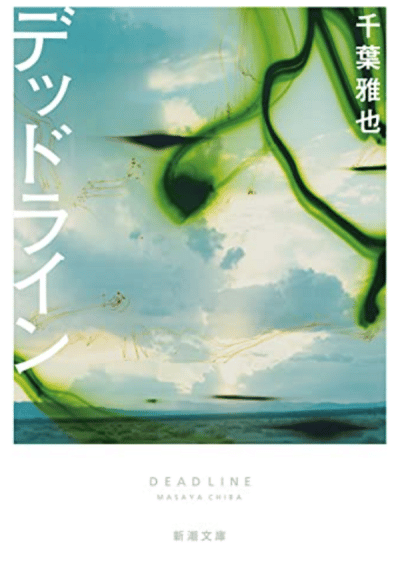
Deadline by Masaya Chiba

Masaya Chiba grew up as an artist and became interested in contemporary art as a high school student in the mid-1990s. But a high school teacher got him interested in art criticism. This was just as Windows ’95 came out and the internet became a phenomenon in Japan. “That’s when I started to focus on writing instead,” Chiba says. “I wanted to do art criticism at first, but I realized I had to study conceptual theories and moved over to philosophy.”

In college, he studied anthropology and began researching the French structuralists and post-structuralists, with the inscrutable and near-incomprehensible Deleuze looming large. He was aware of Deleuze since high school. In fact, he had three heavy volumes of Deleuze sitting in his room since that time, waiting for him to develop the knowledge and background to break through the wisdom hiding within.

Deleuze is known for his bold attempts to rethink metaphysics and his intimidating writing style that keeps readers on their toes. “There’s no strict hierarchy in Deleuze – it goes all over the place, expanding horizontally,” Chiba explains. “For me, one of the important themes in Deleuze is that there aren’t distinctions between things in the way we typically imagine. In fact, many things are connected.”

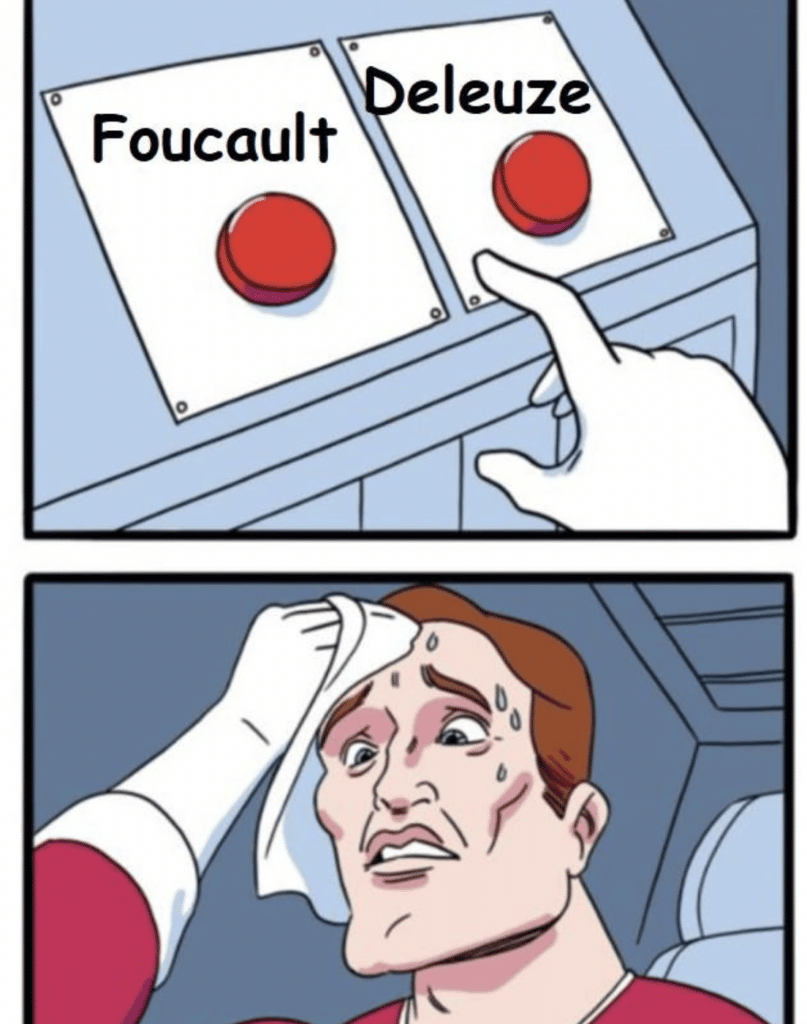
Two notoriously difficult French philosophers

Before the internet, high culture and pop culture were vastly divided, without much of a bridge between them. So in the context of Deleuze’s philosophy, an online age seemed to offer the potential for connectivity.

But instead, as social networking increased, connectivity became too extreme. “Rather than boosting creativity, we started to feel pressure and judgment from others, effectively suppressing creativity,” Chiba says. “As I started to read Deleuze deeper, I realized he wasn’t saying that connectivity was strictly a good thing. He saw the dangers of an over-connected ‘society of control.’”

Lately, Chiba has reconnected with his intellectual roots by thinking and writing more about art. Chiba sees art as revolutionary in a society focused on efficiency, where people want to do everything they can to be productive and avoid unnecessary tasks. “Art doesn’t have a specific objective,” Chiba says. “The art is the objective in itself—a non-objective, so to speak.” 

Fiction, philosophy, what’s the difference?

Chiba didn’t write any novels until his editor suggested he give it a shot. But they quickly became a new kind of vehicle for exploring the same ideas he takes an interest in philosophically.

Just as his essays incorporate figurative language and refuse to be purely logical arguments, his writing grapple with plenty of philosophical ideas. Deadline, his debut, and Overheat, his latest, are both intense first-person, nearly stream-of-consciousness journeys amidst the philosophy, relationships, desire, queerness, and memories that emerge from the midst of changing life. The first focuses on an upcoming masters’ thesis deadline, and the second on a move from Tokyo to Osaka.

Stylistically, Chiba is influenced by Samuel Beckett and the diaries of Paul Klee, who both intrigued Chiba with the extreme simplicity of their prose. “I wanted to write simply about things that happened, plain descriptions,” says Chiba. “So I used my memories from Tokyo as a basis for the story and started to write.”

Chiba’s fiction is notable for its queer themes. His interest in sexuality is a core motivator behind his writing. As LGTBQ people have been gradually (albeit at a much slower pace than the West) accepted in Japan, Chiba says he wants to focus on complex problems, not advocate for simple “acceptance.”

開けば居心地良い空間広がる本!千葉雅也『オーバーヒート』を紹介!

千葉雅也さん『オーバーヒート』を紹介いたします。 https://amzn.to/3z0IOkh 書棚から手に取ったこの本を開けばたちまち、居心地の良いバーのような空間が広がります。 その居心地の良さの正体とはなにか? わけのわからない方向へと進みがちな社会の中で、主人公が言葉を駆使し、そして欲望に忠実なまま、楽しそうに日常を送る様子を見せてくれます。

“It’s important to recognize that there are fundamental differences in life and society being queer,” Chiba says. “The ‘normal life course’ doesn’t apply in the same way. With literature, I can express the incredible complexity of sexuality, the negative aspects of desire.” 

What’s next?

Chiba recently finished a novel to complete the loose trilogy formed by Deadline and Overheat, scheduled to come out in Japan next year. Moving forward, he plans to think about a new fiction project and advancing philosophical writing around the theme of time and temporality.

While his short story “Magic Mirror” received a French translation, his writings have yet to get English translations. “It’s very complicated so it would be difficult, but I’d love to see my book on Deleuze, Ugokisugite ha Ikenai (Don’t Move Too Much) translated into English,” Chiba says.

Masaya Chiba’s open romp between philosophy, fiction, and art offers up powerful possibilities for free and empowering ways to live life. Hopefully, we’ll see his ideas, which are already exerting a real influence in Japan, expressed in English in the coming years.

What to read next

Man of Masks: The Strange Life of Author Mishima Yukio