


Is this the beginning of the end for Japan’s beloved IC transportation cards? Two train systems in Tokyo say they’ve started a large-scale experiment with credit card contactless payments to make life easier for tourists.
I wrote earlier this year about how Tokyu Railway’s Denentoshi line had launched an initial experiment with credit card touchless payments. Now, Tokyu says they’ve expanded the experiment to 10 stations, including Haneda Airport, for a total of 36 stations in total.

Not to be left behind, Toei Subway, run by the Tokyo Metropolitan Government, has installed card readers in December for the critical Oedo and Asakusa lines, numbering a total of 26 stations.
Tokyo Metro, which operates the Ginza, Hanzomon, and Marunouchi lines, says they will also introduce contactless payments in March. The city of Fukuoka, on Japan’s island of Kyushu, currently supports credit card tap for all three city-operated lines.
The slow birth of credit card taps in Japan
The stated goal of supporting credit card payments is that it makes life easier for foreign travelers, who won’t have to wrangle with buying an IC card. While iOS supports adding virtual Suica and PASMO cards, two of Eastern Tokyo’s most popular IC cards, to your phone’s digital wallet, only Android phones produced for Japan support IC cards. JR East currently produces a Welcome Suica card for those who need a physical card while traveling here.
However, train companies might also be eyeing long-term cost savings. Supporting Japan’s IC transportation cards can be pricy, as they’re based on a proprietary IC chip standard, FeliCa, developed by Sony.
See a side of Tokyo that other tourists can't. Book a tour with Unseen Japan Tours - we'll tailor your trip to your interests and guide you through experiences usually closed off to non-Japanese speakers.

In addition, every region of Japan has their own brand of IC card. Supporting different brands across regions – e.g., accepting JR West’s Icoca card, used in the Kansai region, in Tokyo – means supporting the nationwide IC card network. That ups the cost of supporting IC cards even further.
Those costs recently drove six companies in Kumamoto to drop support for national IC cards altogether. The companies realized that installing new terminals that support credit card touch and QR code scanners was cheaper than performing the mandatory terminal upgrades required by the national network.
It’s clear that train companies see the writing on the wall. JR East recently announced several changes to its Suica card that will turn it into a full-fledged cashless payment method. It says it’ll also implement gateless entry to JR lines, such as Tokyo’s heavily trafficked Yamanote loop, in 2028.
Credit card touch hasn’t been a popular method of payment in Japan until recently. As of 2023, only 20% of all transactions were done by card touch. That number’s starting to increase as more stores install tap-to-pay support.
The city’s mayor won’t rule out creating “zero-day vacation rental” zones in residential areas in response to chronic complaints.

Travel from other countries offset a 45.2% drop from a nation that used to lead the pack in Japan tourism.
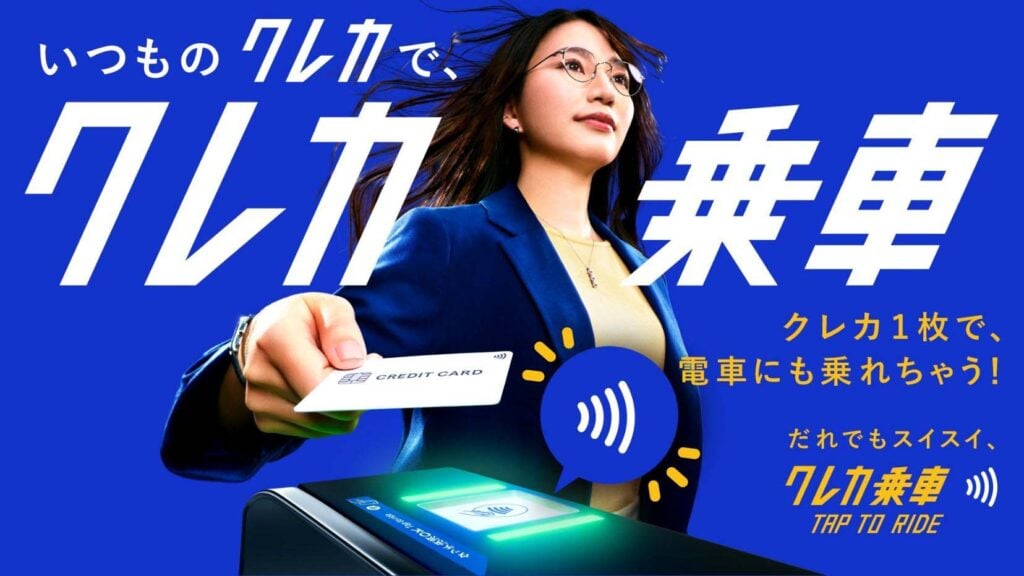
Soon, you’ll be able to tap-to-pay on many trains and subways across Tokyo. But be warned: not every train company’s on board.
