

If you’ve spent any time in a Japanese office, you’ve probably heard the phrase sasete itadakimasu (させていただきます). Roughly translated as “with your kind permission, I’ll…” or “I humbly take the liberty of doing…”, it’s a staple of Japanese business language. Employees use it in meetings, presentations, emails, and just about any situation where they want to sound polite.
But there’s a growing problem: Some Japanese people think the expression is being used far too often. And according to one manners instructor, Sunai Emi (諏内えみ), all that extra politeness may actually make the speaker sound less polite.
When is sasete itadakimasu actually appropriate?
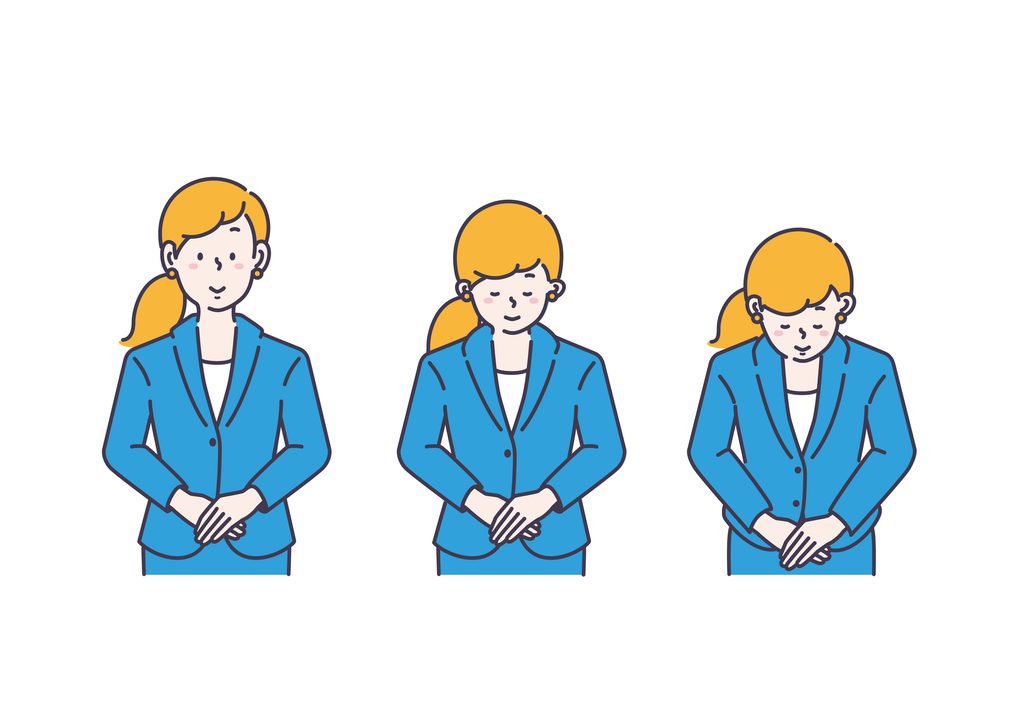
The expression belongs to keigo (敬語), the Japanese system of honorific language used to show respect. More specifically, it’s associated with kenjōgo (謙譲語), or humble language, which lowers the speaker’s position to show consideration for someone else.
According to Sunai, sasete itadakimasu has two absolute conditions. First, the speaker must have permission from the listener or a third party to do something. Second, the speaker must receive some benefit from doing it.
Consider the difference between saying teisei itashimasu (訂正いたします), meaning “I’ll make a correction,” and teisei sasete itadakimasu (訂正させていただきます), meaning “I’ll take the liberty of making a correction.”
In the second example, the speaker isn’t really asking permission, nor are they receiving any particular benefit. The additional wording therefore doesn’t accomplish much.
Sunai recommends reserving the expression for situations where permission and some benefit are genuinely involved. In most other cases, itashimasu (いたします) is perfectly sufficient.
She also takes issue with another common office expression: yasumi o itadaite orimasu (休みをいただいております), or “I’ve been granted the day off.” When speaking to a customer, the phrase can sound as though you’re showing respect to your own company rather than the person you’re addressing. She suggests alternatives such as ashita wa yasumi o totte orimasu (“I’ll be taking tomorrow off”).
Even the government is wagging its finger at sasete itadakimasu
Sunai’s recommendation isn’t new. It closely follows the Guidelines on Keigo (敬語の指針, Keigo no Shishin) published in February 2007 by Japan’s Agency for Cultural Affairs. Those guidelines also say that sasete itadaku is generally appropriate when someone acts with another person’s permission and benefits from doing so.
More specifically, they say that the appropriateness of the expression depends on how well a particular situation meets both conditions.
Interestingly, the expression itself is more than a century old. Linguist Shiina Michi of Hosei University says it experienced a major surge in popularity around 1990. One theory traces its origins to traveling merchants associated with the Jōdo Shinshū school of Buddhism, although this remains a theory rather than an established explanation.
Question: do you like UJ's independent coverage of Japan? Our writers are supported by our members. Join Unseen Japan Insider to get bonus content every week, an ad-free website, and access to our large and growing Insider archive.If you love what we do, help us pay our writers to do more of it by joining Insider. You'll get bonus content every week, an ad-free website, and access to our large and growing Insider archive.
More Japanese people are finding it irritating

The Agency for Cultural Affairs has tracked people’s attitudes toward Japanese expressions for decades through its Public Opinion Poll on the Japanese Language. The results suggest that irritation with sasete itadakimasu has grown over time.
In 1996, only 8.1% of respondents said they were bothered by a meeting chair announcing, “With your permission, I will now end the meeting.” By 2007, that figure had more than doubled to 18.1%.
The reaction was even stronger to a shop announcing that it would close. The percentage of people bothered by kyūgyō sasete itadakimasu (休業させていただきます) tripled from 7.1% to 21.9% in the same time span.
Apologies are another particularly sensitive area. In 2019, 49% of respondents said the expression fukaku hansei sasete itadakimasu (“I will humbly reflect deeply”) bothered them, compared with 48% who didn’t mind.
That doesn’t necessarily mean people consider the expression rude. The survey asked whether something bothered them or caught their ear. It was a more subjective reaction than an outright judgment of bad manners. Still, the numbers suggest that adding more humble language doesn’t automatically make a speaker sound more respectful.
The flip side: policing language is also irritating
Of course, some have a problem with the constant invention of new etiquette rules. They even have a nickname: shitsurei kurieitā (失礼クリエイター), literally “rudeness creators.”
It’s hardly a unique concept. In the West, people criticize both language policing and the overuse of political correctness. If a person says a fairly neutral phrase and someone takes offense because they didn’t say it “the right way,” that’s frustrating.
That’s the case in Japan, too. Manners instructors and commentators get plenty of criticism for finding a new supposedly offensive expression every week. Some social media users have specifically pushed back against claims that ordinary workplace expressions such as ryōkai shimashita (了解しました), meaning “understood,” are inherently disrespectful.
And that makes sense, to a certain extent. People want to use the same common phrase they’ve been using without being criticized. The problem is that language is constantly changing. The term “handicap” was once considered polite, but nowadays, it’s offensive.
Sasete itadakimasu isn’t inherently wrong, and it has its place in conversation. But when it gets overused, and every little thing is someone “humbly taking permission” to do something, it can get a bit tiring. Sometimes, simply saying what you mean is more considerate.
Keep reading


Sources
「させていただきます」を連発する人は要注意!丁寧な敬語が「逆効果」になる理由 ダイヤモンド・オンライン
敬語の指針(文化審議会答申) 文化庁
平成10年度「国語に関する世論調査」の結果について 文化庁
平成14年度「国語に関する世論調査」の結果について 文化庁
平成19年度「国語に関する世論調査」の結果について 文化庁
平成28年度「国語に関する世論調査」の結果の概要 文化庁
令和元年度「国語に関する世論調査」の結果の概要 文化庁
人はなぜ「させていただく」に違和感をおぼえる? 言語学者が解き明かす“敬意のインフレーション” Real Sound ブック
そもそも敬語になっていない…「させていただく」と言われるとイラッとする言語学的な理由 PRESIDENT Online
「させていただく」は間違った表現? 「過剰敬語」指摘に注目も…辞典編纂者の見解は J-CASTニュース
横暴を続けるマナー講師に「失礼クリエイター」という名前を与えることで無力化する流れ、現代の呪詛として残しておくべき Togetter
誰もが「担当させていただきました」「発表させていただきます」ではなく「担当しました」「発表いたしました」という世界に戻って欲しい願い Togetter