
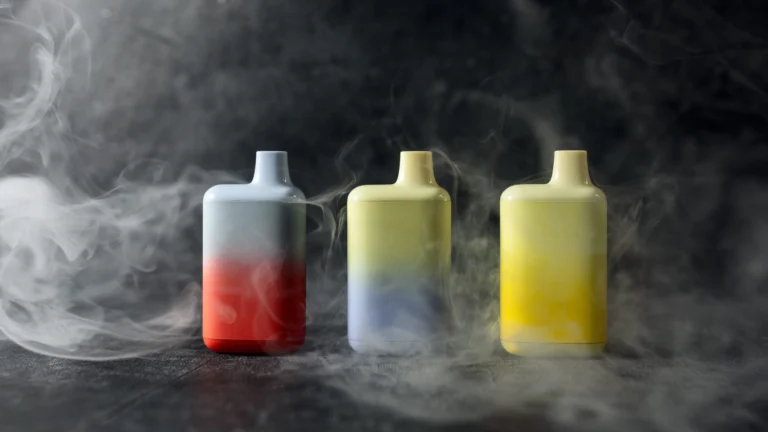
Japan is the world’s largest market for heated tobacco, where domestic sales surpassed cigarettes for the first time this year. Yet nicotine vapes remain illegal to sell, not because nicotine itself is prohibited, but because products containing the chemical must be approved as medicines before they can be marketed.
No nicotine product has received such approval since 2014, when the government said it would consider revising the regulations. Twelve years later, those barriers remain firmly in place.
You can import it. You can smoke it. But you can’t sell it.

The Manufactured Imports and Investment Promotion Organization (MIPRO) states that when e-cigarette liquid contains nicotine, a pharmaceutical ingredient, it requires manufacturing and marketing approval under the Pharmaceuticals and Medical Devices Act.
At present, however, no such product has been approved in Japan.
MIPRO also says the device used to vaporize nicotine contained in a cartridge is classified as a medical device. That means a legal nicotine vape would require two separate approvals: one for the nicotine as a pharmaceutical product and another for the device as a medical device.
Meanwhile, nicotine-free vapes are categorized as general consumer goods and can be legally sold. The result is a peculiar market: Japan has vape shops that can’t legally sell nicotine.
Why does a country that still smokes this much regulate nicotine vapes this way?
The answer lies partly in Japan’s regulatory divide. Tobacco and nicotine fall under two different laws, overseen by two different ministries with very different responsibilities.
Products made from tobacco leaf are regulated under the Tobacco Business Act, administered by the Ministry of Finance (MOF), which also oversees tobacco taxation and revenue. Nicotine products containing no tobacco leaf fall instead under the Pharmaceuticals and Medical Devices Act, administered by the Ministry of Health, Labour and Welfare (MHLW), whose mandate is public health and safety.
Cigarettes and heated-tobacco products contain tobacco leaf, keeping them on the MOF side of the regulatory divide, where they can be legally manufactured, sold and taxed. Nicotine vapes, which contain no tobacco leaf, fall on the MHLW side of the line.
The import rules
The distinction also shapes Japan’s import rules. Personal imports of nicotine liquid are permitted, but resale is prohibited, and the amount that can be imported without additional documentation is limited to a one-month supply.
Buying nicotine liquid from an overseas website for personal use is therefore legal. Customs allows up to one month’s supply, which the MHLW defines as 120 milliliters of liquid, to be imported without an import certificate. Larger quantities require a pharmaceutical import certificate (薬監証明; yakkan shōmei) filed with a Regional Bureau of Health and Welfare.
Giving or selling the liquid to another person, however, violates the Pharmaceuticals and Medical Devices Act, regardless of the quantity or whether money changes hands.
The result is an unusual regulatory landscape: Japan permits people to import nicotine for their own use, while preventing a domestic market from legally selling it.
That is particularly striking given Japan’s smoking rate.
Japan’s 2023 National Health and Nutrition Survey puts the adult habitual smoking rate at 15.7%, 25.6% among men and 6.9% among women. In Britain, the rate is about 13%, while an estimated 5.5 million adults, or 10.4% of the population, vape. In the United States, the adult cigarette-smoking rate fell to 9.9% in 2024, the first time it had dropped into single digits, while 7.0% of adults reported using e-cigarettes.
The comparison doesn’t prove that legalizing nicotine vapes causes lower smoking rates. Britain and the United States started from different baselines and have pursued many other tobacco-control policies.
But it does challenge the assumption that Japan’s more restrictive approach is necessarily the more cautious one.
Britain chose a different regulatory path
Rather than treating nicotine vapes primarily as medicines, Britain regulated them as consumer products, while maintaining a voluntary medicines pathway for products seeking authorization for medical use, including potential prescribing on the National Health Service (NHS).
That approach allowed most vaping products to be sold on the open market, creating a large, mature industry that regulators can now target with more specific rules.
Britain banned single-use disposable vapes on June 1, 2025, following years of concern over their environmental impact and rising use among young people. The UK-based public-health advocacy organization Action on Smoking and Health (ASH) found that disposable-vape use peaked in 2023 and has since declined. By 2025, tank systems accounted for 50% of the devices used, followed by pods at 25% and disposables at 24%.
But a mature legal market also creates problems that Japan has largely avoided by never allowing one to develop.
In Britain, 53% of smokers now believe vaping is as harmful as or more harmful than smoking, a misconception that has grown in recent years. That reflects the other side of having a legal, widely available, and heavily debated vaping market: public perceptions of its risks can shift alongside the market itself.
Question: do you like UJ's independent coverage of Japan? Our writers are supported by our members. Join Unseen Japan Insider to get bonus content every week, an ad-free website, and access to our large and growing Insider archive.We manage to keep most of our content free thanks to the generosity of our members. Join Unseen Japan Insider and you'll get access to new, exclusive UJ member content weekly, an ad-free website, and access to our large and growing Insider archive.
Japan’s nicotine debate is increasingly complicated by heated tobacco
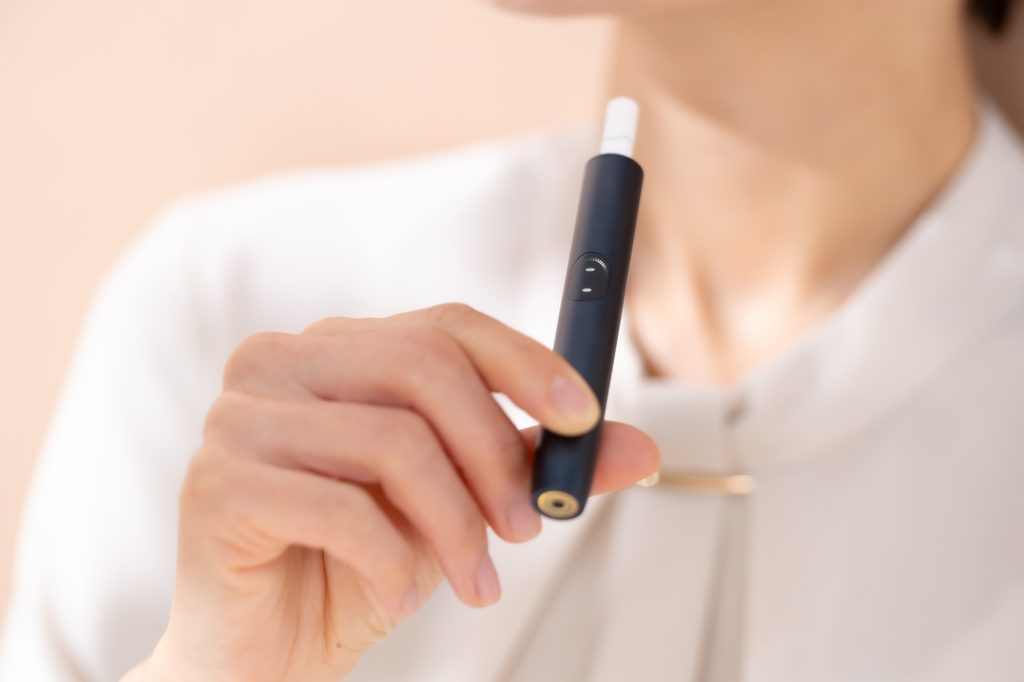
Japan’s regulatory distinction becomes even harder to reconcile when heated tobacco is taken into account.
Roughly 40% of Japanese smokers now use heated tobacco products (HTP; 加熱式たばこ; kanetsu-shiki tabako), according to figures cited by the Science Council of Japan. The council also points to a significant measurement problem: when asked simply whether they currently smoke, about one in five people who use tobacco answer no. Some don’t consider heated tobacco to be tobacco, while others consider themselves to have quit because they no longer smoke conventional cigarettes.
As a result, Japan’s conventional smoking statistics may be systematically understating tobacco use. Health checkups, prenatal examinations, and cancer screenings also largely continue to ask about smoking without separately identifying heated-tobacco use.
The shift isn’t merely statistical.
From January to March 2026, heated-tobacco products outsold conventional cigarettes in Japan for the first time, both by volume and by value. Tobacco Institute of Japan (TIOJ) data released in May show cigarette sales of 17.8 billion sticks in the fourth quarter of fiscal 2025, down 4.8% from a year earlier, compared with 19.8 billion heated-tobacco sticks, worth ¥544.1 billion (about $3.4 billion). Heated-tobacco sales were up 21.5% year on year.
It was the first quarter in which heated tobacco led cigarettes on either measure, let alone both. The TIOJ attributed much of the 21.5% increase to 駆け込み需要 (kakekomi juyō), or rush buying, ahead of the April 2026 heated-tobacco tax increase.
The longer-term trend is also clear. According to the Japan Health Promotion and Fitness Foundation, heated-tobacco consumption rose from 41.3 billion sticks in fiscal 2020, equivalent to 41.8% of cigarette volume, to 58.5 billion in fiscal 2023, or 66.6% of cigarette volume.
Why can’t vape companies get a LUUP-like exception?
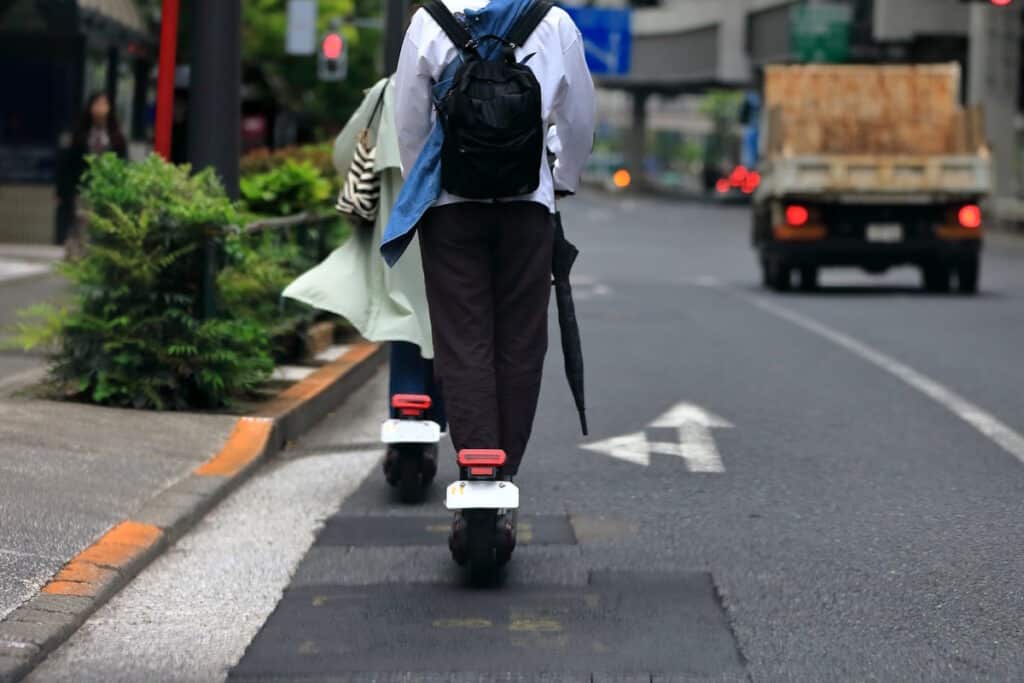
Services like LUUP, a popular micromobility-sharing platform in Japan that lets users rent small electric scooters and e-bikes through a smartphone app, faced a similar problem. Japanese law classified the vehicles as mopeds (原動機付自転車; gendōki-tsuki-jitensha), requiring license plates, brake lights, and helmets, requirements that made a shared-mobility service commercially difficult to operate.
LUUP, whose business depended on changing that framework, spent four years building the case for regulatory reform.
It began demonstration runs on private and public land in 2019. In October 2020, LUUP and two other companies had plans for public-road testing certified under the Special Exception System for New Businesses (新事業特例制度; shinjigyō tokurei seido) of the Industrial Competitiveness Enhancement Act, allowing them to legally test their vehicles in car and bicycle lanes.
The ministry-backed public-road pilot began in April 2021. The Road Traffic Act was subsequently amended in 2022, and on July 1, 2023, a new vehicle class, the specified small motorized bicycle (特定小型原動機付自転車; tokutei kogata gendōki-tsuki jitensha), came into force. Helmets became an effort-based obligation (努力義務; doryoku-gimu), meaning users are encouraged to wear them but face no penalty for not doing so.
That is the regulatory template Japan offers to products stuck in the wrong legal category. And it is a real one.
But that template can’t be applied to nicotine vapes for two reasons.
The first is structural. The regulatory programs run by METI, the Ministry of Economy, Trade and Industry, work by allowing companies to conduct supervised real-world trials, generating evidence that regulators can then use to consider changes to existing rules.
A company can’t conduct a comparable public trial in which it sells an unapproved drug to consumers to generate the evidence needed to obtain approval. The product being tested would itself constitute the regulatory violation. Consistent with that distinction, no tobacco, nicotine or e-cigarette case appears in METI’s published reports on the system.
The second problem is that the system needs a “LUUP”: a company with a strong commercial incentive to change the rules and the resources to spend years building the case for doing so.
Japan’s vape retail market is small, sells nicotine-free products, and has no prominent trade association campaigning for legalization. The consumers who do want nicotine vapes can order them from overseas, which is legal for personal use and largely removes the consumer pressure that might otherwise build for regulatory change.
The other legal hitch
There’s another reason no nicotine vape has been approved: the pharmaceutical approval system is designed around a product having a specific medical purpose.
A drug approval is not simply a safety certificate; it authorizes a product to be marketed for specified indications. Under Japan’s pharmaceutical framework, an applicant must demonstrate efficacy for the intended use.
That creates a fundamental problem for a recreational nicotine product: what medical indication would it claim?
The most obvious possibility is smoking cessation. But MHLW’s own expert committee has already considered that question. In its summary of discussions on the health effects of tobacco, the committee recorded that the efficacy of e-cigarettes for smoking cessation had not been established.
The committee’s safety findings also gave regulators little reason to loosen the rules.
Testing five e-cigarette brands using a solid-phase collection method adapted from cigarette protocols developed by the WHO Tobacco Laboratory Network, MHLW’s committee detected formaldehyde (International Agency for Research on Cancer Group 1, meaning carcinogenic to humans), acetaldehyde (Group 2B), acrolein, glyoxal, and methylglyoxal.
Average carbonyl emissions were far lower than those from conventional cigarettes. But the committee highlighted the wide variation in emissions. Output differed substantially between brands and even between lots of the same brand, with formaldehyde levels in some cases exceeding ten times those measured from a conventional cigarette.
The committee also noted that propylene glycol and glycerol, both commonly used as food additives, can generate carbonyl compounds when heated and aerosolized. For formaldehyde, acrolein, and glyoxal, the estimated margins of exposure fell below the uncertainty threshold, indicating potential health concerns.
12 years on and no change
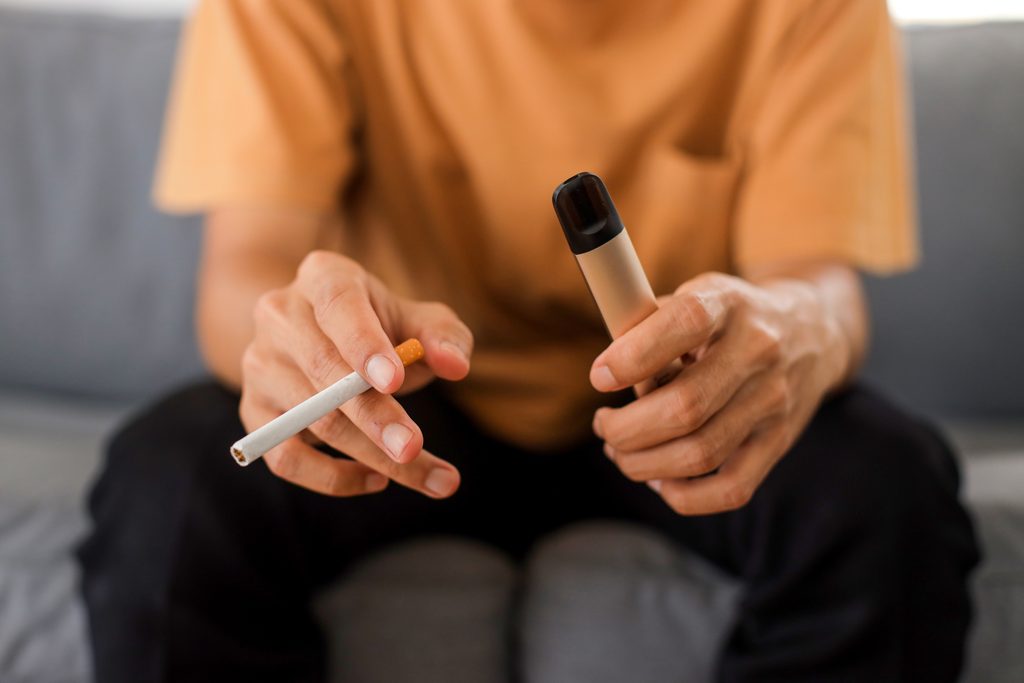
The regulatory problem, then, isn’t simply that Japan considers vaping dangerous. It’s that nicotine vaping doesn’t fit neatly into the kind of product the pharmaceutical approval system is designed to authorize: a product with a defined medical indication and demonstrated therapeutic efficacy.
The government was told this was an unworkable framework in 2014. It said it would look into the issue. Twelve years later, little has changed.
In 2014, a parliamentarian submitted a formal written question to the government arguing that treating a consumer product as a pharmaceutical was “divorced from reality” because pharmaceutical classification implies clinical trials, demonstrated efficacy, and pharmacist-supervised sales through pharmacies for what is essentially a recreational product.
The question also highlighted one of the sharpest consequences of the classification: treating nicotine vapes as pharmaceuticals rather than tobacco products leaves no clear legal basis for regulating them according to tobacco-style age restrictions.
The Cabinet’s response, signed by then-Prime Minister Abe Shinzō, did not propose a new regulatory framework. It said MHLW would study the health effects and that the government would consider the future shape of regulation in cooperation with the relevant ministries.
Twelve years later, no such framework exists.
Japan also lacks a large, politically motivated constituency pushing for access to nicotine vaping. Most Japanese smokers do not want to quit.
The 2023 National Health and Nutrition Survey found that only 20.7% of current smokers said they wanted to stop smoking: 19.7% of men and 23.9% of women. Among men, that share has been declining since 2018.
A smoking-cessation product needs people who want to quit.
Britain’s 5.5 million vapers are 55% former smokers (about 3 million people who no longer smoke) and 40% current smokers. That creates a large constituency with a direct interest in preserving access to vaping and, consequently, a reason to engage with policymakers.
Japan’s smokers, by contrast, already have a product that satisfies much of the demand: heated tobacco. It’s legal, widely available, and increasingly normalized, including in designated smoking rooms where users can also eat.
In short, there’s little obvious constituency left to campaign for a product Japan has never allowed onto the market.
Keep reading



Sources
電子タバコ、電子タバコリキッドを輸入・ネット販売(小口輸入に関するQ&A Q22) ミプロ(一般財団法人 対日貿易投資交流促進協会)
電子タバコの規制並びに分類に関する質問主意書(第186回国会 質問第二一七号) 衆議院
衆議院議員柚木道義君提出電子タバコの規制並びに分類に関する質問に対する答弁書(答弁第二一七号) 衆議院
「ニコパフ」販売か、大学生書類送検 全国初摘発、「小遣い稼ぎ」―大阪府警 時事通信
若者に広がる「ニコパフ」 未承認たばこ、販売で摘発も―専門家「違法薬物の入り口に」 時事通信
加熱式たばこに関するこれまでの知見の整理(第5回受動喫煙対策専門委員会 資料3) 厚生労働省
令和5年度「喫煙環境に関する実態調査」調査結果(概要) 厚生労働省
喫煙室の類型について(資料2) 厚生労働省
第1回受動喫煙対策専門委員会での主なご意見(第2回受動喫煙対策専門委員会 資料1) 厚生労働省
改正健康増進法施行後の現状について(受動喫煙対策専門委員会 提出資料) 一般社団法人 日本たばこ協会
見解 加熱式タバコを含めた喫煙行動の調査・モニタリングの必要性について 日本学術会議
受動喫煙防止対策の推進と課題 ― 健康増進法の一部を改正する法律案 ―(立法と調査 2018.5 No.400) 参議院常任委員会調査室・特別調査室
たばこ税等に関する資料 財務省
たばこ関連産業への国の関与の在り方、日本たばこ産業株式会社株式の保有の在り方及び同株式の処分の可能性について(中間報告) 財務省 財政制度等審議会
「加熱式タバコ専用喫煙室」は「タバコ対策」として有効か。東北大学などの研究 Yahoo!ニュース エキスパート(石田雅彦)
2025年度第4四半期の紙巻たばこ販売本数はマイナス4.8% Yahoo!ニュース エキスパート(不破雷蔵)
加熱式たばこIQOS(アイコス)の日本での展開 IQOS 公式サイト(フィリップ モリス ジャパン)
加熱式たばこと電子たばこの違いと規制について 品川区
既存特定飲食提供施設に対しての経過措置と届出 川崎市
販売本数(加熱式たばこ) 健康ネット(公益財団法人 健康・体力づくり事業財団)
「喫煙につながる恐れ」で無期限謹慎は重くない…? 高校生6人がノンニコチンの電子たばこ使用で処分…Xでは学校側の判断をめぐり、法律や公序良俗の解釈で意見割れる Togetter
加熱式たばこへの8000億円投資で「次世代化」を急ぐJT、株価2倍でも利回り4%を誇る高配当株に「減配リスク」は? 東洋経済オンライン
第5回たばこの健康影響評価専門委員会の議論の整理(資料1) 厚生労働省 厚生科学審議会
No new licence applications for e-cigarettes since UK medicines regulator changed its guidance The Pharmaceutical Journal
UK health agency approves first e-cig for clinical use Engadget
E-Voke Becomes First E-Cigarette to Be Awarded Medicine License in the UK VapeRanks
The Sad Demise of The Voke Nicotine Inhaler Vaping Post
Japan Is the Big New Battleground in the E-Cigarette Wars Fortune(Reuters)
Luupら3社が自転車レーンで日本初の走行実証 電動キックボード実証計画が「新事業特例制度」に認定 LIGARE
改正道路交通法の施行に向けたLuupの今後の取り組みについて 株式会社Luup
規制のサンドボックス制度の活用事例 経済産業省
たばこ事業法(昭和五十九年法律第六十八号) 衆議院
Use of vapes among adults in Great Britain (ASH Fact Sheet, July 2025) Action on Smoking and Health (ASH)
Cigarette and Electronic Cigarette Use Among Adults by Urbanization Level: United States, 2024 National Center for Health Statistics, CDC
U.S. Food and Drug Administration (FDA) Regulation of Electronic Nicotine Delivery Systems (ENDS): Background and Selected Policy Issues (R48483) Congressional Research Service
FDA’s Deeming Regulations for E-Cigarettes, Cigars, and All Other Tobacco Products U.S. Food and Drug Administration
習慣的に喫煙している人は、15.7%(男性25.6%、女性6.9%) 厚生労働省 令和5年(2023)「国民健康・栄養調査」の結果より 日本生活習慣病予防協会