I don’t often write about anime. While anime was the spark for my love of Japan (thanks, Macross/Robotech!), I spend more time reading Japanese novels and manga these days.
But as we’ve discussed before on UJ, anime isn’t disconnected from society. Like all art, it often depicts and comments on the current state of society. That’s when it piques my interest most.
Chainsmoker Cat (ヤニねこ) is the latest anime to generate discussion about how it depicts Japanese society. It’s interesting to see exactly what’s being discussed, and how that discussion differs between Western and Japanese fans. It’s also interesting because it’s one of the few recent media works to tackle a subject most people in Japan don’t want to see, let alone discuss.
Poverty is hard to look at
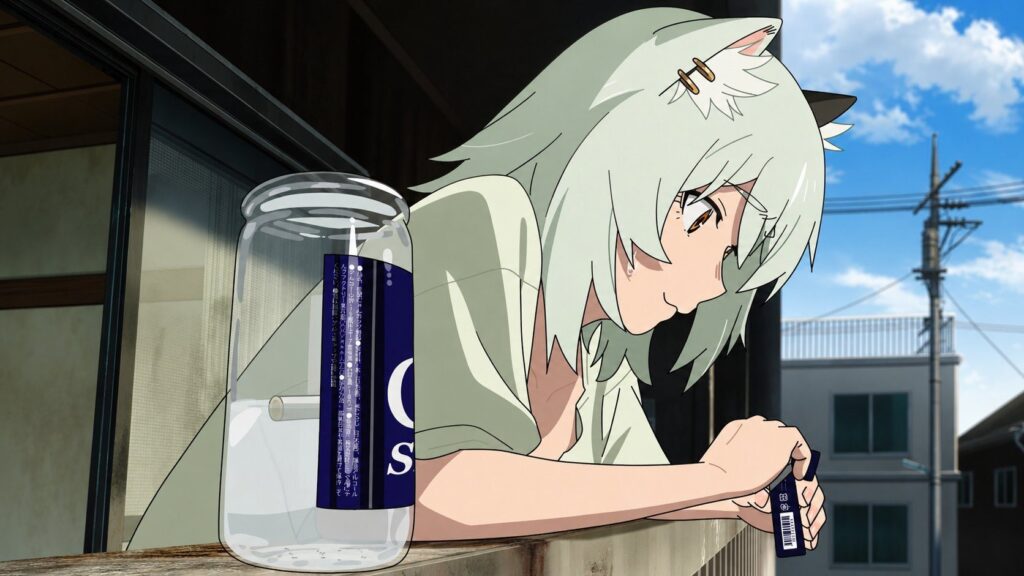
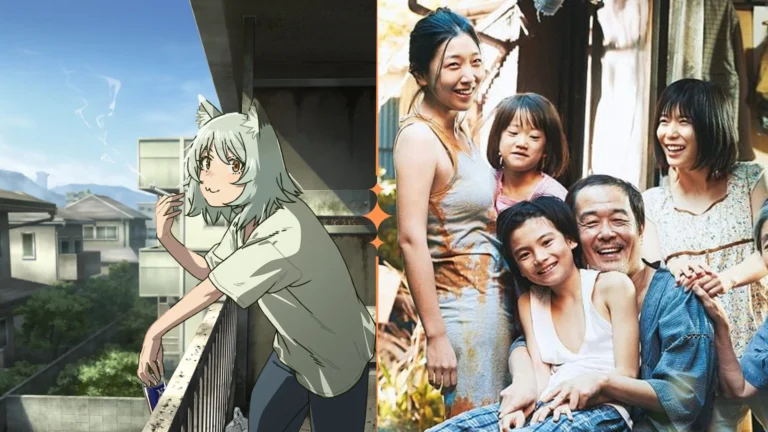
Chainsmoker Cat focuses on Satō Yaniko (佐藤ヤニ子), a 21-year-old cat girl…er, cat woman living in the fictional city of Nyagamihara (get it??). Yaniko is so addicted to smoking that she can barely make it through a work shift. Her water’s been cut off, she’s behind on rent, and she keeps setting off small fires in her nicotine-stained flat. When she’s short on cash (which is always), she digs spent butts out of the trash.
There’s an additional dimension to Yaniko’s hardships: her species. In the manga, beastfolk are an historically oppressed minority. They earn a quarter of human wages and can even legally be kept as pets. The manga both fetishizes them while also using them to make a larger point about the effect that marginalization has on a group.
All of this – the social oppression, Yaniko’s cycle of addiction, her nicotine-besmirched Depression Apartment – is hard to look at for some viewers. As many viewers on English-language social media pointed out, that’s the point. This, they point out, is the reality for many people with mental health issues (another area where Japan routinely fails its citizens).
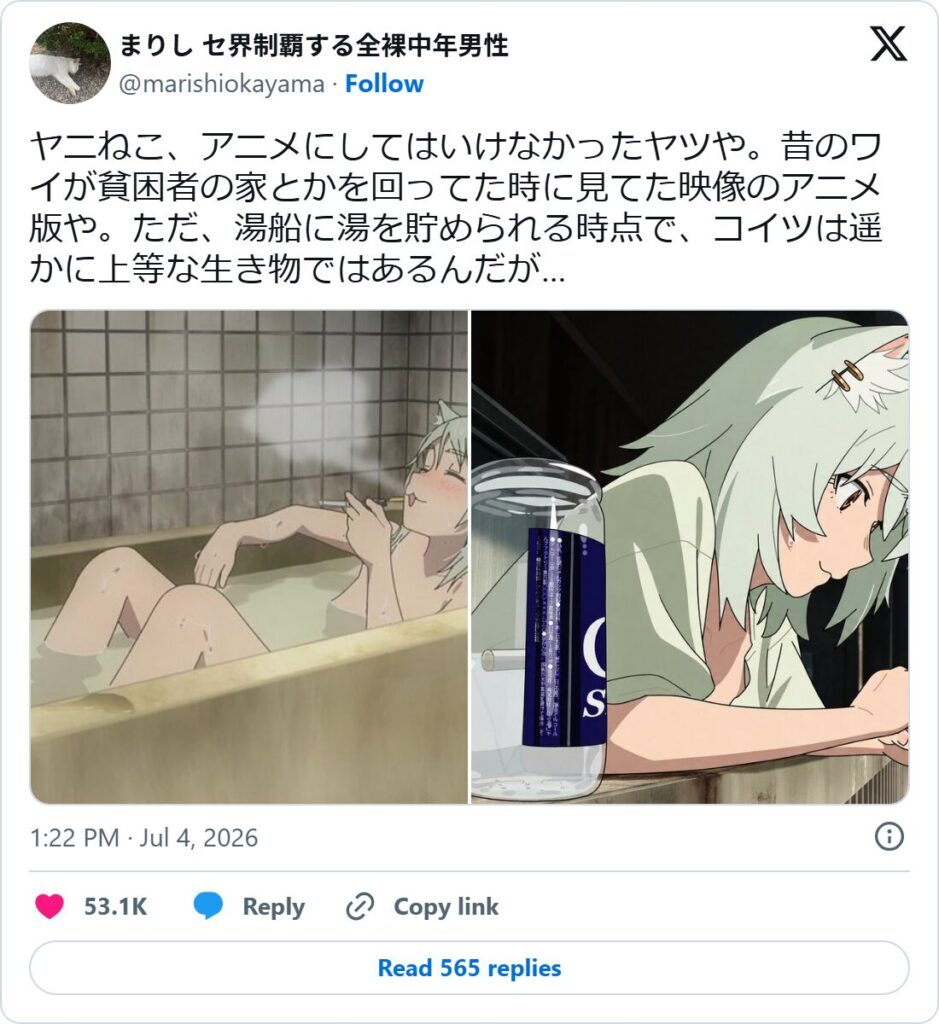
Actually, some Japanese viewers found the depiction too sanitized. X user @marishiokayama drew over 53K likes by posting, “Yanineko isn’t something that should be rendered in anime. It’s an anime version of what I saw back when I used to go around to poor people’s homes. That said, the fact that she can fill a bathtub with hot water means she’s not doing too badly.”
The single most prevalent sentiment in the X thread concerned Yaniko’s poverty. Most people in her situation, almost 37% of users agreed, would be a lot worse off than she is. She only stays afloat because her sister and her landlord support her.
A little over 16% of respondents on that thread said the “cute catgirl” trope works in the series’ favor. It makes it (barely) bearable to watch. If it were any more gritty, it might never have made it to Japanese TV.
The last time art made Japan look at poverty, it caused an uproar
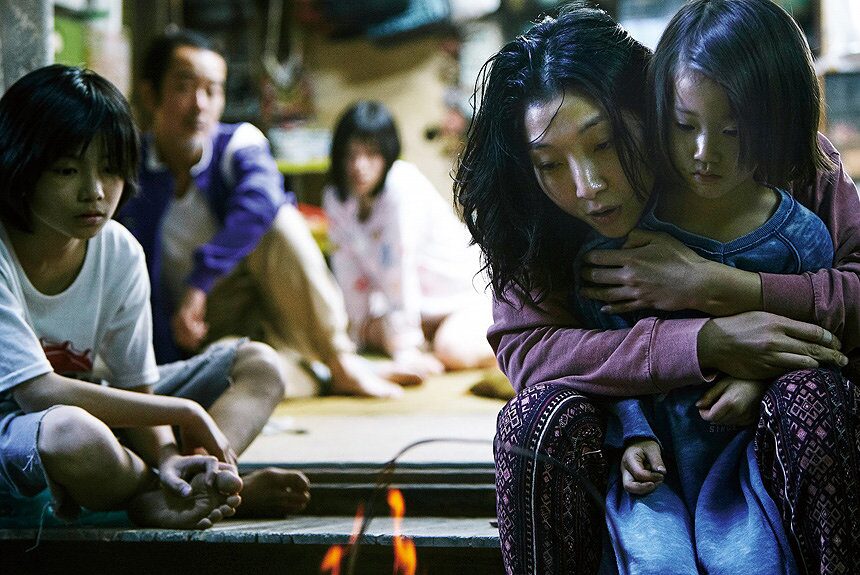
When I take people from the US around Tokyo, many comment on the relative lack of homeless people. This isn’t because homelessness doesn’t exist. It’s because Japan works overtime to keep poverty hidden.
Japan’s relative poverty rate sits around 15%. Its child poverty rate was around 11.5% in 2021, with around 44.5% of single-parent families below the poverty line.
Japan has a social safety net (生活保護; seikatsu hogo) to catch people below the poverty line. Private citizens, such as the children’s cafeterias we’ve written about, also work to make sure those who are struggling get enough to eat.
Some say it’s not enough. The Organisation for Economic Co-operation and Development (OECD), a Paris-based forum of 38 wealthy countries, ranked Japan one of the worst performers on child poverty despite its wealth. The statistics bear this out: poverty is rising in Japan, but the number of people on the welfare rolls is falling.
Japan stigmatizes poverty. It regards it not as a social ill to be addressed but as a national embarrassment to be swept under the rug. This was clear in 2018 when the country’s right-wing piled on an award-winning director for daring to pull back a curtain many want kept closed.