
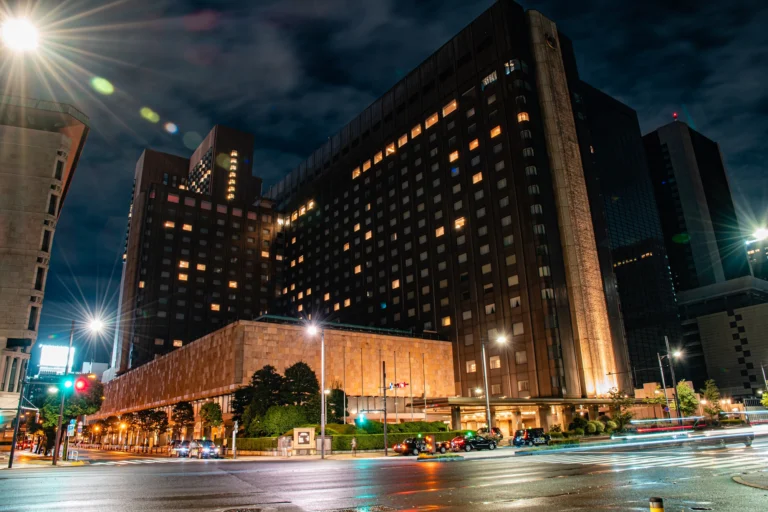
Tokyo’s Imperial Hotel is one of Japan’s most prestigious luxury hotels. Since its opening in 1890, the historic establishment has welcomed foreign dignitaries, celebrities, and countless visitors over its more than 130-year history.
Yet even an institution with such a distinguished reputation isn’t immune to controversy.
Just ask MEDEL GALLERY SHU. On October 15, the gallery issued a formal apology after widespread criticism of an exhibition on the first floor of the hotel’s Imperial Hotel Plaza, featuring artwork that should never have been put up. Those who sounded the alarm said these pieces not only sexualized young girls, but also evoked sexual violence against children.
The exhibition, Okomori-kai (お籠もり会), opened on October 3. To the shock and horror of many, these controversial works reportedly remained on display for approximately three days before being removed following complaints.
The exhibition’s curator, however, appeared unsurprised by their removal. “If anything, it’s remarkable this lasted even three days,” they wrote on social media.
So how did the controversial artwork end up on display inside one of Japan’s most famous hotels? And who approved it?
An exhibition sparks more than outrage
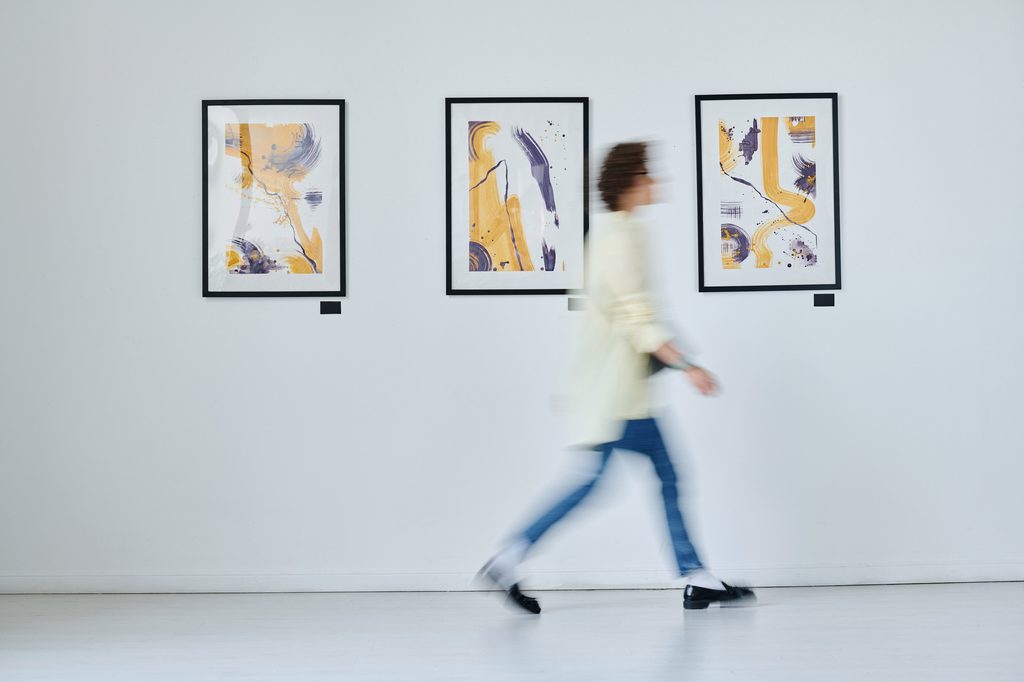
The exhibition, held from October 3 to 13, featured works by multiple artists specializing in character-based paintings. Curated by an artist known as neko, the exhibition was described by its organizers as a free-wheeling, chaotic gathering of artwork. The names of participating artists were initially withheld, with organizers promising to share more details on social media.
However, once photographs of some of the questionable artwork began circulating online, criticism poured in, and rightly so. According to Japanese legal news outlet Bengoshi.com, critics questioned why such artwork depicting young children had been permitted in a commercial venue in the first place, let alone made accessible to the general public.
The works in question were removed well before the exhibition concluded.
In an October 9 post on X (formerly Twitter), the exhibition’s curator addressed the decision, saying it was based on negative feedback from the hotel’s understandably disturbed guests.
The curator also bizarrely suggested the complaints might have been part of a conspiracy, before acknowledging that the outcome was hardly surprising given the exhibition’s location inside the famous Imperial Hotel.
A belated apology for inadequate oversight
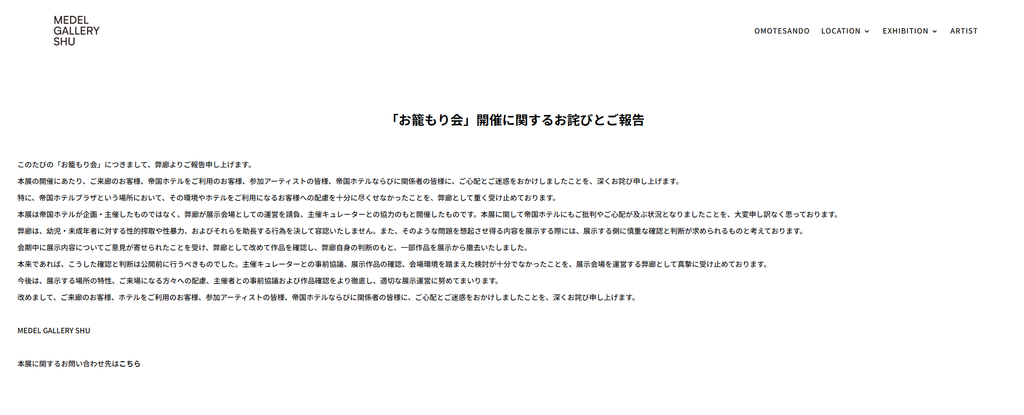
On October 15, two days after the exhibition ended, MEDEL GALLERY SHU finally issued a formal apology, acknowledging that it had failed to adequately review the exhibited works before opening them to the public. The gallery stated that it did not condone sexual exploitation of, or sexual violence against, minors, or actions that encouraged such conduct.
“These reviews and judgments should have been conducted before the exhibition opened to the public,” the gallery said.
According to the statement, the gallery had not sufficiently consulted with the exhibition’s curator, reviewed the artwork, or considered whether the venue was suitable. It maintained that it made the decision to remove certain works independently after receiving complaints.
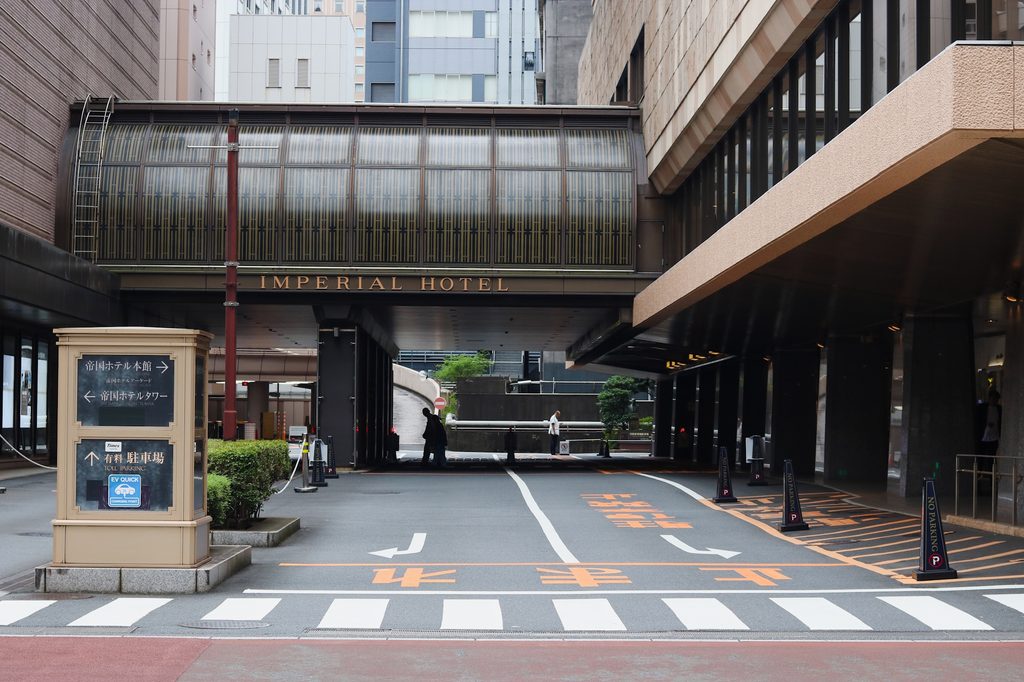
Despite the gallery insisting that the Imperial Hotel had neither planned nor organized Okomori-kai, the hotel issued its own apology the same day, stating that some of the exhibited works were inappropriate and had not received the hotel’s prior review or authorization. Which, naturally, raises the question: why didn’t anyone object to this while the artwork was being put up before the exhibition opened?
In it, the hotel also apologized to guests who saw the artwork and acknowledged concerns about its management of tenants. It pledged to strengthen communication with tenants and conduct far more thorough reviews of artwork before future exhibitions.
Question: do you like UJ's independent coverage of Japan? Our writers are supported by our members. Join Unseen Japan Insider to get bonus content every week, an ad-free website, and access to our large and growing Insider archive.We manage to keep most of our content free thanks to the generosity of our members. Join Unseen Japan Insider and you'll get access to new, exclusive UJ member content weekly, an ad-free website, and access to our large and growing Insider archive.
A familiar debate over artistic “freedom”
Japan is no stranger to controversy over such content. There has always been discourse regarding sexually explicit depictions of fictional minors.
Under Japan’s child pornography legislation, which was strengthened in 2014, illustrations of fictional characters are generally treated differently from material depicting the sexual abuse of actual children. Lawmakers did debate whether to extend restrictions to manga, anime, and other media, but ultimately left them outside the scope of that legislation.
Still, that doesn’t mean that all fictional sexual imagery is exempt from regulation. Japan maintains separate obscenity laws, while publishers, retailers, and events may impose their own restrictions on adult-oriented material.
Comic Market (Comiket), Japan’s enormous convention for self-published manga and other creative works, is one example. Although adult-oriented material is permitted, exhibitors must follow strict rules governing its distribution. In fact, drawings traced or copied from real images of actual children count as child pornography and are banned outright.
The question surrounding Okomori-kai, then, is not simply whether artists have the legal right to create controversial imagery. It’s whether galleries and other public-facing institutions have a responsibility to consider not only where such works are displayed, but also who might encounter them.
Meanwhile, on social media, there have been plenty of reactions highlighting that, despite certain stereotypes overseas, such depictions of minors are not actually universally accepted in Japan. The public response instead illustrates an ongoing disagreement over the boundaries of artistic expression and the responsibilities of those who exhibit it.
Nowhere near sufficient
For now, MEDEL GALLERY SHU stands by its promise to strengthen its procedures for reviewing artwork and consulting with exhibition organizers before future events. However, its apology leaves several questions unanswered, including how the disputed works passed the exhibition’s initial approval process and whether any concerns were raised before the exhibition opened.
The curator’s remarks also leave far too much to be desired, particularly in light of the gallery’s acknowledgment that its oversight was insufficient. Whether this will damage the Imperial Hotel’s reputation also remains to be seen.
After all, the question isn’t why the artwork was taken down. It’s why it was allowed to go up in the first place.
Keep reading

Sources
帝国ホテル内の展覧会が物議、女児への性暴力連想させる作品に批判…ギャラリー謝罪「確認が不十分だった」 弁護士ドットコムニュース
帝国ホテルも謝罪、女児への性暴力連想させるギャラリー展示が物議「ホテル側の確認・許諾得ていなかった」 弁護士ドットコムニュース
「お籠もり会」開催に関するお詫びとご報告 MEDEL GALLERY SHU
帝国ホテル内ギャラリーでの展示作品に関するお詫びとお知らせ 帝国ホテル
改正児童ポルノ禁止法が成立、漫画・アニメ・CGは対象外に GameBusiness.jp
コミックマーケット FAQ コミックマーケット準備会
関連法令の詳細情報について コミックマーケット準備会