
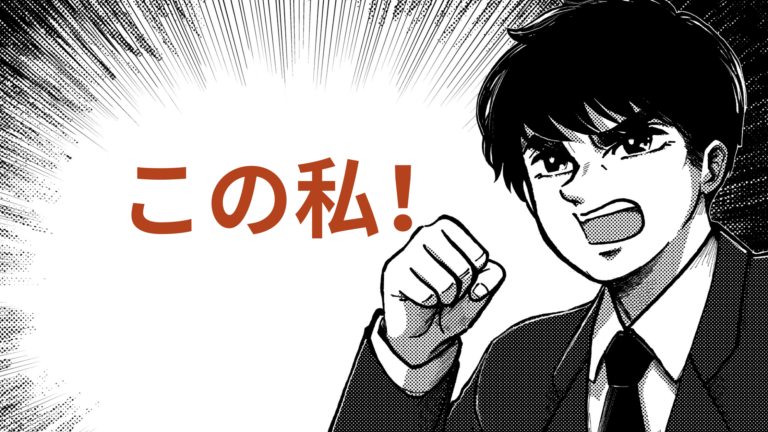
For decades, ore (俺, pronounced “OH-ray”) was the go-to way for Japanese men to say “I” when talking to friends and family. It’s a bit blunt, but also masculine (even a bit rough-and-tumble), and it was the default choice for generations of men in casual conversation.
However, new survey figures suggest that its dominance is coming to an end. In 2026, fewer than half of Japanese men surveyed said they used ore around people close to them.
Five ways to say “I” in Japanese

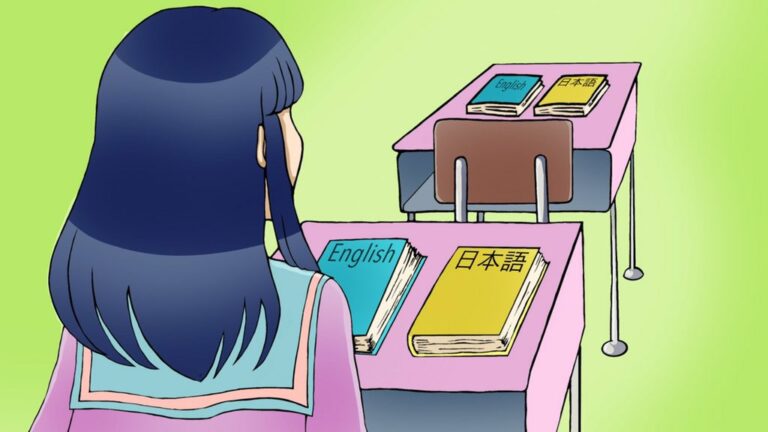
The first thing to understand is that the first-person pronoun “I” is very different in English versus Japanese. In English, the only first-person pronouns are “me,” “myself,” and “I.” All are basic, universal, and gender neutral.
That’s not the case in Japanese. Here, first-person pronouns are many and varied, each giving different vibes in terms of gender, age, social position, and even mood. Choosing among them is not just about saying “I.” It’s about how you want other people to perceive you.
Watashi (私) is the more neutral, formal option. It works in professional settings and can be used by people of any gender. Jibun (自分), meanwhile, offers another possibility, although its meaning and social feel depend on the situation.
Boku (僕) is another common choice, generally softer in tone. Historian Tomoda Kentarō notes that until around 1960, boku was used almost exclusively by highly educated men. Today, a much wider range of people use it, and it often sounds polite without being especially formal. Not just men, either; even girls have started using boku.
There’s also the feminine-coded atashi (あたし). However, like ore, more and more women are moving away from it.
And, of course, there’s ore. Commonly associated with masculinity and casual conversation, it can sound confident and natural among friends. Depending on the context, however, it can come across as aggressive or crude.
Ore loses its majority

According to figures reported by Nikkei from a survey by the Hakuhodo Institute of Life and Living, the decline in ore has been substantial.
In 1994, 86% of unmarried men and 65.4% of married men said they used ore when speaking with family and friends. By 2026, those figures had fallen to 42.5% and 46.7%, respectively. That’s a whopping 43.5 percentage points down among unmarried men and 18.7 points among married men, with married men now saying ore more than unmarried men.
The figures don’t mean that men have simply replaced ore with boku. Instead, their choices have become more varied. By 2026, watashi accounted for around 20% of both unmarried and married men’s reported choices, while jibun accounted for around 10%. Boku is in third place.
Now, while that survey didn’t exactly interview all Japanese men everywhere, it shows an interesting trend in the shift away from ore.
Why are men abandoning ore?

Several different researchers have speculated on why this might be.
Katō Aoi, the researcher in charge of the Hakuhodo survey, suggests that men may be avoiding ore because it emphasizes masculinity and self-assertion. Watashi, by comparison, can sound less forceful.
Tomoda Kentarō, historical researcher and author of The History of the Self-Referential Term “Boku” (自称詞〈僕〉の歴史), has also weighed in. He sees a connection with changing relationships between men and women. As ore has developed a rough, aggressive image, men who want to present themselves as equals to women may find it less appealing.
Linguist Nakamura Momoko offers another explanation: workplace pressure. In professional settings, men may worry that ore will make them seem unpleasant, while boku might sound too childish. Watashi provides a safer alternative that is acceptable across a wider range of situations.
One office worker interviewed by Nikkei described changing his own language after watching a former subordinate get promoted over his old boss. The boss switched from boku to watashi and began addressing the other man with the more respectful suffix -san rather than -kun.
The incident made the worker reconsider how his own pronoun might affect how colleagues perceived him.
Question: do you like UJ's independent coverage of Japan? Our writers are supported by our members. Join Unseen Japan Insider to get bonus content every week, an ad-free website, and access to our large and growing Insider archive.We manage to keep most of our content free thanks to the generosity of our members. Join Unseen Japan Insider and you'll get access to new, exclusive UJ member content weekly, an ad-free website, and access to our large and growing Insider archive.
The rise of jibun
Jibun offers an interesting alternative because it can help speakers navigate social relationships without making a strong statement about themselves.
Katō suggests that it can also be useful online, where people may want to express opinions without revealing too much about their identities or appearing overly assertive.
For some men, however, jibun is less about anonymity, and more about fitting into a group. For example, Nikkei interviewed a young employee at a construction company who said he uses jibun to make himself likeable as a junior colleague. Watashi feels stiff; boku, distant. Jibun, he explained, helps him sound approachable and encourages senior colleagues to look after him.
It is a small example of how something as simple as pronoun use can function as a social tool, helping someone carve out a place within a workplace hierarchy.
Women are moving away from atashi, too
The same survey reportedly found a parallel change among women. In 1994, more than 40% of unmarried women and nearly 30% of married women used atashi, a casual first-person pronoun strongly associated with femininity. By 2026, the figure had fallen below 10% for both groups, while watashi had become much more common.
Nakamura interprets both trends as possible evidence that traditional ideas of masculinity and femininity are losing some of their appeal.
For Japanese learners, the changes highlight just how difficult pronoun choice can be. Language classes have not always devoted much attention to these distinctions, leaving learners to wing it. But to be fair, even native speakers can struggle with the options.
There is no single replacement for ore, just as there is no universal answer to the question of how Japanese men should refer to themselves. However, the rules are becoming less straightforward. In a language where a single word can say so much about the person speaking, that change is worth paying attention to.
Keep reading



Sources
男性の「俺」離れ、半数が使わず 「私」や「自分」で自己主張弱める 日本経済新聞
「ワイ」語りをしていた清原和博は、実は引退後「僕」を使っている…「僕」という自称詞をめぐる歴史 文春オンライン
「俺離れ」男子の心は?「僕」は謙虚「自分」は中立?一人称に迷う若者 Business Insider Japan
私・僕・俺。ラオウも迷う男性の一人称問題 Togetter