

About 21 minutes into Shinkai Makoto’s blockbuster anime Your Name (君の名は; kimi no na wa), there’s a Japanese joke that makes any speaker of the language – native or otherwise – burst out laughing.
In the scene, female protagonist Mitsuha wakes up to find herself in male protagonist Taki’s body. Faced with talking to Taki’s male friends on a rooftop, Mitsuha immediately refers to herself as “watashi,” only to be questioned by Taki’s buddy. At first, she reaches for the even more formal “watakushi.” She then cycles through the two main male pronouns – “boku” (僕) and “ore” (俺) – until Taki’s friends finally seem satisfied. Their pal’s an “ore,” no doubt about it.
“Watashi” or “atashi” are currently considered the polite and feminine way for a woman to refer to herself. But that wasn’t always the case. And it’s increasingly become less of a hard and fast rule. Here’s why some sources in Japan say that more young girls in the Reiwa Era are opting for the traditionally masculine pronoun.
Abandoning the Meiji-era “watashi” in favor of “Boku shōjo”

While “watashi” is regarded today as the safe “feminine” pronoun, that wasn’t always the case. As with most things that people abroad see as stemming from “ancient Japanese culture,” the feminine use of “watashi” only dates back to the Meiji Era (1868-1912).
In Meiji, Japanese was standardized to use the speech of middle-class educated men as a base. However, documents from Edo and Meiji show that women used not just “washi” (ワシ), but also “boku” and “ore.” Women would also say things like “yaa, kimi” (“Look, man…”) and use abrupt imperative forms like “shitamae” – language that’s masculine-coded today.
That’s changed now, as most girls and women use “watashi.” But that’s not set in stone. VERY magazine, a parenting magazine aimed at women, interviewed multiple parents who say their girls are reaching for “boku.” Some of them are as young as elementary school.
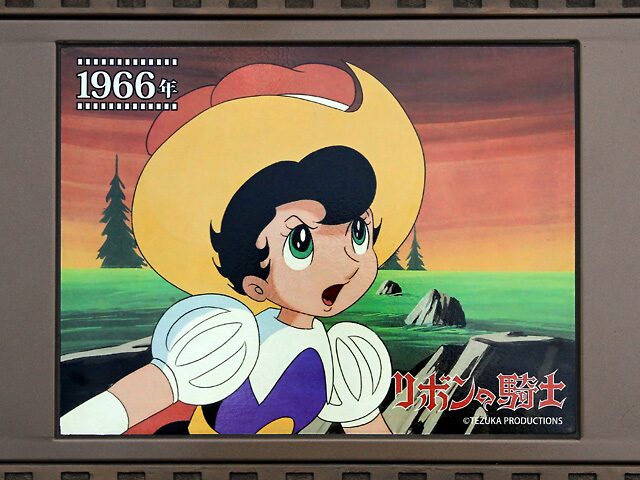
The phenomenon, known as 僕少女 (boku shōjo), is by no means new. Female characters who use male-coded pronouns are a staple of video games, anime and other pop culture media. While the practice can be observed in pre-War fiction, many feel it gained popularity thanks to renowned manga author Tezuka Osamu’s work Princess Knight (リボンの騎士; ribon no kishi), whose main character, Sapphire, has “the heart of both a boy and a girl.” Some also cite the Takarazuka Revue, the all-woman theater troupe, as an influence.
Japanese pop has also exerted a strong influence in normalizing “boku” usage. Artists from Morita Doji to Aimyon employ the word in their lyrics.
Why? One basic reason: because the two-morae of “boku” fits better into song lyrics than the three-morae “watashi.”
Mind you, there’s also the “karaoke theory” put forward by AKB48 creator Akimoto Yasushi. I.e., it’s better for female artists to use “boku” so that men can sing along without feeling embarrassed. But whatever the reason, the fact remains that young Japanese girls grow up in a cultural milieu where “boku shōjo” is normalized.
Question: do you like UJ's independent coverage of Japan? Our writers are supported by our members. Join Unseen Japan Insider to get bonus content every week, an ad-free website, and access to our large and growing Insider archive.We manage to keep most of our content free thanks to the generosity of our members. Join Unseen Japan Insider and you'll get access to new, exclusive UJ member content weekly, an ad-free website, and access to our large and growing Insider archive.
Why the shift toward “boku”?
Why are girls using “boku”? Those asked by VERY didn’t feel it was all that special. One first-grader called it “normal.” A second-grader said it’s just shorter and easier to say. Meanwhile, a kindergartener picked it because it’s “cute.”
But Nakamura Momoko, a professor emeritus at Kanto Gakuin University and Japan’s leading scholar on language and gender, argues there’s a deeper dynamic at play. Boys, she says, will transition from “boku” to “ore” to armor themselves against male hierarchies. Girls, by contrast, switch from “watashi” to “boku” to escape the vulnerabilities tied to femininity, including unwanted sexualization.
This theory is buttressed by pop artists who use “watashi” but will reach for “boku.” Artist aiko, for example, has said she’s switched to “boku” to say things that would be too “embarrassing” to say in her own voice.
It’s not clear, however, how prominent the “boku” trend is. The last known survey on the subject was by famed sociologist Honda Yuki. In 2009-2010, Honda found that around 5% of middle school girls used masculine pronouns – 1.2% used “boku,” and 3.8% used “ore.” So the evidence for increasing “boku” usage is more anecdotal than scientific.
Miyazaki Ayumi of Ochanomizu University also published a 2016 field study into the use of pronouns among junior high girls. She found girls felt justified using either “boku” or “ore” with their peers. Those who want a more traditionally “feminine” pronoun seemed more comfortable with “uchi” versus “atashi.”
Additionally, there’s a heavy cultural wall standing in the way of “boku” usage beyond high school. In a 2024 piece in Kōkōsei Shimbun, one 16-year-old asks her peers if she should stop using “boku” once she enters the adult world. The majority of respondents advised that she revert to “watashi” in professional settings – but keep the “boku” for when she’s with friends.
Not everyone gives up the “boku” habit. Voice actress Haruna Fūka is one of several female celebs who famously still uses the first-person pronoun. Then again, artists are often allowed to cut against the grain of society in ways that regular people can’t.
The Loose and the Linguistic: Tokyo Drift

Language isn’t static. Japanese is no exception. The definitions and usage of words change over time in response to changing cultural norms.
One ready example is in the word heterosexual women use for their husbands. Once upon a time, the word 主人 (shujin) was the go-to term. Today, the word’s connotation of “master” carries an unpleasant aroma, leading most women to opt for the more neutral 夫 (otto).
This linguistic evolution happens even when those in power oppose it. During World War II, the Japanese government attempted to ban most foreign loan words. (That’s why, to this day, Japanese baseball terms are devoid of gairaigo. It’s why basketball is basukettobōru, but baseball is yakyū.) One set of terms they couldn’t exorcise? “Mama” and “papa,” which are still used by children to refer to their parents.
From “yabai” to “egui” and beyond, Japanese keeps evolving. It’ll be interesting to see where “boku” and its brethren go from here.
Keep reading



Sources
最近増えてる?女の子たちの『ボク』呼び現象を深掘り【専門家による解説も】 VERY
女子の「ボク」呼びが広がる理由と社会の変化 ダイヤモンド・ビジョナリー
女子が「ぼく」で何が悪い?言語学者に聞いてみた CHANTO WEB
一人称が「僕」の女の子、「僕」から「俺」に武装する男の子【言語学者・中村桃子】 NOISIE
「一人称がボク、やめるべき?」悩む高2女子に同世代が将来見すえたアドバイス 高校生新聞
ボク少女 Wikipedia (日本語)
日本の中学生のジェンダー一人称を巡るメタ語用的解釈―変容するジェンダー言語イデオロギー― 社会言語科学 (J-STAGE)
「自分らしさ」と日本語 (中村桃子 著) 筑摩書房
How did Mitsuha (as Taki) talk to his friends in ‘Your Name’s English Dub? [JPN vs ENG]. Kantopia
Anime Your Name’s English subtitles struggle to show difference between ‘I’ and ‘I’ in Japanese. All Things Linguistic
女性アイドル・女性アーティストの歌詞で一人称「僕」が多い理由を分析してみた. オトニッチ