

At a hotel in Kyoto this August, the people working the room weren’t singles looking for love. Instead, they were the parents, mostly in their 60s and 70s, gathering to matchmake on behalf of their unmarried adult children.
Armed with lists of prospective partners, they compared ages, heights, occupations, and relationship preferences. If two families seemed like a good fit, they exchanged detailed profiles and photographs for their children to review at home.
This is dairi konkatsu (代理婚活), or proxy marriage hunting. It’s a growing matchmaking format in Japan that puts parents on the front lines of the search for a spouse.
How proxy konkatsu works

Konkatsu (婚活), short for kekkon katsudō, or “marriage activities,” and usually translated as “marriage hunting,” usually involves dating apps, matchmaking agencies, or singles events. Proxy konkatsu takes a different approach: parents attend events, introduce their adult children to other families, and see whether a potential match is worth pursuing. (Not the only proxy service offered in Japan, by the way.)
At the Kyoto event, families received a roster of participating singles before arriving. Parents then approached one another to discuss their children’s prospects, asking questions that would probably come across as uncomfortably direct at a normal dating event. Things like, does a prospective bride want to continue working after marriage? Does she want children? What does her family do?
One mother attending the event to find a partner for her daughter said she felt as though she’d been sent on her child’s behalf. Another parent, promoting her son, emphasized his earnest personality and even mentioned the family’s four-story building.
The process also offers something that dating apps can’t: an early glimpse of potential future in-laws.
One of the organizers behind proxy konkatsu
Of course, the event isn’t free. Kyoto’s Ryōen Oya no Kai, a nonprofit that has organized these events since 2005, charges ¥14,000 (~$90) per parent for its Kyoto events, with different rates for couples and children who attend alongside their parents.
The organization has grown considerably. It attracted 110 parents in its first year, which blew up to 2,334 participants in 2025. Across two decades, it has tallied nearly 60,000 parent visits.
To be clear, a parent can’t go behind their kid’s back to attend or sign them up against their will. The organization requires parents to obtain their children’s consent before participating. It also doesn’t charge a success fee or require families to report whether a match eventually leads to marriage.
The upside of not requiring such a report is that it lessens pressure on the prospective marriage candidates. The downside is that, while there’s plenty of individual testimony and anecdotal stories, there isn’t much reliable data on how many marriages these events actually produce.
A modern version of omiai
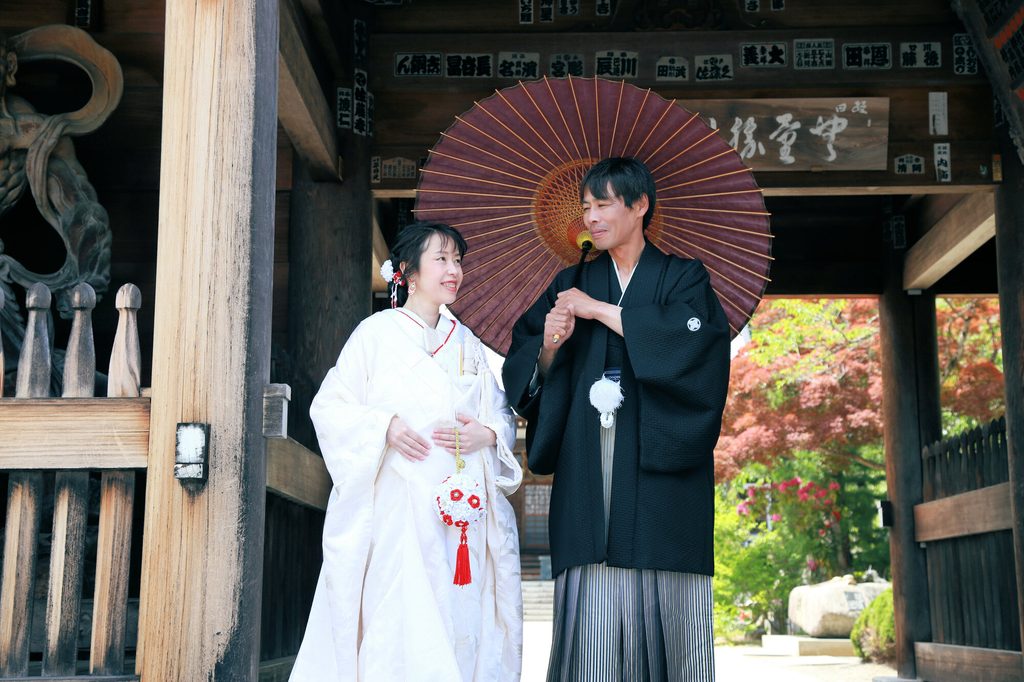
Proxy konkatsu might sound like a new invention, but in a lot of ways, it’s just putting a new hat on omiai (お見合い), the formal introductions traditionally arranged through a third party.
In Japan, before omiai became common, the family head was the one who decided marriage arrangements. They were in charge of pretty much all family affairs, and naturally that included marriage, too. It wasn’t just a social rule, but law: the Meiji Civil Code, which took effect in 1898, required household heads to consent to marriages within their families, and parental consent for men under 30 and women under 25.
Omiai offered prospective couples more opportunities to meet before marrying, though it still centered around family interests. A nakōdo (仲人), or go-between, introduced the two sides and helped assess whether the households were compatible. Families exchanged documents known as tsurigaki (釣書), which outlined a person’s background, family members, and other relevant details.
Today’s proxy konkatsu events follow a similar formula, with parents exchanging family profiles instead of relying on a traditional go-between.
The crucial difference is that the law no longer gives parents the power to approve or veto their children’s marriages. Article 24 of Japan’s postwar Constitution established mutual consent as the basis of marriage.
Question: do you like UJ's independent coverage of Japan? Our writers are supported by our members. Join Unseen Japan Insider to get bonus content every week, an ad-free website, and access to our large and growing Insider archive.We manage to keep most of our content free thanks to the generosity of our members. Join Unseen Japan Insider and you'll get access to new, exclusive UJ member content weekly, an ad-free website, and access to our large and growing Insider archive.
Why traditional matchmaking faded, and the rise of singlehood
According to Japan’s National Institute of Population and Social Security Research, approximately 70% of marriages before World War II were arranged through omiai. However, by the late 1960s, marriages based on romantic relationships had overtaken omiai marriages. Between 2010 and 2014, omiai accounted for just 5.5% of marriages.
Online dating now offers another route to finding a partner. In more recent figures covering marriages from 2019 through June 2021, meeting online accounted for 15.1% of couples, compared with 9.8% for omiai.
Meanwhile, more Japanese adults are remaining unmarried. By 2020, 28.3% of men and 17.8% of women had never married by age 50, according to census figures cited by Nikkei.
For some parents, proxy konkatsu offers a way to help their children navigate a difficult dating environment. Others may simply want to do something constructive about a situation that worries them.
Social psychologist Kito Mie of Meiji Gakuin University points to another factor: concerns about harassment and professional boundaries have made romantic relationships at work and school more difficult to navigate.
Public reactions and opinions of the marriage candidates themselves

Not every adult child is equally enthusiastic, however.
Some actively ask their parents to attend matchmaking events, while others leave their parents to pursue the search despite having little interest in marriage themselves. One mother in her 70s has repeatedly attended events for her 43-year-old daughter, even though the daughter finds actual matchmaking meetings emotionally draining.
You can see some of that tension online in people’s reactions. Some worry that parents may oversell their children or create problems with future in-laws before a relationship even begins. One comment with a decent number of likes said parents are meddling too much, and some people just want to stay single.
However, other users see proxy konkatsu as a sensible adaptation of traditional omiai, and some even call it a better alternative to scam-ridden dating apps.
Perhaps that’s the most interesting thing about proxy konkatsu. It’s a modern attempt to restore the matchmaking role that families once played, while still leaving the final decision up to the marriage candidates.
Keep reading



Sources
【ナゼ】親が子どもの代わりにお相手探し“代理婚活”が盛況!イベントで母親が息子を猛アピール「この子はとてもまじめなんです…」 Yahoo!ニュース/読売テレビ
良縁親の会とは 良縁親の会
結婚支援フォーラム「良縁親の会」京都開催のご案内 良縁親の会
親の「代理婚活」盛況 子どもの結婚相手探し、親同士が近道? 日本経済新聞
40代の娘から「お母さん、お見合いに行ってきて」と頼まれ…親同士が顔を合わせる「代理婚活」の衝撃実態 PRESIDENT Online
第15回出生動向基本調査 結果の概要 国立社会保障・人口問題研究所
第16回出生動向基本調査 報告書 第Ⅱ部 夫婦調査の結果 国立社会保障・人口問題研究所
見合い コトバンク
仲人 コトバンク
民法第四編第五編 (公布時) Wikisource
日本国憲法 e-Gov法令検索
職縁結婚の盛衰と未婚化の進展 日本労働研究雑誌