
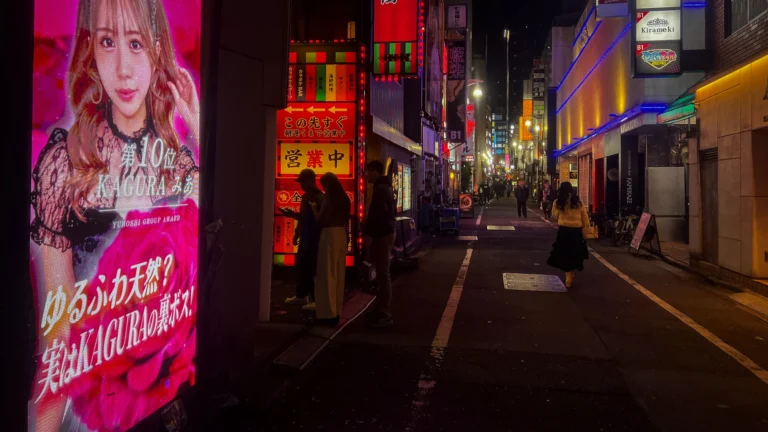
Concept cafes (concafes; コンカフェ) have become a staple of Japanese nightlife. Born out of the Taishō-era tradition of jokyū (女給), or café waitresses, concafes now serve as an after-hours counterpart to maid cafes: a place where customers and cast, either male or female, can drink, chat, and sing together.
More foreign visitors are checking out concafes than ever before. Many more want to visit, but are intimidated. Which isn’t surprising; this is an “only in Japan” type venue that operates on a model that will be foreign to most Western travelers. Concafes also have strict rules you must follow; violating them can earn you a lifetime ban.
Once you understand the rules, however, you’ll find many stores in Tokyo and beyond to be welcoming, friendly, and fun places to hang. In this article, I cover the basic and advanced rules you should know before you visit a concept cafe.
Concept cafe vs. maid cafe and the two types
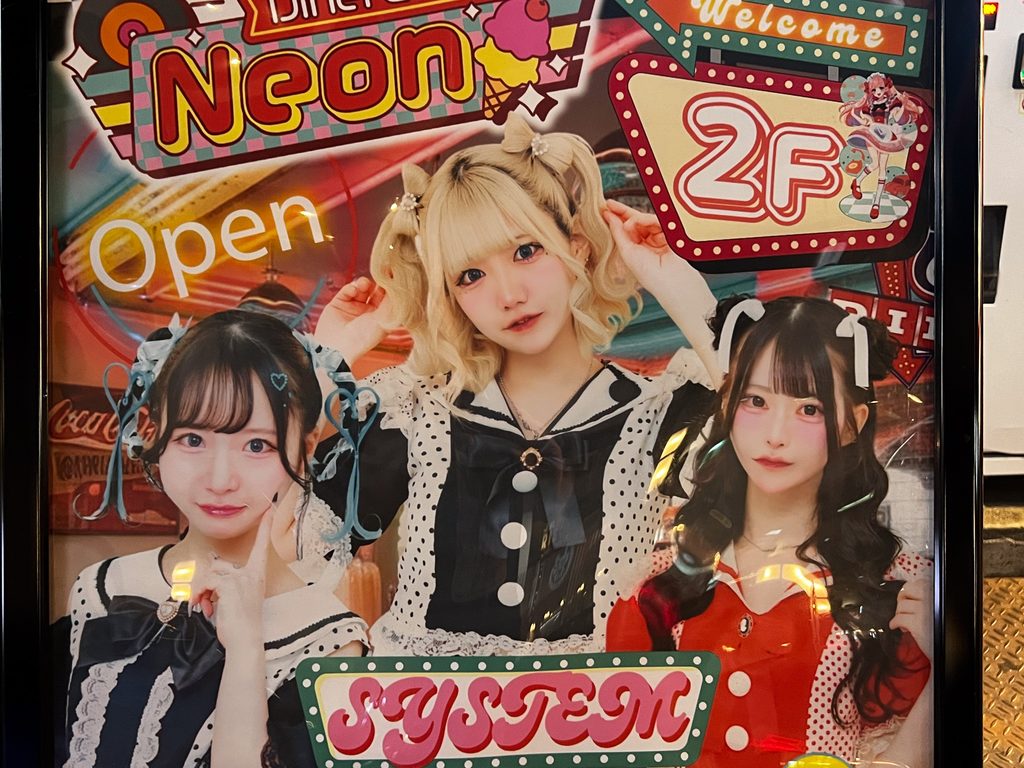
A concept cafe isn’t a maid cafe, though they share a historical lineage.
A maid cafe is primarily a daytime operation serving Western-style cuisine, sweets, and drinks. The shops are performance-based, with set phrases and gestures (e.g., moe moe kyun) that accompany them.
A concafe, by contrast, is a more freeform nighttime business that emphasizes drinking, talking, and sometimes karaoke. Each one operates on a different visual “concept,” hence the name: maids, dolls, succubus, American diner, you name it.
As a part of what I call Japan’s “attention economy,” they’re somewhat akin to rent-a-family or rental girlfriend/boyfriend businesses. They sell friendship by the hour, wrapped in a pretty package.
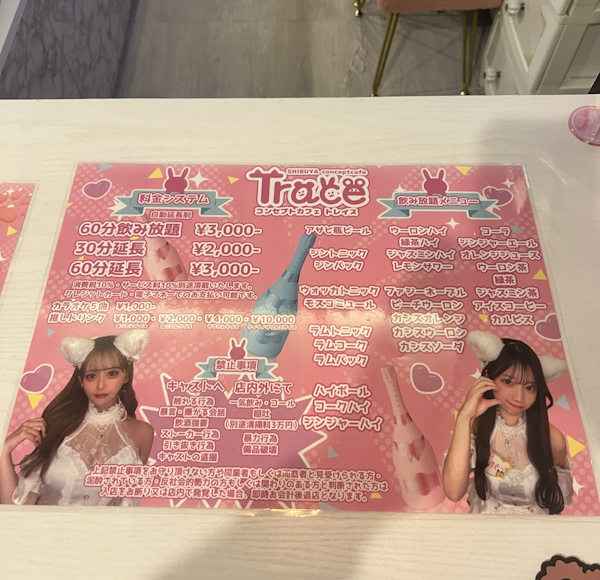
All concafes operate off of the same economic model, or “system.” A base fee provides you a seat for a half-hour or an hour. Drinks may be included in the price (飲み放題; nomi-hōdai, all you can drink) or sold by the drink; some stores offer both options at different prices and let you decide.
Staff members, called cast, will spend time with you, often in 15-20 minute blocks (at settai shops, sitting at your table). You can ask for a specific cast member to sit with you for the duration, which is called 指名 (shimei) and carries a small additional fee.
As a nighttime business, concafes may operate on one of two models:
- Sekkyaku (接客), or serving. Generally, bar-type concept cafes where staff don’t sit or drink with you. These establishments can be open until 5am.
- Settai (接待), or entertainment. Venues where staff sit with you and drink/sing with you, making them more like hostess or host clubs. By law, these must close between 12am and 1am.
Sekkyaku has been the dominant form of concafe. However, more venues these days are running the settai model, even though it means shorter hours.
Why? One reason is to avoid legal scrutiny. Sekkyaku cafes straddle a thin line and risk crossing it if they become overly friendly or intimate with customers to keep them coming back. Many sekkyaku locations work around the law by offering off-book services such as after-hour meetups or pre-meetups (同伴; dōhan), where you meet a cast member for dinner beforehand and enter the club together.
Authorities often raid concept cafes that try to operate what is effectively a settai business under a normal restaurant license. (Settai requires a fūzoku license under Japan’s Entertainment Law.) Concafes that legally operate on a settai model don’t need to fear raids and can structure their business economically like a hostess club does, such as giving a cut of drinks and expensive champagne purchases (バック; back) to cast members.
Basic etiquette at a concept cafe
Here’s the absolute minimum you need to know for your first few visits to a concafe.
Anyone can go
Many assume that the customers at an all-female cast concafe are all men. This isn’t true at all.
A concafe with a female cast doesn’t restrict women or couples from entering. I’ve seen many single women and female friends enter. The same goes for a male-staffed concafe, a dansō (male cross-dressing) venue, a josō (female cross-dressing) cafe, etc. Anyone who wants to spend time chatting and drinking with staff is welcome. Unless posted otherwise, they’re third spaces that are open to all.
…except some venues insist you can speak Japanese
There are a few concafes that restrict themselves to customers who can speak Japanese. These are generally smaller-staffed venues that don’t have the staff to handle non-Japanese-speaking customers and that want to avoid misunderstandings over charges.
If a shop has signs saying they don’t accept non-Japanese speakers, move on. Otherwise, if you speak a little Japanese, feel free to ask if you can enter. More venues are also willing to accommodate customers who rely on translation apps and provide English menus for non-Japanese customers.
A few concafes will have staff who speak some English. I highlight several foreigner-friendly concept cafes and other nightlife venues in my Tokyo nightlife guide.
No touching
A concafe isn’t a sexy cabaret or a soapland. The focus isn’t sex; it’s conversation and friendship. Keep your hands to yourself.
No photos
As a rule, taking your own photos is forbidden. Nearly all stores will offer Polaroid photos for purchase, called cheki (チェキ). If you want a souvenir photo, buy one!
Don’t ask to exchange contact details, though they may ask you
Traditionally, concept cafes have forbidden asking staff for their messaging app (LINE) or social media (Instagram, X) details. So, don’t ask.
That said, staff at some stores may ask you if you want to exchange contact details. This will often happen if you live in Japan or plan to visit repeatedly. The cast member will then occasionally ping you to ask if you plan to come to their store, or to invite you to special events such as their birthday celebration. You can also use this to let them know when you’re next coming to the store.
Don’t ask overly personal questions
This includes questions about staff members’ real names, ages, where they live, etc. Don’t ask to meet cast members outside of the cafe, and don’t ask if they’re seeing anyone. (Many will just say no even if they are to make themselves seem “available.”)
Some questions you can ask include:
- What made you want to work at a concafe? (「コンカフェで働こうと思ったきっかけって何だったの?」)
- What do you like about working here? What’s the hardest part about working at a concafe? (「コンカフェの仕事で一番好きなことは?一番つらい時は?」)
- What’s your favorite (food, performer, anime, book, etc.)? (「一番好きな〇〇はなに?」)
- Do you have an oshi? (「推しがいるの?」)
- What are your hobbies? What do you like to do on your days off? (「趣味はなに?休日にやりたいことは?」)
- Do you have anything you really pursue outside of work? (「この仕事以外で、今がんばってることある?」)
- What would you do if you won the lottery? (「宝くじで1億円当たったら、まず何買う?」)
- Are you a ramen or an udon person? (「ラーメン派?うどん派?」)
- What is people’s first impression of you? (「初対面の人によく言われる第一印象って何?」)
You can also, of course, talk about yourself. What do you plan to do in Japan? What did you do earlier today? Where are you going next? What do you do for work?
Don’t wait outside for cast members
I shouldn’t have to say this, but it’s printed clearly in the rules of every concafe I’ve visited, which means enough customers have violated it that it deserves a callout. Waiting for someone’s shift to end so you can approach them and ask them out is creepazoid behavior. What happens in the concafe, stays in the concafe.
Watch the clock
Some concafes will tell you when your set time is up. Others will not, and will extend (延長; enchō) your time automatically. This can leave you feeling shocked when you get the bill. Note the exact time you enter the store, and keep an eye on your watch or the wall clock.
Advanced concept cafe etiquette

If you go to a given concafe frequently, you’ll become a 常連さん (jōren-san), or regular customer. You may even develop an oshi whom you request each time you visit. Here are some tips on managing that relationship.
Advancing up the spending ladder: cast drinks and champagne
A common feature of concafes is buying drinks for your companion, called the cast drink (キャストドリンク) or kya-dori (キャドリ) for short. These aren’t required, but they’re viewed as a courtesy if someone is spending a lot of time with you.
Cast members may also try to upsell you on more expensive drinks or champagne, with champagne prices generally starting around USD $100-200 and climbing into the thousands. They do this because cast members get a cut of what you spend. Remember, purchase isn’t obligatory, and whether you accept or refuse is up to you.
Personally, I gravitate toward venues that don’t push expensive purchases in the first place, leaving largesse to the customer’s discretion. You can find my favorites in Tokyo in my nightlife guide.
Regulars, guests, and tainyū
If you visit a cafe regularly, you’ll encounter other workers mixed in with the regular cast. One of the most common is the guest attendee. This is usually a well-known person from another club or someone with a lot of social media clout.
A guest appearance doesn’t mean you can’t go that day, and it doesn’t put any special obligation on you. If you’re going on that day to see your oshi, make sure they know you’re coming.
Another person you’ll see is a “trial worker,” known as taiken nyūten (体験入店) or tainyū for short. This is someone who’s seeing if the store’s a fit for them by spending a day on the job. Tainyū workers are generally paid in cash, and won’t necessarily join the cast if the experience wasn’t to their liking. Be understanding that they’re new to the cafe and don’t understand the ins and outs (and may be new to concept cafe work in general).
Going to the club when your oshi isn’t there, and rikude
If you follow your oshi on X or Instagram, you’ll likely be able to see when they’re in, as many staff members post their schedules. If you and your oshi are in contact via these apps or LINE, give them a heads-up you’re coming and what time. That helps them coordinate requests from multiple customers and ensure they’re free when you arrive.
Let’s say you have an oshi and you want to go to the cafe on a given night, but can see on their Instagram that they’re not scheduled for a shift. What do you do?
The best thing to do is give your oshi a heads-up. In some cases, if they’re free, they’ll offer to do rikude (リク出), i.e., come to see you by special request (リク is an abbreviation of リクエスト). Since they know they’ll get paid and get a cut of your spend, many will be happy to take the small extra shift.
What you shouldn’t do is show up without your oshi knowing and spend big on someone else. Also, if your oshi offers a rikude, keep the appointment; they often won’t get paid if you don’t show up.
Just be respectful

Several nightlife staff I’ve talked to say they appreciate foreign customers, as they generally tend to be well-behaved and respectful of the rules. Sadly, it’s often Japanese customers who cross the line, usually after drinking past their limit.
The golden rule: just be nice. Follow store guidance, keep your drinking to an acceptable level, and treat the cast well. If you do that, I guarantee you’ll have a fun evening to tell your friends back home about.
Keep reading




Sources
流行りのコンセプトカフェ その実態を現役店員に聞く 弁護士ドットコム
ホストから「メンコン」へ? 少女たちがハマる夜の“トライアングル”経済の実態 弁護士JPニュース
ホスト、キャバクラ、ガールズバー、デリヘル…遊興、娯楽を規制する影の主役「風営法」知れば鮮明になるナイトビジネス関連事件の輪郭 弁護士JPニュース
「萌え産業」に異変…相次ぐ「コンカフェ」閉店&摘発ラッシュのなぜ 経営センスなければ「一発屋」熾烈な世界 J-CAST ニュース
嫌われないためのコンカフェマナー完全版|知らないと恥をかくNG行動10選 ゔぃらねすアカデミア
コンカフェの繋がりとは?連絡先・LINE交換がNGな理由や対処法を伝授 Emille
【重要】コンカフェ嬢が営業DMを送るとクビになる?送ってはいけない営業DMを徹底解説! 近コンバイトマガジン
コンカフェでキャスドリ(ドリンク)を出さないお客様への正しい向き合い方と稼ぐための対処法☆ 体入ドットコム PLUS
コンカフェのキャスドリとは?値段・頼み方・頼まなくてもよいかを解説 ミナミのコンカフェ開拓録 @ケイタ(note)
キャスドリは「最低限嫌われない権利」 875(note)
高校の時に”メイドカフェ”に体験入店したらとあるお客さんがシャンメリー全種類頼んだ後に「騙されているからこの給与もらって今日で辞めたほうがいいよ」と言ってくれた Togetter
コンカフェのゲスト出勤って何?メリット・やり方・イベント成功のポイントを解説! かふぇこん
コンカフェ体入の疑問をすべて解決!流れから注意点・よくある質問まで徹底解説! かふぇこん
コンカフェのリクエスト出勤とは?仕組みと上手な活用法を解説♡ 体入ドットコム PLUS
コンカフェでキャストが出勤でない日にいくーといったらリクエスト出勤するわといってくれたのですが… Yahoo!知恵袋
コンカフェについての初心者質問です! Yahoo!知恵袋
あっとほぉーむカフェに数回行きました。推しができてからは推しのいる日にしか… Yahoo!知恵袋
コンカフェについて質問です。 Yahoo!知恵袋
コンカフェの推しさんに「〇日行くよ!」って伝えていたのですが、その… Yahoo!知恵袋