
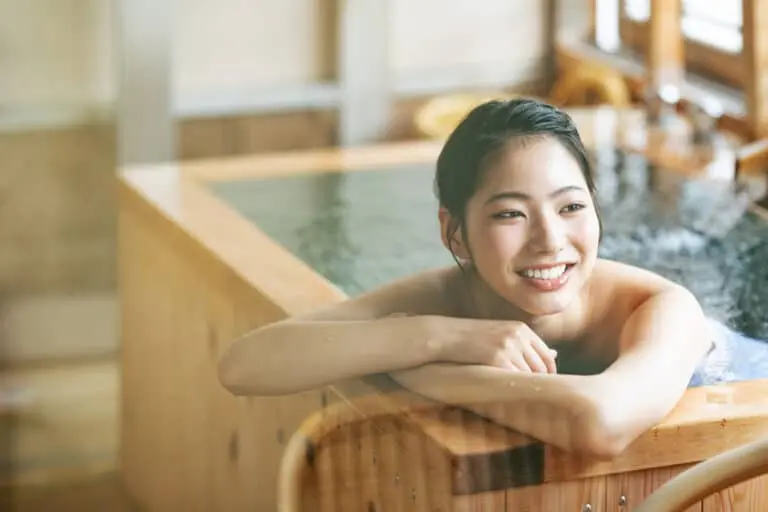
With Japan long since reopened to tourists following the COVID-19 pandemic, many people are planning a trip. Whether this is your first or dozenth trip, you’ve probably heard of onsens. But do you know the best onsen in Japan?
Onsens are public bath houses, often hot-spring fed, where attendees can get clean and relax in a variety of tubs. They range from simple small onsens with one or two tubs to massive spas and complexes sporting dozens of options. Both traditional inns and modern hotels often have attached onsen, and some even allow for booking private tubs.
Wherever you go in Japan, there will certainly be plenty of onsens around. From Hokkaido to Okinawa, Japan is home to thousands of onsens both natural and man-made. The ones mentioned in this article are just a few of the best onsens in Japan. They include one on each of the country’s four main islands. Each of these would make an amazing addition to any upcoming Japan trip you may have planned!
Beppu: The Best Onsen Town – Kyushu
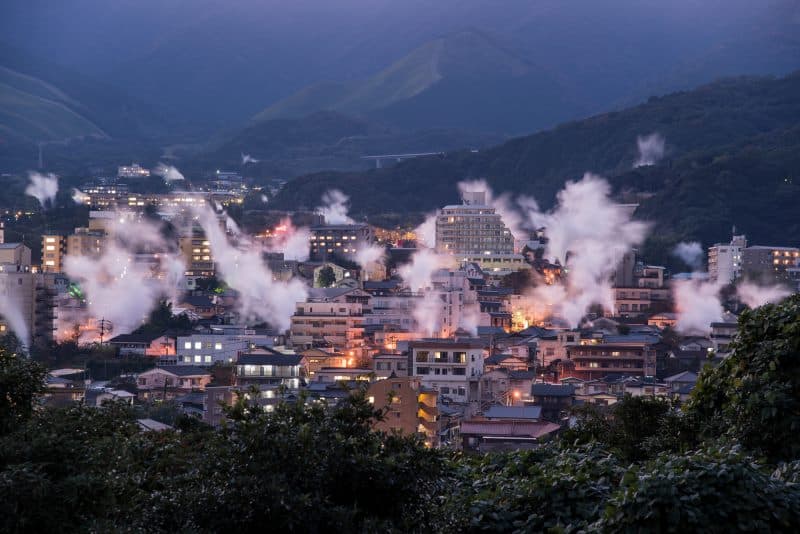
An “onsen town,” also known as a “resort town” is a town known for its large number of onsens. Typically built around natural springs, onsen towns are often popular tourist destinations for Japanese residents and visitors alike. Onsen towns around Japan include Atami in Shizuoka Prefecture, Hakone not far from Tokyo, Nanki-Shirahama in Wakayama Prefecture, and many more.
But few are as well known as Beppu, located in Oita Prefecture on the island of Kyushu. Sometimes called the “hot spring capital of Japan,” Beppu is made up of eight different onsen areas collectively known as Beppu Hatto, or “Beppu’s Eight Hot Springs.”
Each of Beppu’s eight onsen areas is built around a geothermal hot spot and features a wide variety of baths. In addition to the iron-rich waters of natural hot springs, visitors can enjoy sand baths, mud baths, steam baths, and more. [2]
The architecture of Beppu’s onsen areas blends the traditional and the modern, offering both ryokan inns and luxury hotels for visitors to stay in. Beppu also has its “Hells” (jigoku), seven geothermal pools far too hot to bathe in and open for viewing only. Four of them were designated a national “Place of Scenic Beauty” by the Japanese government in 2009.
Noboribetsu: Paradise in “Hell” – Hokkaido
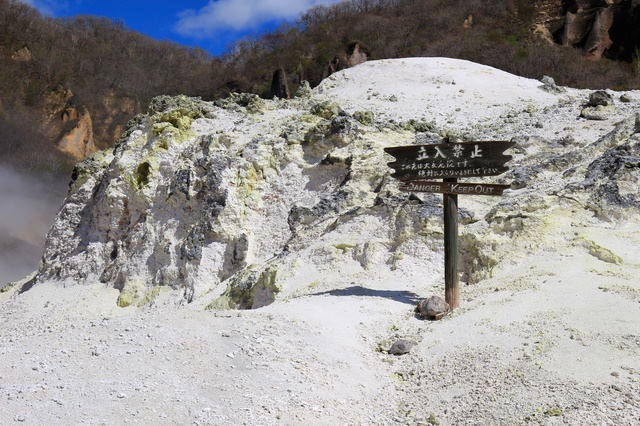
Another onsen that blends beauty and relaxation with a forbidding name is Jigokudani, or the “Valley of Hell,” located in Noboribetsu, Hokkaido. Nestled in a volcanic crater, this onsen resort is home to Oyunuma, a steaming sulfur lake that sits around 50°C at the surface and reaches roughly 130°C in its depths. Visitors can hike Noboribetsu’s many nature trails, visit the lake, and photograph the truly “hellish” rocky, sulfur-blasted landscape before relaxing in one of the town’s many baths. Popular baths in the area include Daiichi Takimotokan, Noboribetsu Grand Hotel, and the Yumoto Sagiriyu public bathhouse. [3]
Local legend says that Jigokudani and its boiling lake were once a gate to the underworld, where oni (demons) could cross from Hell into the human world. Statues and art depicting terrifying, imposing oni fill the town. The town also hosts the annual Noboribetsu Jigoku Matsuri, or “Hell Festival,” on the last weekend of August, where dancers dressed as demons perform rituals to keep the evil spirits away for another year.
Dogo: Miyazaki’s Inspiration – Shikoku
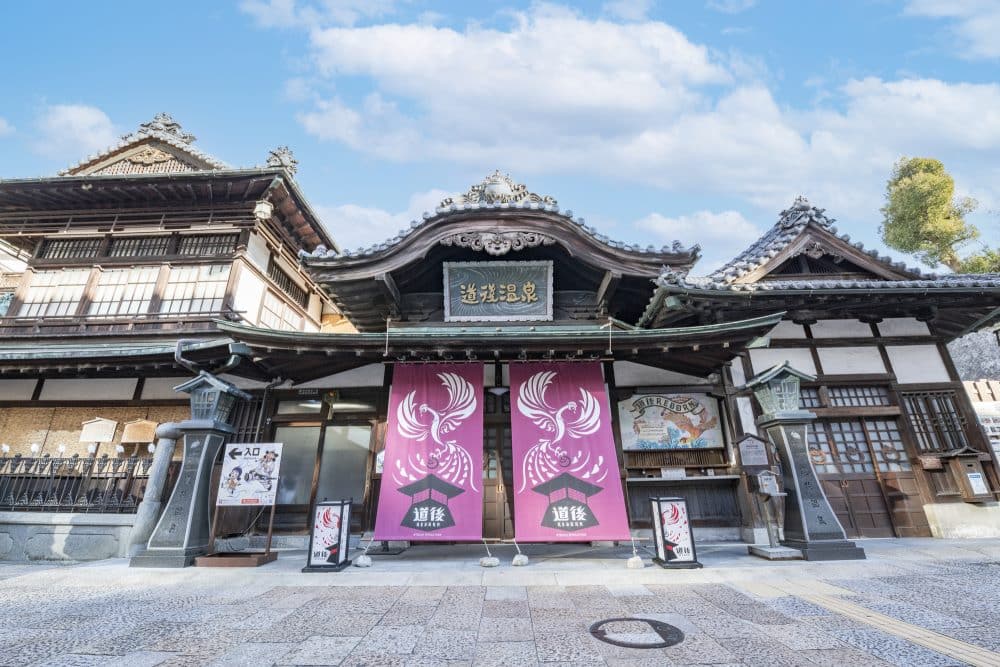
Often regarded as Japan’s oldest hot spring, the onsen at Dogo is often credited as a visual influence on animator-director Hayao Miyazaki‘s classic film Spirited Away. Dogo is located in Matsuyama City, Ehime Prefecture on Shikoku, the smallest of Japan’s four islands. It was also reportedly the favorite onsen of both legendary ruler Prince Shotoku and author Natsume Soseki. It features heavily in Soseki’s semi-autobiographical novel Botchan.
Ghibli art director Takeshige Yoji has said he referenced the exterior of Dogo’s primary bathhouse, the Dogo Onsen Honkan, when drawing the bathhouse run by the witch Yubaba in Spirited Away, though Miyazaki has said no single building was the model. Its two baths, the Kami-no-Yu and the Tama-no-Yu, both sit on the first floor, with tatami rest rooms, an exhibition room, and private rooms on the floors above. A newer addition to the area, the Asuka-no-Yu annex, features private bathhouses that can be rented for an ultimate solo or couple’s relaxation experience. There is also the Yushinden, a bath reserved specifically for the imperial family. That one isn’t open to the public, but tours are sometimes available. [4]
Kusatsu: The Healing Waters – Honshu
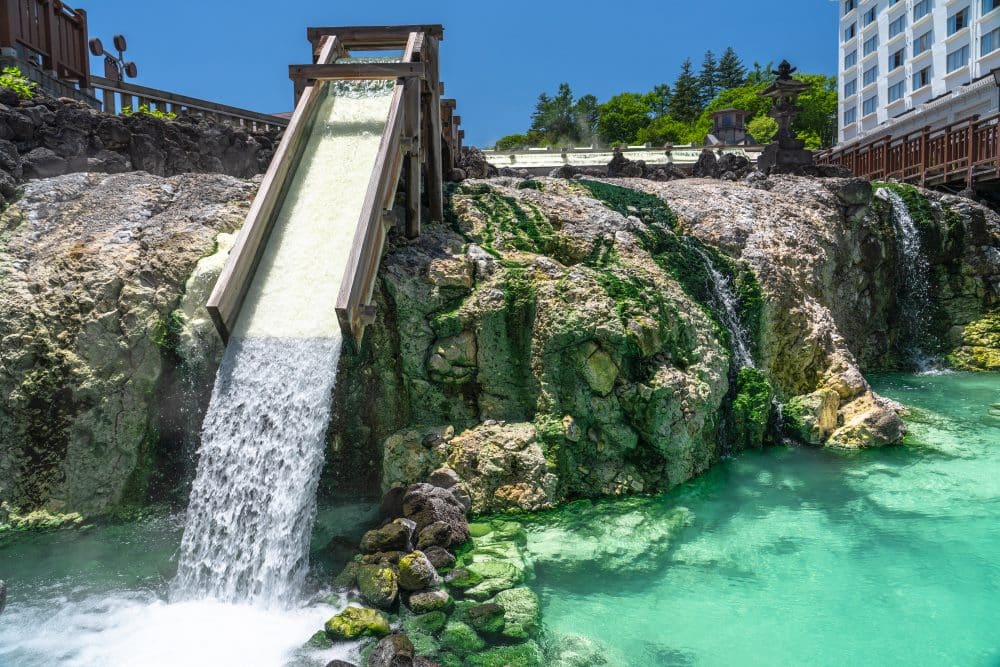
Located in Gunma Prefecture north of Tokyo, Kusatsu Onsen gained popularity in the late 1800s when Erwin von Baelz, a professor of medicine at Tokyo University, publicly highlighted the healing properties of its baths. People believe that the baths at Kusatsu are effective in treating a variety of ailments including nerve damage, chronic pain, illness, and even stress. Traditional wisdom in the area holds that the only disease Kusatsu Onsen’s waters cannot cure is lovesickness.
Kusatsu’s healing benefits are not just rumors. The waters of this onsen are unusually acidic, making them effective at killing germs. At roughly pH 2.1, Kusatsu is among Japan’s most acidic hot springs, though Akita’s Tamagawa Onsen, at about pH 1.1, holds the national record. The town is home to a number of bathhouses, including some smaller baths that are free to use. Shops sell a variety of local souvenirs, including the area’s famous “onsen dumplings” as well as salts from the hot springs that buyers can take home and use in their own bathtubs.
Beyond the Best Onsen
These are just a few examples of the many wonderful onsen available throughout Japan. Adding an onsen soak – or several! – to any upcoming trip to Japan can help you relax, combat the stress of travel, and simply take a moment to breathe. Visiting an onsen can be a relaxing full-day experience or a brief bath, and could even serve as a romantic couple’s encounter if you rent a private tub. No trip is complete without a soak!
Keep reading

Sources
[1] Kanko Keizai Shimbun, via Nippon Travel Agency. “にっぽんの温泉100選ランキング” 2022. Link.
[2] Beppu Jigoku Association. “Beppu Hells Tour Pamphlet.” Link.
[3] Noboribetsu International Tourism and Convention Association. “Noboribetsu Onsen.” Link.
[4] Dogo Onsen Official Website. “The History of Dogo Onsen, Japan’s Oldest Hot Spring.” Link.
[5] Kusatsu Onsen Official Website. “Kusatsu Onsen.” Link.