
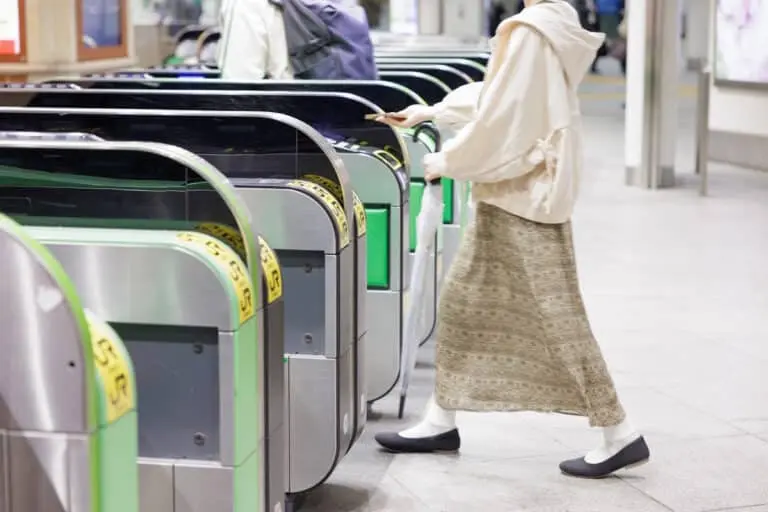
If you’ve been to Japan once, you’ve got the ritual down pat. Swipe your card at the gate and board the train. But JR East wants to change that. The train company that runs rail through eastern Japan wants to change how you board by supercharging its iconic train card, Suica.
JR East announced this week it wants to make sweeping changes to its Suica train card. The company plans to use GPS data to enable passengers to board a train without swiping a card at a gate. It’ll also use GPS to calculate how far you traveled and how much to charge you.
JR East says it plans to begin introducing the new system in 2028. It’s not quite clear yet how it’ll roll it out or handle potential non-payment.
What is clear is that JR East continues to look for ways to cut costs. Getting rid of toll gates would help. According to Nikkei, a single gate costs in the ten-millions of yen (hundreds of thousands in USD) to set up. JR East operates 3,500 gates in the Greater Tokyo Area.
JR East’s last cost-cutting plan saw it close over half its service ticket counters, instructing customers to use its online services instead. The country’s burgeoning tourism business, however, resulted in hour-long waits at remaining counters, leading to a customer backlash.
A move to make Suica a powerful mobile payment option

On top of eliminating gates, JR East wants to make Suica a more powerful cashless payment option. It plans to roll out interpersonal payments using Suica cards sometime after 2028.
You can currently use Suica to pay for goods and services at around 2.26 million locations in Japan. However, JR East has only issued around 31.47 million mobile Suica cards. That lags behind the two most popular cashless payment options – PayPay (66 million) and d-Barai (63 million).
In a separate announcement later today, JR East announced that it would raise the limit for Suica cards by 2026. Currently, you can only have up to 20,000 yen (USD $131) on a card at any given time. This is a holdover from days when cards were primarily physical.
The moves come as transportation cards, long a staple of travel inside of Japan, seem to be going out of style. More train companies are introducing QR code and credit card touch payment options, making the one cutting-edge technology obsolete.
At the same time, some regional transportation companies are abandoning support for cards like Suica. Currently, Suica is one of around a dozen or so cards you can use anywhere in Japan that supports the national IC card network.
However, recently, most bus and train companies in Kumamoto dropped support for the network. The companies concluded it was cheaper to support QR codes and credit card touch payments than pay for the upgrades required by the national network.
Keep reading


Sources
JR東日本、Suicaの位置情報で改札フリー 個人間送金も. Nikkei
JR東、Suica抜本改革 2万円上限引き上げやコード決済. Nikkei