

A manager for the Kure City Fire Department in Hiroshima Prefecture has had his pay cut for what many on Japanese social media say is an act of kindness in a country where people are routinely overworked.
The 57-year-old section manager reportedly took night shifts from 11 of his subordinates without his manager’s approval on 20 or more separate occasions from last May until this January.
He reported the shifts as completed by his workers so they would get paid their usual salaries. All in all, the man completed 2.42 million yen (USD $15,390) on behalf of others.
“I wanted to let my people rest,” he told his bosses.
That wasn’t a good enough reason for his supervisors, however. They cut his pay by 10% for the next six months. They also docked several other people and are forcing workers who didn’t work to repay the department for the shifts.
The news left many Japanese social media users vexed. “What a gentle soul,” one poster said in a popular comment. Others agreed.
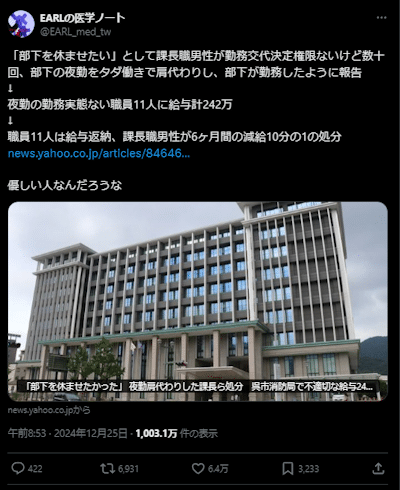
“I know he shouldn’t have done it but it’s still sad…At least let his people keep their pay,” wrote another.
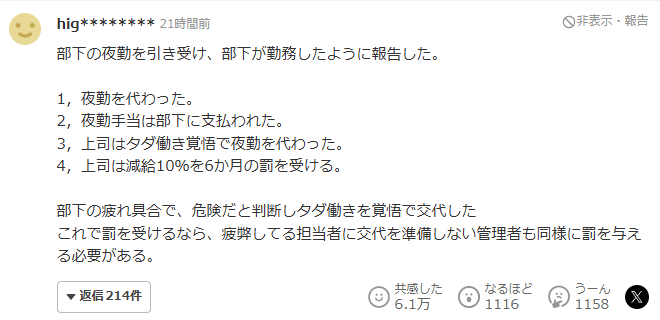
One commenter on Yahoo! News Japan, in a post liked over 60,000 times, praised the manager. “He recognized the danger of his workers being exhausted and took it upon himself to work on their behalf for free. If that’s a punishable offense, then you also need to punish the managers who didn’t provide backup for this exhausted supervisor.”
Karoshi (過労死), or working to death, is a chronic workplace problem in Japan. We wrote yesterday about one infamous case of overwork: Takahashi Matsuri, an employee at Dentsu who was working more than double the so-called “karoshi line” in overtime every month.
Japan’s government has implemented various workplace reforms to prevent overwork. Some offices have implemented clever solutions, such as shutting down computers at the end of the work day, to enforce the practice.
However, population decline is leaving many businesses shorthanded. In some cases, that’s leading to companies relying more on foreign labor to fill in the gaps. But it’s also leading some companies to force existing workers to “do more with less.”
Perhaps that’s why the workplace-destroying Hello Kitty memes proved so popular recently…