
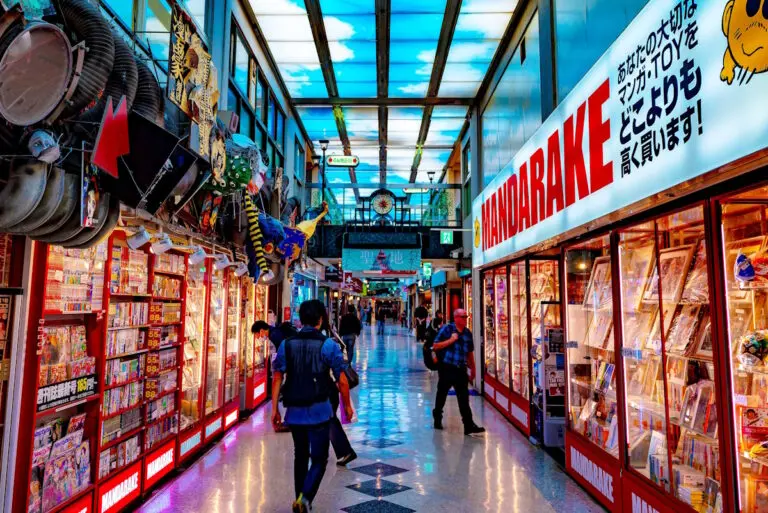
It’s no secret these days that anime and manga are big business. In 2024, Japan’s otaku-related industries reached a total market value of $25 billion, in no small part due to an explosion in global popularity.
As an IP-driven industry, however, the sudden appearance and expansion of generative AI (GenAI) threw a massive wrench into the works at the height of this anime boom. The global nature of the problem only makes it harder to tackle. Now, workers and executives alike are wondering how much GenAI might shave off their bottom line – and their careers.
Local industry facing global threat
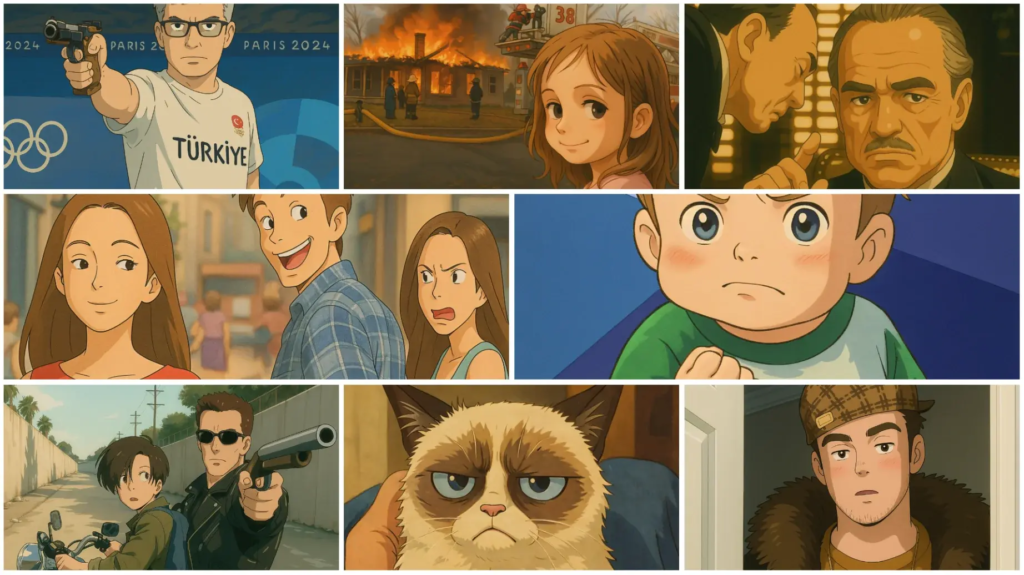
It’s now been almost half a decade since GenAI hit the global scene and started stomping around every creative industry it touched. Ever since, artists have been struggling with the technology’s limitless capacity for just-so, not-quite plagiarism.
But when Japan’s Agency for Cultural Affairs released its prospective stance on AI and copyright in 2023, there was at least some sign of legal protections. In particular, the Agency was taking the view that:
- AI output that closely resembled copyrighted work could be legally deemed a copyright violation.
- The AI output itself could likely be ruled uncopyrightable.
While not a ruling in and of itself, seeing these determinations come from a government body gave some hope to Japanese creatives that their livelihoods wouldn’t be completely hung out to dry.
The big problem left over, however, is that whatever the Japanese government groups and legal system decide, it’s a wide, wide world. There are far more AI users and companies outside Japan than inside.
As the generative AI user base has grown and more models are coming to market, a worldwide wave of algorithmic plagiarism is being unleashed. Japan’s iconic, globally loved characters like Doraemon, Detective Conan, Goku, and many more are prime real estate for GenAI enthusiasts.
International copyright law is a domain that Japan’s IP industries have been operating in for decades now, so it isn’t that they lack the tools or infrastructure to protect their characters. The problem now is the unprecedented scale.
It’s one thing to track down a piracy group or an individual plagiaristic artist. It’s another to fight against thousands of plagiarized images being pumped out every day, each slightly different than the rest, coming from accounts across the globe, generated by different models using different training data. As strong as Shueisha’s legal department is, even they can’t handle the pure volume of copyright infringement that generative AI has created.
Japan’s big AI problem
GenAI stands to disrupt far more than just anime and manga. Creative industries of all types are being overwhelmed by generated content. That’s left the future of work in these spaces an open question.
Many of these industries were already feeling the baseline pressures of capitalism towards tighter timelines, heavier workloads, and lower wages that drove away new talent and hamstrung professional development in favor of corporate profits. These trends were already an open secret in the anime and manga industries.
GenAI offers studio leadership new possibilities to replace labor costs with automated capital. Just this month, the new season of the Ascendance of a Bookworm anime has sparked controversy due to its use of GenAI for backgrounds.
This AI threat strikes at an inopportune time for the Japanese economy. While creative work is far from the largest sector, it is one of the few domains that have been growing since the coronavirus struck.
According to an investigation by industry magazine Brand New Creativity, creative industries accounted for slightly more than 2% of Japan’s GDP in 2020. While Japan’s overall economy shrank, creative GDP increased compared to 2019.
In the five years since, the anime and manga market, in particular, has more than doubled, in no small part due to a huge increase in revenue from the global market. Now, GenAI stands to harm industry labor relations and revenues at the same time. That could take the wind out of the sails of one of the few Japanese industries thriving in the 2020s.
Question: do you like UJ's independent coverage of Japan? Our writers are supported by our members. Join Unseen Japan Insider to get bonus content every week, an ad-free website, and access to our large and growing Insider archive.If you love UJ's independent coverage of Japan, join Unseen Japan Insider to get content every week, an ad-free website, and access to our large and growing Insider archive.
Will artists find help at home?

As tensions heighten between creative workers, creative industries, and AI companies, the pressure on the Japanese government to take a clear stance on AI content is growing. The ruling Liberal Democratic Party (LDP), however, has been aggressively conciliatory towards the last decade of Silicon Valley moonshot projects.
At the end of March, the LDP’s committee for “the advancement of digital society” formed a new project team focused on “the new era of AI and blockchain finance.” In a 2025 whitepaper, the LDP reaffirmed its 2024 commitment to make Japan “the world’s most AI-friendly country,” stating that, “digital power built on AI is our most effective weapon to fight against the massive global shifts created by AI itself.”
Suffice to say, there doesn’t seem to be any sign of shakeup in the LDP’s pro-AI stance. This, despite significant segments of the Japanese economy being actively threatened by the technology.
Disregarding the economic well-being of the population in favor of deals with moneyed interests is nothing new for the LDP. After all, seven LDP members were exposed and subsequently let off the hook for a 2024 slush-fund kickback scheme. So it’s hardly surprising that they choose to align with AI over the creative workers and companies that make up a meaningful chunk of GDP and an even more meaningful segment of Japan’s soft-power projection.
However, this still leaves the legal status of AI content firmly in the air. That tension heightens the creative industry’s anxiety over the future of its work in Japan.
A problem that solves itself?
This rising AI anxiety in the anime and manga industries comes at a bit of an awkward time for GenAI image and video generation itself.
Last month, OpenAI unceremoniously yanked its image generation service Sora after just six months. That scuttled its pending $1B deal with Disney.
Exact details of the project’s collapse are still unclear, but observers noted that image generation is orders of magnitude more expensive than chatbots like ChatGPT. With the legal questions around generated content unsettled, it’s difficult to make a clear value case to clients that would convince them to cover the exorbitant costs.
For the anime and manga industries, this could be a sign of the rocky seas settling all on their own. It’s well understood that large-scale GenAI has been burning money hand over fist, chasing paths to profitability while eating up a multi-trillion-dollar investment runway. Currently, the most successful use cases seem to be in copilot programming (code generation) and back-office automation.
Sora’s sudden downfall suggests that similar pathways aren’t necessarily forthcoming for generated images. While creative companies may find themselves temporarily bothered by this wave of digital copycats, perhaps all they need to do is fight back where they can and buckle down until the money runs out.
Keep reading

Sources
日本のアニメ・漫画のキャラに酷似、AI生成の動画や画像氾濫…「権利複雑」と業界の動き鈍く. Yomiuri
文化GDPは12.3兆円。文化庁報告書が日本の文化経済の現在地を可視化、ゲーム・アニメの輸出力が適切に把握できていないという指摘も. Brand New Creativity
Anime and Manga Industries labor troubles source – The low wage problem in the anime industry. Animator Dormitory Channel
AI ホワイトペーパー2025. LDP
【独占】「金融庁や財務省に緊張感」──自民党「次世代のAI・オンチェーン金融構想PT」が発足、発起人・平将明議員が語る狙い/OKX、米国株「マグニフィセント・セブン」の無期限先物を提供開始【日曜日に読みたい厳選10本】. Nada News
OpenAI is shutting down its Sora video app just months after launch. CNN