
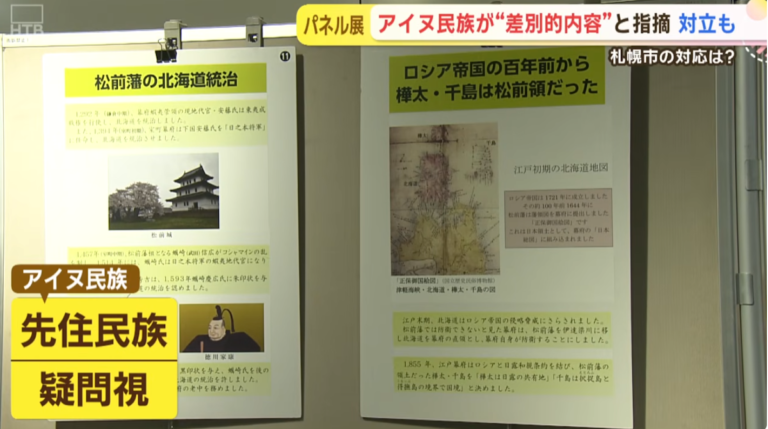
For the second time in seven months, Sapporo’s city government has approved a panel exhibition inside the city’s main underground concourse, Chikaho, that specifically claims that the Ainu are not an indigenous people. The display, which started on March 16th, has been installed by a conservative group calling itself “Association to Learn the Historical Truth about Ainu” (アイヌの史実を学ぶ会).
The “debate” about the Ainu
The group praises the 1899 Hokkaido Former Natives Protection Law as benevolent, while also claiming that Japanese settlers ‘civilized’ the Ainu, echoing an attitude similar to colonial revisionists from around the world.
This 1899 act also served as the basis for the forced assimilation of the Ainu. It banned their traditions, forced the transfer of their lands to Japanese citizens, and forbade them from using their language.
However, along with the previous exhibition, the claim that the 1899 law (which ran until 1997) “civilized” the Ainu people directly contradicts the historical consensus that forms the backbone of the 2019 Ainu Policy Promotion Act.
This panel exhibition has been allowed to go ahead by the Sapporo City Council in spite of strong and justified opposition, which presented a petition with 12,000 signatures opposing approval of the exhibit. Alongside this, various Ainu organisations have presented formal complaints, as well as earlier warnings from C.R.A.C. Hokkaido (Counter-Racist Action Collective), which has opposed anti-Ainu discrimination in the past, and the Ainu Policy Citizens’ Review Council.
Passing the yen
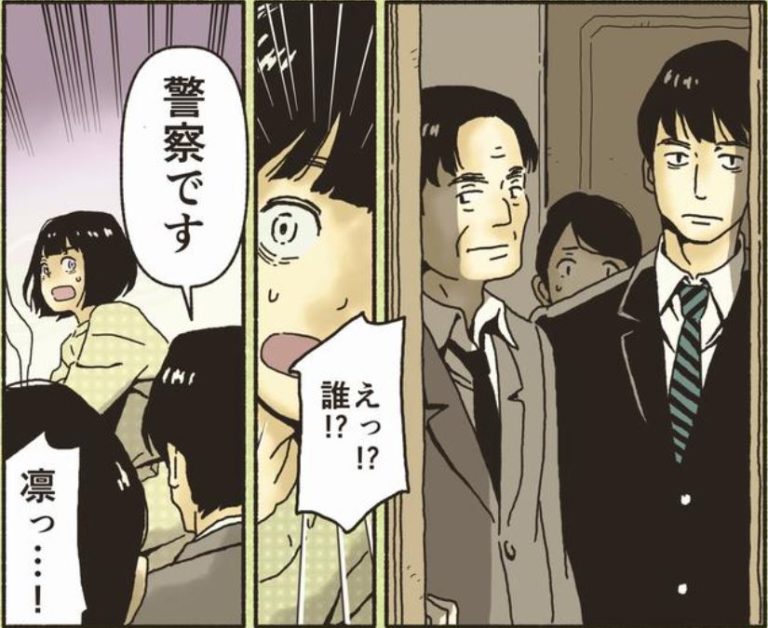
As was the case when the previous exhibition was displayed in September of last year, the panels have brought protests. Tensions have been so high due to the protests at the site that the police have been called in.
The result of this is the previously mentioned formal complaints by C.R.A.C. NORTH and Ainu Policy Citizens’ Review Council being sent to the Sapporo City Government.
However, Sapporo Mayor Akimoto Katsuhiro claimed his hands are tied due to the free-speech doctrine. He also stated that the city has no right to refuse the use of a public facility if there is a “legitimate reason” for its use.
He has also asked the national government to clarify what counts as discrimination under the 2019 Ainu Policy Promotion Act. This is despite the law straightforwardly forbidding this.
Sadly, the City Government’s response has also been “neutral.”
It stated that the idea that the 1899 Law is comprehensive is “contrary” to the view held by the City Council. Yet, the city government claims “there are aspects that must be considered from a different perspective when deciding whether or not to approve the use of the facility.”
Again, it is plainly written in the 2019 New Ainu Policy that such displays are prohibited.
A clearly defined transgression
The Act on Promoting Measures to Realize a Society That Respects the Pride of the Ainu People, also known as the New Ainu Policy, came into force on May 24, 2019. It’s the first law that formally recognizes the Ainu as an indigenous people of Japan.
Article 4 states of the New Ainu Policy plainly: “No person shall discriminate against Ainu people on the grounds of being Ainu, or otherwise engage in acts that infringe their rights or interests.”
This clearly contradicts the Sapporo government’s claim that there was no “legitimate reason” to block the exhibition from taking place.
Question: do you like UJ's independent coverage of Japan? Our writers are supported by our members. Join Unseen Japan Insider to get bonus content every week, an ad-free website, and access to our large and growing Insider archive.We manage to keep most of our content free thanks to the generosity of our members. Join Unseen Japan Insider and you'll get access to new, exclusive UJ member content weekly, an ad-free website, and access to our large and growing Insider archive.
A law with no consequences
While the law explicitly states what counts as discriminatory, there are no penalty clauses for violating it. This means that enforcement is left up to cities and local municipalities. As a consequence of this gap, Sapporo has used this to justify approving the event.
However, other cities have taken matters into their own hands when it comes to punishing discrimination. The city of Kawasaki enacted Japan’s first municipal hate-speech ordinance in 2019.
This law enforces penalties for repeat offenders of hate crime law. This is something which the so-called ‘Association to Learn the Historical Truth about Ainu’ would fall afoul of. Critics have pointed to this Kawasaki law as something that Sapporo should pursue implementing.
“Distorting historical fact”
The panels present at the exhibition contradict basic facts. Professor Segawa Takuro of Sapporo University stated: “The definition of indigenous peoples that is generally used today is people who have come under the rule of a modern state and possess their own language and culture.”
“Therefore…the Ainu people can be said to be indigenous peoples,” he added.
Mark Winchester, who studies the history of modern Ainu thought, explains that “The panel exhibition creates a narrative that Ainu culture was barbaric, unclean, and primitive, and therefore assimilation policies were necessary and even beneficial.”
Winchester had previously mentioned during the 2025 exhibition that the display was a “distortion of historical facts.”
C.R.A.C. NORTH points out that not only does the display breach the 2019 law, but it also directly conflicts with the United Nations Declaration of the Rights of Indigenous Peoples. Japan is a signature country of this declaration.
Protecting the Ainu against discrimination
Hata Hiromi, former professor of administrative law at Hokkai Gakuen University, advised that “Sapporo City should take the initiative and establish standards for discrimination through guidelines.”
He explained further: “If an ordinance is to be enacted, a council of experts on human rights issues should be formed to discuss the content of the guidelines and ordinance.”
The Hokkaido Ainu Association’s 2025 Assembly had previously asked the Japanese government to add consequences for transgressions of Article 4 of the 2019 law.
A wider pattern and why it matters

For years now, groups such as the ‘Association to Learn the Historical Truth about Ainu’ (which has the backing of Sanseito and other right-wing organisations) have pushed to delegitimise the Ainu’s status as indigenous peoples.
We recently posted an article about a lawmaker’s remarks about the Ainu not being indigenous. These remarks caused the Japanese government to reaffirm the 2019 law.
This was also a part of the same campaign. These current issues surrounding the exhibition in Sapporo are a test of whether the 2019 New Ainu Policy is just talk or an actual step forward.
As we have reported, and will continue to do so relentlessly, the Ainu have long been wronged by the Japanese government. Sapporo’s position – that it cannot act until the national government defines discrimination – exposes the structural weakness of declaratory-only anti-discrimination statutes in Japanese law.
This parallels similar gaps in hate speech and LGBTQ rights statutes. This case presents a chance to prove that the Japanese government is committed to righting historical wrongs. It will also affirm if they are committed to protecting the people under their jurisdiction…or if these laws are just there to placate rather than correct past discrimination.
Keep reading



Sources
【アイヌ民族パネル展問題】”差別的”な展示を公共の施設で…抗議の声が広がる「あまりにひどい」…許可した札幌市の対応は 北海道ニュースUHB / 北海道文化放送 (Yahoo!ニュース)
「先住民族とは言えないのでは」札幌市の公共スペースで開かれたアイヌ民族に関するパネル展で一部団体が主張→関係者からは『差別的』だと抗議の声「あまりにひどい」警察も出動し会場騒然 UHB 北海道文化放送
「アイヌパネル展」めぐりアイヌ民族が”差別的内容”と指摘 対立も 札幌市の対応は HTB北海道ニュース
“差別的”アイヌのパネル展に研究者批判「史実を曲解」涙し傷つくアイヌ民族を前に記者が主催者に対話を促すと…専門家は札幌市批判「主体性発揮し条例作るべき」 HBCニュース北海道 (Yahoo!ニュース)
“アイヌ民族への差別”と批判の声「事実を歪曲している」札幌の地下歩行空間に展示されたパネル展をめぐる騒動 なぜ差別を禁じる法律がありながら許可されたのか? HBC北海道放送
札幌市また容認 チカホでアイヌ民族に「差別的」パネル展 1万2千人が反対署名も 専門家「自治体の主体性が問われている」 北海道新聞デジタル
札幌チカホでアイヌ「差別的」展示 北海道の公共施設でも 法の狭間で行政苦悩 北海道新聞デジタル
札幌でアイヌ民族に否定的なパネル展 河北新報オンライン
チカホにおけるアイヌヘイトパネル展の承認取消を求める要望書 C.R.A.C. NORTH (note)
9・10月に「アイヌの史実を学ぶ会」によるアイヌヘイトパネル展・再び! チカホに公開質問状 C.R.A.C. NORTH (note)
チカホで実施された、アイヌ民族に関する歴史を歪曲し、尊厳を毀損するパネル展に関する質問状 アイヌ政策検討市民会議
アイヌの人々の誇りが尊重される社会を実現するための施策の推進に関する法律 e-Gov法令検索
アイヌの人々に対する偏見や差別をなくそう 法務省 / Ministry of Justice
北海道における脱植民地化の課題 反差別国際運動 IMADR