

While Japan’s world-famous publishing industry is stagnant – total market scale shrank in 2025 for the fifth year in a row – a new wave is gaining traction: self-authored, published, and printed magazines, colloquially known as zines.
Zines have been a creative form for decades, but in 2020s Japan, the medium is gaining mainstream traction unlike ever before. They’re finding shelf space in major bookstore chains, and being featured in segments on TV.
Zines have always been hanging around subcultural spaces. So what’s driving this burst of interest in the medium?
How zines hit Japan
Zines themselves date back to the 1930s, starting with fan zines, small magazines of science fiction stories created by independent genre enthusiasts. This initial incarnation of the form grew to some notoriety. One zine, “Comet,” was formative in the development of the science fiction genre.
However, the medium waxed and waned as it was picked up by different subcultures. Most zines you’ll find outside Japan are in the punk-rock zine lineage, which took off alongside the music genre and consumer printing services like Kinko’s.
Japan’s current zine boom is a bit of a divergence from these subcultural scenes of the past. Rather than zines being the extension of some other cultural practice, zines themselves are the focal point of the new movement. Zine content spans all manner of genres and interests: a kid’s self-published children’s books, a young mother’s child-rearing tips, an old couple’s poetry chapbook.
The exact starting point of the trend is up for dispute, but many cite the “Literary Flea Market” – an open book market for professional and independent publishers that started in 2002 – as ground zero for the movement. As of 2025, the Literary Flea Market had expanded to Tokyo Big Site, the city’s largest event center, and was host to visitors to the tune of 20,000 people.
Breaking through to the mainstream
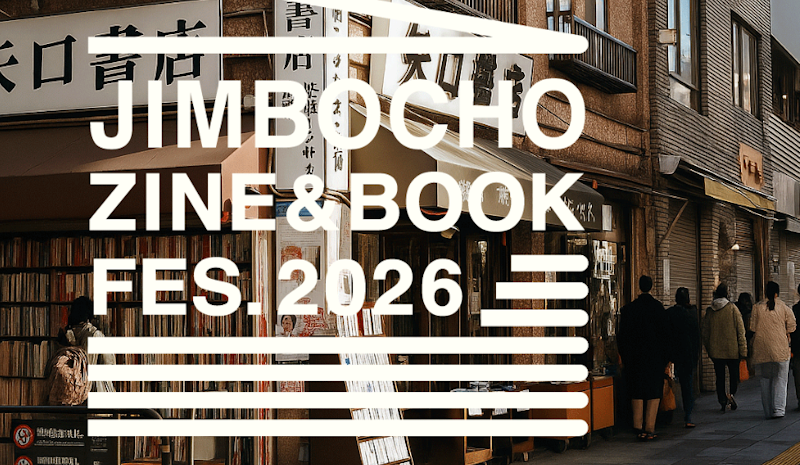
The movement really gained steam in the 2020s, spurred on by Zine-fest, a zine focused book festival similar to the Literary Flea Market, but focused specifically on zine publishing.
Zine-fest was started by Nakanishi Tsutomu, the owner of Book Culture Club, a small group of bookstores, after a student from a nearby art school gave Nakanishi a passionate pitch on the art form. In the five years since, Zine-fest has expanded from a neighborhood event to a nationwide network of zine fairs. Book Culture Club has more than 30 zine-fests scheduled around the country for 2026.
In a shrinking industry, the fertile soil of zine publishing is catching retailers’ attention. Chain bookstores are stocking shelves of zines alongside their normal magazine selection and hosting zine-focused events to harness the growing interest in the form. The famous bookstore brand Yurindo said in a statement that, “[zines] have become something we can’t ignore.”
This level of retail collaboration is rare in the history of the medium, which has traditionally been limited to independent bookstores or art spaces. It’s clear that while the major publishers are treading water, the Japanese public has an appetite for something new, and zines are here to oblige.
Question: do you like UJ's independent coverage of Japan? Our writers are supported by our members. Join Unseen Japan Insider to get bonus content every week, an ad-free website, and access to our large and growing Insider archive.We manage to keep most of our content free thanks to the generosity of our members. Join Unseen Japan Insider and you'll get access to new, exclusive UJ member content weekly, an ad-free website, and access to our large and growing Insider archive.
Why are zines big in Japan?
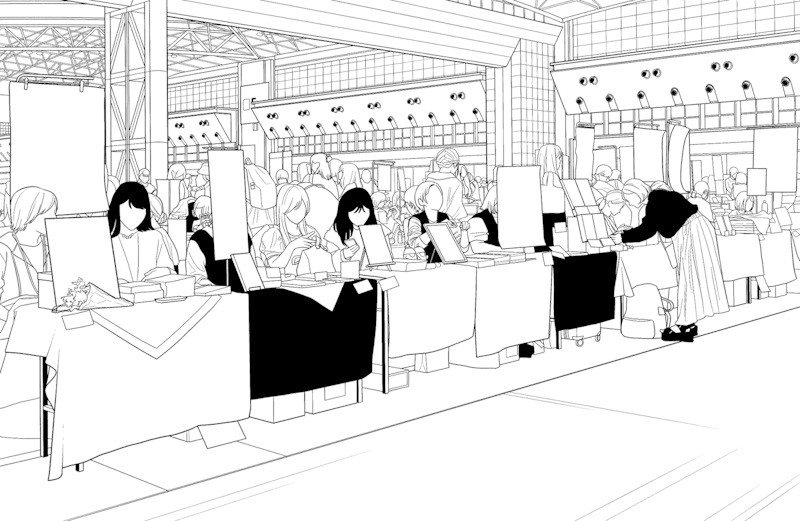
The zine boom may be new to Japan, but self-publishing isn’t.
The same Tokyo event center that hosted the Literary Flea Market also hosts the Comics Market (or Comiket), a twice-yearly, volunteer-run marketplace that regularly hosts over 200,000 visitors and 30,000 vendors. While not directly related to the zine trend, it speaks to the infrastructure and culture that exists in support of independent publishing and retail.
Comiket has its fair share of issues, but it’s also a cultural institution, running since the 1970s. Thanks to its growth across the decades, a boutique industry of printing and binding services accessible for individual creators has grown to supply the demand that Comiket provides.
For zines, this foundation of self-publishing infrastructure connects with Japan’s vibrant if struggling bookstore economy. Unlike the publishing side which is dominated by major houses, distribution is fragmented and competitive. The largest bookstore chains only account for 18% of market share, an ideal condition for a “local” product like a zine.
When the market is packed shoulder-to-shoulder with small bookstores, a shelf of zines unique to your store gives customers a reason to keep coming back. It also gives the zine’s author an opportunity to distribute their work. It’s a win-win.
It’s exactly this kind of partnership that spawned Zine-fest. These grassroots organizations put market pressure on the larger chains to provide retail space for zine creators. In this moment where traditional publishing is on the decline, a chance to grab customer attention is hard to pass up, even for the largest bookstore groups.
Digital handicraft in the AI era
While it may seem like this new zine wave has lost its countercultural roots in favor of broader participation, zines themselves are part of a new post-digital counterculture.
In a world dominated by digital platforms and their content algorithms, a self-printed, independently distributed zine offers a material experience that you know is a genuine encounter with a creator rather than a curated experience based on surveillance. Even if most of zine production is digital these days, the production and distribution systems set them apart from a deteriorating digital landscape.
At the head of that deterioration is generative AI. The technology praised for its coding prowess is causing major headaches in the publishing world. Even academic journals are being overwhelmed with AI-generated submissions; popular fiction publishing has it all the worse.
As more and more of the digital and physical publishing market is squeezed by AI, individual digital projects like zines become a new type of handicraft: a work of art crafted lovingly by the creator and delivered directly to the audience.
Looking at the growth in Japan’s zine markets, it seems that this digital backlash is gaining momentum.
Keep reading



Sources
若者に「ZINE」文化じわり。個人編集の出版物続々、大手書店には専用棚. METI Journal ONLINE
手作り小冊子「ZINE」ブーム 大型即売会活況、書店や自治体もイベント. 日本経済新聞
ZINEフェス開催日程一覧(随時更新). BOOK CULTURE CLUB (note.com)
BOOK CULTURE CLUB. Wikipedia (Japanese)
“世界で最もクールな街” 神保町で、本の「今」と「未来」に出会う。神保町展覧会「Zine & Book フェス in 神保町」. PR Times
小規模な自主出版物「ZINE」の魅力知って きょう、あす 前橋で初展示・販売イベント. 東京新聞
ZINEが買える全国のイベント(即売会)まとめ. やーはちのブログOriginal source article. TABI LABO