
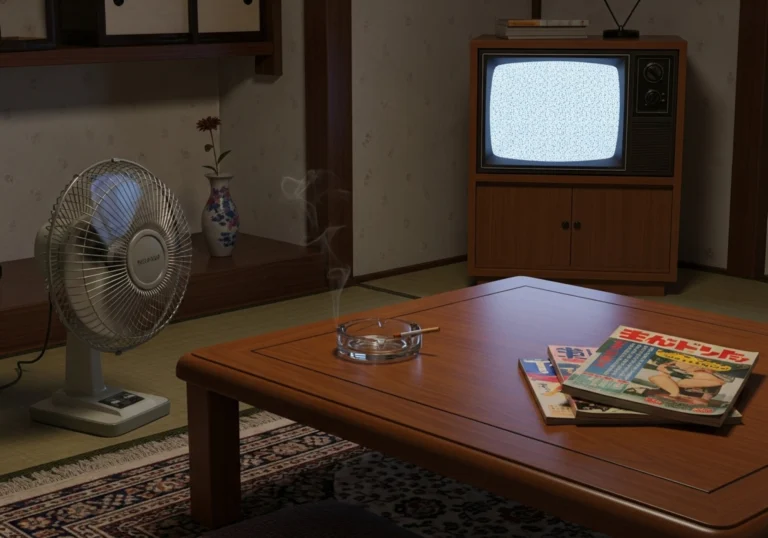
New data spells trouble for Japanese TV stations: young men and women are leaving the TV behind. Whether it’s the aging hardware or broadcast shows, young people are checking out, preferring internet-enabled hardware like smartphones and the new content creation paradigms (like YouTube channels) that come with it. This technological shift is part of a broader disconnect between the terrestrial stations, like NHK, and an audience that is rapidly moving away from their media traditions.
Internet viewing isn’t making up the difference
According to an investigation by Nikkei reporters, the 2025 Cabinet Office’s Consumer Trend Survey (内閣府 消費動向調査) found that television ownership, while relatively stable overall, had tanked among a specific demographic. Among single men under the age of 30, less than 60% owned a television, as compared to the 90% ownership for national averages.
Among single women, ownership was around 70%. While men are leading the trend, it’s clear that the move away from television is mostly generational.
This decline continues a two-decade-long pattern. Looking at historical survey data, Nikkei found a steady decline, starting at around 95% in 2005, down to the lows of today.
Unsurprisingly, this move away from TVs lines up with the rise of smartphones: the first iPhone launched in 2007. The rise of affordable PC’s is also contributing to the trend. According to a 2023 LINE survey of 50,000 respondents, computer ownership had already surpassed TV ownership among those under 30.
This could spell big trouble for a 20th-century media ecosystem built around television. While families may still find that a single large screen is useful for shared viewing, single people don’t really need the large screen in their day-to-day, when PCs offer more utility, and smartphones are more convenient.
The content draw isn’t making up the difference either. A 2022 NHK survey found that almost 30% of people in their 20’s didn’t watch any content from broadcast networks at all, including internet VODs, related YouTube content, etc.
As a reporter for Diamond Online noted, in Japan’s current media landscape, this is more than passive disinterest. It would require active avoidance. Clearly, the old tech and the old shows are falling flat for the younger generations.
Bad romance is bad news for TV viewing
Losing out on the single demographic may seem like a drop in the ocean, with TV ownership still relatively stable among couples and families, but the single demographic is also growing. Japan’s marriage rate is at an all-time low; the lifetime unmarried rate for men topped 28% in the 2020 census. This means that TV ownership is collapsing the fastest in one of the fastest-growing demographics. It’s falling only slightly slower among the symmetrically growing demographic of single women.
These dynamics highlight the way that the internet is shifting social, political, and economic relations all at the same time. Internet technologies offer entertainment options that make single life a more appealing option as economic pressures squeeze people away from traditional family formation. The growth of that single demographic pushes people away from family-oriented technologies like television, reinforcing the cultural cachet of internet content.
These mutually reinforcing trends build into long-term shifts in the fabric of society. Though TV isn’t in hot water yet, loss of audience could quickly shift bottom lines from black to red. If broadcasters and manufacturers aren’t tracking these trends, they could easily find the ground falling out under them.
Question: do you like UJ's independent coverage of Japan? Our writers are supported by our members. Join Unseen Japan Insider to get bonus content every week, an ad-free website, and access to our large and growing Insider archive.If you love what we do, help us pay our writers to do more of it by joining Insider. You'll get bonus content every week, an ad-free website, and access to our large and growing Insider archive.
Is NHK the problem?
Certainly, a large part of the trend is technological shifts: young, single Japanese people with stagnant wages and rising housing costs find that a TV is a pointless expenditure when they already have access to entertainment online.
An additional factor is the lack of a foreign market for anything outside of anime. While South Korea’s K-dramas enjoy international love, few Japanese drama or variety shows are available to watch from overseas. Japanese TV hasn’t had an overseas hit like Terrace House in years.
On top of this, the Japanese government’s particular relationship with TV stations has almost certainly exacerbated the issue.
For context, anyone who installs a TV capable of receiving terrestrial broadcasts is obligated by Japanese law to pay a monthly fee in support of the NHK, Japan’s national broadcaster. The fee is relatively small, currently 1100 yen (approx. 7 USD) per month, but signing the contract and keeping up with payments is a notoriously annoying bit of mundane bureaucracy. Compared to the convenience of online video platforms, many of which are free to use, the added hassle of NHK negotiation with a TV makes it just that little bit more unappealing in the modern entertainment market.
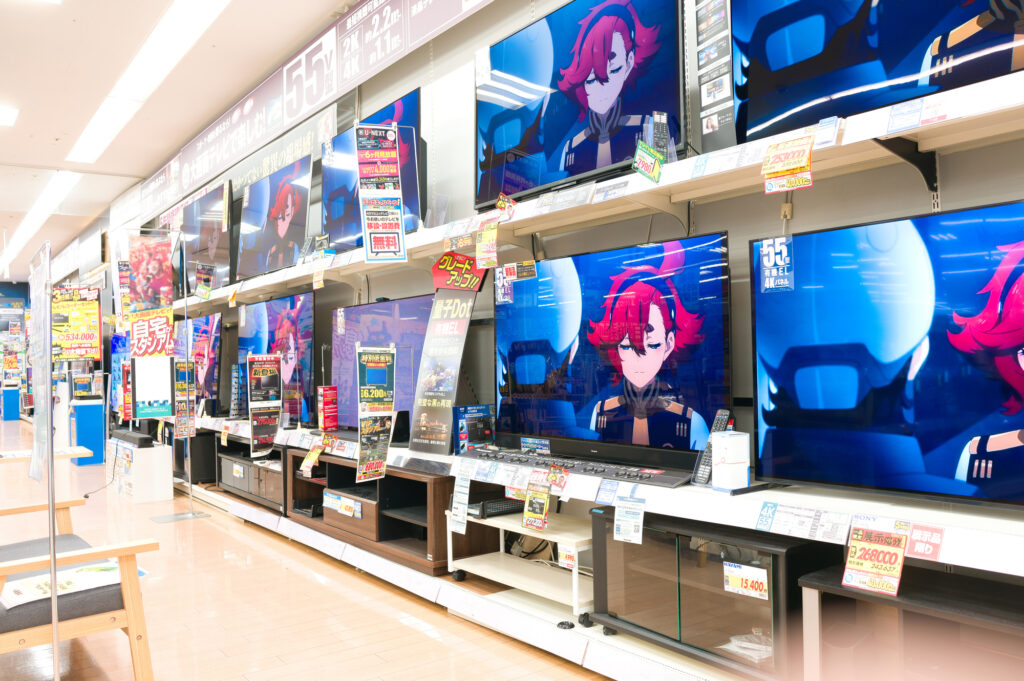
The impact of the NHK fee can even be seen within the TV market, with more and more stores offering “tunerless” TVs: screens that exclusively broadcast from digital inputs, and so can’t receive the NHK’s broadcast, thereby avoiding the need for a monthly contract. Tunerless TVs are still a small corner of the TV market, but they have garnered newfound attention in the past few years, visible in a sharp rise in the Google search volume for “tunerless TVs.”
Unfortunately, this isn’t as effective a tactic as it used to be. NHK has recently made moves to begin collecting an “Internet only” version of the fee.
All this is to say, for most young adults, TVs come with an extra layer of bureaucratic bother thanks to NHK policy from nearly a century ago. For most people, this is just an extra benefit to not buying a TV, but even for those who do buy a TV, avoiding these compulsory contracts and fees is a part of their purchasing decision.
Is there hope for Japanese TV?
Though there is clear room for future concern, Japanese TV stations don’t need to panic just yet. Connected TV penetration is already significant, exceeding 70% in the Kanto region. While singles are moving away from TVs as a technology, there’s still plenty of room for large screens in general. A laptop may suffice if you’re living alone, but if people want to watch things together, computers make for a less inviting experience.
However, if broadcasters want to stay afloat in the new era, they clearly need to get onto the internet. One television station insider highlighted this necessary transition, revealing that internal numbers show a 7:3 ratio of traditional broadcast viewers to internet viewers. With TV ownership in decline and online devices on the rise, it’s hard to imagine this ratio will trend back towards TV.
As such, broadcasters need to find a way to build online audiences lest their advertising business model collapse. While this may be a blow to television’s historic dominance, it seems unlikely that either the hardware or broadcast business models will completely disappear. What seems certain is that the relationship of future generations to television will look vastly different from the political and cultural hegemony it held in the 20th century.
Keep reading




Sources
若い単身男性、4割が「テレビ持たず」 スマホ・タブレットで代替 日本経済新聞
20代の3割が「テレビ見ない」現実…そして静かに広がる「究極のテレビ離れ」とは Diamond Online
一周まわってテレビ? 変化する映像視聴のマクロ環境 【奥律哉の広告とメディアのミライ】② 民放online
「テレビ」の保有率は全体で9割、『単身世帯』の10代・20代では「パソコン」が「テレビ」の保有率を上回る結果に LINEリサーチ(PR TIMES)
若年層のテレビ離れが深刻に・・・10~20代の約半数が視聴せず NHK「国民生活時間調査」 Media Innovation
ドルキで「テレビ」が売れ筋に NHK受信料問題で”離れる”選択肢?テレビメーカーも異例の対応 ITmedia ビジネスオンライン
統計表一覧:消費動向調査(主要耐久消費財等の普及・保有状況) 内閣府 経済社会総合研究所
ドンキ「NHK受信料不要のテレビ」、なぜ中年に人気? 最新の売れ行きを開発者が分析 ITmedia ビジネスオンライン