
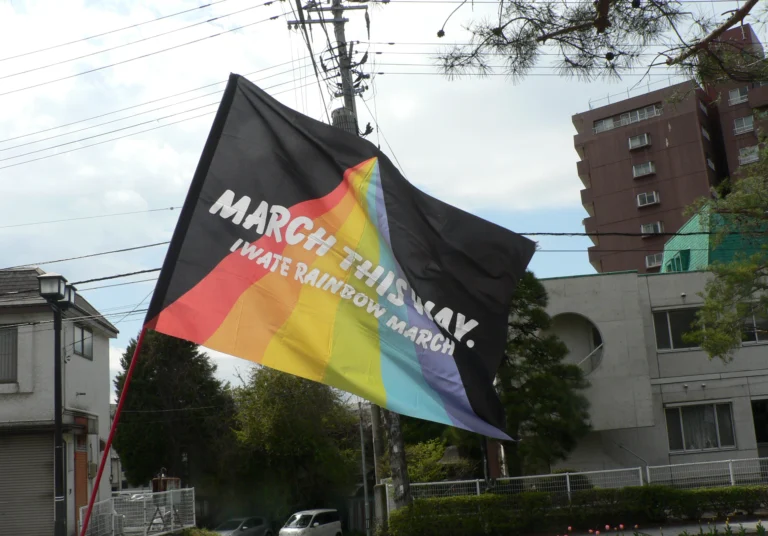
Iwate Prefecture, in Japan’s northern Tohoku region, is quintessential rural Japan. With its endless expanses of mountains and rice fields, Japan’s second-largest prefecture happens to also be its second-least densely populated. It’s home to breathtaking landscapes, historic sites, and a colorful yearly pride parade that seeks to raise visibility and awareness for LGBTQ+ people.
As part of my passion for covering pride parades across Japan, I travelled to Morioka City this spring for the Iwate Rainbow March. First held in 2018, it became the Tohoku region’s second pride parade, after the Aomori Rainbow Parade debuted in 2014.
Eight years later, the event continues to draw in people from various places throughout Iwate and Tohoku, as well as some from further away. At the parade, participants told me why they decided to join.
A prideful trek
While the first edition took place as planned in 2018, the 2019 edition of the Iwate Rainbow March had to be cancelled due to a typhoon. The 2020 edition had to be postponed, and the 2021 edition was held online, both due to the COVID-19 pandemic. Since then, the Iwate Rainbow March has been held in person, yearly, from 2022 to now.
Compared to previous editions, this year’s Iwate Rainbow March took place earlier into the spring season. Cherry blossoms could consequently still be seen all around Morioka, especially in the Morioka Castle Ruins Park, where organizers and attendees gathered for the event, while others participated in the city’s local cherry blossom festival.
A parade “to empower myself”
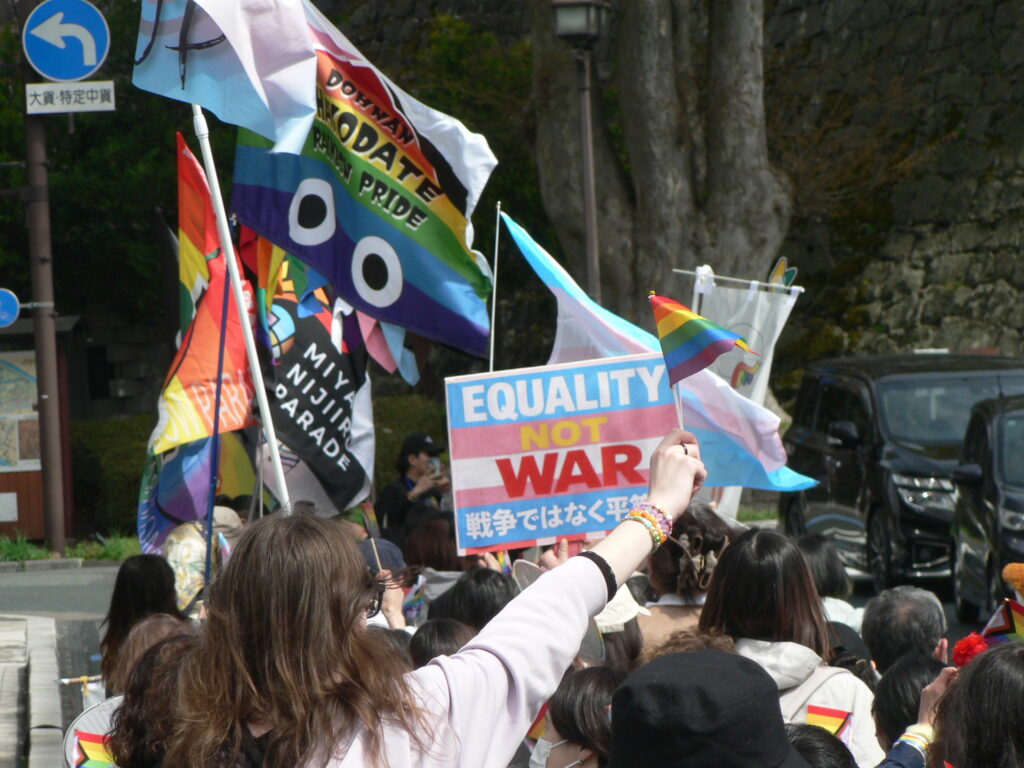
For Kasajima (29), Makochi (21), and Haru (21), today is neither their first pride parade nor their first Iwate Rainbow March. With them, they carry a unique flag that manages to stand out even among the many other colorful flags, thanks to its eleven appendages in the colors of the Progress Pride Flag, and a pair of big round eyes, which allow it to resemble a squid.
The three are members of the organization Dohnan Hakodate Rainbow Pride, which was launched on January 1, 2026. Based in Hakodate, a major port city in Southern Hokkaido, the primarily LGBTQ+-led organization seeks to work towards a society that is free from discrimination, and where everyone can live comfortably.
When I ask what brings them here from up north, Kasajima answers first: “First of all, I think it is important to take part in LGBTQ+ events in various regions, to show solidarity, and link up with each other. But I am also here because I love parades and walking with everyone. I always look forward to it. This is my third time participating in the Iwate Rainbow March.”
Makochi: “This year is my second time walking in the parade in Morioka. I hope to spread the word about Hakodate’s first-ever pride parade, which will take place later this year, and to stand in solidarity with the people here in Tohoku. Walking around Morioka, I’ve grown really fond of this city. I’d like to grow fond of many places in this manner.”
Haru: “Like those two, one reason I’m here is because it’s enjoyable. But another reason is that, well… my friends from back in Aomori, where I’m originally from, tend to react with an ‘oh, you’re involved in that kind of stuff?’ attitude towards social activism like this. It’s to the point where it almost feels like they’re making fun of me. It makes me lose confidence and feel a bit down.
“But when I’m here, I can sense there are many like-minded people. I think that might be another big reason I come to parades like this. To empower myself. I am incredibly grateful to be able to participate in Iwate’s parade for the second time.”
A former city councillor
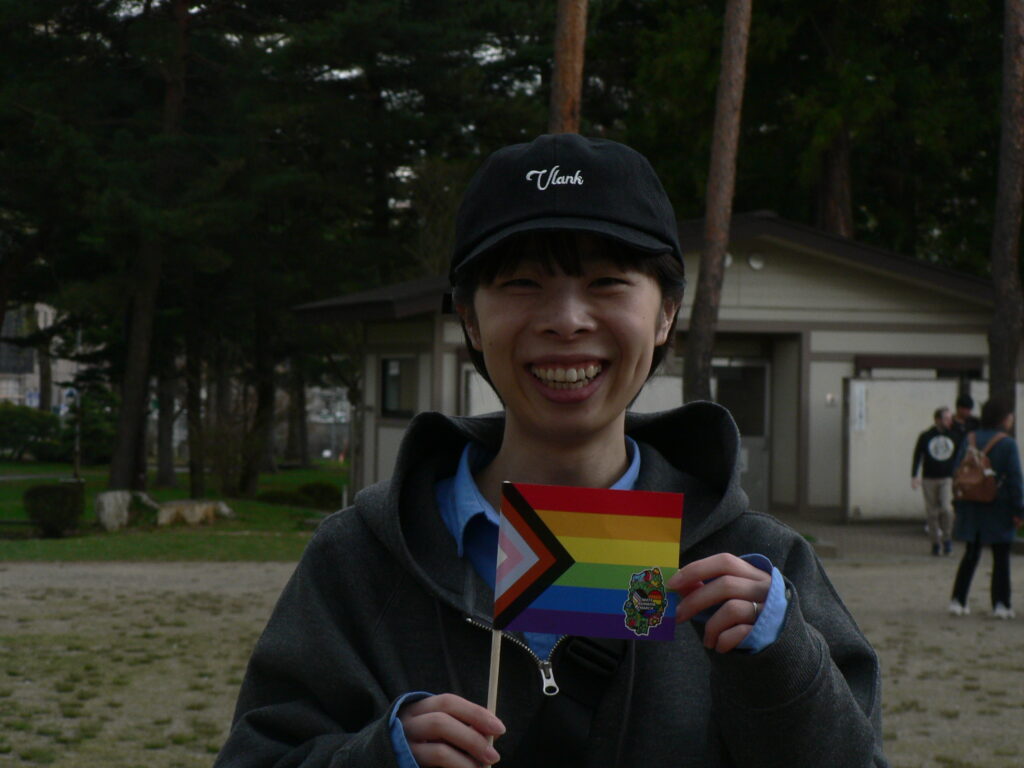
Katō Mai (31) is a regular at the event, who has played an important role in advancing LGBTQ+ rights and understanding in Morioka City and Iwate Prefecture. In 2018, she founded Iwate Rainbow March and while she is no longer involved as a staff member, she has attended each and every edition.
In August 2019, Katō stood as a candidate in Morioka City’s municipal assembly election. She did so mere weeks after turning 25, which is the minimum age to be a candidate. Despite, or perhaps partly owing to, her young age, she won a seat while receiving the second-most votes out of all 44 candidates. During her four years as assembly member, she managed to get the city to introduce a “partnership system”, and, with her partner, became the city’s first couple to register their relationship through this policy.
Katō chose not to run for re-election in 2023, but remains committed to creating a society where LGBTQ+ people can live at ease. She tells me that while some things have certainly improved in Iwate and the Tohoku region in the 8 years since she founded Iwate Rainbow March, there is still plenty of social change left to be made.
“Looking at society at large, there’s the fact that same-sex marriage hasn’t been realized yet. But also, so much prejudice and discrimination towards transgender people, which needs to be tackled through education and spreading information.”
Question: do you like UJ's independent coverage of Japan? Our writers are supported by our members. Join Unseen Japan Insider to get bonus content every week, an ad-free website, and access to our large and growing Insider archive.If you love UJ's independent coverage of Japan, join Unseen Japan Insider to get content every week, an ad-free website, and access to our large and growing Insider archive.
First pride
As a colorful crowd in the corner of the park’s event square gradually starts to form in the early afternoon, a small amount of rain drizzles down, only to quickly dissipate again before the parade’s official opening. (In his article on the event for glad xx, Gotō Junichi comments that it is apparently common for rain to stop just before the start of parades in Japan, and he refers to it as a sign of good luck.)
Although the rain does not produce any rainbows, it provides a perfect excuse for one attendee to bring out her rainbow-colored umbrella. Asked whether today is her first pride parade, 38-year-old Chris Takisawa, who has been living in Japan for over sixteen years, responds with a big smile.
“It actually is! In my entire life, I have always lived away from where the pride parades were. This is my first one, so I am super excited! I have always wanted to be a part of it. I have donated, I have watched online. So it is such a treat to finally be able to actually be here today.”
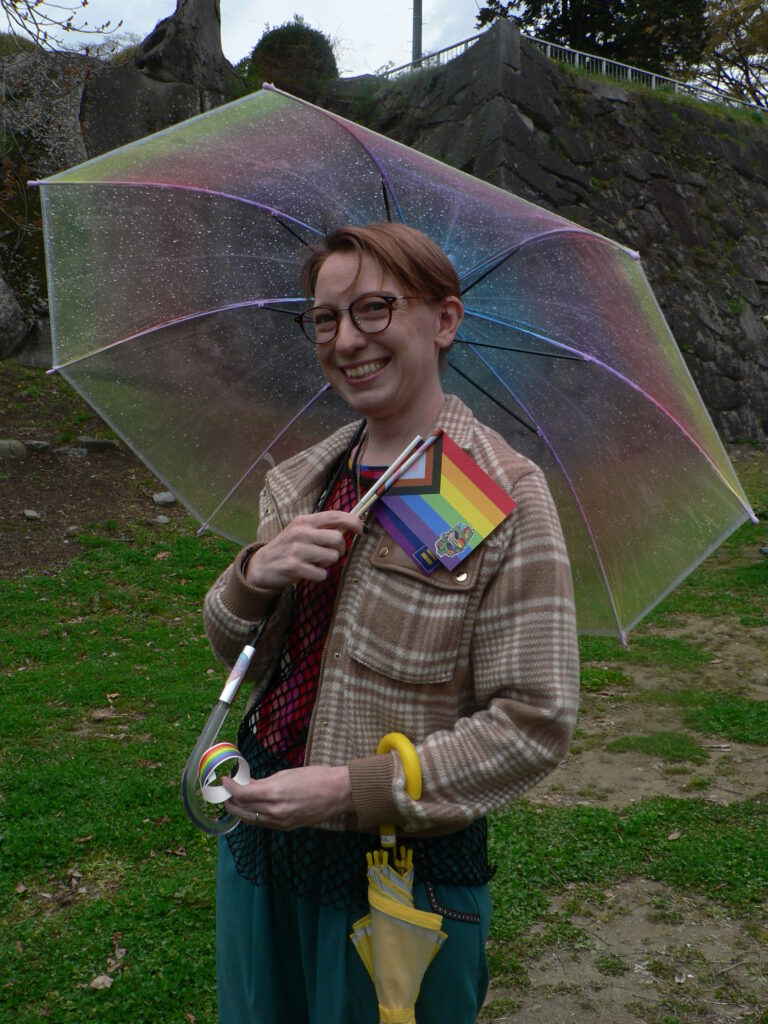
Takisawa continues: “I am bi and genderqueer, so in that respect I am here as part of the community. But also, as a teacher, I want to provide representation for students who may need it. For a long time, I was in the closet, so I couldn’t be that representation. But now I can, and I hope that if they see me in the news they know they can talk to me.”
Opening statements
As registration for the parade draws to an end, it becomes time for its official opening. Rei, a representative of Iwate Rainbow March, greets the crowd and speaks of wanting to walk with those in mind who could not make it to today’s event, before revealing this year’s slogan: “わたしはわたし 沈黙を破り、声をあげよう” (I am who I am, let’s break the silence and raise our voices).
This is followed not much later by brief introductions and speeches from various other groups participating in this year’s Iwate Rainbow March with their own flags:
- Deaf LGBT Tohoku
- Miyagi Nijiiro Parade
- Aomori Rainbow Parade
- Akita Pride March
- Transgender Japan
- Dohnan Hakodate Rainbow Pride
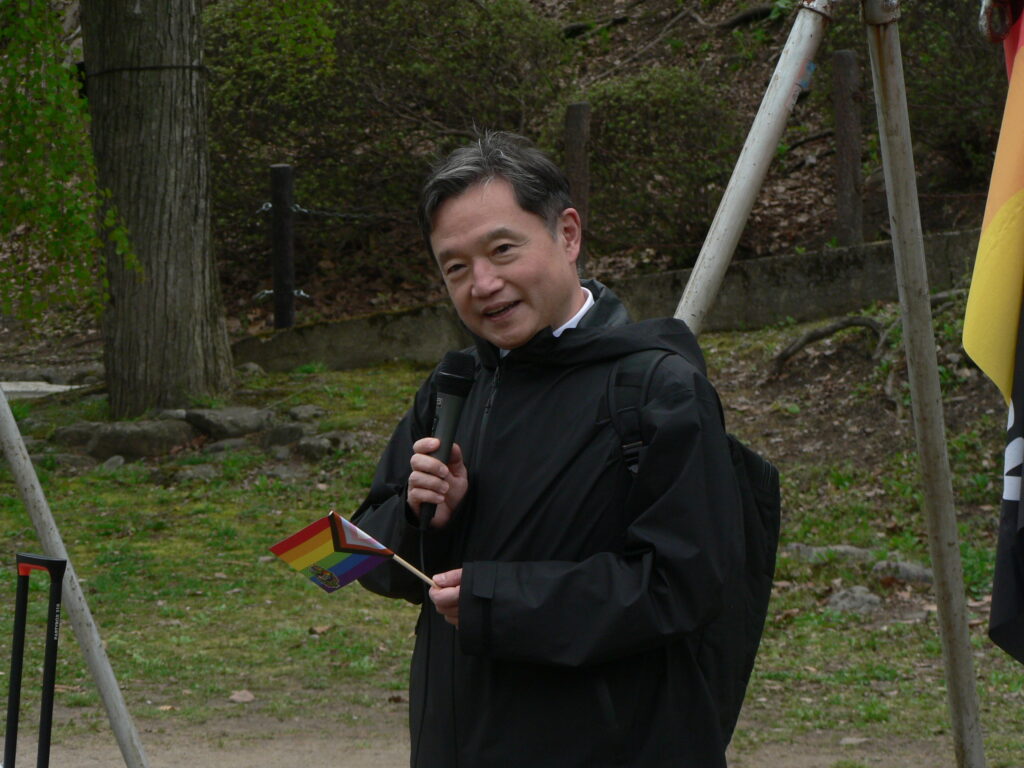
Afterwards, Morioka City Mayor Uchidate Shigeru, a small rainbow flag in his hand, also delivers a brief speech in which he speaks of his dream for Morioka to become a place where anyone, regardless of age, gender, disability, or other aspects of who they are, can live easily.
A successful parade
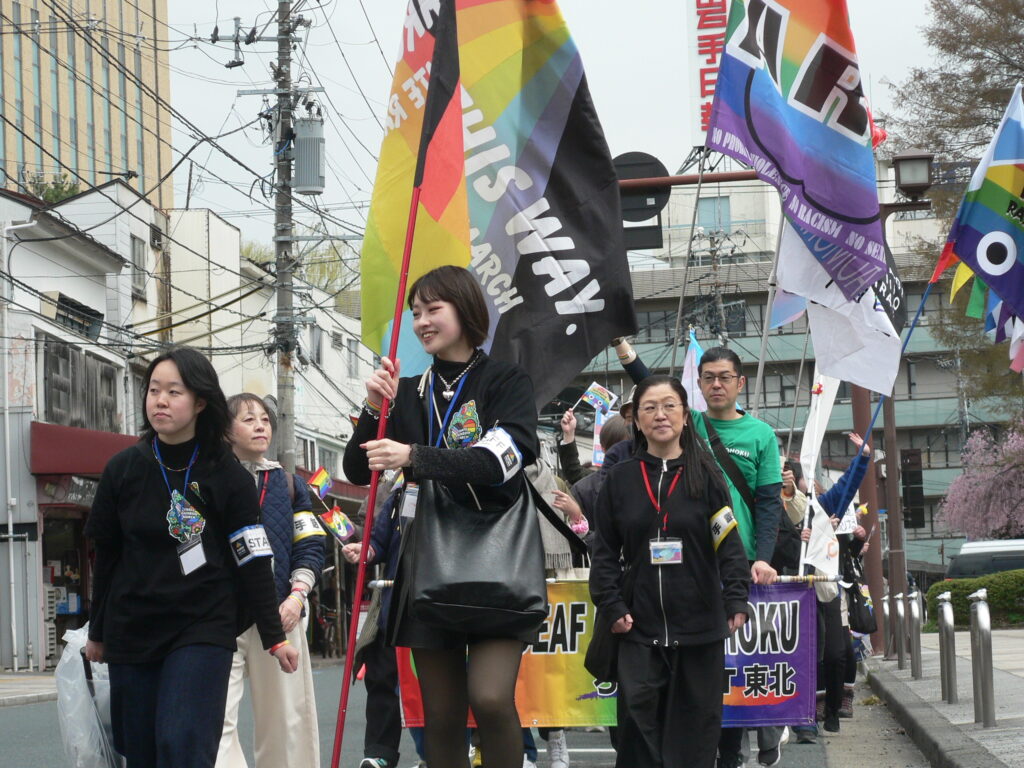
At 1PM, the parade starts. With representatives of Iwate Rainbow March and the various other pride organizations at the front, the procession makes its way through the city streets of Morioka.
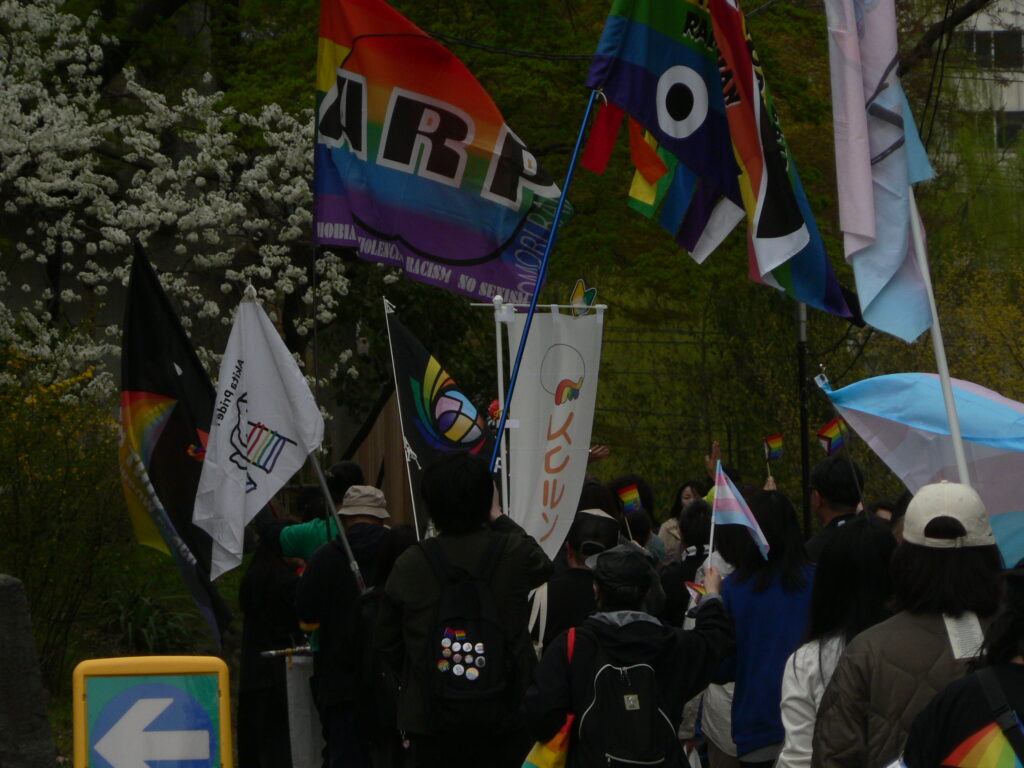
A speaker on wheels, dragged around much like a suitcase, plays music and messages. The smiles and friendly hand- and flag-waving from the marchers are often reciprocated by people along the route, and, as time passes, the cloudy skies make way for the sun.
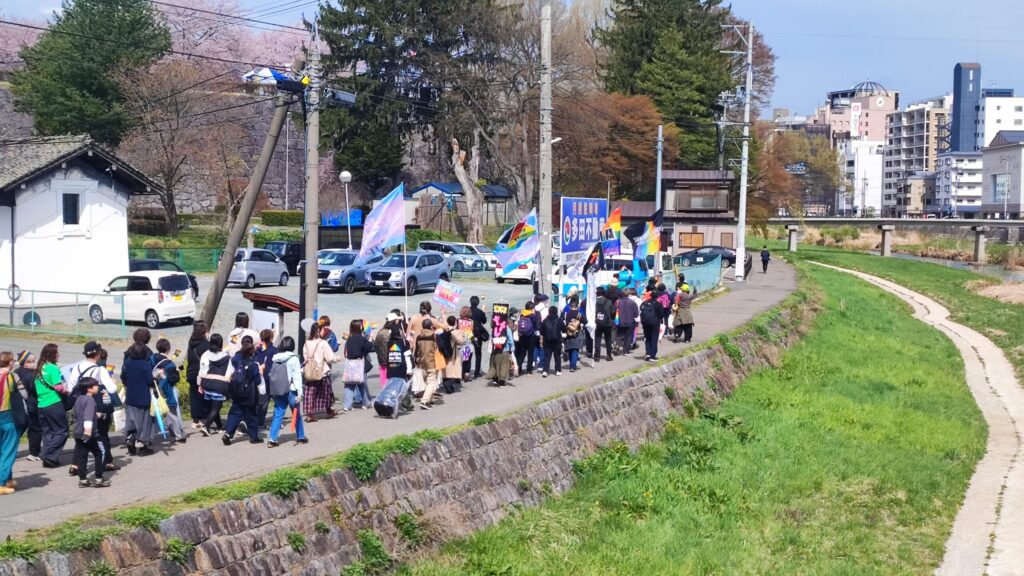
After about an hour of walking, the parade gracefully comes to an end at the same park where it started. Group photos are taken, and heartfelt closing statements delivered. Rather than dispersing immediately, many people choose to stick around afterwards to greet old friends or talk some more with friends they made along the way.
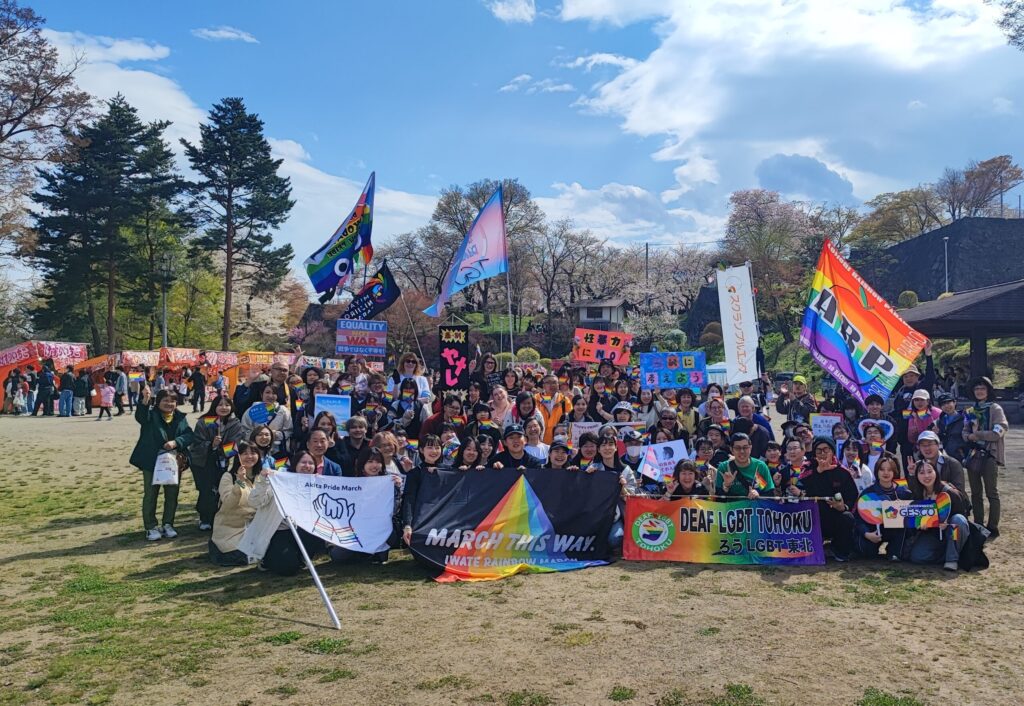
In total, 120 people participated in this year’s Iwate Rainbow March. Ritsu, one of the organization’s representatives, tells me they’re happy with how the event turned out.
“Due to the timing this year, we were worried there would be fewer people, as many might be busy, so soon after the start of the fiscal year. But in the end, turnout remained similar. And thanks to the event coinciding with the cherry blossom festival we may have even been able to appeal to many people who normally pay little attention to LGBTQ+ issues.”
Keep reading


Sources
【同性パートナーシップ証明制度】盛岡市の第1号は加藤市議、長野県が8月1日から、近江八幡市が7月1日から導入. PRIDE JAPAN