
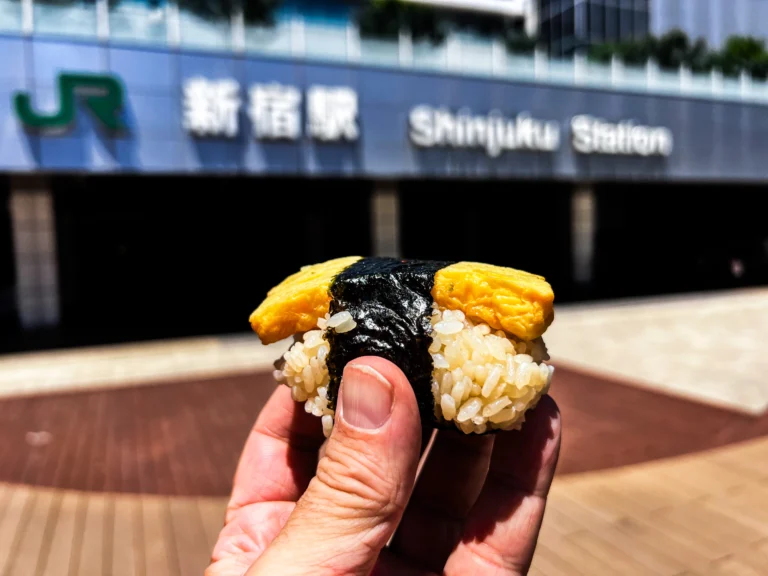
I always tell people that sushi in Japan hits different. You can go to some hole-in-the-wall spot and get fresh cuts and well-prepared bites for cheap that beat the stuffing out of most offerings in the states that cost three times as much. Heck, even the supermarket sushi here isn’t half bad.
Most nigiri sushi these days is served in a set modern style. However, some stores still do so-called Edomae sushi, the predecessor of modern sushi that was popular around Tokyo Bay in the Edo Era. Most of these restaurants are upscale and will charge you an arm and a leg for the experience.
So it’s no surprise social media got excited when a user alerted everyone that you could get Edomae sushi for dirt cheap at Shinjuku Station.
Good sushi at the world’s busiest train station? This I had to see for myself.
What is Edomae sushi?
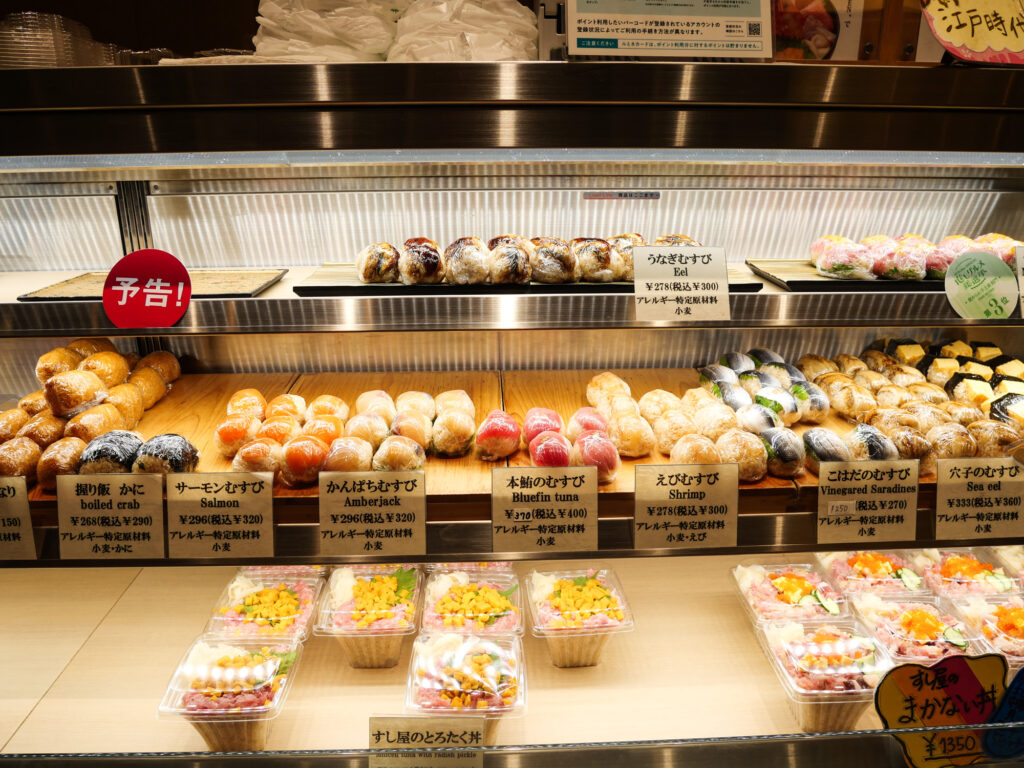
Edomae (“Edo-style”) sushi is made, not from raw fish, but from fish that’s been prepared, such as being cured, marinated, or pickled. Eel cured in salt and shrimp cured in soy sauce are some examples of what you can expect from Edomae sushi.
According to the Morisada Mankō, an Edo-era encyclopedia of daily life, other typical toppings included 玉子焼き (tamagoyaki, egg), 白魚 (shirauo, whitebait), マグロ刺身 (maguro sashimi, tuna), コハダ (kohada, gizzard shad), and 穴子甘煮 (sweet-simmered conger eel). Contrary to today when fatty tuna is prized as a high-end ingredient, in Edo it was dismissed as 下魚 – gezakana, or low-grade fish. (It spoiled too quickly back then and was too oily for the Edo palette.)
Like the sushi of today, this was commonly served nigiri style. Unlike today, the rice was often made with red vinegar, giving it a reddish tint. It was cheap, too: pieces generally cost around 8 mon, or about 100 yen ($0.63) in today’s terms. Since egg was still a luxury ingredient, tamagoyaki went for about double that price.
No one quite knows when Edomae sushi started. What’s clear is that fishmongers began selling the prepared fish as a way to get rid of their excess supply. Curing, boiling or otherwise preparing the fish meant it could last longer in the days before ready access to refrigeration. Edomae sushi soon became a popular street food sold out of yatai (street stands) around town, eaten mostly as a snack.
Was Edomae sushi REALLY that big?
If there’s one thing everyone agrees on, it’s that Edomae sushi was big.
Okay, well…not everyone agrees.
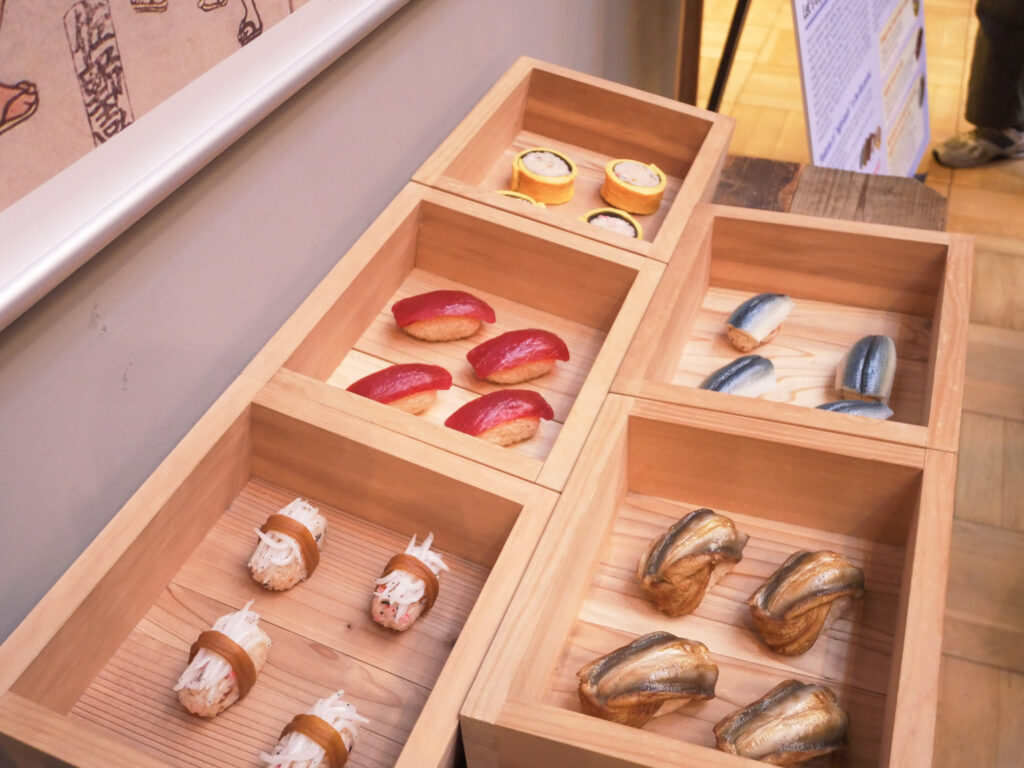
On sites run by Mizkan (a large Japanese maker of rice vinegar, a key component of sushi rice), it’s commonly held that Edomae sushi was almost fist-sized, a chonky slab of fish sitting on top of a bed of rice. By many accounts, it was two to three times larger than the sushi we enjoy today.
But not everyone thinks so. At least one Internet self-proclaimed scholar used ukiyo-e prints from the time to argue that Edomae sushi was reasonably sized and that it only got bigger during the Meiji era, after the downfall of the shogunate.
This, however, seems to be a minority opinion. Visitors to the Fukagawa Edo Museum in Kiyosumi, for example, will find a display of recreated plastic Edomae sushi where each bite amply occupies the palm of your hand. The Tokyo Central Library also cites numerous contemporary accounts that back up the contention it was 2-3x larger than modern sushi.
The Edomae sushi tweet that launched a thousand trips on the Yamanote
We will probably never be able to recreate the exact taste and texture and Edomae sushi. That doesn’t stop people from trying. The style remains popular among both sushi and history aficionados.
Just how popular is demonstrated by a recent X post from user @aramotokei, who alerted everyone that Edomae sushi bites can be had at an unlikely place: Shinjuku Station, one of the world’s busiest (and most confusing) transit points.
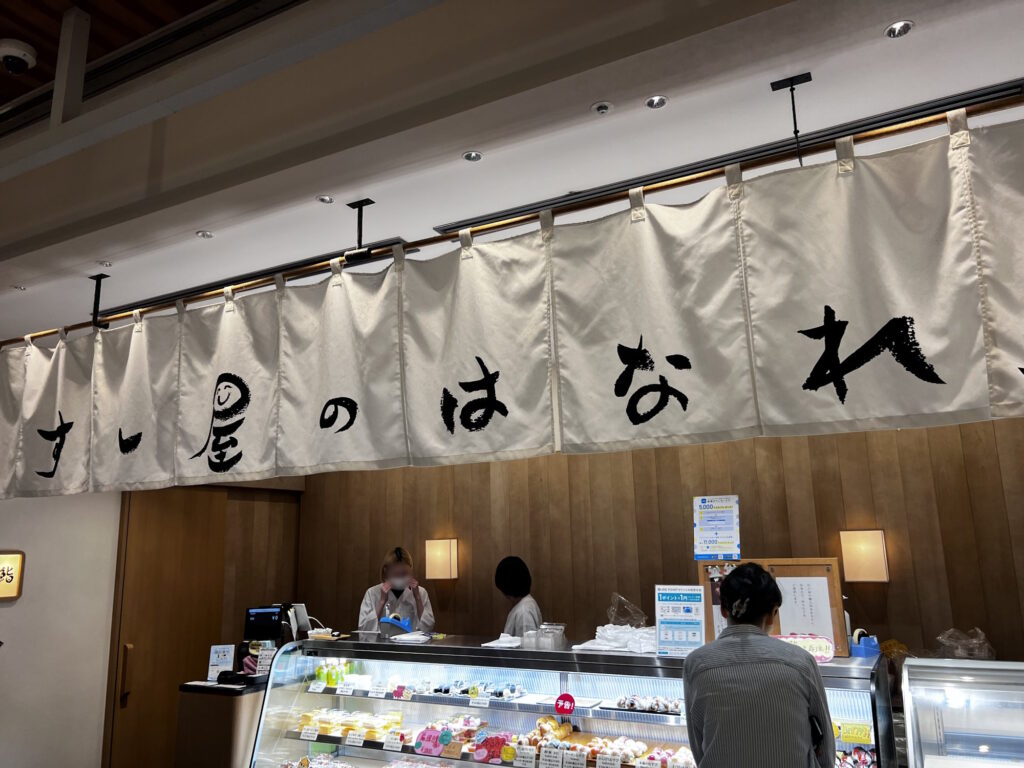
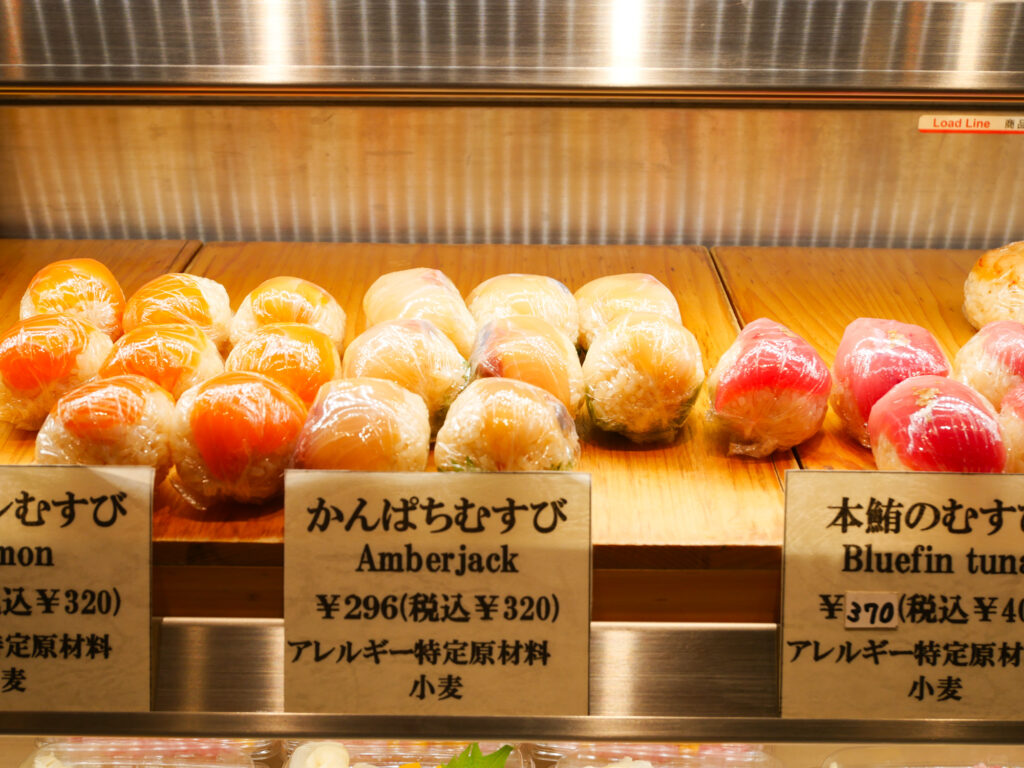
The small shop, Hanare, is the work of the SUSHITOKYOTEN brand. It’s a takeout stand (no eat-in seats available) inside of the station in NEWoMan’s Ekinaka (“inside the station”) area on the 1st floor. That means you have to either be in the JR station to access it (e.g., coming in on the Yamanote or another JR line) or you have to swipe yourself in specifically to eat there. (It IS possible to swipe in, get sushi, and swipe out and leave without an issue. I did it, so don’t hesitate!)
Some of the items can be pricey. However, the core Edomae sushi selection is dirt cheap, even by modern standards. Most pieces cost around 320 yen ($1.90), tax included. That means you can get four or five honkin’ pieces for less than $10. In an age of rising costs and prices, it’s nice to be able to get, not only Edo taste, but Edo value.
Giving $10 Edomae sushi a taste
Not one to miss out on cheap Edo-era eats, I hopped on my bike and rode from Minato City to Shinjuku Station. Yes, riding the Yamanote would have been way easier, but it was a gorgeous day and I’d already been inside for most of the week.
After parking in a nearby bicycle garage, I walked over to NEWoMan and swiped myself into the JR gate to access the Ekinaka (エキナカ) area. (Note: There is an Ekisoto [駅外] eating area outside the station as well; don’t get it twisted.) Hanare was tucked off into a small corner to the right of the gate, hidden out of sight. はなれ, hanare, means “detached” or “set apart,” so the store’s living up to its name.
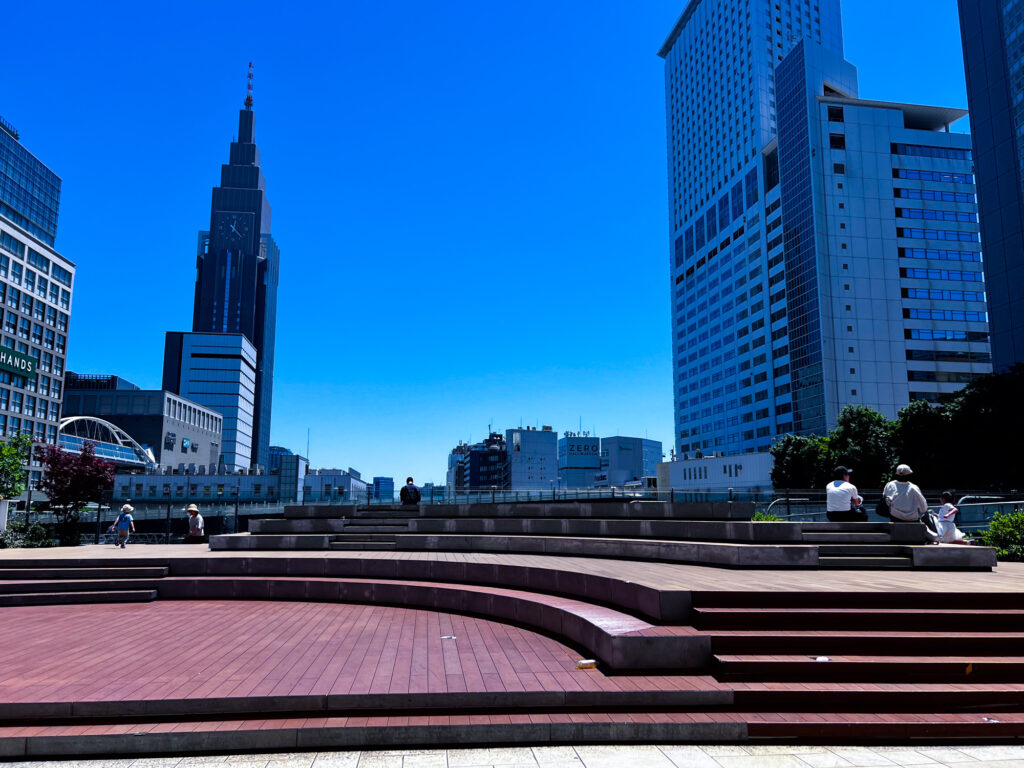
There’s nowhere inside the station to sit. (There’s some seating, but it’s reserved for patrons of other stores.) So I swiped out of the station and sat in a public seating area that overlooks the train tracks.
Most of the pieces had seasoning already applied (as is the nature of Edomae sushi). I believe only the tuna didn’t have seasoning, so they gave me soy sauce and wasabi to apply.
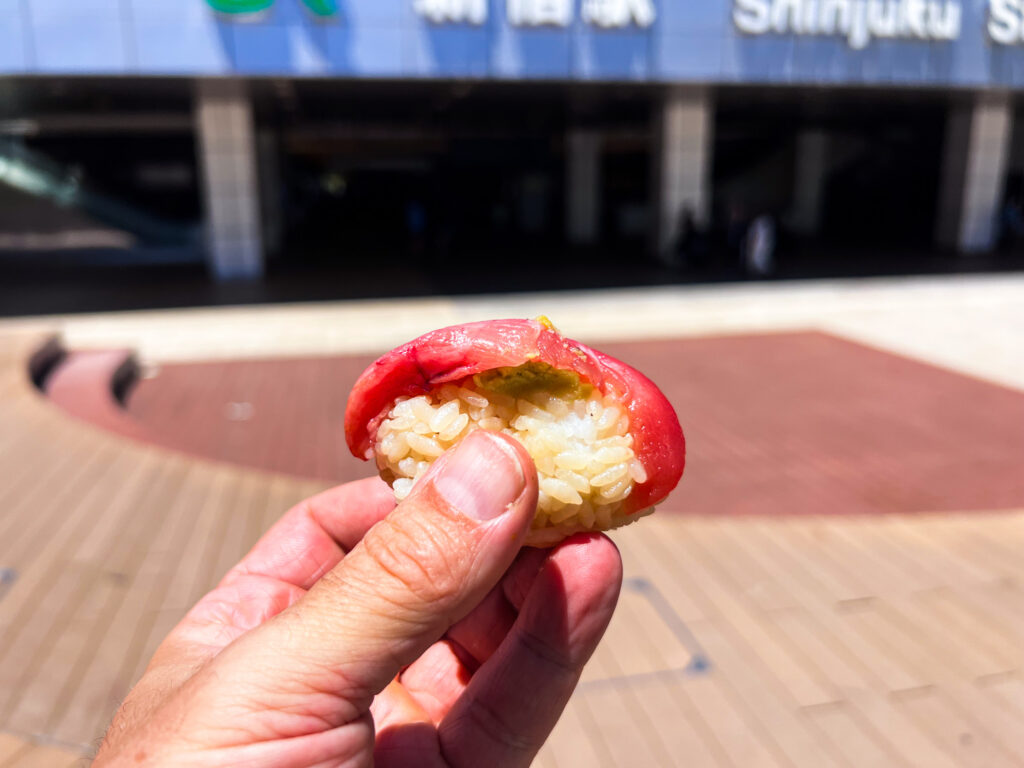
I’m not gonna act like this was gourmet sushi. For me, it was a little on the plain side. The curing was notable but not overwhelming. The cuts of fish were solid but I wouldn’t categorize them as spectacular. (That said, I’ve paid a lot more for a lot worse in the states. Again, that’s the benefit of eating a fish dish on the island nation that created it.)
But it was good for what I paid for it. In the end, it’s train station sushi.
A big plus: it was extremely filling. I ordered five pieces and ended up taking one home with me. All in all, I’d dub Hanare a good place to fill up on inexpensive sushi, especially if you’re busy and don’t have time for a sit-down lunch or dinner.
Other Edomae sushi around Tokyo, from the cheap to the gourmet
Hanare isn’t the only place in town you can get Edomae sushi. If you want something a little more fancy than a train station, locations such as Fukuju in Ikebukuro or Sushiya Ono in Ebisu offer high-end Edomae sushi in the 10K/person price range. Additionally, if you want to see what else SUSHITOKYOTEN has to offer, you can book a table at the NEWoMan location or one of its other four locations around Tokyo.
Not willing to drop that much on a meal? Check out Aoyama Sakana at Jingū-mae in Shibuya or Ryōgoku in Minato’s Shirokane.
We here at Unseen Japan Tours also know some fabulous sushi spots – ones that most tourists overlook. Let us make reservations for you as part of your larger, custom-designed Japan travel itinerary. Talk with us today→
Keep reading

Sources
これはお寿司?おにぎり?再現された江戸時代の屋台寿司を喰らう note (ハスつか)
寿司は江戸の昔からお手軽ファストフードだった:『守貞漫稿』(その3) nippon.com
すしの歴史(4) 江戸の握り寿司文化と華屋与兵衛 ミツカン すしラボ
初期の握り寿司は大きくなかった note (mitimasu)
江戸時代の東京から始まった寿司屋の歴史 ホームメイト・クックドア
江戸時代グルメ雑学(1)「握り寿司」は江戸っ子が生んだファストフード Japaaan
すし屋のはなれ、(フロアガイド) ニュウマン新宿 NEWoMan