
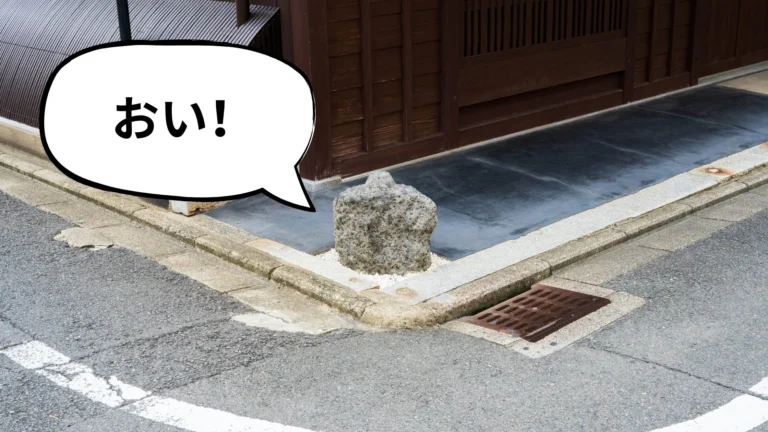
A recent popular social media post highlighted what the user views as an “erotic” word specific to Kyoto. But locals view ikezu as anything but sexy. The local word for “spiteful,” whose origins appear lost to time, is still regarded by most locals with a sense of fear and dread.
Some locals, however, argue that ikezu gets a bad rap. The most vivid example is a stone that, for visitors to the Kansai region, has become a symbol of local hostility. Some locals, however, insist that the rock isn’t rude at all. And evidence shows it’s not.
Kyoto’s so-called “culture of rudeness”
Ikezu, meaning spitefulness or unkindness, is a nifty piece of Kyoto slang that’s come to be identified with the region. Japan lore has it that the Kyoto region is notably unkind to outsiders, resulting in a so-called “ikezu culture,” or “culture of unkindness,” in which residents hide rudeness behind seemingly polite, everyday phrases.
The most popular example is the question “How about some bubuzuke [chazuke]?” at a restaurant. Since chazuke is served at the end of a meal, this question is often interpreted as the shop proprietor saying, “Get the hell out.”
Some locals dispute this. The bubuzuke bit traces back to a rakugo (Japanese traditional comedy performance) act. Residents insist they’ve never seen a shop actually do this, and insist it would run contrary to the hospitality on which most Kyotoites pride themselves.
Others, however, celebrate Kyoto’s nasty reputation, such as a shop that challenged visitors at a special event to read the “true intentions” of the proprietress. (One group that visited got kicked out in 20 seconds.)
The user, @sansan_kiken on X, posted another hot take on ikezu, though: “Isn’t ikezu a pretty dirty word, plus it means ‘spiteful,’ glad I was born Japanese.”
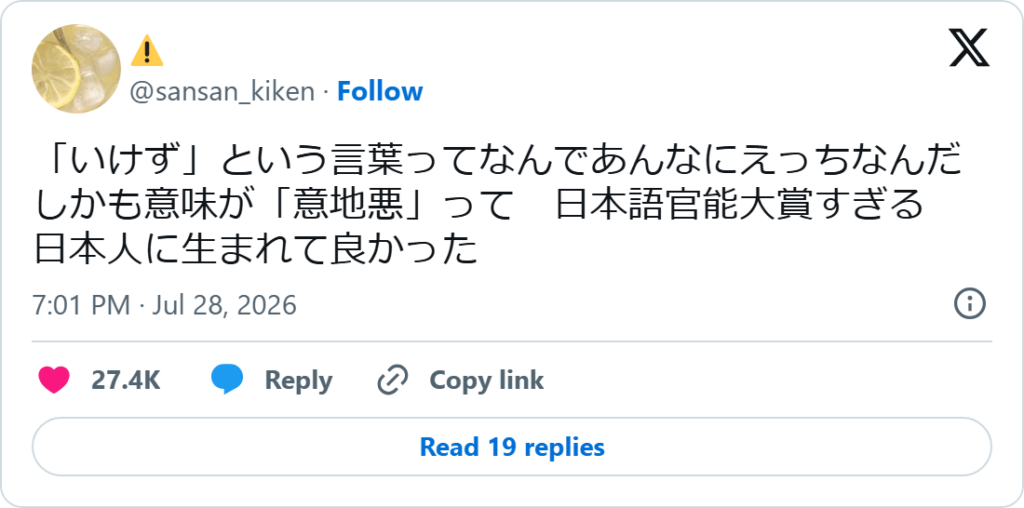
Many in the sparse comments (the user limited comments, probably fearing a backlash) and quote retweets didn’t agree with her.
“It’s a word for describing insidious Kyoto people,” one scoffed, “Only Kanto people [people from the region around Tokyo] think like this,” another wrote.
“It’s so completely a Kyoto word that I can only find it genuinely frightening,” wrote another.
So where did this image of ikezu as sexy or playful come from? Some say you can blame Chibi Maruko-chan (ちびまる子ちゃん). 「うーん、いけずぅ」is the popular children’s anime character’s catchphrase. You can even buy a Nendroid of her saying it as she makes her “ikezu face.”
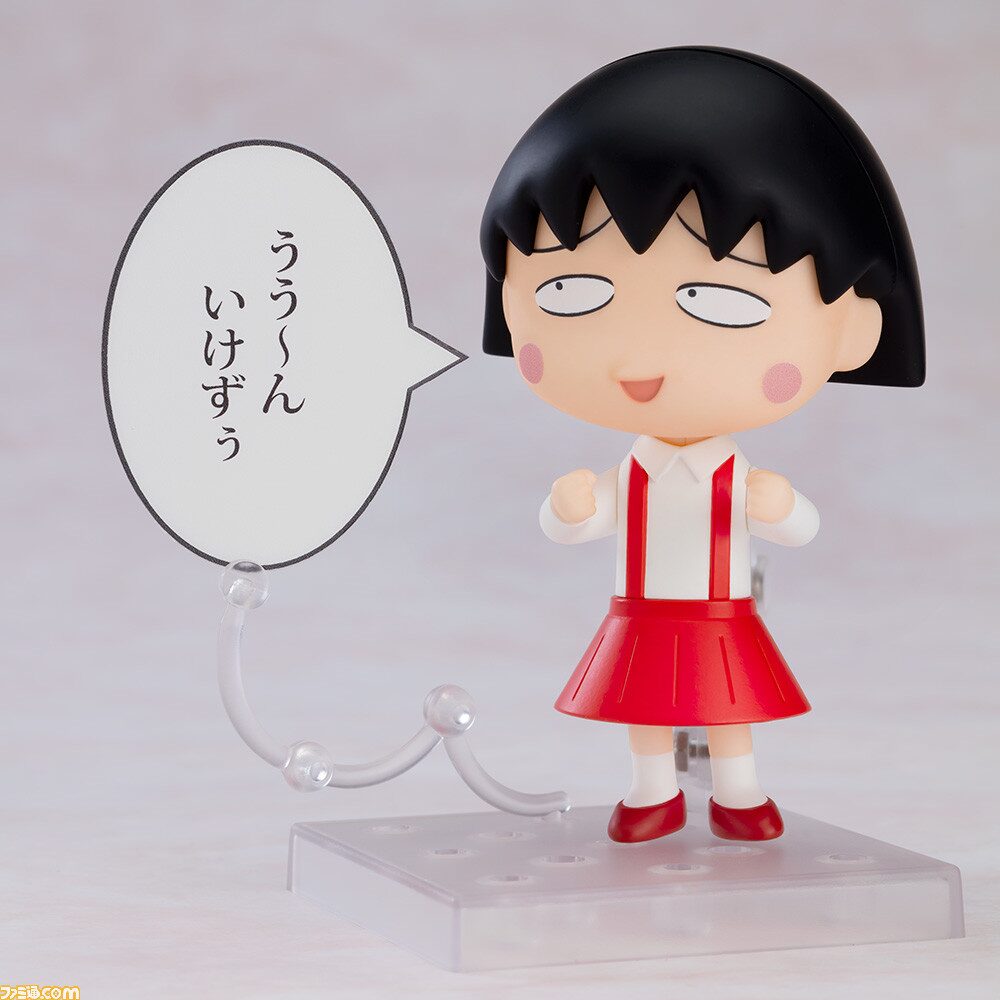
The character (who is not from Kyoto’s Kansai region) helped popularize it nationwide as a coquettish phrase. In Kyoto, however, it remains frightening.
There are exceptions, however. One user on the original thread writes: “Ultimately, it’s only fun if a Kyoto beauty’s saying it. If some middle-aged guy said it, it’s just harassment. Ninety percent of the effect is the face.”
A word whose origins are lost to time
This raises a good question: where did ikezu come from?
Unlike other popular slang expressions, such as yabai and egui, the answer to this one is: no one knows.
The first use of ikezu comes from the jokebook 『軽口ひやう金房』 (Karukuchi Hyōkinbō), published between 1688 and 1704, in the sense of “mean-spirited.” It also contains another connotation of “villain,” which first appears in the puppet play 『夏祭浪花鑑』 (Natsumatsuri Naniwa Kagami).
ike in itself is an established prefix for things that are unfavorable, adding a sense of scorn or contempt to words. The words いけずうずうしい (ike-zūzūshii, brazenly shameless), いけ好かない (ikesukanai, thoroughly disagreeable) highlight this sense.
But ikezu remains a bit of a mystery. One commonly cited theory derives it from 行けず (ikezu), “unable to get past,” carrying the sense of “not proceeding smoothly/as expected.” One Osaka dictionary reputedly once carried a harsher variant: 行けず後家 (ikezu-goke), a woman who couldn’t get married. Yikes.
Question: do you like UJ's independent coverage of Japan? Our writers are supported by our members. Join Unseen Japan Insider to get bonus content every week, an ad-free website, and access to our large and growing Insider archive.If you love what we do, help us pay our writers to do more of it by joining Insider. You'll get bonus content every week, an ad-free website, and access to our large and growing Insider archive.
The ikezu-ishi: A rude stone? Or a kind stone?
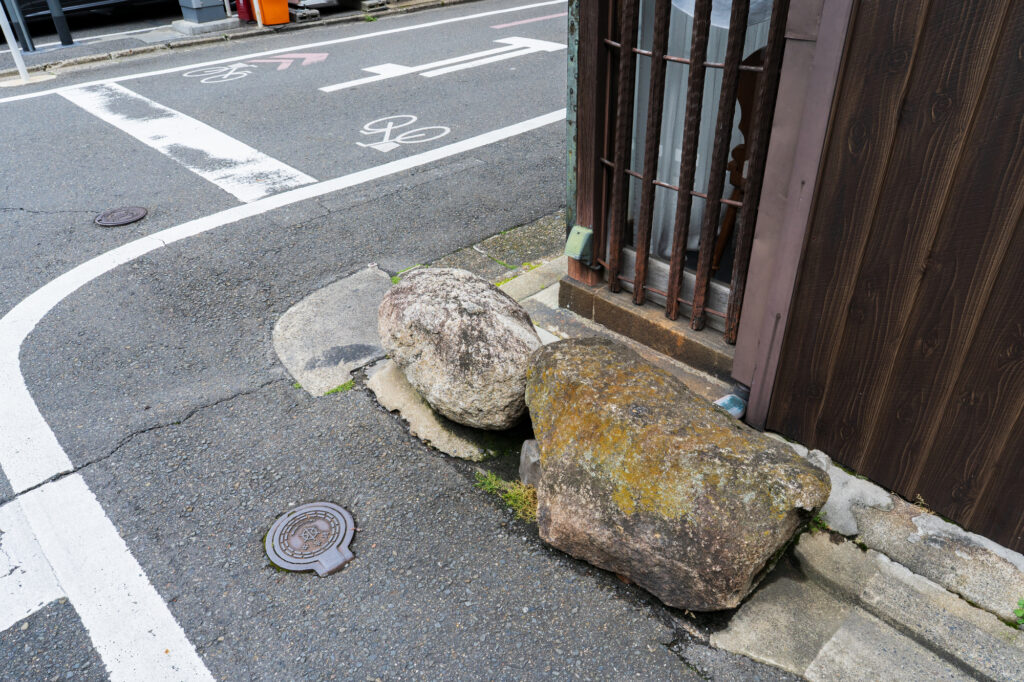
Ikezu has found a larger life, however, in an artifact that’s spread across the region: the ikezu-ishi, or “rude stone.” This device is a large stone, which can span up to knee height, set at the corners and edges of properties. The intent is to stop vehicles on narrow streets (which abound in Japan) from clipping against walls.
The popular assumption is that ikezu-ishi “culture” is part of the larger ikezu-bunka: just another way that Kyoto-ites look out for themselves at the expense of others. However, one study found that ikezu-ishi aren’t even that common in Kyoto.
Nakajō Takeshi (中条武司), a sedimentologist and Deputy Head of the Academic Affairs Division at the Osaka Museum of Natural History, ran a citizen-science survey on the phenomenon and submitted it to the Geological Society of Japan’s 130th Annual Meeting in September 2023.
As of mid-2023, the team counted 15,835 individual stones across 1,505 sites; by 2025, it had confirmed stones at 2,914 locations across 39 of Japan’s prefectures.
Of course, being a geologist, Nakajō was interested in what these stones were, rock-wise. He found that the type of rock used reflected local geology. For example, granite made up 93% of the stones in Nishinomiya, whereas Himeji ikezu-ishi were 80% tuff (just 14% granite).
Nakajō further found that the rocks weren’t dug up for this purpose. Most are repurposed old stone products and former building materials that provide a glimpse into the area’s architectural history.
Nakajō’s team also found something else interesting. While the vast majority of the stones were concentrated in Kansai, only 10% were in Kyoto. A whopping 45% were in Osaka. Hyogo accounted for another 25%.
The reason? Kyoto limits the rocks to crossroads, whereas Osaka lines them up along walls. Kyoto’s preoccupation with preserving aesthetics generally limits their use.
On top of ikezu-ishi not being a “Kyoto thing,” some Kyoto residents reject the name and the ensuing reputation. One resident interviewed by a paper argued they should be called 親切石 (shinsetsu-ishi), or “kindness stones” instead. The reasoning is straightforward: the stones are there to signal to people to be more careful so that neither property nor vehicle gets scuffed.
I can see this serving as a kindness to the driver, too. In Japan, if you get into any sort of accident, even one that only damages property, you’re legally obligated to involve the police. From this standpoint, helping drivers avoid an accident that will likely ruin their day is very much not ikezu.
Some Kyotoites agree. One woman interviewed by Nikkei, Yoshikawa Michiko (吉川美智子), said she designed her ikezu-ishi, a yellow stone with a black circle, out of consideration for drivers after they kept hitting her wall in a narrow alley. It’s worked: since installing it, she says, hits have gone from frequent to only a few a month.
Tourists hate this one stupid stone trick
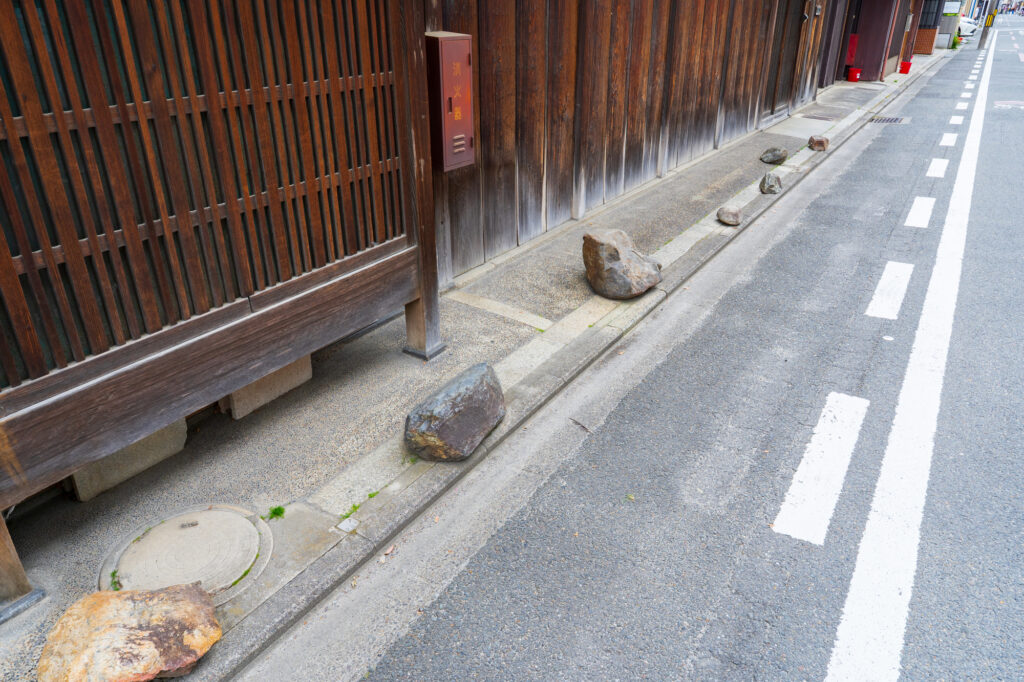
Given that ikezu-ishi can do damage, one has to wonder: are they legal?
The answer is: yes – but only if they’re on your property. Japan’s Road Traffic Act, Article 76(3), bars placing anything on a road that could obstruct traffic. If you fully block a road, you could face up to two years’ imprisonment. This is all theoretical, however: as far as I can tell, no case has ever been lodged against a malicious use of ikezu-ishi.
One thing is clear, though: some domestic tourists hate ikezu-ishi. Asahi Geinō reports on multiple visitors who have complained after scraping their cars or suitcases against the stones. Some say that, because they’re so low to the ground, they’re a hard-to-see nuisance. As a result of an uptick in ikezu-ishi incidents, local guides have begun urging visitors to watch the ground while navigating narrow streets.
While some hate the stones, others love them. Spotting them has become a fun pastime for domestic tourists on social media. Japanese commenters on X have also made a cost argument in favor of the stones, noting that damage to a barrier or a fence can cost ¥200,000-300,000 range (~$1,220-1,830) to fix.
Love ’em or hate ’em, ikezu-ishi are a Kyoto landmark worth looking for next time you’re in Kyoto. Or Osaka and Hyogo, apparently.
Keep reading



Sources
いけず(イケズ)とは? 意味や使い方 コトバンク(精選版 日本国語大辞典)
いけ(イケ)とは? 意味や使い方 コトバンク(精選版 日本国語大辞典)
いけず石調査 大阪市立自然史博物館
路傍に置かれる「いけず石」の岩石種と分布調査(予察) 日本地質学会学術大会講演要旨(J-STAGE)
いけず石 ウィキペディア
京都の路地家の角にみられる「いけず石」とは? 他の地域にも「いけず石」に似た家の角に置かれる石がある LIFULL HOME’S PRESS
京都人、無言の抵抗?「いけず石」…当事者側の言い分を聞いた Lmaga.jp
京都の路地で注目集まる「いけず石」とは?観光客との摩擦と文化の継承に揺れる“無言の気配り” アサ芸プラス
「京都人は褒めるフリして嫌味」そんなことない 「ぶぶ漬けでも」は都市伝説か J-CASTニュース
いけずの語源は池之端の芋茎ではなさそう【由来】 つむぎゆりブログ
「いけず」の由来と語源 由来メモ
京都でしか見かけない?車から家を守るために置かれた「いけず石」 Togetter
「いけず石」で道路交通法違反に? 弁護士法人あいち刑事事件総合法律事務所 京都支部
夏祭浪花鑑 文化デジタルライブラリー(日本芸術文化振興会)
家守る「いけず石」関西に集中 京都の厄よけ意識も影響? 日本経済新聞